پن کیا گیا ٹویٹ
ibn nasrallah
663 posts

ibn nasrallah
@SStick11
when I’m older, I want to see how I was thinking. thus, this serves as my journal. Encapsulating my thoughts within time.
شامل ہوئے Mayıs 2020
176 فالونگ38 فالوورز
ibn nasrallah ری ٹویٹ کیا

@KentGarrison Actually the purchasing power is still about the same....
English

Iran has agreed to 11 out of the American conditions, and the remaining three are still under negotiation for the next two weeks:
1. A permanent commitment never to develop or possess nuclear weapons.
2. Handing over all its enriched uranium to the International Atomic Energy Agency.
3. Allowing the IAEA full access and monitoring of every part of its nuclear facilities.
4. Completely and permanently stopping uranium enrichment inside Iran.
5. Significantly reducing both the range and the number of its missiles.
6. Immediately cutting off all support to militias and proxy groups in the region.
7. Stopping all attacks on energy facilities in the Gulf.
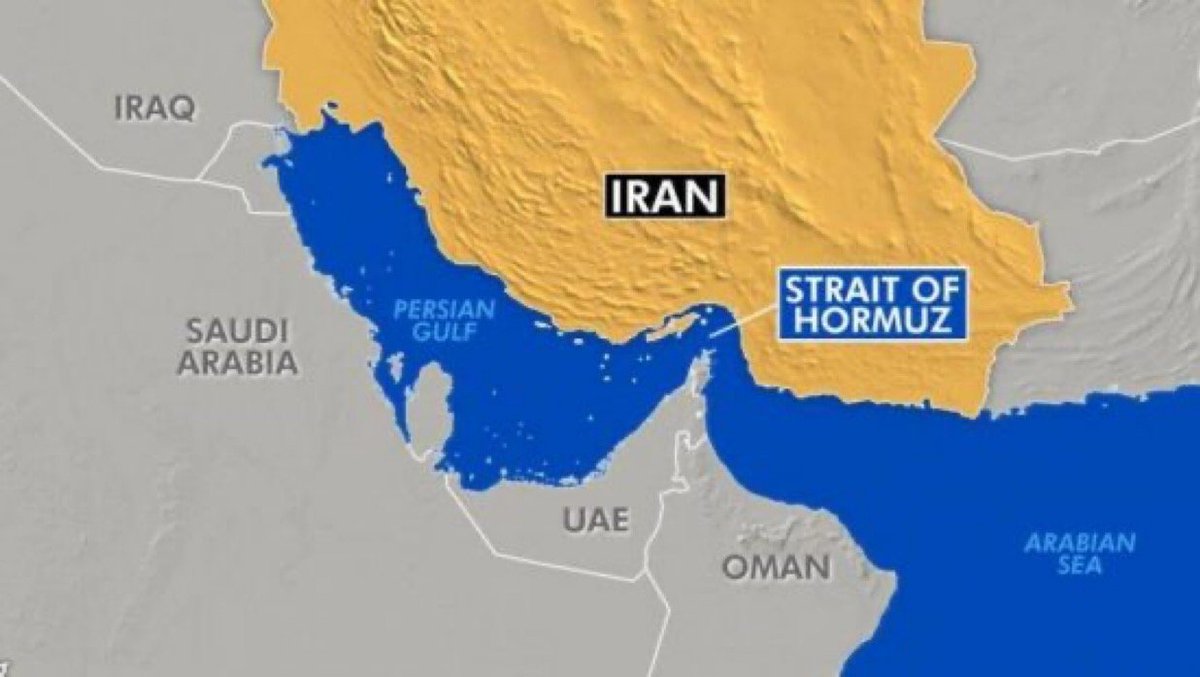
8. Reopening the Strait of Hormuz immediately, with no conditions or delays.
9. Lifting all sanctions imposed on Iran.
10. Canceling the snapback mechanism for reimposing UN sanctions.
11. American support for the Bushehr nuclear power plant, but only under direct US supervision. !
English
ibn nasrallah ری ٹویٹ کیا

@ShaykhSulaiman She started off with a logical argument , before she pulled the 150k number out of her behind
English
ibn nasrallah ری ٹویٹ کیا

As a shia, I think the difference comes from a deeper issue, not just politics or resources. In many Sunni contexts, there is a strong emphasis on obedience to the ruler (ḥākim), often to avoid fitna (chaos). In theory, this obedience is not absolute: classical Sunni scholarship clearly states that there is no obedience in disobedience to God, and that obedience is conditional, especially if the ruler commands sin or shows clear disbelief.
However, in practice, this principle has often been applied in a very restrictive way. Many scholars prioritized stability to such an extent that opposition, reform, or public accountability became extremely limited. As a result, even unjust or oppressive rulers are often tolerated, as long as they do not cross certain theological red lines.
This can create a structural limitation: when obedience is emphasized so strongly, it may discourage criticism, reform, and grassroots initiative. Over time, this fosters dependence on existing power structures rather than encouraging independent development.
So the issue is not simply “why rely on others,” but whether the internal framework allows for genuine autonomy and reform. Without the ability to question authority and hold leadership accountable, it becomes much harder to build the kind of independence you’re calling for.
And Allah knows best.
English
ibn nasrallah ری ٹویٹ کیا

@MarioNawfal Mario sacrificed his soul for the sake of Israel.
English

@Chainless_Slave does Iran now have justification to strike UAE soil…. x.com/iribnews_irib/…
English

Sayed hasan and sayed khamenai may god preserve both their souls, sent their children to war .
Sean Strickland@SStricklandMMA
It needs to be standard practice of leaders to send their children to war...

English

@SStricklandMMA @DespairAndChaos Sayed hasan and sayed khamenai both sent they’re children to war.
English

@zaudzarosh Put more simply according to this dude.
Shia are worse the Zionists in Israel .
English

First, mutʿa is not a casual or unregulated relationship; rather, it is a marriage contract in Shi‘i jurisprudence with clear conditions: a specified duration, a dowry (mahr), and the consent of both parties. It also entails legal consequences such as established lineage (nasab) and the obligation of a waiting period (ʿidda). This clearly distinguishes it from fornication (zina), which has no framework, no rights, and no obligations.
Second, the legitimacy of mutʿa goes back to the early period of Islam. It was known during the time of the Prophet ﷺ and was acknowledged by a number of companions. The disagreement between Sunnis and Shi‘as is not about its original existence, but about whether it was later abrogated. Shi‘i scholars hold that there is no definitive evidence that the Prophet ﷺ permanently prohibited it.
From a social perspective, mutʿa addresses real-life situations such as travel or temporary inability to enter into permanent marriage, providing a lawful framework that preserves dignity and prevents falling into what is prohibited.
As for the claim that it is a “gateway to prostitution,” this is based on a clear misunderstanding. Prostitution is a commercial relationship with no rules or obligations, whereas mutʿa is a legal contract with conditions and consequences, including the obligation of a waiting period (ʿidda). In fact, the waiting period, which can reach around three months in some cases, makes repeated consecutive relationships practically impossible, which contradicts the nature of prostitution. Therefore, it cannot be equated with a mere sexual transaction, as it involves real rights and responsibilities. And just as any system can be misused, that does not change its true nature, just as the misuse of permanent marriage does not invalidate its legitimacy.
And Allah knows best.
English

@usulspace @FarisHammadi Great explanation. The sunnah operate under the assumption that Muttah is intrinsically wrong similar to prostitution , but considering we both accept it was allowed by the prophet a.s that cannot be the case. The debate should thus be on whether Muttah was later allowed or not
English

@PBDsPodcast When I was younger (14-16) I use to look up this guy . Thank god, I matured and recognised that money isn’t a definition of one’s self worth .
Money isn’t special. It’s your character, knowledge , manners and morals that matter .
English