
Sysdata ری ٹویٹ کیا
Sysdata
81 posts

Sysdata ری ٹویٹ کیا
Sysdata ری ٹویٹ کیا
Sysdata ری ٹویٹ کیا

How to know you're "ready" for a specific distance:
Complete a ~2/3 (Metric) simulation at race-pace as a regular training session with...
- Minimal decoupling between pace/HR
- No extended recovery needs beyond that of a regular loading day.
For a marathon, I think a person should have a minimum of 2 years of progressive training behind them to build to this type of session (26K/16mi at race pace)
For the shorter distances, the "complete" phase of the preparation is much shorter. The "compete" phase, however, is similar.
George Poth 🇩🇪@georgepoth67
@Alan_Couzens How would someone know they're prepared for a specific distance? And how long would each preparation take? Very interested to see your take. Thanks.
English
Sysdata ری ٹویٹ کیا
Sysdata ری ٹویٹ کیا

The Mathematics of Life - where I explore how fractals determine how long complex biological systems (like us) last and how to get more out of your 2 billion heartbeat budget youtu.be/zZYRWgVBSrI

YouTube
English
Sysdata ری ٹویٹ کیا

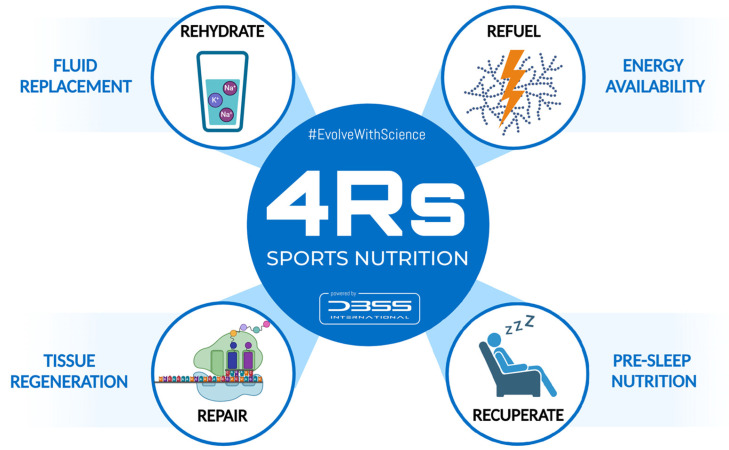
Recovery science + free tool!
The paper provides a link to a FREE app where you can enter your info, and it will calculate your protocol. Also helps you grade your supplement choices.
I love it! Making science more applicable.
Specific values included!
pmc.ncbi.nlm.nih.gov/articles/PMC12…

English
Sysdata ری ٹویٹ کیا

This is very good advice.
Especially the "you're prepared to train 6-8 hrs/wk" part.
Personally, I would double it...
6hrs run + 6hrs cross-train
But I am aware I have particular biases 😊
David Abbott@runliftrunlift
Marathon registration readiness check list ✅You’ve done a few half marathons ✅You can run easy for 2 hours no problem ✅You’ve been able to run consistently for 4-6 months with no injuries ✅You’re prepared to train 6-8 hours per week A marathon is just a big long run But make sure you’re ready for the challenge
English
Sysdata ری ٹویٹ کیا
Sysdata ری ٹویٹ کیا
Sysdata ری ٹویٹ کیا
Sysdata ری ٹویٹ کیا
Sysdata ری ٹویٹ کیا
Sysdata ری ٹویٹ کیا
Sysdata ری ٹویٹ کیا
Sysdata ری ٹویٹ کیا

Listen to your children.
Listen to them. Not hear them. There is a difference between the two.
Keep the phone away, remove your attention from the TV. Stop your work. Pause for a few minutes. Listen to them.
They want to talk to you, perhaps they are scared or confused. Perhaps they are bored and reaching out to you. They love you and want to talk to you. Perhaps they want your advice. Perhaps they want just to learn from your experiences. Whatever it is, they want to talk to you.
Listen to them.
Very soon, they leave the nest and then there won't be anyone there to speak to you.....
#Children
English
Sysdata ری ٹویٹ کیا

Why training your legs is one of the most evidence-backed things you can do for health & longevity
Leg muscles (glutes, quads, hamstrings, calves) make up the largest insulin-sensitive tissue mass in the human body. When you train them, you influence whole-body metabolism more than any other muscle group.
1) Insulin sensitivity ↑ ~20–40%
Leg exercise increases GLUT-4 translocation independent of insulin, allowing muscles to absorb glucose efficiently for 24–72 hours. This directly lowers insulin resistance.
2) Post-meal glucose spikes ↓ ~30–50%
Because of their size and glycogen capacity, legs act as the body’s primary glucose sink — critical for diabetes and pre-diabetes control.
3) Resting metabolic rate increases
More leg muscle = higher basal energy expenditure. This makes fat loss biologically sustainable, not willpower-dependent.
4) Mitochondrial density ↑ ~15–25%
Lower-body resistance training drives mitochondrial biogenesis, improving fat oxidation, metabolic flexibility, and cellular energy output.
5) Myokine release = systemic benefits
Leg contractions release powerful signaling molecules:
• IL-6 (exercise-induced) → anti-inflammatory
• Irisin → fat oxidation & mitochondrial health
• BDNF → brain health & neuroprotection
6) Endothelial function & nitric oxide improve
Leg training enhances NO bioavailability, arterial compliance, and venous return → better blood pressure and vascular health.
7) Fall risk reduces significantly
Lower-limb strength is one of the strongest predictors of balance and fall prevention, especially with aging.
8) Disability is delayed
Leg strength directly predicts the ability to stand, walk, climb stairs, and live independently.
9) Mortality risk ↓ ~20–30%
Cohort studies consistently show higher muscular and lower-body strength correlates with lower all-cause mortality.
10) Healthspan is preserved
Strong legs protect mobility, metabolism, circulation, and autonomy ,the true biological markers of aging well.
Loss of leg strength is one of the earliest signs of aging, long before disease appears.
Leg training is not optional fitness.
It is preventive medicine for metabolism, mobility, and longevity.

English
Sysdata ری ٹویٹ کیا

Yesterday, I said that if a new runner’s heart rate shoots above 150 within the first few seconds of starting, they probably shouldn’t be running.
When someone who hasn’t trained consistently begins jogging, and their heart rate rapidly climbs into the 150s and stays there, that effort is not aerobic base work. It’s high-intensity work relative to their current conditioning. It may not feel “hard” in the way sprinting feels hard, but physiologically, it is well above the zone where foundational adaptations occur.
True aerobic base development happens below the first lactate threshold. That’s where mitochondrial density improves, capillary networks expand, and fat oxidation becomes more efficient. That’s also where oxidative stress is manageable, and the recovery cost is low enough to repeat the effort frequently.
If heart rate is immediately elevated, the body is operating in a more glycolytic state. Oxidative stress increases. Sympathetic tone rises. Recovery burden goes up. That may still improve fitness, but it’s not base building. It’s stress accumulation.
There’s another layer that matters even more in midlife adults: the speed of tissue adaptation. This is my office hours every week. Many runners' injuries are training errors.
The cardiovascular system adapts relatively quickly. Tendons, fascia, cartilage, and bone adapt slowly. When you combine high metabolic stress with repetitive impact load before tissues are prepared, the mismatch shows up as plantar fasciitis, Achilles pain, knee irritation, hip tendinopathy, or stress reactions.
Most new runners don’t quit because they lack motivation. They quit because something starts to hurt.
Brisk walking, incline walking, rucking, cycling, or structured walk-run intervals allow aerobic adaptations to occur with a lower oxidative and mechanical burden. As aerobic efficiency improves, heart rate at a given pace drops. As tissues strengthen, impact tolerance increases.... Then running becomes sustainable.
Running is a phenomenal tool. But durability comes first. Base comes first. The ability to recover comes first.
And yes... sprinting is fine. High HR is fine... don't come at me about this ;-). But... as @Alan_Couzens and @feelthebyrn1 and @inaki_delaparra and others will also tell you... Your base training is foundational. Take the time to build it and maintain it.
English