Alexandru

1.9K posts

Alexandru banner
Alexandru

Alexandru

@TuturasAlexand

Excellence demands discipline

Romania شامل ہوئے Ekim 2021
60 فالونگ290 فالوورز
پن کیا گیا ٹویٹ
Alexandru
Alexandru@TuturasAlexand·
Why isn’t Europe joining Trump’s war with Iran? And why aren’t they sending ships to secure the Strait of Hormuz? Well, the head of the U.S. military, Gen. Caine, says it himself: the strait cannot be secured (NYT). First of all, the EU doesn’t depend on oil from the Gulf region! I keep seeing this news today: “Why don’t we secure our oil by sending ships to the Strait of Hormuz?” Here are the EU’s official 2024 figures. In 2025 there are some changes, but not very significant. The largest oil supplier to the EU is the U.S., with nearly 20%, followed by Norway at 15%, Kazakhstan at 12%, African countries at 12–13%, then Azerbaijan and South America. Gulf countries account for Saudi Arabia – 7% and Iraq – 6%. So about 87% of the oil imported by the EU comes from outside the Middle East conflict zone. But why did Germany, France, the UK, Italy, Spain, and the Netherlands refuse Trump’s invitation to commit militarily to the Iran war? Here are the main reasons: 1.Europe already has a war on its continent! The EU is the main supporter of Ukraine, both financially and through arms deliveries. The supplies promised by Trump via NATO are paid for by the EU, but even these will no longer be delivered. Engaging European countries in Iran would mean abandoning Ukraine, at least in the short term, and increasing risks. Russia could exploit such a moment and carry out the “general mobilization” increasingly talked about in Moscow, forcing military actions beyond Ukraine. 2.European countries are already contributing to the defense of Gulf states. And they do so daily, even if they don’t boast publicly like Trump. Aircraft from France and the UK have conducted defensive operations in Bahrain, the UAE, Jordan, and Saudi Arabia since the start of the conflict. French Mirage jets even ran out of ammunition after intercepting multiple Iranian drones. These operations have been kept discreet to remain effective. 3.EU weapons stockpiles are limited. Especially missiles and drones. Production takes years to rebuild stocks to an optimal level. Several European intelligence chiefs and generals warned in 2025 that Russia could plan an attack on another European country. It would be imprudent to leave depots empty. Even the Americans are moving stocks from Asia after initially boasting about strikes. And we cannot forget Russia, China, and North Korea. Unlike the U.S., Europe does not have an ocean separating it from Russia. 4.The Suez Canal is the critical point for the EU, not Hormuz! There are already concerns that Yemeni rebels may target ships transiting the Gulf of Suez—which they have publicly announced. European countries cannot be active on four fronts simultaneously: • Strait of Hormuz • Gulf of Suez • Mediterranean Sea (remember missiles launched toward Cyprus and Turkey) • Baltic Sea, where Russia has increased acts of sabotage Maybe now Trump will understand what an alliance that plans strategically means—not just a Rambo who always plays the biggest and toughest! 5.Trump went to war without NATO consultation. Not even with major European countries. That’s not how it’s usually done, especially when asking for support. Japan, Canada, and Australia have not confirmed sending ships or troops, because they cannot abandon security in Asia and also haven’t received concrete, timely plans. 6.What can European countries offer in addition to the U.S.? Not much. That’s why Boris Pistorius, Germany’s Defense Minister, said today: “Trump is asking for a few European frigates to do what the powerful U.S. Navy cannot?” And he’s right. The problem isn’t the number of ships, soldiers, or firepower. The problem is that the Strait of Hormuz is an enormous strategic trap, and without a clear plan, it cannot be secured. And that plan takes weeks to develop, not days! Planning for this scenario has been going on for over 40 years, and the conclusion has always been the same: it’s extremely difficult.
Alexandru tweet media
English
1
1
5
184
Alexandru
Alexandru@TuturasAlexand·
Robert Fico is increasingly following the same political script as Viktor Orbán—positioning himself as a disruptor inside the EU while echoing narratives that align with the interests of Vladimir Putin. Blocking unified European support for Ukraine at a critical moment is not just a domestic political gesture; it has broader strategic implications. It weakens EU cohesion and sends a signal that internal divisions can be exploited. Like Orbán, Fico appears to prioritize short-term political gains and populist messaging over a consistent, constructive role within the European framework. This pattern raises legitimate concerns: rather than contributing to collective security and stability, such positions risk undermining them—ultimately benefiting actors who seek to divide Europe rather than strengthen it.
Robert Fico 🇸🇰@RobertFicoSVK

On behalf of Slovakia, I refused to approve the conclusions of today’s summit, which fully support Ukraine.

English
0
0
0
33
Alexandru
Alexandru@TuturasAlexand·
Robert Fico is increasingly following the same political script as Viktor Orbán—positioning himself as a disruptor inside the EU while echoing narratives that align with the interests of Vladimir Putin. Blocking unified European support for Ukraine at a critical moment is not just a domestic political gesture; it has broader strategic implications. It weakens EU cohesion and sends a signal that internal divisions can be exploited. Like Orbán, Fico appears to prioritize short-term political gains and populist messaging over a consistent, constructive role within the European framework. This pattern raises legitimate concerns: rather than contributing to collective security and stability, such positions risk undermining them—ultimately benefiting actors who seek to divide Europe rather than strengthen it.
English
17
4
100
3.2K
Robert Fico 🇸🇰
Robert Fico 🇸🇰@RobertFicoSVK·
On behalf of Slovakia, I refused to approve the conclusions of today’s summit, which fully support Ukraine.
English
899
970
6.3K
141.5K
Alexandru
Alexandru@TuturasAlexand·
Viktor Orbán’s messaging has become increasingly one-dimensional, revolving almost entirely around Volodymyr Zelenskyy as a রাজনৈতিক scapegoat. Rather than articulating a coherent policy agenda, his political narrative leans heavily on constructing external enemies—“paper villains”—to deflect from domestic shortcomings. This isn’t a strategy for governance; it’s a strategy for electoral survival. By framing every issue through the lens of conflict with Ukraine, Orbán avoids addressing deeper structural problems within Hungary’s economy and energy policy—areas where tangible results are notably lacking. At the same time, his positioning continues to raise serious concerns across Europe. His consistent alignment with narratives that benefit Vladimir Putin fuels criticism that his approach is less about protecting Hungarian interests and more about maintaining political leverage, even at the cost of unity within the EU. Ultimately, reducing complex geopolitical and economic challenges to slogans like “no oil = no money” may resonate politically, but it underscores a deeper issue: the absence of credible solutions for Hungary’s long-term stability and prosperity.
Orbán Viktor@PM_ViktorOrban

📍 Brussels. Situation report. It was a tough debate, but we stood our ground. We have the right to say no to the Ukrainian war loan. As long as @ZelenskyyUa does not lift the oil blockade, they will not receive any money from Brussels. No oil = no money.

English
0
0
0
11
Alexandru
Alexandru@TuturasAlexand·
Viktor Orbán’s messaging has become increasingly one-dimensional, revolving almost entirely around Volodymyr Zelenskyy as a রাজনৈতিক scapegoat. Rather than articulating a coherent policy agenda, his political narrative leans heavily on constructing external enemies—“paper villains”—to deflect from domestic shortcomings. This isn’t a strategy for governance; it’s a strategy for electoral survival. By framing every issue through the lens of conflict with Ukraine, Orbán avoids addressing deeper structural problems within Hungary’s economy and energy policy—areas where tangible results are notably lacking. At the same time, his positioning continues to raise serious concerns across Europe. His consistent alignment with narratives that benefit Vladimir Putin fuels criticism that his approach is less about protecting Hungarian interests and more about maintaining political leverage, even at the cost of unity within the EU. Ultimately, reducing complex geopolitical and economic challenges to slogans like “no oil = no money” may resonate politically, but it underscores a deeper issue: the absence of credible solutions for Hungary’s long-term stability and prosperity.
English
4
0
7
666
Orbán Viktor
Orbán Viktor@PM_ViktorOrban·
📍 Brussels. Situation report. It was a tough debate, but we stood our ground. We have the right to say no to the Ukrainian war loan. As long as @ZelenskyyUa does not lift the oil blockade, they will not receive any money from Brussels. No oil = no money.
English
314
971
4.5K
50.3K
Alexandru
Alexandru@TuturasAlexand·
The message is clear: de-escalation is no longer just a diplomatic preference—it is an economic necessity. Europe must move beyond statements and actively focus on shaping viable pathways to end the conflict. A prolonged war in the Middle East, especially one affecting critical infrastructure and maritime routes, risks triggering severe disruptions in global energy markets and trade flows. The consequences would not remain regional—they would cascade into higher inflation, reduced industrial output, and ultimately a deep global economic recession. For Europe, the stakes are particularly high. Its economies remain sensitive to energy shocks and external instability. This is why the priority should be clear: invest political capital in negotiations, push for enforceable ceasefires, and support frameworks that can lead to a sustainable resolution. Preventing escalation is not just about stability—it is about safeguarding the global economy. Without a coordinated effort to end the war, the risk of a serious, worldwide economic downturn becomes increasingly unavoidable.
English
2
0
7
4K
Emmanuel Macron
Emmanuel Macron@EmmanuelMacron·
It is time to open a path towards de-escalation in order to restore stability in the Middle East. France calls for the immediate implementation of a moratorium on strikes targeting civilian infrastructure, whether related to water or to energy. Freedom and security of navigation must be restored. As the region enters a period of religious celebrations and renewal, tempers must cool and hostilities must cease, in order to give a real chance to the prospect of a negotiated and sustainable solution.
English
3.1K
1.2K
7.8K
715.6K
Alexandru
Alexandru@TuturasAlexand·
The message is clear: de-escalation is no longer just a diplomatic preference—it is an economic necessity. Europe must move beyond statements and actively focus on shaping viable pathways to end the conflict. A prolonged war in the Middle East, especially one affecting critical infrastructure and maritime routes, risks triggering severe disruptions in global energy markets and trade flows. The consequences would not remain regional—they would cascade into higher inflation, reduced industrial output, and ultimately a deep global economic recession. For Europe, the stakes are particularly high. Its economies remain sensitive to energy shocks and external instability. This is why the priority should be clear: invest political capital in negotiations, push for enforceable ceasefires, and support frameworks that can lead to a sustainable resolution. Preventing escalation is not just about stability—it is about safeguarding the global economy. Without a coordinated effort to end the war, the risk of a serious, worldwide economic downturn becomes increasingly unavoidable.
Emmanuel Macron@EmmanuelMacron

Il est temps d’ouvrir une voie vers la désescalade pour la stabilité au Moyen-Orient. La France appelle à la mise en œuvre sans délai d’un moratoire sur les frappes ciblant les infrastructures civiles, qu’elles soient liées à l’eau ou à l’énergie. La liberté et la sécurité de la navigation doivent être rétablies. Alors que la région entre dans une période de célébrations religieuses et de renouveau, les esprits doivent s'apaiser et les combats cesser pour donner une chance à la perspective d’une solution négociée et soutenable.

English
0
0
2
71
Alexandru
Alexandru@TuturasAlexand·
The message is clear: de-escalation is no longer just a diplomatic preference—it is an economic necessity. Europe must move beyond statements and actively focus on shaping viable pathways to end the conflict. A prolonged war in the Middle East, especially one affecting critical infrastructure and maritime routes, risks triggering severe disruptions in global energy markets and trade flows. The consequences would not remain regional—they would cascade into higher inflation, reduced industrial output, and ultimately a deep global economic recession. For Europe, the stakes are particularly high. Its economies remain sensitive to energy shocks and external instability. This is why the priority should be clear: invest political capital in negotiations, push for enforceable ceasefires, and support frameworks that can lead to a sustainable resolution. Preventing escalation is not just about stability—it is about safeguarding the global economy. Without a coordinated effort to end the war, the risk of a serious, worldwide economic downturn becomes increasingly unavoidable.
English
0
0
4
64
Emmanuel Macron
Emmanuel Macron@EmmanuelMacron·
Il est temps d’ouvrir une voie vers la désescalade pour la stabilité au Moyen-Orient. La France appelle à la mise en œuvre sans délai d’un moratoire sur les frappes ciblant les infrastructures civiles, qu’elles soient liées à l’eau ou à l’énergie. La liberté et la sécurité de la navigation doivent être rétablies. Alors que la région entre dans une période de célébrations religieuses et de renouveau, les esprits doivent s'apaiser et les combats cesser pour donner une chance à la perspective d’une solution négociée et soutenable.
Français
1K
357
1.6K
288.3K
Alexandru
Alexandru@TuturasAlexand·
Viktor Orbán’s rhetoric increasingly sounds like political theater rather than serious governance. Viktor Orbán continues to frame every challenge—especially energy—as someone else’s fault, most often pointing at Volodymyr Zelenskyy, without presenting any credible, long-term strategy of his own. Instead of offering structural solutions for Hungary’s energy security or economic resilience, he relies on a narrative of grievance and external blame. This approach may serve short-term political messaging, but it does little to actually address the needs of Hungarian families and businesses. The reality is that Hungary’s vulnerabilities in energy and economic policy have been building for years. Deflecting responsibility does not change that. Orbán’s focus on political campaigns centered around Ukraine and energy disputes risks obscuring a deeper issue: the lack of meaningful reforms or forward-looking policies at home. If anything, this pattern reinforces criticism that his leadership prioritizes political survival over tangible progress for Hungary.
Orbán Viktor@PM_ViktorOrban

‼️ This is not a game. Access to affordable energy is vital for Hungarian families and businesses. We are not asking for favours. We insist on receiving what is rightfully ours, what keeps our homes warm and our economy running. It is time to end the oil blockade @ZelenskyyUa.

English
0
0
1
18
Alexandru
Alexandru@TuturasAlexand·
Viktor Orbán’s rhetoric increasingly sounds like political theater rather than serious governance. Viktor Orbán continues to frame every challenge—especially energy—as someone else’s fault, most often pointing at Volodymyr Zelenskyy, without presenting any credible, long-term strategy of his own. Instead of offering structural solutions for Hungary’s energy security or economic resilience, he relies on a narrative of grievance and external blame. This approach may serve short-term political messaging, but it does little to actually address the needs of Hungarian families and businesses. The reality is that Hungary’s vulnerabilities in energy and economic policy have been building for years. Deflecting responsibility does not change that. Orbán’s focus on political campaigns centered around Ukraine and energy disputes risks obscuring a deeper issue: the lack of meaningful reforms or forward-looking policies at home. If anything, this pattern reinforces criticism that his leadership prioritizes political survival over tangible progress for Hungary.
English
9
0
14
1.1K
Orbán Viktor
Orbán Viktor@PM_ViktorOrban·
‼️ This is not a game. Access to affordable energy is vital for Hungarian families and businesses. We are not asking for favours. We insist on receiving what is rightfully ours, what keeps our homes warm and our economy running. It is time to end the oil blockade @ZelenskyyUa.
English
546
1.6K
7.2K
73.5K
Alexandru
Alexandru@TuturasAlexand·
The strategic stakes could not be clearer. A prolonged conflict in the Middle East—especially one targeting critical energy infrastructure—risks pushing the global economy into a severe recession driven by supply shocks, surging energy prices, and collapsing market confidence. The longer the war continues, the higher the economic cost for everyone, including Europe. At the same time, this is not an isolated crisis. Any diversion of global attention and resources creates strategic openings elsewhere, particularly for Russia. That is why continued—and even strengthened—support for Ukraine remains essential, not only for its sovereignty but for the broader architecture of European security. Ending the war swiftly is therefore both an economic and geopolitical imperative. De-escalation in the Middle East and sustained commitment to Ukraine must go hand in hand if Europe is to avoid deeper instability and protect its long-term interests.
Kaja Kallas@kajakallas

Iran's attacks on Qatar’s energy infrastructure are deepening the chaos. The war in the Middle East needs an exit, not an escalation. This is equally important for Ukraine, as Russia stands to gain from the Iran war. Now is the time to step up support for Ukraine, including by moving forward with the loan agreed by leaders already in December. My doorstep ahead of today’s #EUCO

English
0
0
0
36
Alexandru
Alexandru@TuturasAlexand·
The strategic stakes could not be clearer. A prolonged conflict in the Middle East—especially one targeting critical energy infrastructure—risks pushing the global economy into a severe recession driven by supply shocks, surging energy prices, and collapsing market confidence. The longer the war continues, the higher the economic cost for everyone, including Europe. At the same time, this is not an isolated crisis. Any diversion of global attention and resources creates strategic openings elsewhere, particularly for Russia. That is why continued—and even strengthened—support for Ukraine remains essential, not only for its sovereignty but for the broader architecture of European security. Ending the war swiftly is therefore both an economic and geopolitical imperative. De-escalation in the Middle East and sustained commitment to Ukraine must go hand in hand if Europe is to avoid deeper instability and protect its long-term interests.
English
1
0
0
659
Kaja Kallas
Kaja Kallas@kajakallas·
Iran's attacks on Qatar’s energy infrastructure are deepening the chaos. The war in the Middle East needs an exit, not an escalation. This is equally important for Ukraine, as Russia stands to gain from the Iran war. Now is the time to step up support for Ukraine, including by moving forward with the loan agreed by leaders already in December. My doorstep ahead of today’s #EUCO
English
2.2K
695
3.1K
362.7K
Alexandru
Alexandru@TuturasAlexand·
Energy is not just another sector of the economy—it is the foundation of any state that aims for long-term development and strategic autonomy. Without secure, affordable, and sustainable energy, industrial competitiveness weakens, investment declines, and economic growth becomes fragile. For Europe, strengthening its energy base is inseparable from strengthening its overall resilience. A competitive economy simply cannot exist without a stable energy supply that supports innovation, manufacturing, and technological advancement. In this context, energy policy becomes a core pillar of national and regional strategy. Any serious ambition for long-term prosperity must start with ensuring energy security, diversification, and efficiency.
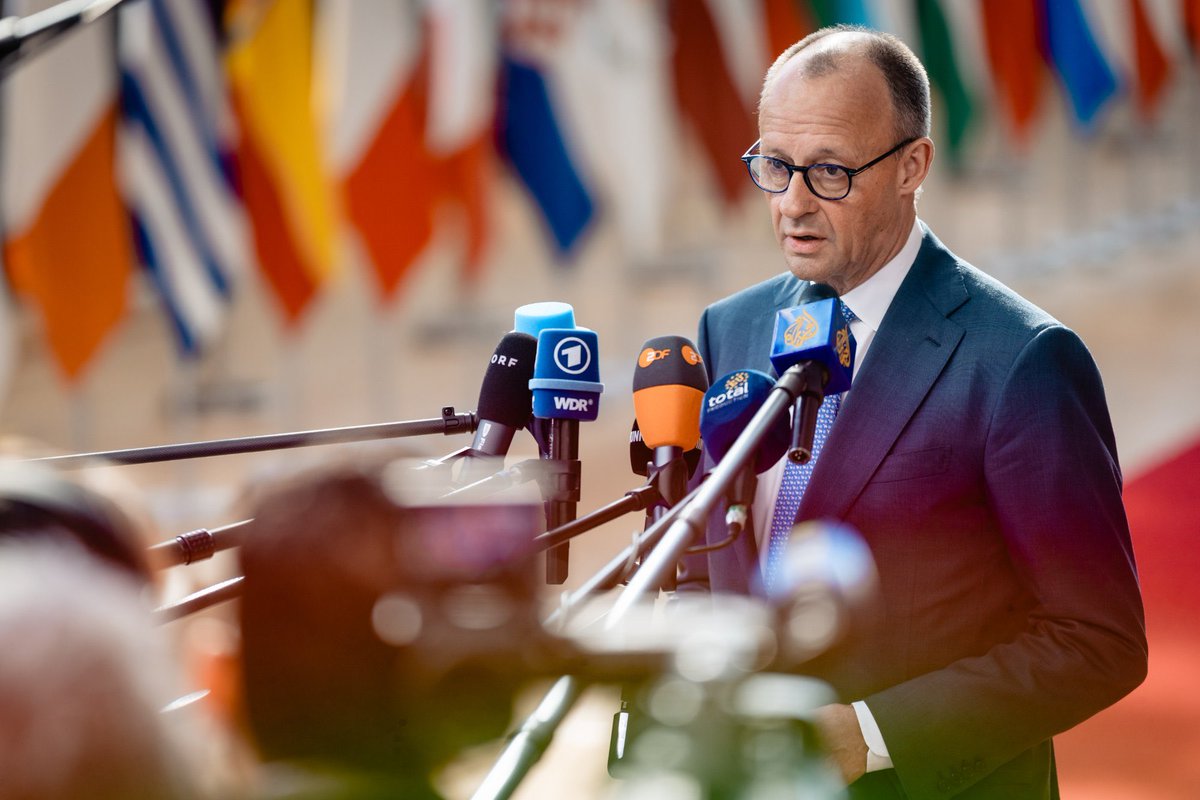
Bundeskanzler Friedrich Merz@bundeskanzler

Europa muss sich bei seiner Verteidigung und Energieversorgung behaupten. Das geht nur mit einer wettbewerbsfähigen Wirtschaft. Hier müssen wir heute einen großen Schritt weiterkommen. Ich bin zuversichtlich, dass das gelingt.

English
0
0
0
8
Alexandru
Alexandru@TuturasAlexand·
Energy is not just another sector of the economy—it is the foundation of any state that aims for long-term development and strategic autonomy. Without secure, affordable, and sustainable energy, industrial competitiveness weakens, investment declines, and economic growth becomes fragile. For Europe, strengthening its energy base is inseparable from strengthening its overall resilience. A competitive economy simply cannot exist without a stable energy supply that supports innovation, manufacturing, and technological advancement. In this context, energy policy becomes a core pillar of national and regional strategy. Any serious ambition for long-term prosperity must start with ensuring energy security, diversification, and efficiency.
English
0
0
2
14
Bundeskanzler Friedrich Merz
Bundeskanzler Friedrich Merz@bundeskanzler·
Europa muss sich bei seiner Verteidigung und Energieversorgung behaupten. Das geht nur mit einer wettbewerbsfähigen Wirtschaft. Hier müssen wir heute einen großen Schritt weiterkommen. Ich bin zuversichtlich, dass das gelingt.
Bundeskanzler Friedrich Merz tweet media
Deutsch
1.4K
114
637
88.6K
Alexandru
Alexandru@TuturasAlexand·
The urgency of ending this conflict cannot be overstated. Continued escalation in the Middle East—especially strikes on critical energy infrastructure—risks triggering severe disruptions in global gas and oil supply chains. That, in turn, feeds directly into inflation, energy price volatility, and broader economic instability. If the war drags on, the world is not just facing higher living costs—it is staring at the very real possibility of a deep global recession. Markets are already sensitive to geopolitical shocks, and sustained uncertainty in such a strategic region could undermine investment, trade flows, and economic growth worldwide. A swift de-escalation and negotiated end to hostilities is no longer just a regional priority—it is an economic necessity on a global scale.
Keir Starmer@Keir_Starmer

I condemn in the strongest terms the overnight Iranian strike on a Qatari gas facility. We are working towards a swift resolution to the situation in the Middle East, in the best interests of the British people – because there is no question that ending the war is the quickest way to reduce the cost of living.

English
0
0
0
32
Alexandru
Alexandru@TuturasAlexand·
The urgency of ending this conflict cannot be overstated. Continued escalation in the Middle East—especially strikes on critical energy infrastructure—risks triggering severe disruptions in global gas and oil supply chains. That, in turn, feeds directly into inflation, energy price volatility, and broader economic instability. If the war drags on, the world is not just facing higher living costs—it is staring at the very real possibility of a deep global recession. Markets are already sensitive to geopolitical shocks, and sustained uncertainty in such a strategic region could undermine investment, trade flows, and economic growth worldwide. A swift de-escalation and negotiated end to hostilities is no longer just a regional priority—it is an economic necessity on a global scale.
English
0
0
0
89
Keir Starmer
Keir Starmer@Keir_Starmer·
I condemn in the strongest terms the overnight Iranian strike on a Qatari gas facility. We are working towards a swift resolution to the situation in the Middle East, in the best interests of the British people – because there is no question that ending the war is the quickest way to reduce the cost of living.
English
11.8K
911
7.1K
2.2M
Alexandru
Alexandru@TuturasAlexand·
The statement attributed to Viktor Orbán follows a now familiar pattern: assigning blame externally while offering little in the way of concrete, actionable solutions. Portraying European Union and Ukraine as the source of Hungary’s energy challenges oversimplifies a far more complex reality shaped by regional war, market dynamics, and long-standing policy choices. The repeated narrative of an “oil blockade” serves a political purpose, but it does not address the structural issue—Hungary’s continued dependence on Russia for energy. Equally striking is the gap between rhetoric and policy. Strong declarations about “breaking” constraints are not accompanied by clear strategies: no detailed diversification plans, no transparent timelines, and no measurable steps toward reducing vulnerability. This absence of substance contrasts sharply with the scale of the claims being made. Over time, this approach risks eroding credibility. Blaming external actors may resonate domestically in the short term, but it does little to resolve underlying economic pressures or improve long-term stability. The evidence on the ground—persistent energy exposure, strained relations with European partners, and limited structural reform—suggests that the promised outcomes have yet to materialize. In this context, the criticism is not merely political—it is practical. Effective governance requires more than identifying scapegoats; it demands coherent strategy, transparency, and results.
Orbán Viktor@PM_ViktorOrban

❗️ Brussels is playing along with Ukraine. Their words are just for show and we expect nothing from them. Make no mistake: we will break the Ukrainian oil blockade ourselves.

English
0
0
0
37
Alexandru
Alexandru@TuturasAlexand·
The statement attributed to Viktor Orbán follows a now familiar pattern: assigning blame externally while offering little in the way of concrete, actionable solutions. Portraying European Union and Ukraine as the source of Hungary’s energy challenges oversimplifies a far more complex reality shaped by regional war, market dynamics, and long-standing policy choices. The repeated narrative of an “oil blockade” serves a political purpose, but it does not address the structural issue—Hungary’s continued dependence on Russia for energy. Equally striking is the gap between rhetoric and policy. Strong declarations about “breaking” constraints are not accompanied by clear strategies: no detailed diversification plans, no transparent timelines, and no measurable steps toward reducing vulnerability. This absence of substance contrasts sharply with the scale of the claims being made. Over time, this approach risks eroding credibility. Blaming external actors may resonate domestically in the short term, but it does little to resolve underlying economic pressures or improve long-term stability. The evidence on the ground—persistent energy exposure, strained relations with European partners, and limited structural reform—suggests that the promised outcomes have yet to materialize. In this context, the criticism is not merely political—it is practical. Effective governance requires more than identifying scapegoats; it demands coherent strategy, transparency, and results.
English
1
0
13
1K
Orbán Viktor
Orbán Viktor@PM_ViktorOrban·
❗️ Brussels is playing along with Ukraine. Their words are just for show and we expect nothing from them. Make no mistake: we will break the Ukrainian oil blockade ourselves.
English
570
1.9K
9.1K
98.9K
Alexandru
Alexandru@TuturasAlexand·
What is happening today in the war in Iran, as well as in the United States, is likely to lead to an energy crisis that could sweep through the global economy—unless rational decisions are made. 🚨 Donald Trump announced earlier that the U.S. will no longer be involved in securing the Strait of Hormuz, and that countries which need oil should handle it themselves—as if Germany or Japan had started this war. 🚨 Today, Tulsi Gabbard, the U.S. Director of National Intelligence, stated that Iran has not continued its nuclear program and that the Iranian regime remains functional. She is the third person to contradict Donald Trump, after the resignation of Joe Kent (head of the U.S. counterterrorism center) and Jonathan Powell, the UK national security adviser. We are already seeing a significant rift between U.S. intelligence services and individuals within Trump’s inner circle—a divide that highlights serious dysfunction in the organization and decision-making of the Trump administration. Trump is becoming increasingly isolated in his narrative that Iran was “an imminent threat,” “developing nuclear weapons,” and “intending to attack the United States.” 🚨 JD Vance told Americans that “several weeks of ugly fuel prices” are ahead, but blamed Joe Biden for the situation. 🚨 Israel and the United States bombed Iran’s South Pars gas field today—the largest natural gas field in the world, jointly operated by Iran and Qatar. 🚨 In response, Iran announced it will target oil facilities in Saudi Arabia, Qatar, and the United Arab Emirates, calling for evacuations in those areas. So today we are witnessing a situation where all parties directly involved in the war in Iran are attacking oil and gas infrastructure. Meanwhile, the Strait of Hormuz remains open only to certain vessels—particularly from China, Turkey, and India—which pay for oil in yuan. Why? Because Iran is supported by China and also by Russia, including through military equipment. In other words, China continues to receive oil, Russia sells it at higher prices, and both countries support Iran. What is not fully understood today is that these facilities cannot be rebuilt in a week or even a month—even if the war ended tomorrow. Every oil field, refinery, and storage facility destroyed in the region means a prolonged global energy crisis. And it appears these attacks will not stop. Every missing barrel from the global market—regardless of who the buyer is—will push prices even higher. Today, the price of oil remained consistently between $107 and $110 per barrel. Given how this war has evolved so far, the biggest cost will likely be borne by U.S. allies—countries in Europe, South Korea, Japan, and Australia—not Russia or China. Such a “brilliant plan” could only have been conceived by Donald Trump.
Alexandru tweet media
English
0
0
1
41
Alexandru
Alexandru@TuturasAlexand·
So is Volodymyr Zelenskyy now to blame for everything—including the corruption, stagnation, and growing instability that Hungary has faced over the past 16 years under Viktor Orbán? This narrative stretches credibility. Domestic governance challenges cannot be credibly outsourced to external actors, especially in a context where broader European policies on energy and security are responses to Russia’s actions, not the cause of Hungary’s internal issues. Framing Ukraine as the problem may serve short-term political messaging, but it does little to address structural concerns at home. Ultimately, accountability for national outcomes lies with those in power—not with foreign leaders navigating a war imposed upon them.
English
0
0
7
375
Orbán Viktor
Orbán Viktor@PM_ViktorOrban·
.@ZelenskyyUa is using an oil blockade to pressure Hungary. We will not give in. We will not give up cheap energy. Tomorrow in Brussels, we say NO. ❌
English
617
1.4K
8.1K
86.8K
Alexandru
Alexandru@TuturasAlexand·
The statement attributed to Viktor Orbán reflects a recurring pattern of confrontational rhetoric that distorts a complex energy and security landscape. Framing the situation as an “oil blockade” imposed by Volodymyr Zelenskyy is misleading. The reality is tied to broader efforts by Ukraine and the European Union to reduce dependence on Russia’s energy exports—an objective driven by security concerns following Moscow’s aggression. These are coordinated policy shifts, not unilateral punitive actions against Hungary. The notion of “cheap energy” is equally problematic. Hungary’s reliance on Russian oil and gas has not insulated it from volatility; rather, it has entrenched structural dependence that limits strategic flexibility. Many EU states have absorbed short-term costs to diversify supply precisely to avoid such vulnerabilities in the long run. Politically, Orbán’s framing increasingly aligns with narratives that echo Kremlin talking points—portraying Ukraine as the source of disruption while downplaying Russia’s role as the root cause of the crisis. This positioning has contributed to Hungary’s growing isolation within the European Union and raised concerns about its alignment on key strategic issues. Ultimately, the argument is not only factually weak but strategically short-sighted. By prioritizing narrow, short-term energy considerations over collective security and long-term resilience, Orbán risks undermining both Hungary’s credibility and its position within the European framework.
Orbán Viktor@PM_ViktorOrban

.@ZelenskyyUa is using an oil blockade to pressure Hungary. We will not give in. We will not give up cheap energy. Tomorrow in Brussels, we say NO. ❌

English
0
0
0
25