VALHALLA | Norse Gods & Runes
1.3K posts

VALHALLA | Norse Gods & Runes
@ValhallaPlus
For Norse Mythology, Runes, Pagan, Viking, Celtic, Anglo-Saxon; Try Valhalla+ on @Google Play Store
Scotland شامل ہوئے Ekim 2021
18 فالونگ1.4K فالوورز
VALHALLA | Norse Gods & Runes ری ٹویٹ کیا

The Picts were an ancient people inhabiting northern and eastern Scotland from the 4th to 9th centuries AD, known for their enigmatic symbol stones, sophisticated art, and warrior culture, though modern research reveals complex societies with extensive trade, eventually merging with Gaelic Scots to form the Kingdom of Alba, the precursor to modern Scotland. Their name, meaning "painted people,"
🏴🛡🗡⚔️
English
VALHALLA | Norse Gods & Runes ری ٹویٹ کیا

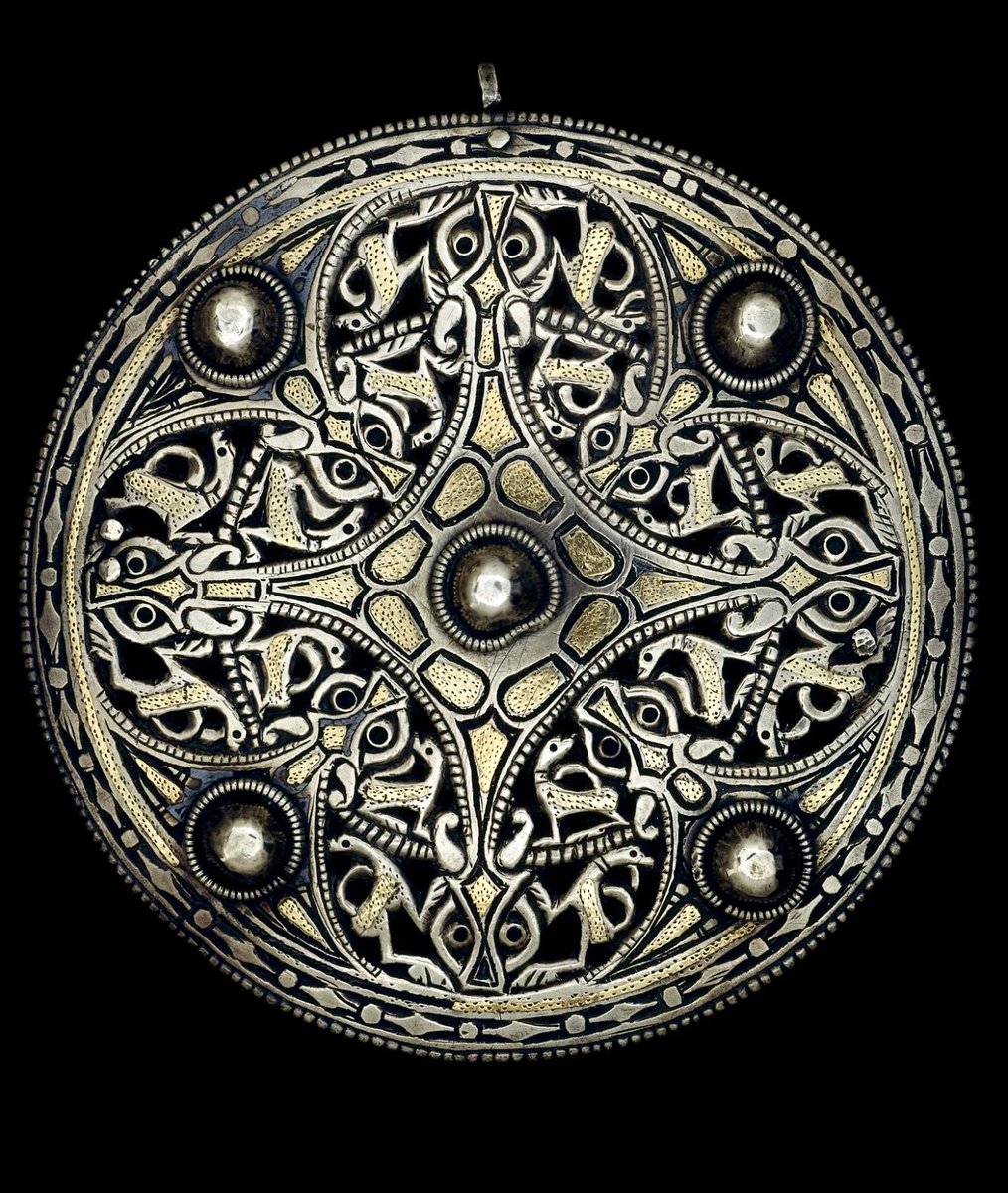
The Late Anglo-Saxon Strickland Brooch, AD 800s.
A fabulous example of creativity and craftsmanship!
This large silver disc brooch is inlaid with gold and niello, and decorated in ‘Trewhiddle-style’ with an intricate pattern of puppy-like animals.
📷 British Museum britishmuseum.org/collection/obj…
#Archaeology

English
VALHALLA | Norse Gods & Runes ری ٹویٹ کیا

Archaeologists working at Loch Bhorgastail on the Isle of Lewis in Scotland have uncovered an ancient man-made island, known as a crannog, that is far older than expected.
Rather than dating to the Iron Age, as previously believed for structures like this, the site appears to be over 5,000 years old and belongs to the Neolithic period. It was built gradually over time using layers of timber, brushwood, and stone, showing clear evidence of long-term communal effort.
Finds such as a stone causeway and a large collection of pottery fragments, some containing traces of ancient food, suggest the site was a focal point for gatherings. People may have met there for shared meals, ceremonies, or other social activities, which challenges earlier ideas about how organised prehistoric communities in Britain were.
The discovery was made possible through modern underwater archaeology techniques. The shallow edges of lochs are difficult to study because they are too deep for land-based surveys but too shallow for traditional sonar methods. By combining underwater photography from divers with aerial drone imaging, researchers were able to create detailed 3D models that connect what lies beneath the water with the surrounding landscape.
This approach is now revealing a much richer prehistoric landscape than previously known and could lead to the discovery of many more hidden Neolithic sites across Scotland.

English

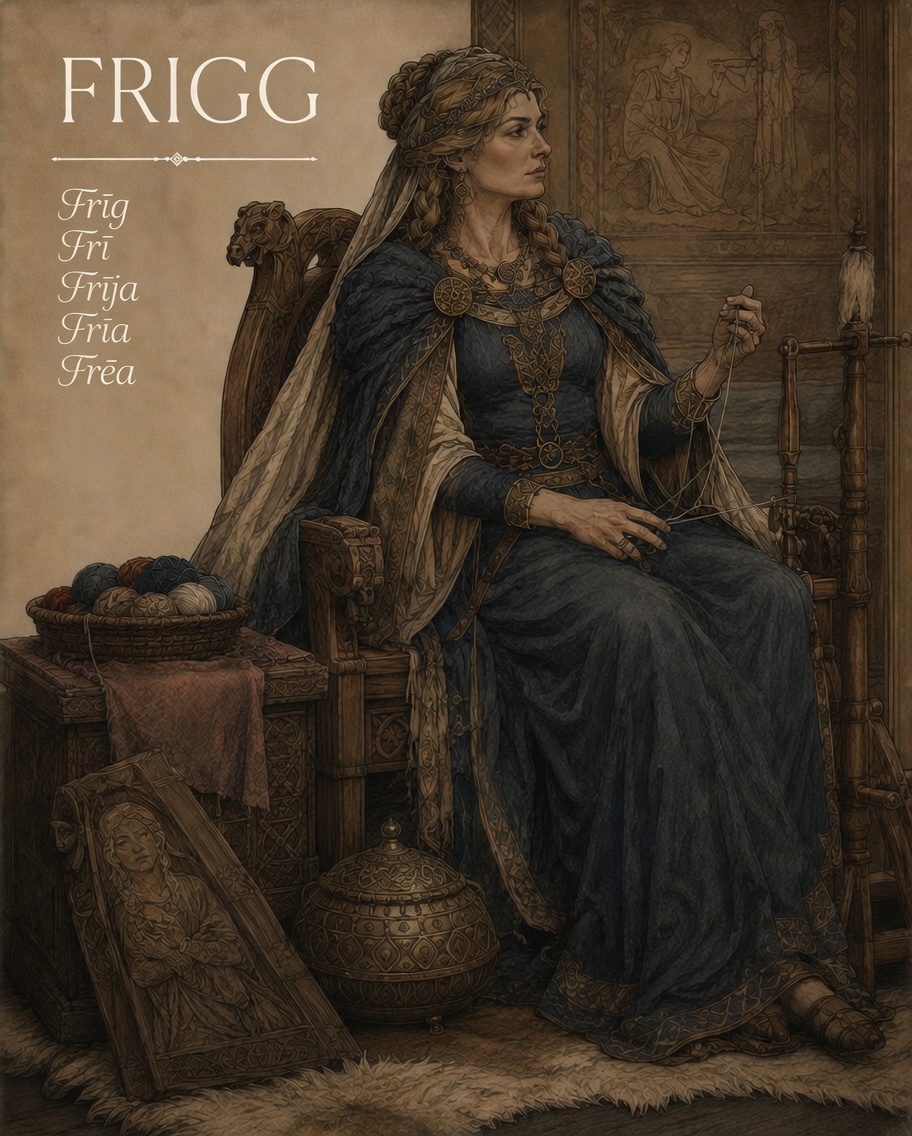
@GF_DOnofrio The goddess Frigg feared Baldr's death and requested all things to swear never to harm him, but she overlooked the young mistletoe, Loki exploited this error by tricking the blind god Hǫðr into throwing a projectile with mistletoe at Baldr, the only substance that could kill him.
English

@ValhallaPlus Tell us the story of how that mistletoe sprig affected Baldr, please.. thanks
English
VALHALLA | Norse Gods & Runes ری ٹویٹ کیا

The incredible 1,000-year legacy of a single Native American woman, lost to history, was just found hidden in the DNA of families in Iceland.
In 2010, a genetic study looked at the DNA of about 80 people from four Icelandic families and found something that puzzled them. They all shared a specific genetic marker that isn't from Europe.
This genetic line, known as C1e, is almost exclusively found in Native American populations. Researchers believe it entered the Icelandic gene pool sometime around 1000 AD.
This is the same time period when the Vikings were exploring the coasts of North America. They even established a small settlement in what is now Newfoundland, Canada, a place they called Vinland.
It seems very likely that during one of these voyages, a Native American woman was brought back to Iceland, possibly as a captive or a settler.
Imagine that journey across the cold Atlantic, leaving your whole world behind to start a new life in a completely unknown land. It's a powerful human story.
Her DNA has now been passed down through roughly 40 generations, a silent testament to her existence and survival. Over 1,000 years later, science has finally uncovered her story.
This discovery challenges the timeline we all learned in school, suggesting the first American may have arrived in Europe nearly 500 years before Columbus ever sailed west.
© American Journal of Physical Anthropology, National Geographic
#archaeohistories

English
VALHALLA | Norse Gods & Runes ری ٹویٹ کیا

The Picts did not fall...
That is the strange thing at the centre of their story. They were not conquered by Rome, though Rome tried. They were not destroyed by the Angles or the Vikings, though both pressed hard against the edges of their world. They did not end in fire or massacre or the kind of catastrophic military defeat that closes other chapters of early medieval history.
They simply stopped being Picts.
By the middle of the 9th century, the people who had controlled much of northern Britain for five hundred years had merged with the Gaelic kingdom of Dalriada to form the kingdom of Alba, the political foundation of what would eventually become Scotland. The merger was not sudden. It was not clean. Historians argue about whether it was primarily political, cultural, or dynastic, whether the Picts absorbed the Gaels or the Gaels absorbed the Picts or whether something genuinely new emerged from the collision of the two. What is harder to argue is the outcome.
Within a few generations, the Picts had become invisible.
Their language disappeared, leaving almost no written record. The few Pictish words that survive come mostly from place names and the names of kings preserved in later lists, scraps of sound without enough context to reconstruct what surrounded them. No Pictish manuscript tradition survives. No law codes. No literature. No religious texts in their own tongue. A people who had maintained their independence against the most powerful empire the ancient world produced left behind less written evidence of themselves than almost any comparable culture in early medieval Europe.
What they left instead were the stones.
Hundreds of them, scattered across the Highlands and islands of Scotland, carved with a visual language that nobody has fully decoded. The symbols appear again and again across different stones and different centuries with a consistency that speaks of meaning, of a shared system understood by the people who made them, but the key to that system did not survive the merger that ended the Pictish world. Spirals and crescents. Stylised animals of extraordinary elegance. Geometric designs of a precision that required both skill and intention. The stones are clearly saying something. We do not know what.
This is what makes the Picts so compelling and so frustrating in equal measure.
They were not a marginal people. From roughly the 3rd to the 9th centuries they controlled most of northern Britain, built fortified settlements, engaged in complex diplomacy with their neighbours, and maintained a cultural identity distinct enough that everyone around them recognised it. Roman writers noted them. Later Gaelic and Northumbrian sources noted them. Medieval chroniclers recorded their kings in lists that suggest an organised and continuous political structure. They were present, powerful, and noticed.
And then the noticing stopped.
The kingdom of Alba that emerged in the 9th century was in many ways a Pictish kingdom wearing Gaelic clothes, or a Gaelic kingdom built on Pictish foundations, depending on which thread you pull. The kings of Alba traced their legitimacy through lines that included Pictish royal blood. The territory was overwhelmingly what had been Pictish land. But the name was gone, and with the name went the identity, at least as a distinct category that the people themselves maintained or that outside observers continued to apply.
What drove the transformation is still debated. A dynastic union under Cináed mac Ailpín, known to later tradition as Kenneth MacAlpin, is the conventional starting point, but the conventional starting point has been questioned and complicated by subsequent scholarship. The reality was probably messier and slower than a single king and a single moment of unification. These things usually are.
#archaeohistories

English