Vasu Eda

4.7K posts

Vasu Eda banner
Vasu Eda

Vasu Eda

@VasuEda

Author of Get Job Ready (Penguin). Researching India’s innovation economy and youth employability. Book in progress: Innovation and the Future of India.

شامل ہوئے Mart 2009
404 فالونگ509 فالوورز
پن کیا گیا ٹویٹ
Vasu Eda
Vasu Eda@VasuEda·
India’s AI Mission has ambition and funding but lacks the institutional architecture to deliver on it. It needs a dedicated body, staffed by technical experts, anchored to the PMO, not another coordination committee. My latest in The Print: theprint.in/opinion/indias… @ThePrintIndia
English
1
0
1
225
Vasu Eda
Vasu Eda@VasuEda·
@IITHyderabad A timely initiative to strengthen industry academia linkages and foster a more innovation driven ecosystem
English
0
0
1
206
IIT Hyderabad
IIT Hyderabad@IITHyderabad·
Product-Based PhD at IIT Hyderabad | A Call to Industry for Innovation & Viksit Bharat Prof. B. S. Murty, Director, IIT Hyderabad, shares a visionary initiative — Product-Based PhD programmes that focus on developing innovative products and processes through strong industry-academia collaboration. By enabling researchers to create solutions with real-world applications, IIT Hyderabad aims to accelerate innovation, entrepreneurship, and technology commercialization for a stronger and more self-reliant India. 🎥 Watch the full video: youtu.be/f1fGX6zYDUM We invite industries to partner with us in shaping the future of research and innovation. @IITHyderabad #ProductBasedPhD #Innovation #IndustryAcademiaPartnership #ResearchToImpact #Entrepreneurship #Technology #ViksitBharat #FutureOfResearch #MakeInIndia @EduMinOfIndia @paniitindia @paniit_usa @PanIIT1
YouTube video
YouTube
English
11
37
138
13K
Vasu Eda
Vasu Eda@VasuEda·
According to the Azim Premji University State of Working India 2026 report, nearly 40% of graduates aged 15–25 are jobless (and it’s been stuck at 35–40% for 40 years). 11 million out of 63 million young graduates (20–29) are unemployed. Someone needs to sit those families down, the ones who took on debt to finance their kids’ education, and explain how India is in a “great position” with lower debt than some peers… while spending just 0.64% of GDP on R&D. Prudence looks different when your child’s future is the collateral.
English
2
0
1
1.2K
Mihir Vora
Mihir Vora@theMihirV·
Indian economy is not on steroids. India has been growing prudently. We are one of the few countries to not increase the debt/GDP since 2008 financial crisis. Government, corporates and households have all been conservative about debt Which means that in times of crisis, we still have capacity to take on debt for growth if needed. We still have bullets left to fire - which can’t be said for many other countries
Michael A. Arouet@MichaelAArouet

China didn’t build an economic miracle. It built the world’s biggest debt experiment. And experiments don’t last forever When growth is fueled by borrowing, every vacant illuminated skyscraper, highway, and ghost city comes with a bill. How long can they keep the illusion alive?

English
28
131
810
67.9K
Vasu Eda
Vasu Eda@VasuEda·
@elonmusk One of the best features of Korea’s growth story was its expectation of nothing less than global competitiveness. Firms were encouraged, and often pressured, to compete with the world’s best. Then the chips were allowed to fall where they may. The results speak for themselves.
English
1
0
7
597
Vasu Eda
Vasu Eda@VasuEda·
One lesson from China may be that great companies are rarely engineered from the top down. Hyper-competitive local ecosystems, ambitious founders, and room for experimentation created thousands of contenders. The state often backed success, but success usually had to be demonstrated first. Products and results spoke louder than plans.
English
0
0
1
16
Swarajya
Swarajya@SwarajyaMag·
India's industrial policy gets many things right — targeted incentives, production-linked rewards and long-term strategic focus. Yet one critical question remains. Are we building tomorrow's champions—or mainly backing firms that are already champions today? 🧵
Swarajya tweet media
English
3
15
57
2.7K
Vasu Eda
Vasu Eda@VasuEda·
One of the most important lessons for Viksit Bharat may be that national progress is ultimately experienced locally. When local governments are entrusted with authority, accountability, and adequate financial resources, and when communities become active partners in delivery, public services can improve dramatically. This water transformation is an example of this principle in action.
English
0
0
1
103
anand mahindra
anand mahindra@anandmahindra·
One of the great ironies of India is that we worship our rivers, yet rarely trust the water that flows into our homes. Which is why Puri’s transformation fascinated me. An entire city where people can apparently drink straight from the tap. And this change didn’t take decades. It happened over just a few years because political leadership, administrative execution and community participation all moved in sync. A key part of the story is the role played by the ‘Jal Sathis’ local women who became guardians of the city’s water quality and helped build public trust in the system. My #MondayMotivation this week comes from leaders & participative citizens who proved that governance can genuinely improve the quality of everyday life
The Better India@thebetterindia

India’s only city where you can drink straight from the tap—no boiling, no filters, no fear. 💧 Puri transformed its broken water system into a 24×7, BIS-certified supply using smart pipelines, IoT monitoring, and community trust. From massive leakages to clean water at every tap, this isn’t just infrastructure—it’s belief restored. This Odisha Day, we ask — if one city can do it, why not others? #CleanWater #SustainableIndia #UrbanTransformation #OdishaDay #Odisha [Tap Water In India, Puri Water Project, Clean Drinking Water, Smart Water Management, Sustainable Cities, Odisha Day]

English
146
597
3.3K
147K
Vasu Eda
Vasu Eda@VasuEda·
@elonmusk The issue isn’t fertility. It’s the gap between rising education levels and the creation of high quality jobs. That’s what shows up as “qualified candidates not getting jobs,” not a demographic story.
English
0
0
0
246
Vasu Eda
Vasu Eda@VasuEda·
OECD countries run large-scale public support systems (healthcare, unemployment insurance, education). In Tamil Nadu, some studies estimate school meals improved attendance by ~10–12 percentage points and reduced dropouts significantly. Breakfast schemes increased attendance in 80%+ of schools. The real debate is design, targeting, and outcomes—not the existence of support.
English
0
1
1
106
Vasu Eda
Vasu Eda@VasuEda·
India’s next development challenge is not merely scaling economic output, but translating national capability into everyday quality of life. The true test of a developed nation is whether citizens can experience development in their daily lives, not simply observe it in national statistics.
Nirupama Menon Rao 🇮🇳@NMenonRao

Reading Shekhar Gupta’s column on Delhi’s latest fire tragedy, I was reminded that this is not a story about one city, one government or one political party. It is a story about us. The India of today is vastly different from the India I entered public service five decades ago. We are more prosperous, more confident and more influential than ever before. We build satellites, digital public infrastructure and world-class enterprises. We aspire to shape the international order and claim our place among the world’s leading powers. Yet some of our most persistent challenges remain stubbornly unresolved: unsafe buildings, failing public infrastructure, environmental degradation and cities struggling to keep pace with the aspirations of their citizens. No generation of policymakers, administrators, professionals or citizens can claim complete innocence. We are all participants in the story of India’s rise, and in some measure, its unfinished tasks. The tragedy is not only that preventable disasters continue to occur. It is that they no longer surprise us. A great power is judged not only by its economic growth, military strength or technological achievements, but also by the quality of life it provides its citizens and the effectiveness of its institutions. India’s rise is real. But it will remain unfinished until the safety, dignity and quality of everyday life available to ordinary Indians begin to match the scale of our national ambitions. That is the challenge before us.

English
0
0
1
30
Piyush Goyal
Piyush Goyal@PiyushGoyal·
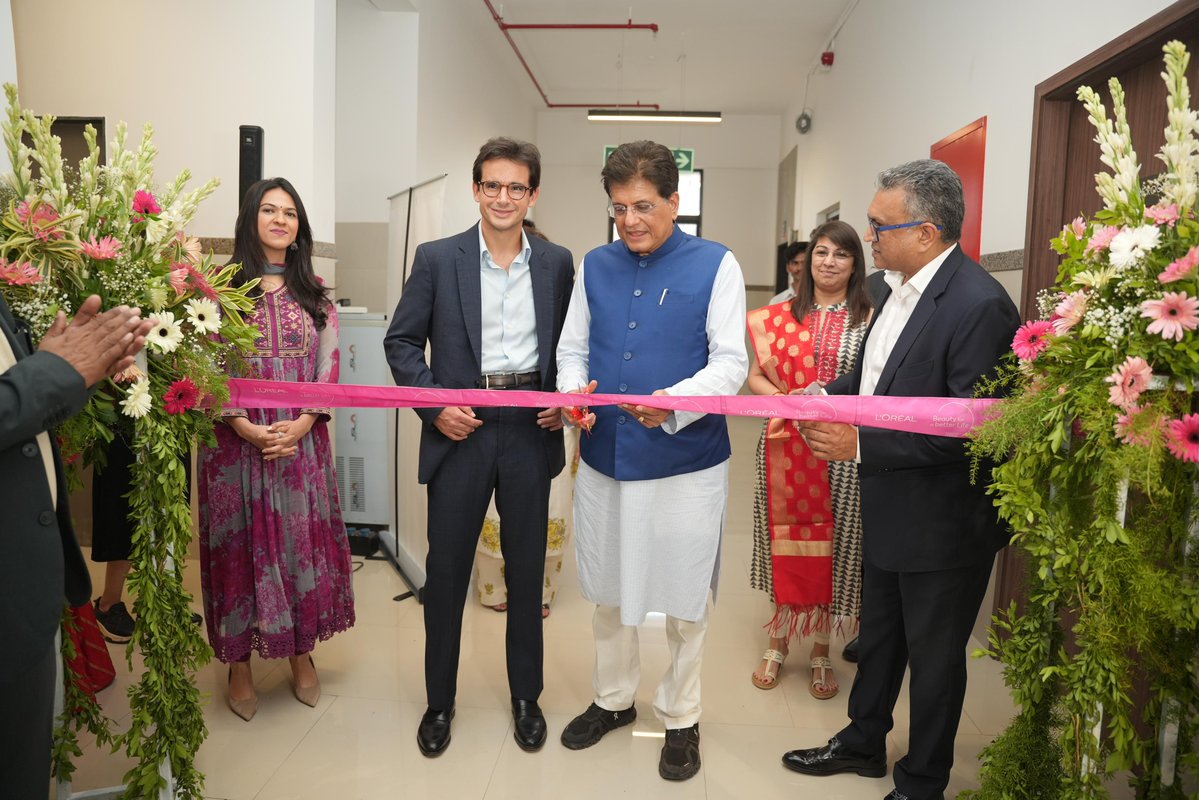
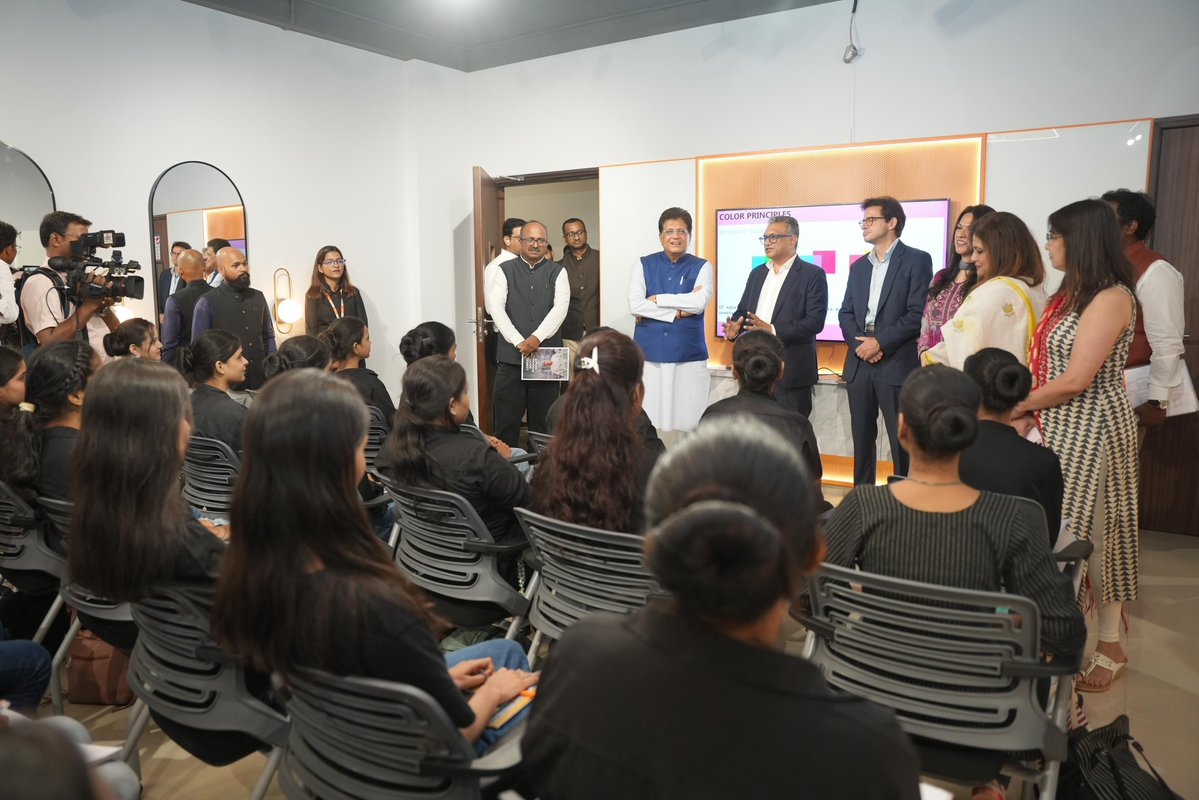
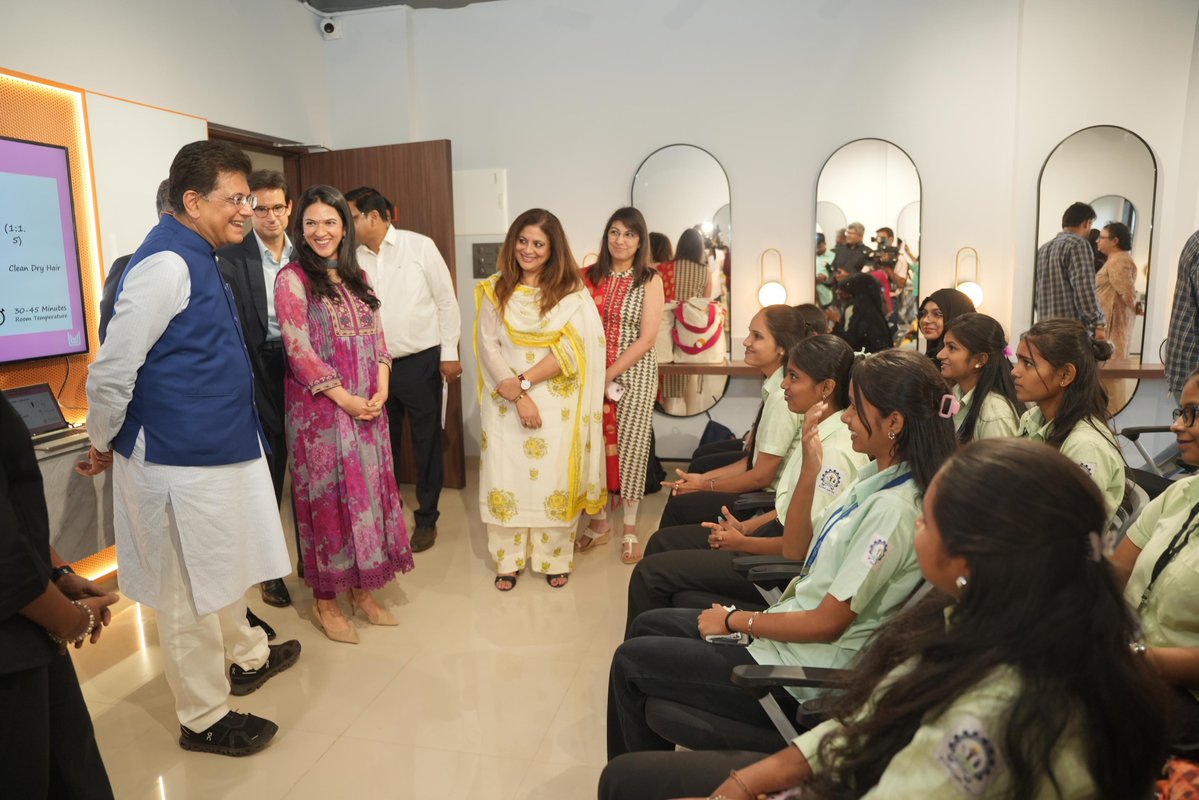
Inaugurated the L'Oréal India Beauty & Hairdressing Skilling Centre at Atal Bihari Vajpayee Kaushalya Vikas Kendra, Kandivali, where young women will gain industry-relevant skills, entrepreneurial capabilities, financial literacy and digital fluency to build successful careers and businesses. Guided by PM @NarendraModi Ji's vision of women-led development, we are creating pathways to economic empowerment and self-reliance through skill development. As India advances towards Viksit Bharat, empowering women with skills and opportunities will remain central to our growth story. Many of these young learners will not only secure employment but also emerge as job creators, uplifting their families, communities, and the nation along the way!
Piyush Goyal tweet mediaPiyush Goyal tweet mediaPiyush Goyal tweet mediaPiyush Goyal tweet media
English
13
62
474
12.5K
Vasu Eda
Vasu Eda@VasuEda·
India’s urban transition is unfolding under low state capacity conditions, compounded by incomplete local empowerment. Institutional capacity has not kept pace. Decentralisation remains partial in practice. Urban local bodies exist, but they are fiscally constrained and administratively fragmented. This is not unique to India. Similar patterns have emerged in other rapidly urbanising contexts. The difference in India is scale, which makes these governance frictions more visible and nationally consequential.
English
0
0
0
22
HindolSengupta
HindolSengupta@HindolSengupta·
I agree with every word @ShekharGupta has written - Indian cities are unliveable and they are greatest destroyers of the Indian brand. They are badly managed, ironically against the poor, the middle class and the rich (who don’t get the quality they deserve for taxes they pay).
HindolSengupta tweet media
English
55
370
1.2K
73.4K
Vasu Eda
Vasu Eda@VasuEda·
Politicians don’t need to be scientific experts. That’s unrealistic in a complex democracy. What matters is building credible institutions with independent experts and mechanisms to implement policy. Cynicism grows when leaders cherry-pick or sloganise science. The fix is stronger institutional guardrails.
English
0
0
0
22
Nitin Pai
Nitin Pai@acorn·
Politicians have made people so cynical by their political speech that people don’t believe them when they actually give scientific explanations. Some find the science unbelievable, others because they suspect the politician is using the science out of expedience.
English
2
1
16
823
Vasu Eda
Vasu Eda@VasuEda·
India doesn’t need to produce an NVIDIA to be successful, and NVIDIA itself is not proof that “cheap capital + low rates” is the main driver of innovation. It is an extreme outlier shaped by a very specific ecosystem, not a universal benchmark. The Korea and Taiwan paths already break the binary in the argument. Firms like Samsung and TSMC scaled through state–market coordination, export pressure, and long-horizon industrial policy—not either free-market capital abundance or authoritarian control. Cost of capital also doesn’t explain enough on its own. Indian IT firms generated large cash flows but largely optimized for payouts and low-risk expansion, while Amazon and Alibaba reinvested aggressively into platforms and infrastructure. That gap is about reinvestment incentives and institutional structure, not just macro rates. India already has real strengths—demographics, digital public infrastructure, a growing startup base, and early semiconductor and manufacturing momentum. The constraint isn’t waiting for a perfect macro regime or a domestic NVIDIA, but whether capital consistently gets converted into compounding platforms. Incentives and institutions explain more of the variance in innovation outcomes than monetary policy ever does on its own.
English
1
1
11
608
Upamanyu Acharya
Upamanyu Acharya@upamanyuacharya·
India will never produce an NVIDIA, and it has nothing to do with talent. R&D is the purest form of investment, and the central bank has spent decades making investment the dumbest thing you can do with a rupee. I've been surfing the semiconductor wave for a while now, reading 10-Ks for fun. Spent last month in the Bay Area and the gap between India and the US is not a gap; it's a different universe. Conversations about agentic AI and the next decade of hardware, with my boomer relatives Waymo-ing around SF and self-driving home on Tesla FSD like it's normal. Nobody there thinks any of this is remarkable; they already live in the future. NVIDIA spends nearly twice as much on R&D as every listed company in India combined. Silicon Motion, the world's leading maker of NAND flash controllers and around since 1995, ploughs 29.7% of revenue back into R&D. Micron runs 10.2%, NVIDIA 9.9%, on revenue bases that dwarf anything we have. India Inc? 0.85% of turnover, and half our listed companies report zero R&D at all. The easy move is to lambast our promoters and the dhandomaxxing capitalist class, or the foreign MNCs running India as a glorified offshoring unit, or the babus who fund nothing useful. Satisfying. But Wrong. The reason no rational Indian founder pours money into frontier R&D is that there is genuinely no payoff at the end of it. Why? 1. R&D compounds, and compounding punishes laggards. At the edge of science a 1-2% gain is a moat; Intel spent 20+ years performing impossible physics every 24 months because Moore's Law was the business model, and that consistency makes them one of the goated companies of all time even after they got mogged recently. NVIDIA lives the same way today: invent at the limit or cease to exist. If you're 50% behind, no quantum of innovation closes that. You never touch the high end. You stay a mass-market producer of things that already exist. India is precisely there. 2. The supply side is the real thesis, and it's monetary. Two decades of high inflation, high money-printing, high nominal rates. That regime subsidises consumption and taxes patience. R&D is the longest-duration, highest-variance bet on the board; it is the first thing a 8% risk-free rate kills. Frontier R&D only ever gets funded two ways: a psychopathically risk-tolerant capitalist with cheap capital, or a state with Stalin-grade control. The USSR took agrarian peasants to the first man in space in 20 years; China built its own version. India has neither the state capacity, the political will, nor the balance sheet to do that. So nobody does it. Talent was never the bottleneck. Capital structure was. If you want a SpaceX or a TSMC born here, you need an environment where a conglomerate can deploy $10B and sleep at night: a low-rate regime that makes long-duration investment rational, IP and patent courts that actually function, and policy that doesn't get rewritten every 2-3 years on a minister's whim. Stability is the input. Innovation is the output. Bay Area versus Bombay, we are several universes apart, and you cannot print your way across that distance; you can only compound your way there, and we've spent years optimising for the opposite. The gap won't be bridged. With luck, it narrows.
English
181
626
2.5K
315.1K
Vasu Eda
Vasu Eda@VasuEda·
If anything, India should move away from the obsession with precise rankings and rank-based sorting. A better approach is what exams like the SAT and ACT do: place students into performance bands and then evaluate them through multiple signals, not a single rank. The goal of assessment should be to identify readiness and potential, not create an illusion of exact merit. The excessive reliance on a single high-stakes ranking system can create enormous pressure while narrowing how we define talent and success.
English
0
1
1
586
Swarajya
Swarajya@SwarajyaMag·
The NEET-leak conversation in India has revived the question of whether the Chinese model of Gaokao is what we should aspire to — one national exam, transparent ranking, no reservations, pure merit. A new book makes the strongest case for why that's an incorrect aspiration. 🧵
Swarajya tweet media
English
14
37
140
41K
Vasu Eda
Vasu Eda@VasuEda·
The bigger story here is state capacity. As AI lowers the barriers to finding vulnerabilities, governments need far stronger technical expertise inside the system to evaluate vendors, oversee implementation, and manage risk. Policy ambition without technocratic capacity creates blind spots.
English
1
0
2
261
Anubhuti Vishnoi
Anubhuti Vishnoi@anubhutivishnoi·
What IIT led expert panel working on CBSE-OSM portal has found so far :- # Claude and other AI tools helped breach CBSE-OSM portals, find vulnerabilities # Serious capability and capacity deficit at vendor Coempt portal; little knowledge on portal security #Meanwhile, NTA on mission mode. Shutting dormant portals, shifting to AI translations ahead of June 21 retest More @ETPolitics m.economictimes.com/news/india/cla…
Anubhuti Vishnoi tweet media
English
10
26
63
20.1K
Vasu Eda
Vasu Eda@VasuEda·
Agreed. GDP remains an important measure of economic output, but citizens do not experience GDP directly. What ultimately matters are lived development outcomes: whether schools teach effectively, hospitals function, jobs are created, public services work, and opportunities expand. GDP tells us how much value is being created. Lived development outcomes tell us whether that value is translating into real improvements in people’s lives.
English
0
0
0
86
Kaushik Basu
Kaushik Basu@kaushikcbasu·
GDP was meant to be an umbrella measure to help nations design economic policy. But overtime for some nations it became an umbrella to hide failures. It is time to move beyond GDP. Read this essay by Mahmoud Mohieldin & also the UN Report Beyond GDP. english.ahram.org.eg/News/570002.as…
English
13
55
159
7.7K
Vasu Eda
Vasu Eda@VasuEda·
@Iamsamirarora IT services companies were never big in product development. Their bread and butter has been ERP-style systems. At this point, I would assume most of the AI revenue is coming from coding and other functional area like marketing and financial analysis.
English
0
0
2
66
Samir Arora
Samir Arora@Iamsamirarora·
IT Service companies say things like " a bridge is needed for AI transformation and we are the bridge" or that "AI is moving from pilot to industrialization" etc and that AI implementation projects may take time but this transformation cannot be done without them. In the meantime, run rate for Anthropic revenue is US$ 50 billion and US$ 30 billion for OpenAi already, with most of it coming from enterprises. IF Anthropic IPO has to happen this yr, next year's run rate will need to be perhaps US$ 100 billion plus for it alone, for its IPO to go through. My question: How come IT services companies are still waiting for AI implementation projects and at the same time enterprises will soon be spending US$ 100-200 billion on these 2 model companies alone. Who assisted these enterprises so that they are comfortable spending so much already (for it sure does not look like IT service companies saw anything substantial)? May be you don't need the amount of help that IT service companies think will be needed. Logically, more help should be needed at this stage where models may be less developed and users are less familiar- and still they are presumably doing this on their own. You tell me- I dont have the answers
English
146
50
516
81.4K
Vasu Eda
Vasu Eda@VasuEda·
India could learn from China’s 2013 Civilized Tourism guidelines and 2015 blacklist system, which created visible deterrents for poor public behavior, as well as South Korea’s emphasis on moral education, including daily school cleaning and etiquette from an early age. But civic sense starts long before adulthood. It is shaped at home, reinforced in schools, and modeled by those in positions of influence. Rules and penalties can help. Lasting civic culture is built through habits, norms, and examples repeated every day. That is where I would focus.
English
0
0
1
41
Vasu Eda ری ٹویٹ کیا
Ministry of Education
Ministry of Education@EduMinOfIndia·
A new initiative for Viksit Bharat, connecting global Indian talent with India’s scientific and innovation future. Ministry of Education is inviting applications for the “Prime Minister Research Chair (PMRC) Scheme”, a premier national initiative bringing talented and accomplished Indian-origin researchers and professionals from across the world to India’s leading Government Higher Education Institutions. Be a part of Bharat’s next chapter of R&D led growth and innovation. From Bharat’s rich scientific legacy to an innovation-driven future, PMRC aims to bring “Global Indian Talent” closer to nation-building. Join India’s journey towards an Aatmanirbhar & Viksit Bharat. 📌 Read more: pib.gov.in/PressReleasePa… 🕸️ Visit website for more details: pmrc.education.gov.in #PMRC #ViksitBharat #Innovation #HigherEducation @narendramodi @PMOIndia @dpradhanbjp @Vineet_K26 @PIB_India @airnewsalerts @DDNewslive
English
24
45
98
21K
Vasu Eda
Vasu Eda@VasuEda·
Indian IT has generated $100B+ in profits in a decade and largely returned it to shareholders. Amazon and Alibaba reinvested relentlessly into scale instead of short-term profit. India doesn’t lack profits or capital. It lacks aggressive reinvestment pathways into globally scalable businesses. Capital deployment, like modern cricket, has to be year-round—not seasonal.
English
0
0
3
239
Uday Kotak
Uday Kotak@udaykotak·
Google which is cash surplus, just announced an additional capital raise of $80 bn. Google annual profit is $160 bn, last quarter $62 bn, and market cap $4.5 trillion. That is close to total profits and market cap of all Indian listed companies put together. It’s a wake up call to all companies to invest into the future, whatever the present maybe. Now that IPL is done and dusted, time for India to focus on business of business.
English
966
3K
19.5K
1.6M
Vasu Eda
Vasu Eda@VasuEda·
Respectfully, I think this diagnoses the wrong problem. India doesn’t suffer from a shortage of political operators. It suffers from a shortage of technocratic capacity. Politics can set direction. Development depends on execution. Execution depends on expertise, measurement, accountability, and increasingly AI enabled feedback systems. The missing layer is not more politics. It’s more state capacity. This is a theme I explored in my recent @ThePrintIndia article: theprint.in/opinion/indias…
English
0
0
0
73
Swarajya
Swarajya@SwarajyaMag·
The NEET and CBSE fiascos have expectedly produced calls to fire the officials. But even if every NTA & CBSE officer were replaced overnight with India's most diligent ones, the Ministry of Education would still not be staffed well for its job. That layer is simply missing.🧵
Swarajya tweet media
English
11
50
183
7.8K