Bytebytego

2.2K posts

Bytebytego

Bytebytego

@bytebytego

Weekly system design topics you can read in 10 mins.

شامل ہوئے Mart 2022
2 فالونگ126.6K فالوورز
پن کیا گیا ٹویٹ
Bytebytego
Bytebytego@bytebytego·
The Big Archive for System Design - 2023 Edition (PDF) is available now. And it's completely FREE. The PDF contains 𝐚𝐥𝐥 𝐦𝐲 𝐭𝐞𝐜𝐡𝐧𝐢𝐜𝐚𝐥 𝐩𝐨𝐬𝐭𝐬 published in 2023. What’s included in the PDF? 🔹 Netflix's Tech Stack 🔹 Top 5 common ways to improve API performance 🔹 Linux boot Process Explained 🔹 CAP, BASE, SOLID, KISS, What do these acronyms mean? 🔹 Explaining JSON Web Token (JWT) to a 10 year old Kid 🔹 Explaining 8 Popular Network Protocols in 1 Diagram 🔹 Top 5 Software Architectural Patterns 🔹 OAuth 2.0 Flows 🔹 What does API gateway do? 🔹 Linux file system explained 🔹 18 Key Design Patterns Every Developer Should Know 🔹 Best ways to test system functionality 🔹 Top 6 Load Balancing Algorithms 🔹 Top 12 Tips for API Security 🔹 𝐀𝐧𝐝 100+ 𝐦𝐨𝐫𝐞 – Like, follow and subscribe to our newsletter to receive the PDF download link: bit.ly/3KCnWXq
Bytebytego tweet media
English
22
138
734
120.3K
Bytebytego ری ٹویٹ کیا
Alex Xu
Alex Xu@alexxubyte·
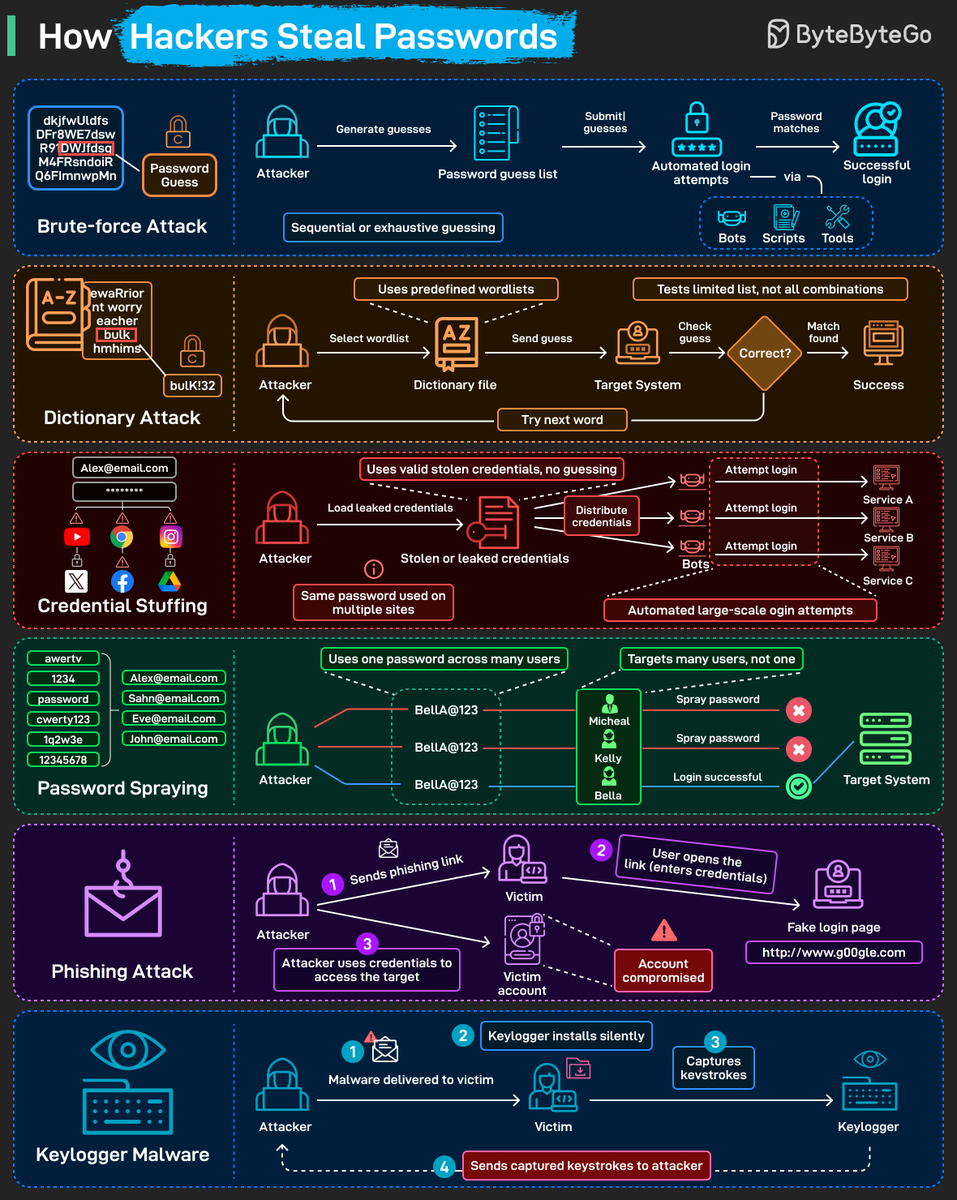
How hackers usually steal passwords
Alex Xu tweet media
English
2
26
126
4.2K
Bytebytego ری ٹویٹ کیا
Alex Xu
Alex Xu@alexxubyte·
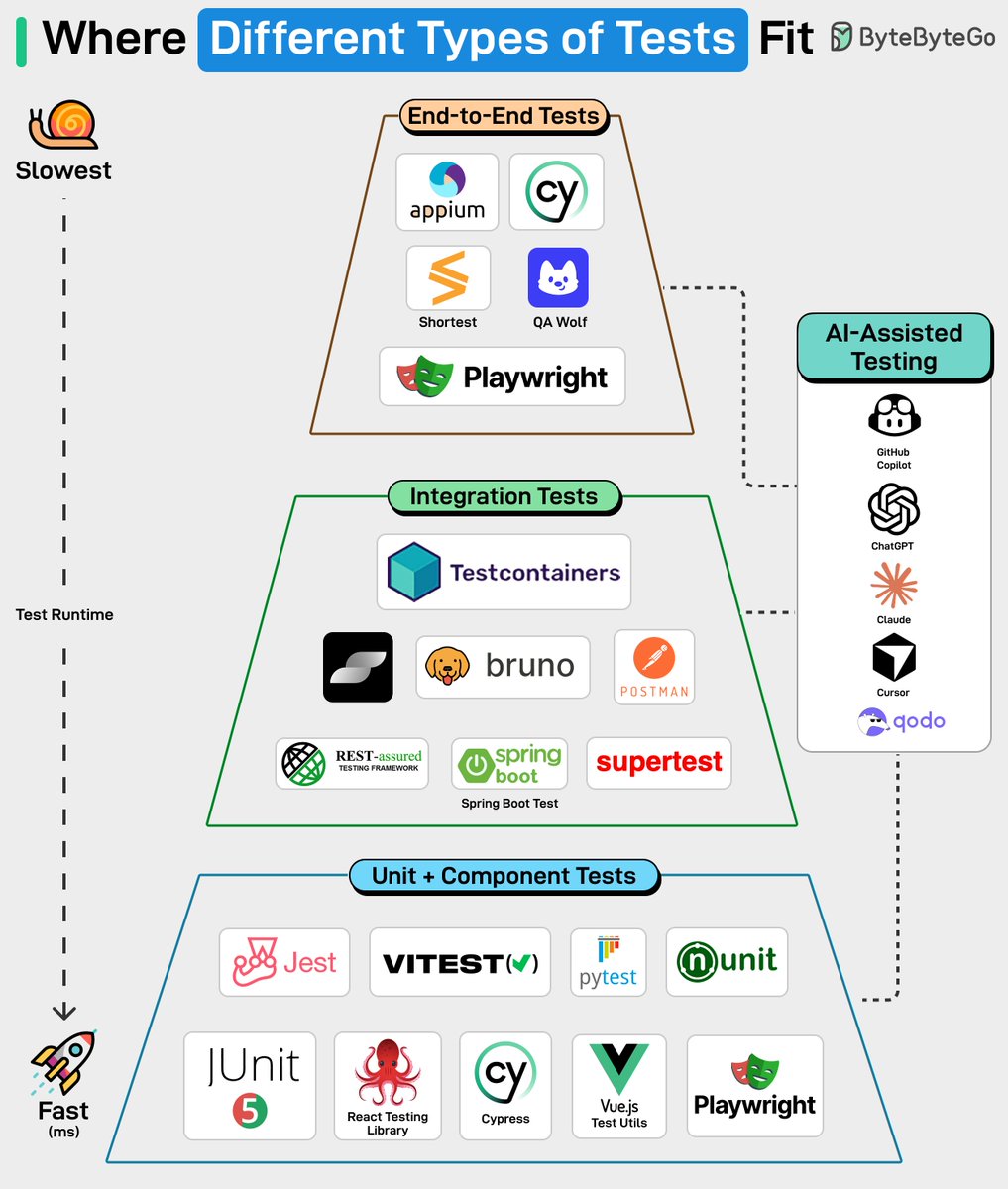
Writing code is easy now, but testing code is hard. Let’s take a look at where different types of tests fit. How do you test your code?
Alex Xu tweet media
English
8
108
534
24.5K
Bytebytego ری ٹویٹ کیا
Alex Xu
Alex Xu@alexxubyte·
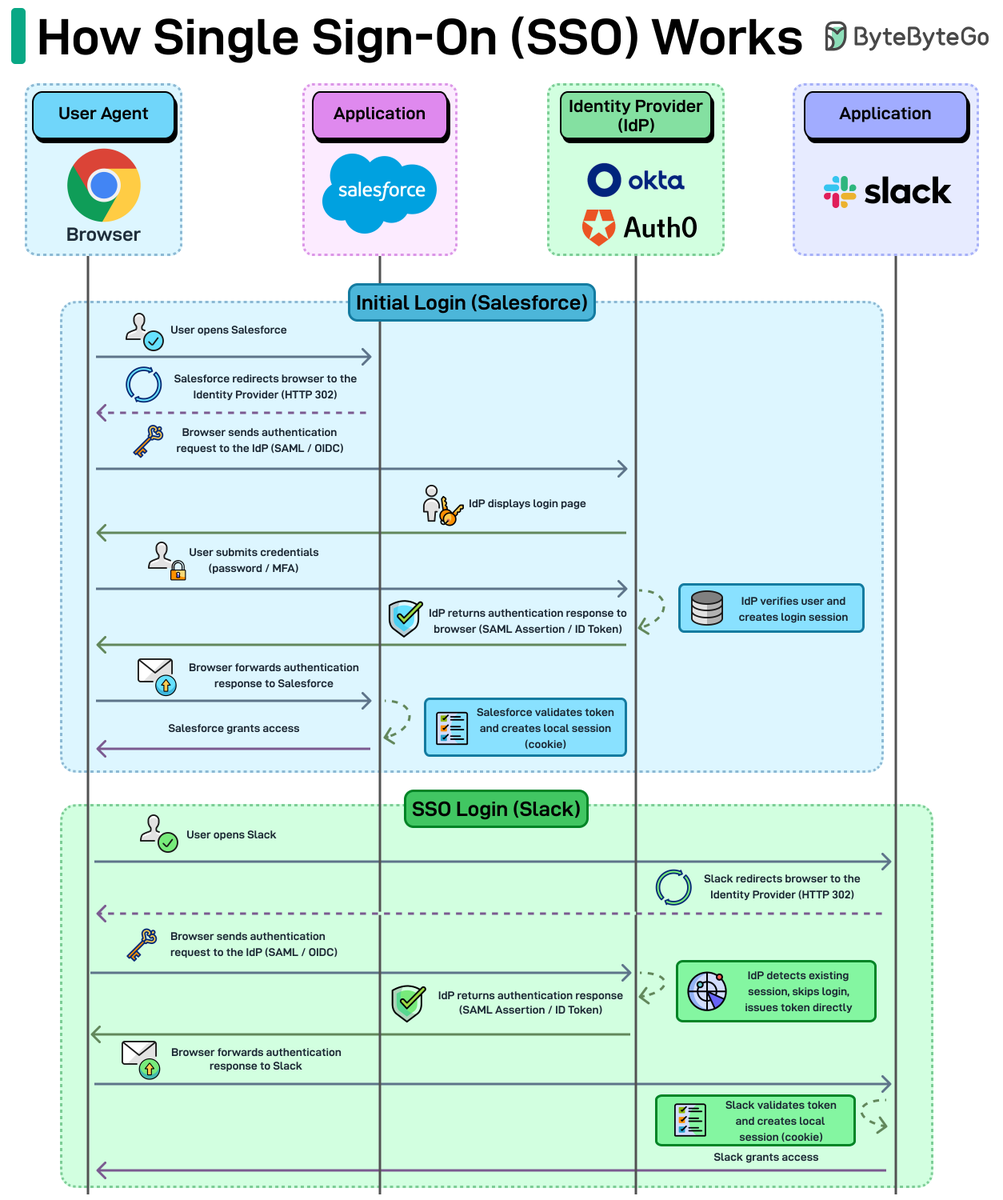
How Single Sign-On (SSO) Works
Alex Xu tweet media
English
3
78
433
17.6K
Bytebytego ری ٹویٹ کیا
Alex Xu
Alex Xu@alexxubyte·
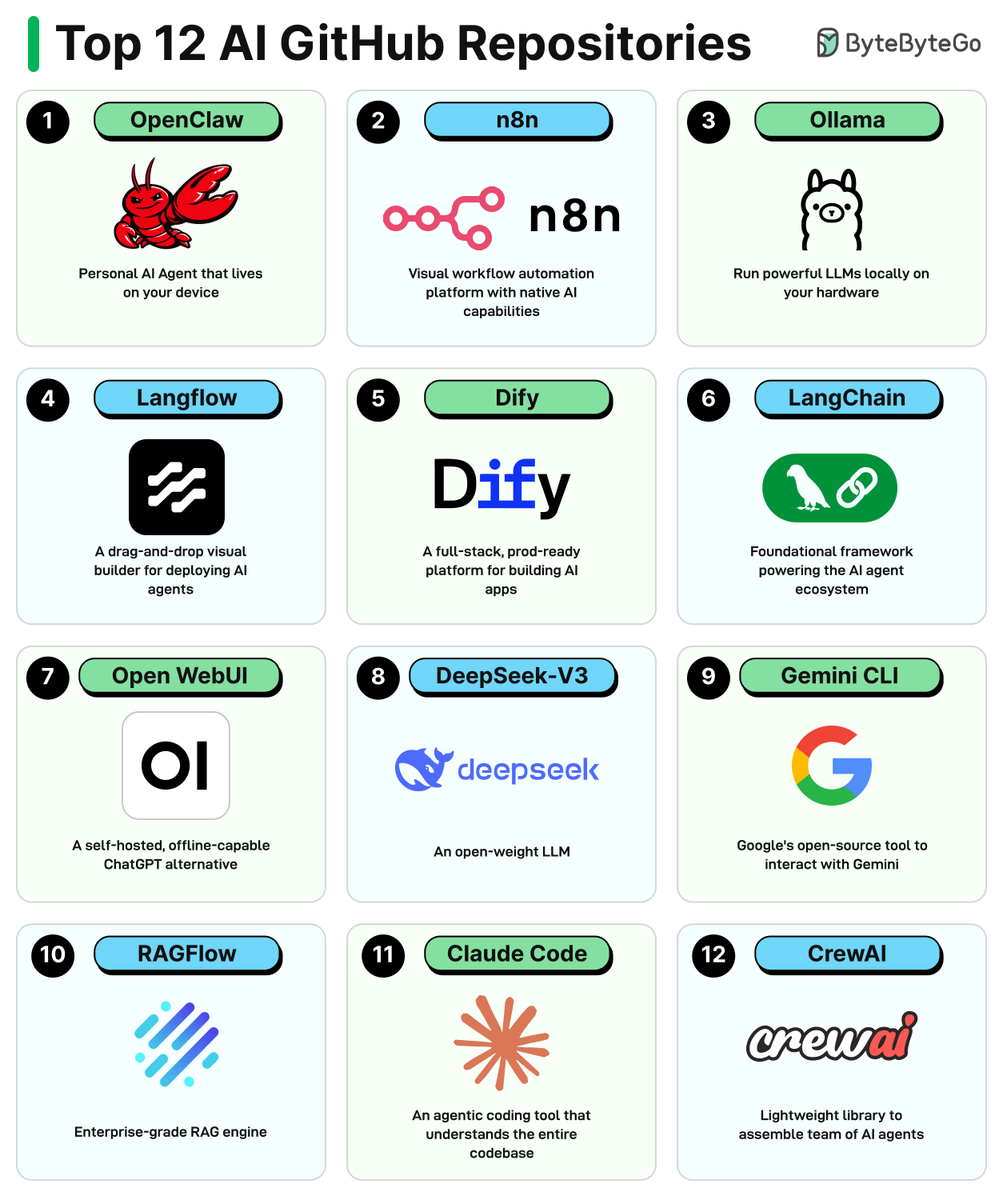
Top 12 GitHub AI Repositories These repositories were selected based on their overall popularity and GitHub stars.
Alex Xu tweet media
English
33
648
3.3K
121.6K
Bytebytego ری ٹویٹ کیا
Alex Xu
Alex Xu@alexxubyte·
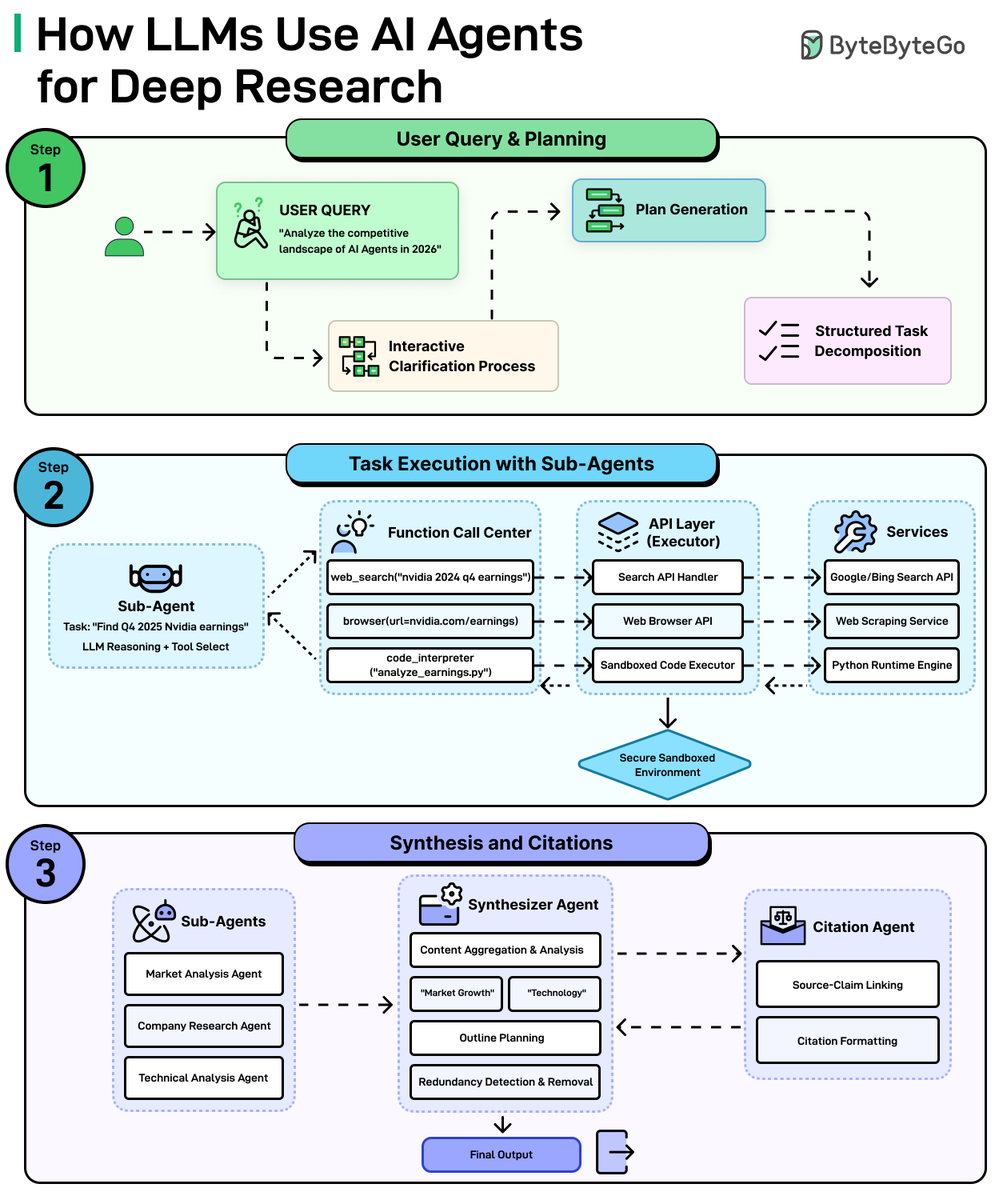
How LLMs Use AI Agents with Deep Research
Alex Xu tweet media
English
12
62
300
15.1K
Bytebytego ری ٹویٹ کیا
Alex Xu
Alex Xu@alexxubyte·
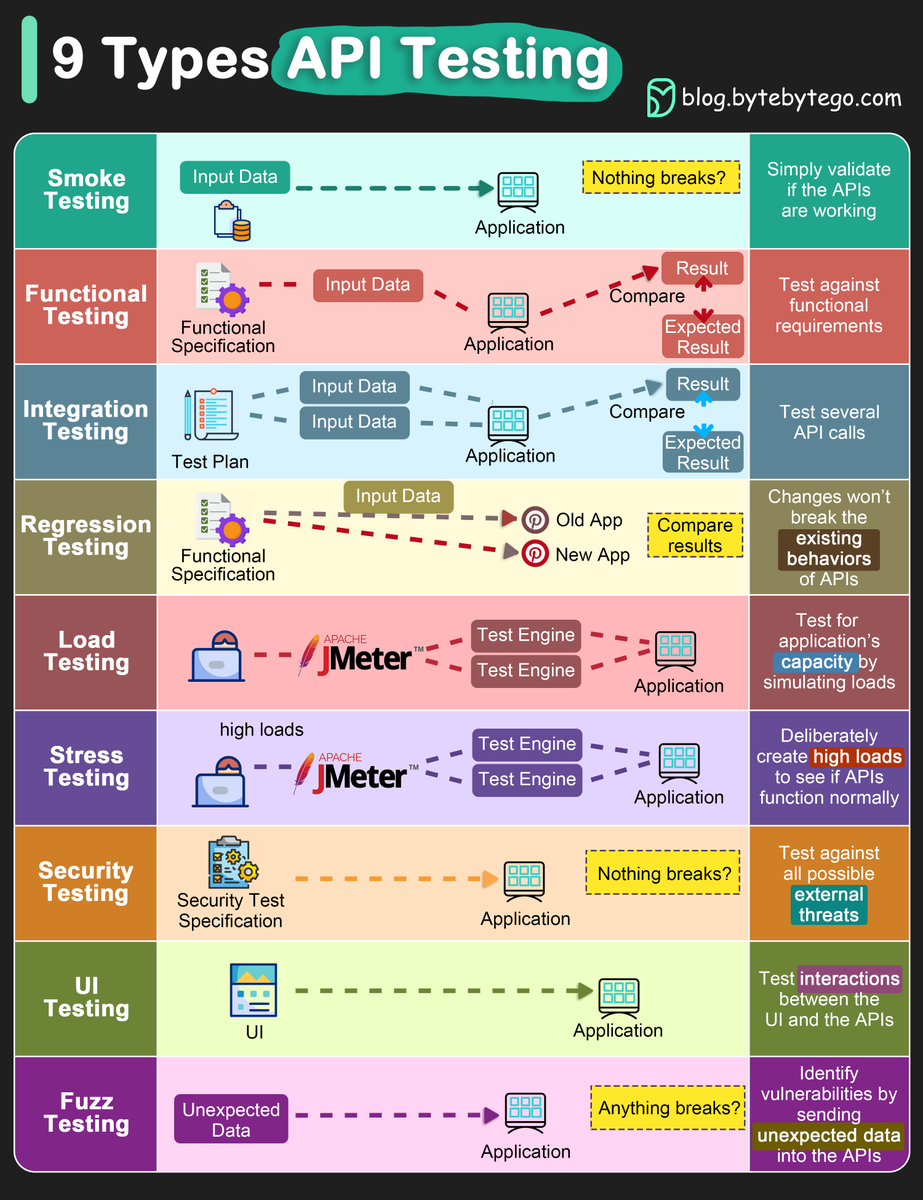
10 Types of API Testing
Alex Xu tweet media
English
6
86
534
56.2K
Bytebytego ری ٹویٹ کیا
Alex Xu
Alex Xu@alexxubyte·
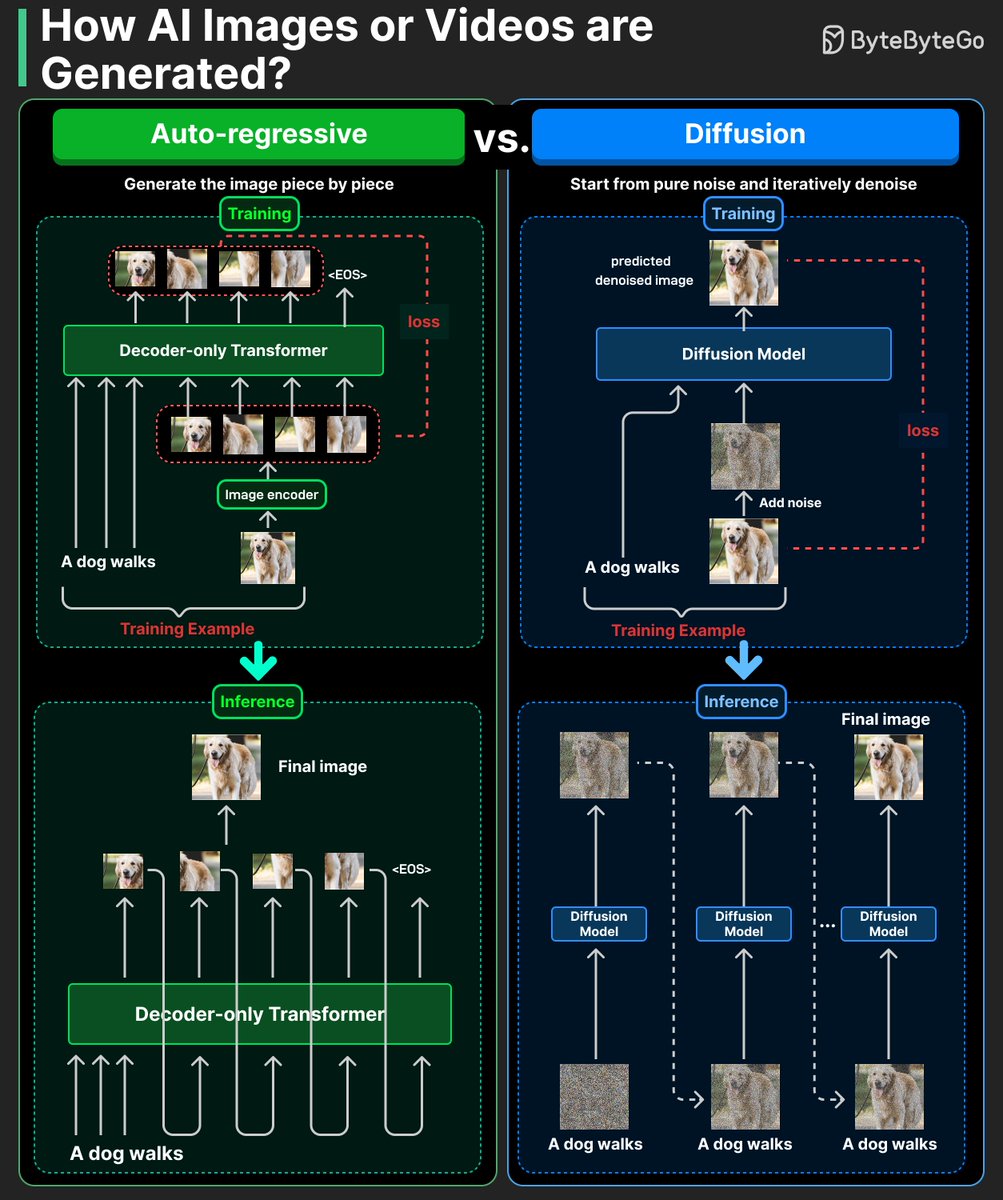
How AI Actually Generates Images There are two main ways modern models generate images: auto-regressive and diffusion. Auto-regressive models generate an image piece by piece. During training, an image is split into tokens, and the model learns to predict them one by one, just like text. It minimizes next-token prediction loss over image tokens. At inference time, the model predicts one image token at a time until the full image is formed. Diffusion models start from pure noise and iteratively denoise it. During training, we add noise to real images and train the model to predict that noise. At inference time, the model starts from random noise and iteratively denoises it into a clean image. Auto-regressive is like drawing a dog stroke by stroke in sequence. Diffusion is like starting with a rough sketch (coarse shapes), then progressively adding detail and cleaning up the picture. Over to you: Which text-to-image model do you find most powerful?
Alex Xu tweet media
English
5
35
168
10.9K
Bytebytego
Bytebytego@bytebytego·
What’s Next in AI: 5 Trends to Watch in 2026 Chapters 00:00:00 Intro 00:00:43 Reasoning 00:02:26 Agents 00:03:39 Coding 00:04:50 Open-weights 00:05:39 Multimodal
English
3
11
63
8K
Bytebytego ری ٹویٹ کیا
Alex Xu
Alex Xu@alexxubyte·
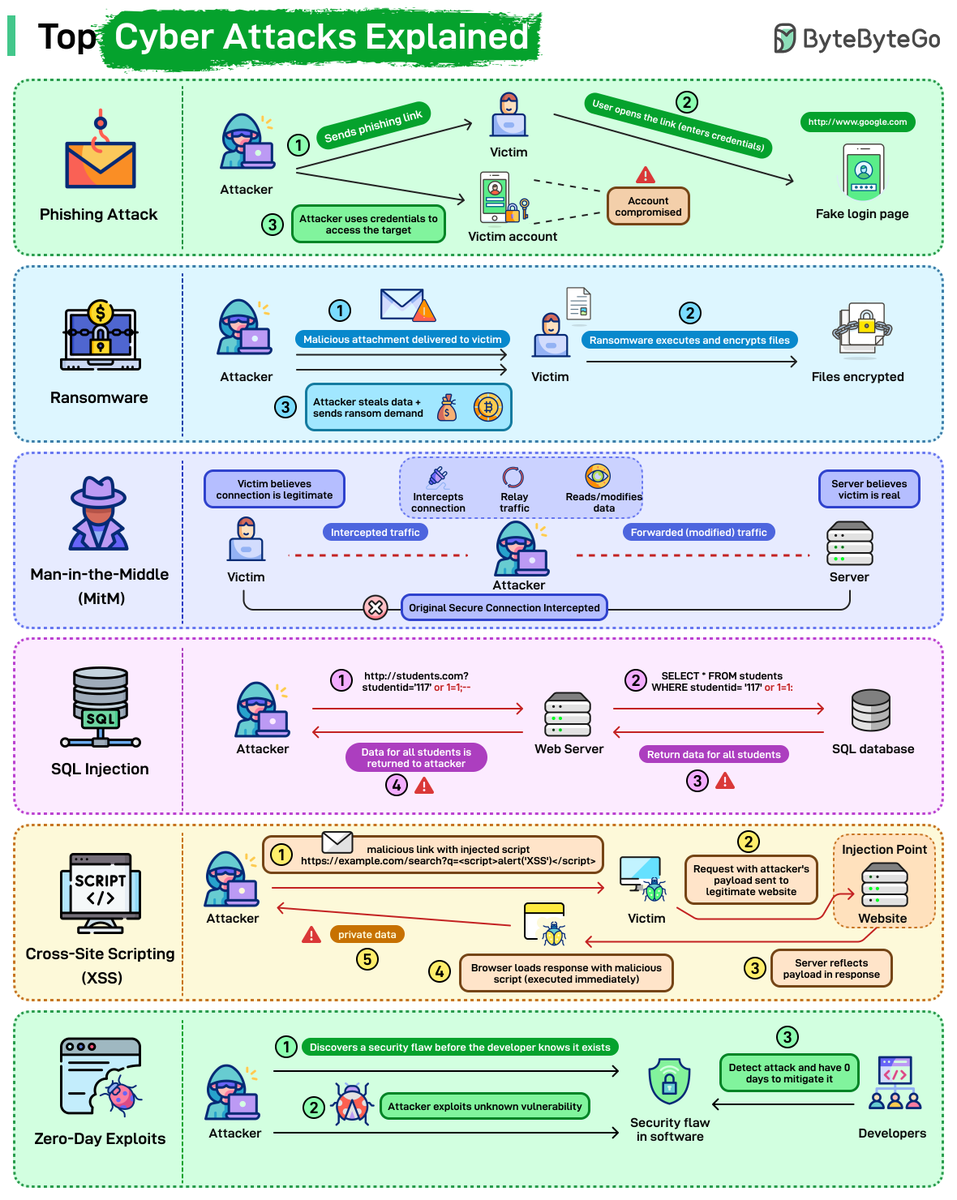
Top Cyber Attacks Explained Here’s a quick look at how some of the most common attacks work: Phishing: The attacker sends a fake link pointing to a spoofed login page. The victim enters credentials, the attacker captures them, and uses them to access the real system. Ransomware: The victim opens a malicious attachment or file. The ransomware encrypts local data and demands payment to restore access. Files stay locked until the ransom is paid or a backup is restored. Man-in-the-Middle (MitM): The attacker positions themselves between the victim and the server, intercepting traffic in both directions. Neither side detects the interception. The attacker can read or modify data as it passes through. SQL Injection: Malicious SQL gets inserted into an input field, for example, studentId=117 OR 1=1. The database executes it as a valid query and returns data it shouldn't. A single vulnerable input field can expose an entire table. Cross-Site Scripting (XSS): A malicious script gets injected into a legitimate page. When another user loads that page, their browser executes the script. Session tokens, cookies, and private data can be stolen this way. Zero-Day Exploits: The attacker finds a vulnerability the vendor hasn't discovered yet. No patch exists. The attack runs until the vendor identifies the issue and ships a fix, which can take days or weeks. Over to you: Which of these attacks have you seen most often in real environments, and which one do you think is the hardest to defend against today?
Alex Xu tweet media
English
4
49
193
8.9K
Bytebytego ری ٹویٹ کیا
Alex Xu
Alex Xu@alexxubyte·
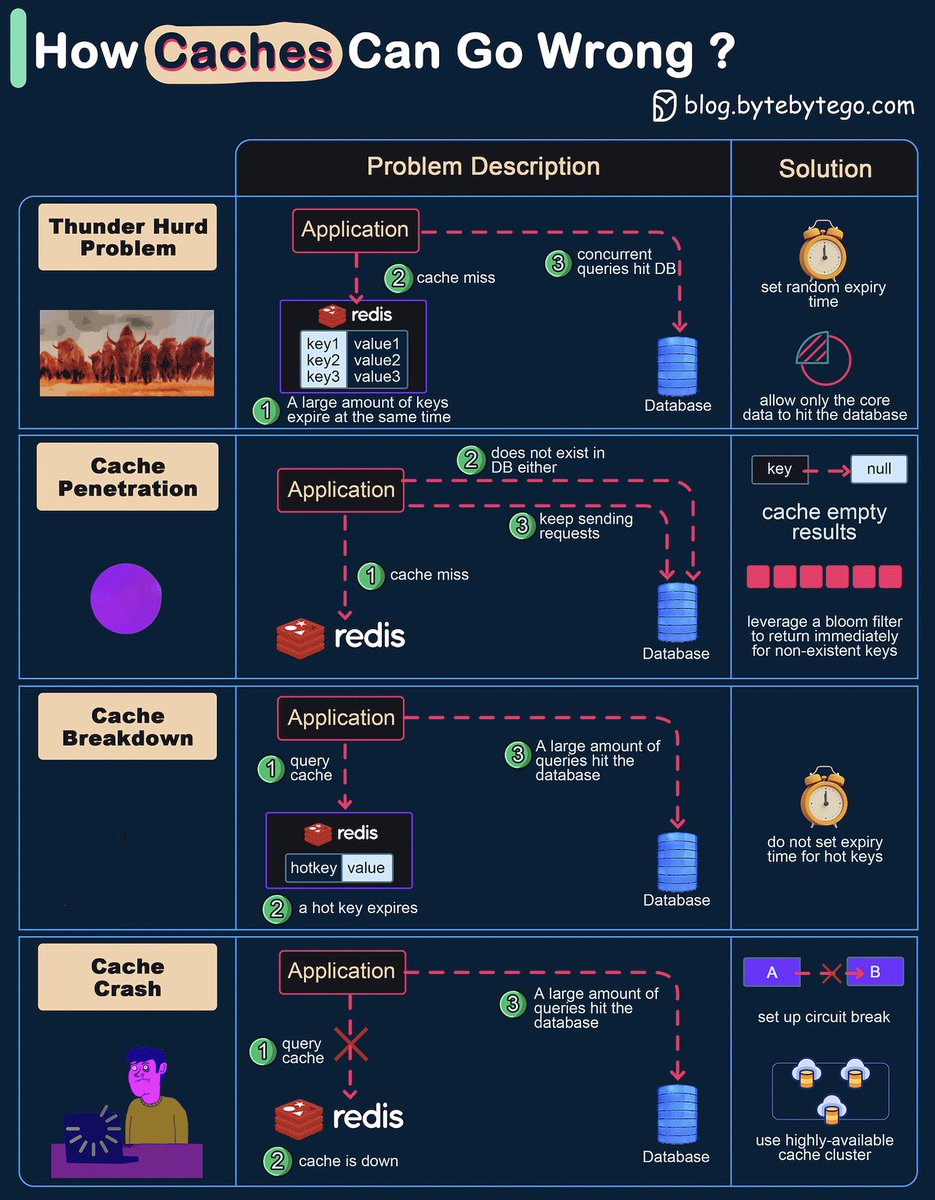
How can Cache Systems go wrong?
Alex Xu tweet media
English
10
72
537
59.8K
Bytebytego ری ٹویٹ کیا
Alex Xu
Alex Xu@alexxubyte·
Top 4 API Gateway Use Cases
Alex Xu tweet media
English
3
52
268
10.1K
Bytebytego ری ٹویٹ کیا
Alex Xu
Alex Xu@alexxubyte·
CPU vs GPU vs TPU
Alex Xu tweet media
Indonesia
20
462
2.4K
110.3K
Bytebytego ری ٹویٹ کیا
Alex Xu
Alex Xu@alexxubyte·
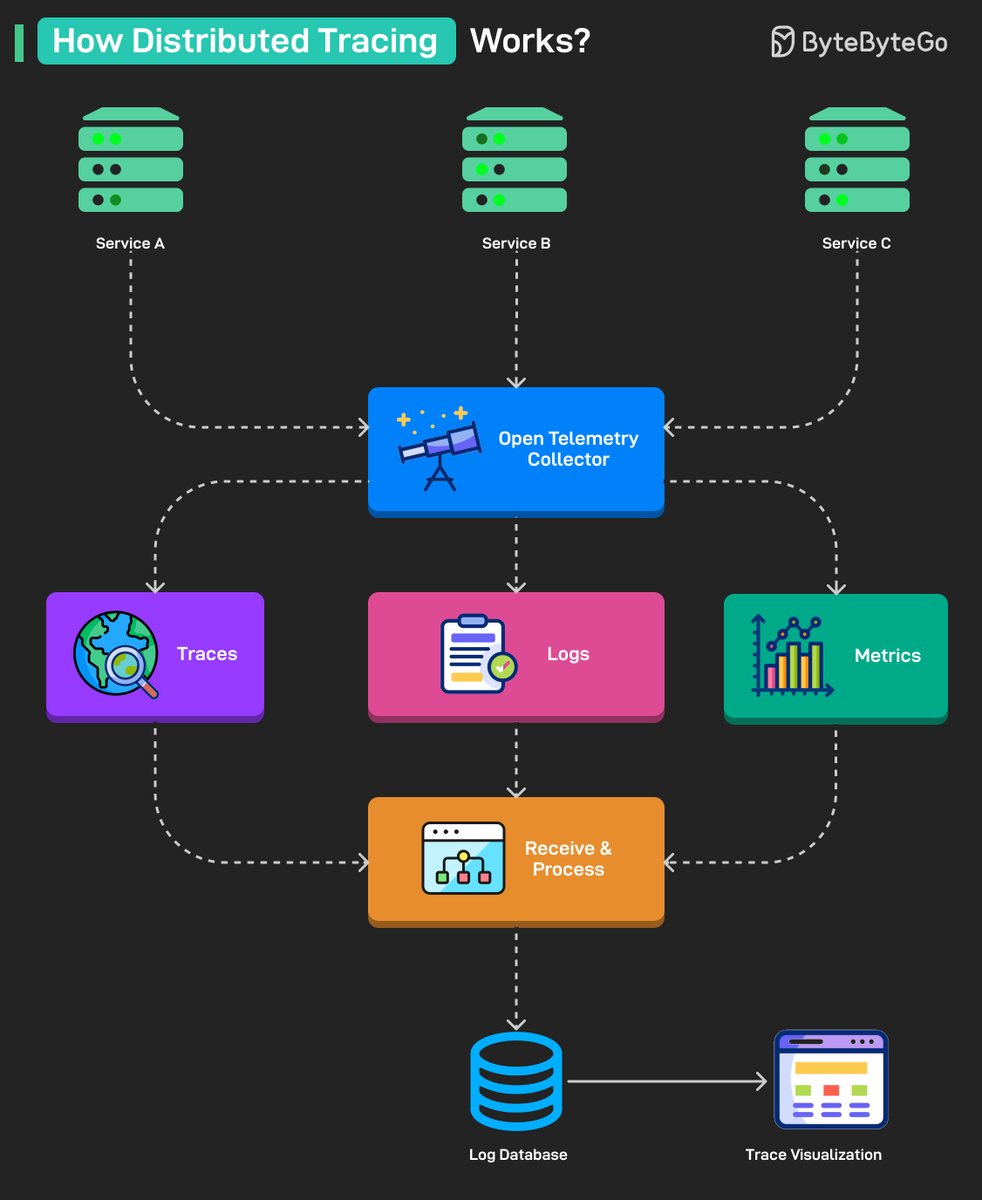
How Distributed Tracing Works at the High Level?
Alex Xu tweet media
English
3
37
201
12.2K
Bytebytego ری ٹویٹ کیا
Alex Xu
Alex Xu@alexxubyte·
How GPUs Work at a High Level
Alex Xu tweet media
English
5
85
390
15.2K
Bytebytego ری ٹویٹ کیا
Alex Xu
Alex Xu@alexxubyte·
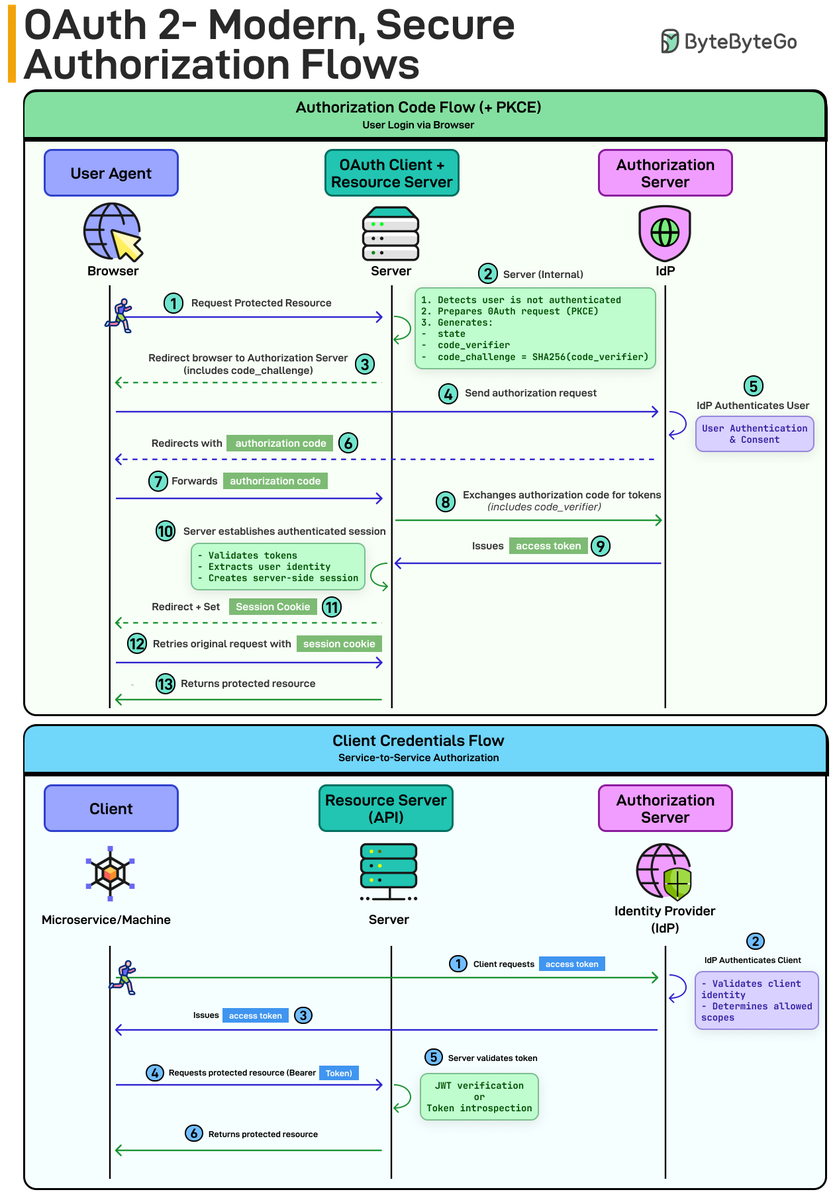
How OAuth 2 Works
Alex Xu tweet media
English
3
99
480
18.9K
Bytebytego ری ٹویٹ کیا
Alex Xu
Alex Xu@alexxubyte·
A nice cheat sheet of different monitoring infrastructure in cloud services.
Alex Xu tweet media
English
9
87
402
18.6K
Bytebytego ری ٹویٹ کیا
Alex Xu
Alex Xu@alexxubyte·
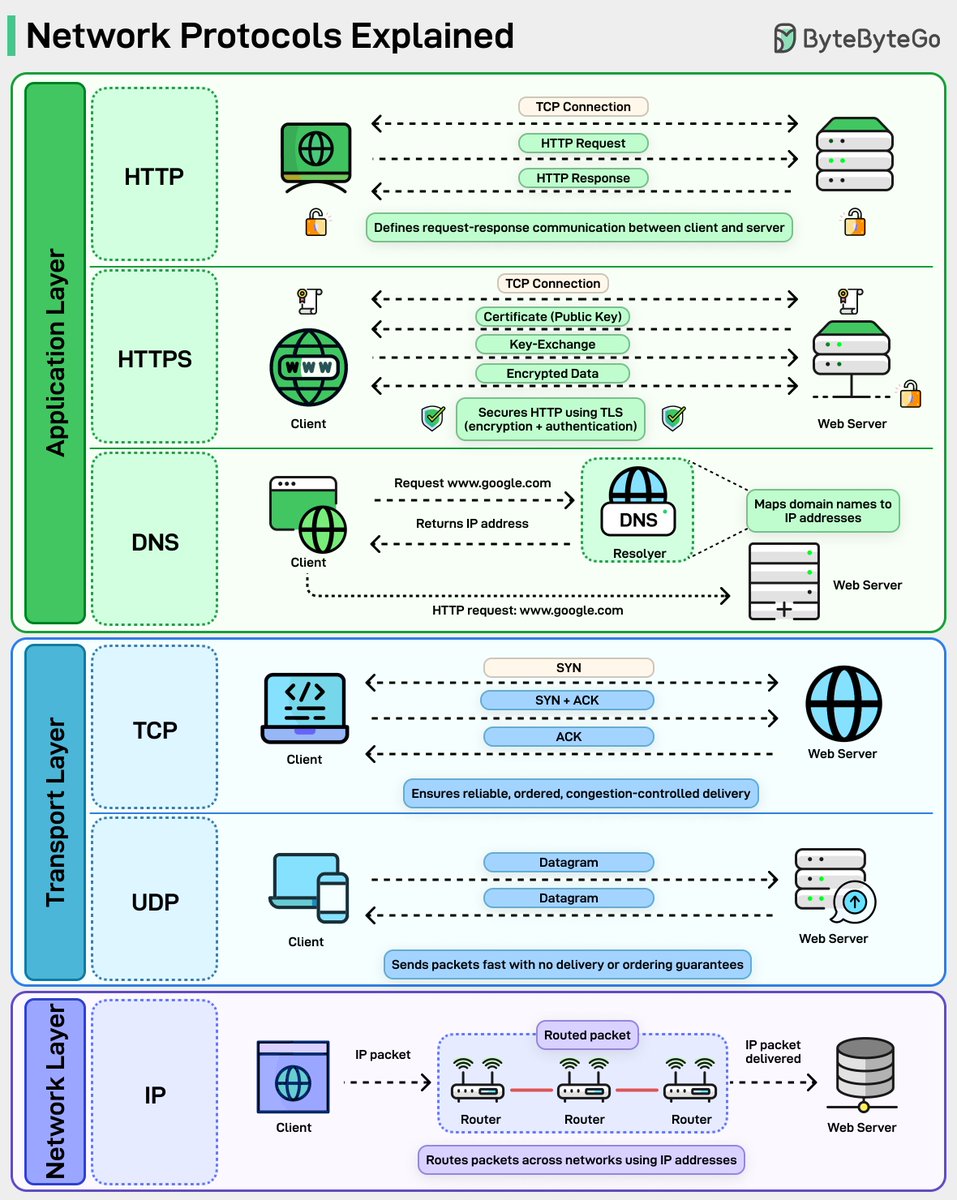
Network Protocols Explained
Alex Xu tweet media
English
3
101
571
18.7K
Bytebytego ری ٹویٹ کیا
Alex Xu
Alex Xu@alexxubyte·
Block recently laid off 40% of its workforce. I am truly sorry to everyone going through this. We want to provide a bit of support during this difficult time. We would like to offer one year of free access to our interview prep platform. Losing a job is incredibly stressful, and we hope this can ease at least one small part of the process. Our platform covers system design, coding patterns, ML system design, OOD, and more. There are no strings attached. Just email me at hi@bytebytego.com with your name and a brief note, and we will get you set up.
English
33
67
803
115.4K
Bytebytego ری ٹویٹ کیا
Alex Xu
Alex Xu@alexxubyte·
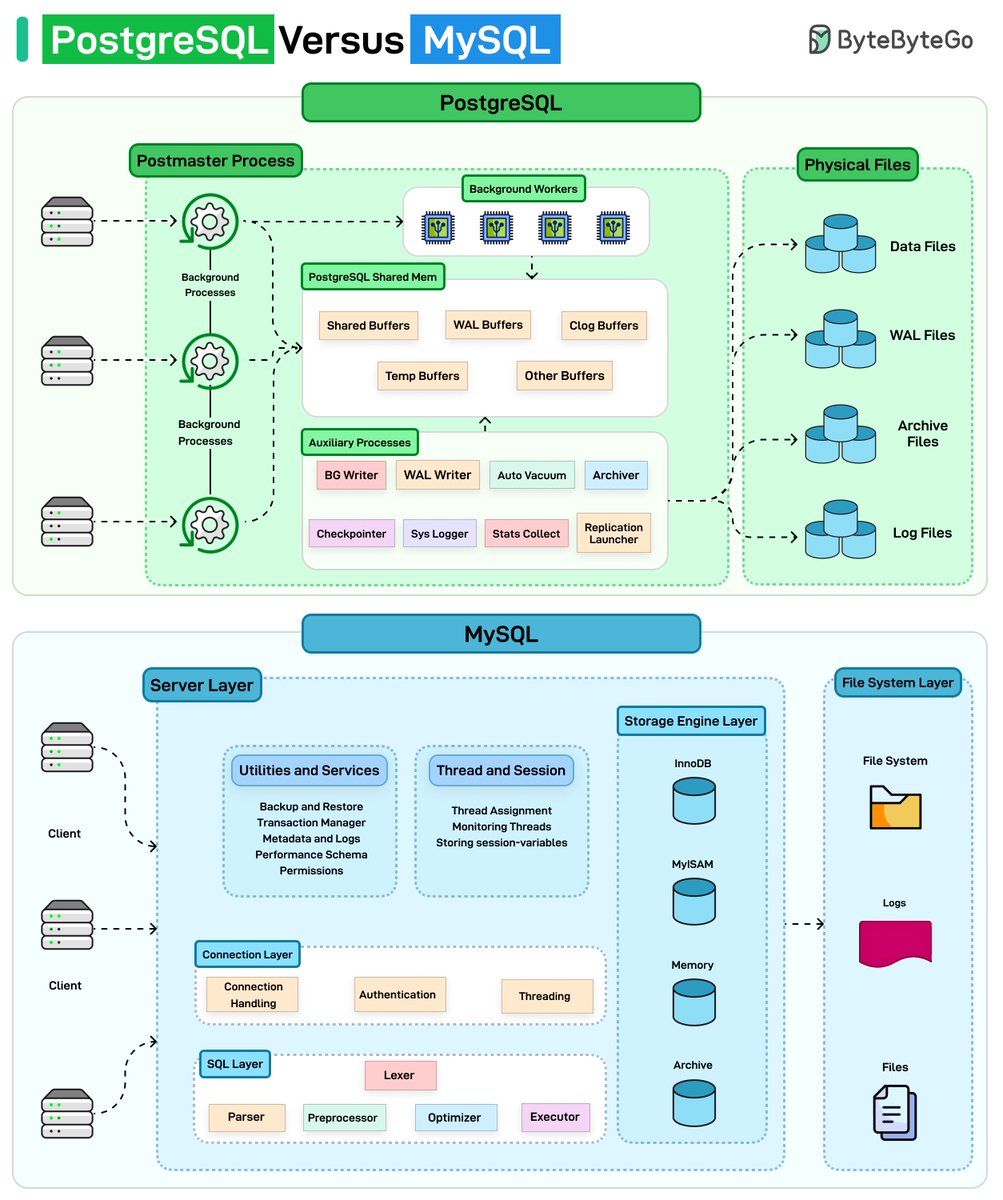
PostgreSQL versus MySQL Built using the C language, PostgreSQL uses a process-based architecture. You can think of it like a factory with a manager (Postmaster) coordinating specialized workers. Each connection gets its own process and shares a common memory pool. Background workers handle tasks like writing data, vacuuming, and logging independently. MySQL takes a thread-based approach. Imagine a single multi-tasking brain. It uses a layered design with one server handling multiple connections through threads. The magic happens using pluggable storage engines (such as InnoDB, MyISAM) that you can swap based on your needs. Which database do you prefer?
Alex Xu tweet media
English
20
121
710
137.6K