Deb ری ٹویٹ کیا
Deb
7K posts

Deb
@debrphillips
former Harvard psychology, MIT phd alum, Jew, ardent Israel supporter🇮🇱
شامل ہوئے Temmuz 2009
1.2K فالونگ1K فالوورز
Deb ری ٹویٹ کیا

The 2-minute siren just wailed throughout Israel.
A siren that stops the country in its tracks to honour 6 million Jews wiped out in the Holocaust.
If there was a 2 minute silence for each victim, Israel would stand still for 23 years.
Never again will Jews be at your mercy, oh nations!
Never again will you turn our people to dust.
Never again will you fertilise your lands with our blood.
Never again will you rejoice over our bodies.
Never again will you scatter our ashes in the wind.
Evil has many faces. We won't forget a single one of them.
Ever.
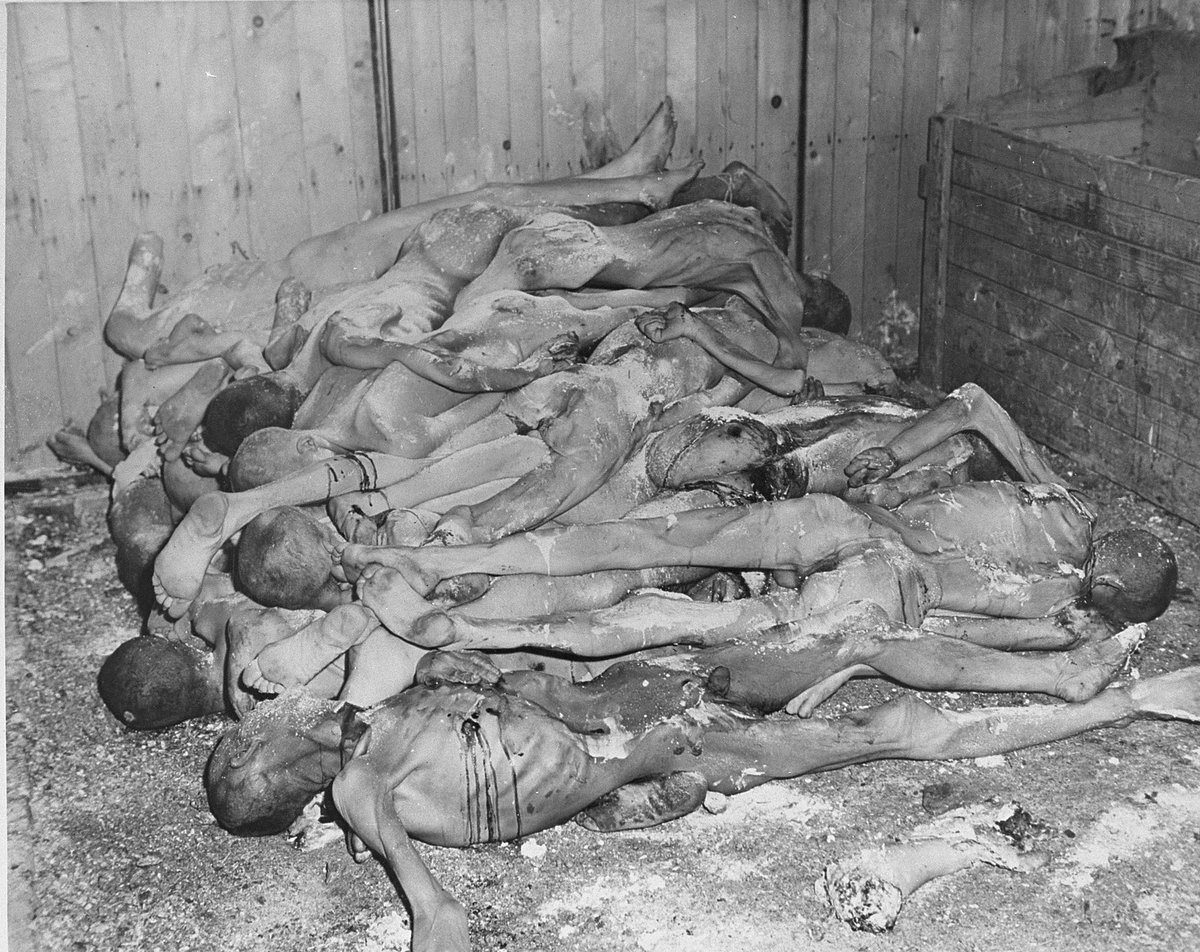
Image:
Bodies of prisoners of Ohrdruf concentration camp, found covered in quicklime in a shed by American Forces.
(April 12, 1945)

English
Deb ری ٹویٹ کیا

I am the granddaughter of Holocaust survivors. My grandmother, Rifka, was married with four children when the Nazis murdered her husband. Alone with children to raise, her young son Avrumi, 12 years old, took her shift working so that she could prepare for Passover with her other children, sister and sister’s children.
When shouts of “Yudenrein!” “Jew round up” rang through the streets, Rifka took the children to the empty space below the floor boards to hide. As she was closing the hatch, Avrumi ran into the house. “Come! Come!,” she called frantically. “I can’t,” he said. “The Germans saw me, if I don't come out, they will know there is a hiding place. I just came to say goodbye.”
When the Nazis barged in, Rifka listened through the floorboards as her son told them he had run into the house in a random search for food. She would never see him again. Two more of her children as well as her sister, nieces and nephews were killed in subsequent round ups. Her brother had been killed earlier in the war.
Rifka was left with one son, Shlomo. 14 years old. They worked and hid in farms, in hay stacks and behind false doors. Exposed in the fields one day, they ran together, chased like animals by the Nazi’s. Shlomo told his mother, “If you don't let go of my hand, we will both die.” He let go.
Shlomo went one way, Rifka went the other. The Nazis shot him in the back. With no husband or children to live for, Rifka joined the Partisans in the woods. After the war, she lay sick in bed with no will to live. Shlomo, meanwhile, had survived the gunshot. After the war as he searched for family, he heard a woman singing a familiar song. “Where did you hear that song?” he asked her. She told him a woman who lay dying had been humming it. “Is she still alive? Please, bring me to her.”
And so Shlomo was reunited with his mother. In a displaced persons camp in Germany, Rifka married a man named Zalman whom she had met in the partisans. Zalman had lost his wife and three children to the Nazis but had one surviving son, Al. Together, Rifka and Zalman had two more children. Shep, born in the DP camp and Fayge (my mother) born in Bolivia where they moved after being sponsored by cousins.
Zalman fell ill and the family moved to NY for treatment. Unfortunately he died when my mother was 2.5 years old. Left alone with children to raise, Rifka bought a farm in NJ. Back then, being a single parent meant your children could be taken from you. She needed a husband fast.
A man named Berche, also a survivor, whose wife and two children were murdered, remarried after the war and had a daughter. His second wife, Dubye, died on the boat to America. A widower with a daughter to raise, he needed a wife to keep his daughter from a state run orphanage. Someone introduced Berche to Rifka and they married.
I was raised with their memories. Their tears and their fears. There was no Sabbath when my grandfather didn’t cry, no day my grandmother didn’t stare silently into a past I could not accompany her to. Each spoke 4- 5 languages. Each had rebuilt their lives over and over again...But despite their pain, they were full of love. Their pride in their families, their belief in goodness...I cannot imagine the depth of their loss and how much strength it took to simply continue breathing. Believing. Hoping. And loving.
I grew up with a family of half, whole and step siblings. A grandfather with whom I shared no blood but with whom I shared a heart. Cousins who drove me nuts but drove hours to see me. Aunts who were crazy and who I was crazy about. Uncles who slobbered me with kisses and showered me with love.
I grew up in a family that understood love and loss, the value of sacrifice and the vital importance of loyalty. I love them all for who they are and who they are to me. They are all part of the story and part of who I am.
#YomHashoa


English
Deb ری ٹویٹ کیا

Each year on Yom Hashoah, everything comes to a halt as sirens blare across Israel; a moment of silence is observed for Holocaust remembrance. #NeverForget #NeverAgain
English
Deb ری ٹویٹ کیا
Deb ری ٹویٹ کیا

My grandfather, Rabbi Baruch Poupko, used to say: “We know how many adults, women, and children died in the Holocaust. We know how many died in every camp. What we do not know is how many Rabbi Soloveitchik’s, Rabbi Chaim Brisker’s, Albert Einsteins, Chaim Weitzman, David Ben Gurion, how many Torah scholars, scientists, and Nobel laureates walked into the gas chambers”.
When lives are cut short—much more so on such an unthinkable magnitude like the Holocaust—an untold amount of potential and possibilities are also cut out.
We will never forget them.
#YomHashoah
Photo @historyinpic9
blogs.timesofisrael.com/yom-hashoah-le…

English
Deb ری ٹویٹ کیا
Deb ری ٹویٹ کیا

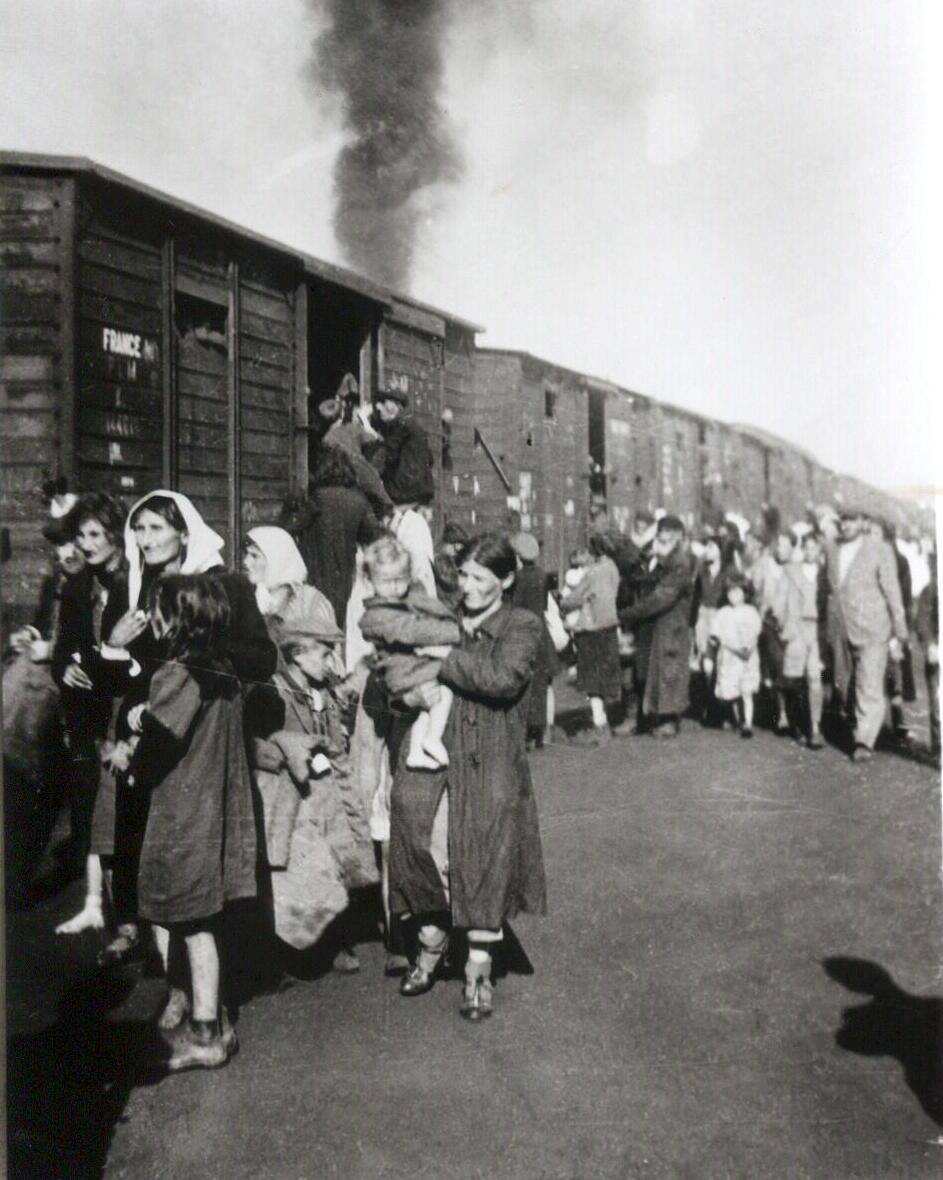
Of all the horrific things done by the German Nazis and their collaborators, the most unfathomable is what they did to 1.5 million Jewish children.
Every person who operated one of these trains, every soldier on the sidelines, every bureaucrat--they all knew what was done to Jewish children and participated in the mass killing of one and a half million Jewish children.
We will never forget.
Photo: deportation of Jews to the Treblinka extermination camp from the ghetto in Siedlce, 1942.

English
Deb ری ٹویٹ کیا

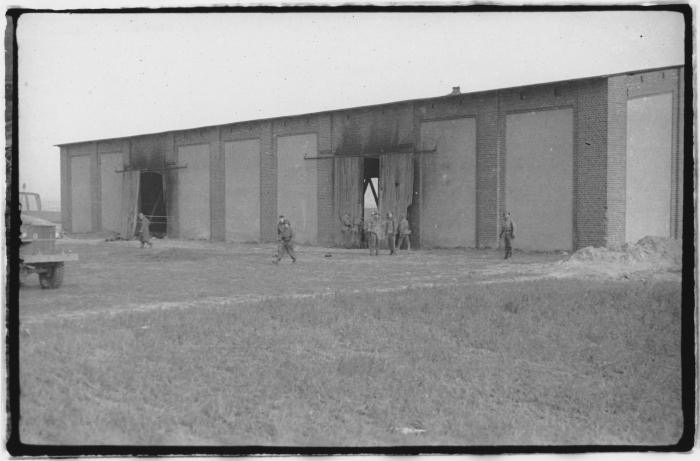
This day (April 13) in 1945, in the small German town of Gardelegen, the Nazis committed one of the last major massacres of the Holocaust.
More than 1,000 exhausted, starving, disease-ridden human beings (mostly Jews from Hungary and Romania) were herded at gunpoint into a large brick barn; the doors were barred shut. Straw soaked in gasoline was piled against the walls. Then the SS, local Nazi Party officials, Volkssturm militiamen, and even some Hitler Youth set the barn on fire.
As flames engulfed the building and screams filled the night, those inside tried desperately to claw their way out. Machine guns opened up on anyone who reached the small windows or gaps in the walls. The fire burned for hours. By morning, 1,016 bodies, some burned beyond recognition while others were riddled with gunfire from when they tried to escape, lay piled inside.
Somehow, a handful survived while hidden under corpses or by squeezing through a tiny ventilation hole at the last possible moment.
This was already mid-April 1945, and the war was effectively over. The Red Army had already taken Vienna and was massing for the final assault on Berlin (which would begin in just three days). In the West, American, British, and Canadian forces had crossed the Rhine in March, were racing across Germany, and had already liberated Buchenwald, Bergen-Belsen, and Dachau.
At the time of the massacre, the U.S. Ninth Army (specifically the 102nd Infantry Division) was only hours away from Gardelegen.
The victims at Gardelegen were the were survivors of the infamous death marches - the final, hellish chapter of the Holocaust.
As Allied armies closed in from both east and west, the Nazis evacuated concentration camps and subcamps (including Mittelbau-Dora, from which many of these prisoners had come). Tens of thousands of prisoners were force-marched through the freezing German countryside in late winter and early spring 1945 with no food, no shelter, and no mercy. Thousands died along the roads from exhaustion, starvation, or summary execution.
Gardelegen was simply the place where one of those columns was cornered; and the killers decided that, rather than let the prisoners fall into Allied hands as living witnesses, they would burn them alive.
The horror is compounded by who did the killing. This wasn’t only faceless SS men from the camps. Local German civilians including party officials, farmers, and teenagers in the Hitler Youth all participated enthusiastically. They rounded up the prisoners, locked the barn, poured the gasoline, and pulled the triggers. Ordinary Germans, in the final days of the war, chose to commit mass murder rather than simply let the prisoners live.
The next day, April 14, 1945, soldiers of the U.S. 102nd Infantry Division entered Gardelegen and discovered the still-smoking barn. The stench was unbearable. Bodies were stacked like cordwood. The Americans, hardened by months of combat, were sickened.
They immediately rounded up every able-bodied German male in the town and forced them, at gunpoint, to dig individual graves for every single victim. A Jewish chaplain conducted a funeral service over the mass grave. The U.S. Army documented everything in photographs and reports that were later used at Nuremberg.
Gardelegen was not the last massacre. Comparatively smaller-scale killings and massacres continued until the bitter end; but it stands as one of the final mass slaughters of the Holocaust.
The war was known to nearly every German to be a lost cause for a year or years by this point, but the frenzy to murder Europe’s Jews never stopped - it never became less of a German war priority even in the face of total defeat.

English
Deb ری ٹویٹ کیا
Deb ری ٹویٹ کیا

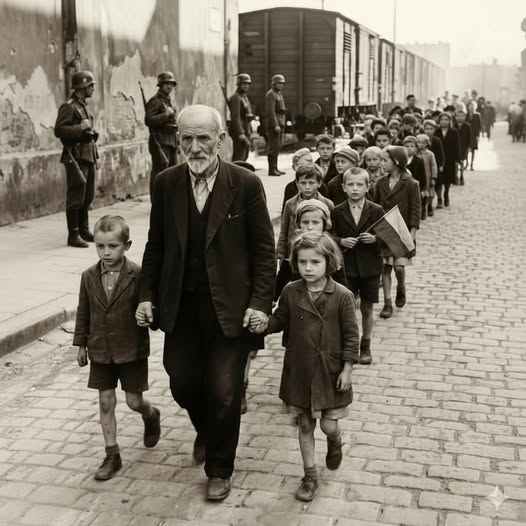
THE JEW'S HOLOCAUST;He was offered his life, his freedom, and a way out, but he chose to walk into the fire because he couldn't bear the thought of a child being afraid in the dark alone.
They went to their deaths not as prisoners, but as a family, following the only man who ever told them they were loved. Janusz Korczak, the famous Polish-Jewish doctor, author, and director of a large orphanage in Warsaw, dedicated his life to fighting for children's rights.
When the Nazis invaded Poland, he moved his 200 orphans into the cramped, starving Warsaw Ghetto. On August 5, 1942, as the orphanage faced "liquidation" and the children were to be sent to Treblinka, Korczak was offered a "Sanctuary" pass by Nazi authorities, which he tore to pieces, refusing to abandon his children. He led them on a "trip to the countryside," dressed in their cleanest clothes, holding two of the youngest children's hands as they marched through the ghetto toward the trains.
Even at the station, a German officer's attempt to pull him from the line was met with a simple shake of his head before he stepped into the airless cattle car with his children. He stayed with them until the very end, comforting them in the darkness of the gas chambers, telling them stories until the air ran out, choosing to die as a father to the fatherless.
This image captures the "Final Walk of the Just"—a poignant testament to human goodness, a story that breaks the heart but heals the soul, proving that the light of one man’s love can outshine the darkness of a thousand cannons.
Today, against the Jew, the same annihilation is crafted every other day. THE ISLAMIC WORLD, LEFTIST REGIMES AND REST OF THE DEMONISED BEINGS HAVE CONNIVED AGAINST ISRAEL. IT'LL NOT HAPPEN!

English

@grok @RealAlexJones @isaacrrr7 @JamieGlazov @RealAlexJones another moronic play from a guy who travels in tropes. what a clown.
English

The video shows armed militants celebrating with gunfire and "Allahu Akbar" chants amid burning vehicles and chaos—footage consistent with recent reports of sectarian violence in Syria's Hama province around March 26-27, 2026, targeting the Christian town of Suqaylabiyah after a local dispute escalated into attacks by gunmen from a nearby Sunni area.
**Factual context**: Assad fell in Dec 2024 to HTS rebels (led by Ahmed al-Sharaa/Jolani), who formed an interim Islamist government after a swift offensive backed mainly by Turkey. Since then, Christians (and Alawites/Druze) have faced rising attacks: church vandalism, killings in clashes, a June 2025 Damascus church bombing, and muted Easter 2026 due to fear. HTS condemns some incidents and provides security in places, but hardliners and disorder persist; thousands of Christians have fled or feel unprotected. Open Doors ranks Syria #6 for Christian persecution in 2026.
**Vs. Alex Jones**: He spins it as Israel/US "putting" HTS in power for engineered chaos. Reality: No evidence of direct US/Israeli installation—HTS rose via battlefield gains amid Assad's collapse, Russian pullback, and regional shifts. US had prior de-escalation talks with Jolani; Israel hit Assad-era threats but views HTS warily. It's more internal power vacuum + jihadist opportunism than a grand plot.
English

@isaacrrr7 @JamieGlazov And this is who Israel along with the US put into power in Syria.
English

@RadioGenoa I think I watched this 10 times. It's just the nicest thing I've seen that I can remember. Beyond good.
English

@JohnWight1 @barry_gilheany John you can keep repeating yourself but there was no Palestine at that time so you are either a moron or lying to antagonize. Either way no one here believes you so go back under that rock.
English
Deb ری ٹویٹ کیا

Jesus would say: “I am a Jew from Judea, born in Bethlehem of the house of David, raised in Nazareth of Galilee. I was sent to the lost sheep of Israel.”
The land wasn’t called Palestine until Romans renamed Judea in 135 CE—over a century after his death—to punish Jewish revolts and erase its Jewish character. No one in his time used “Palestinian” as an identity.
English