Edward Ring

4.6K posts

Edward Ring banner
Edward Ring

Edward Ring

@edring

I love California Author of "The Abundance Choice - Our Fight for More Water" https://t.co/cOenUj0I72

California شامل ہوئے Ekim 2008
127 فالونگ1.5K فالوورز
Edward Ring
Edward Ring@edring·
In a supply chain crisis, California has advantages that few other states or nations can match. Water. Farmland. Oil, natural gas, sunlight. Ocean fisheries. Timber. High tech. ALL being undermined and squandered by the politicians who currently govern. youtube.com/watch?v=5MfK0I…

YouTube video
YouTube
English
0
0
0
65
Edward Ring
Edward Ring@edring·
The common thread underlying U.S. actions with respect to Greenland, Venezuela, Panama, and Iran: A "Supply Chain Cold War." youtube.com/watch?v=ODf_QE…
YouTube video
YouTube
English
0
0
0
55
Edward Ring
Edward Ring@edring·
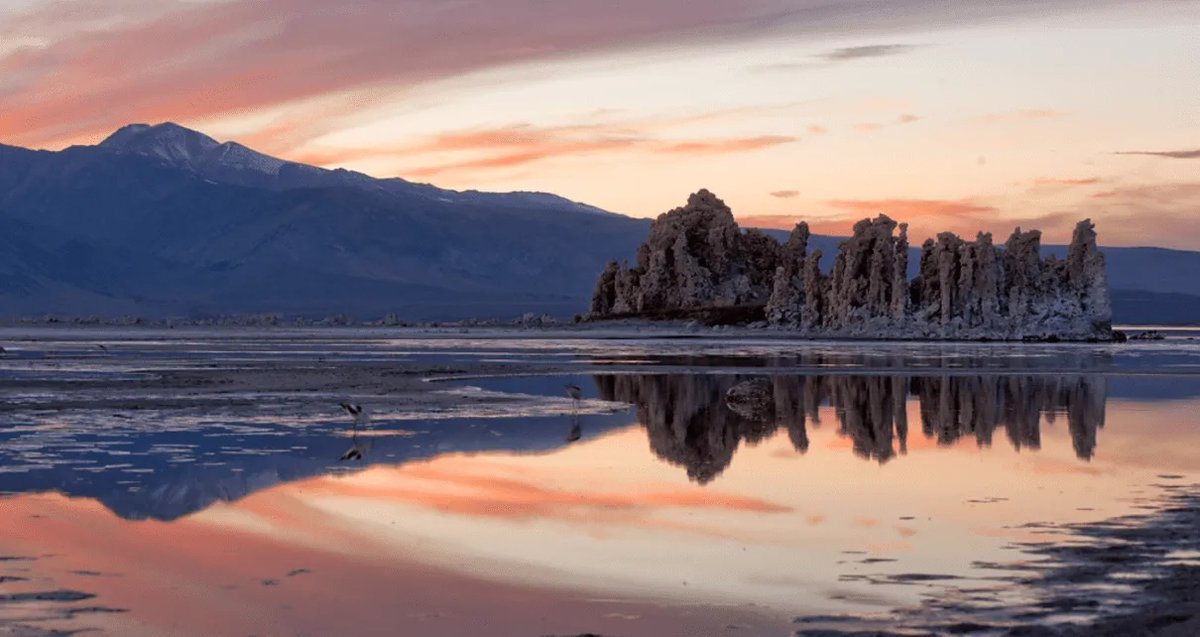
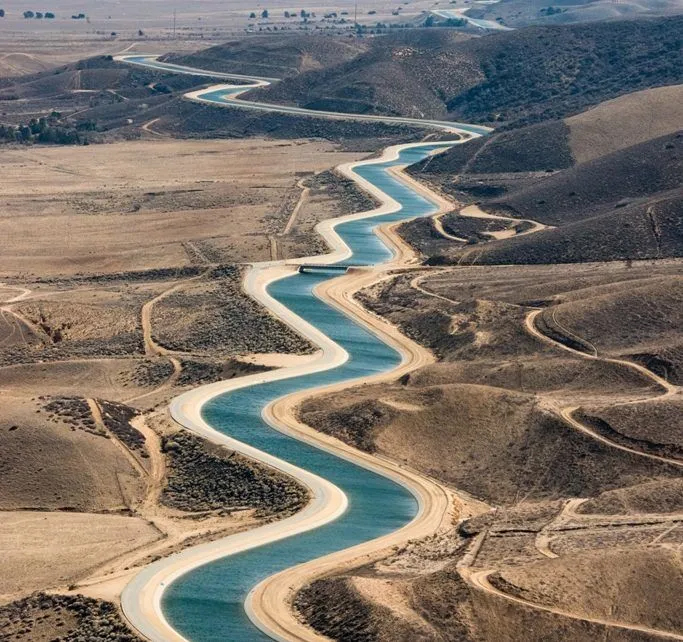
Along with the California Condor, one of our state’s most magnificent environmental success stories of the 20th century is how Mono Lake was saved. In the early 1980s, after decades of unsustainable water withdrawals from the Owens River into the Los Angeles Aqueduct, the lake had declined in elevation to 6,372 feet. The decline was primarily caused by the Los Angeles Department of Water and Power diverting an average of 80,000-100,000 acre feet per year from the tributaries feeding Mono Lake. The turnaround has been incredible. Today, LADWP’s average withdrawals from the upper Owens River watershed are down to 16,000 acre feet per year. The level of the lake has risen to an elevation of 6,383 feet, which is within 9 feet of the what the State Water Resources Board has set as the ultimate goal of 6,392 feet. The acute crisis is over. For example, Negit Island, an important rookery where a land bridge was forming due to the dropping lake level, now remains safe from predators. And overall, years of investment in habitat restoration have preserved and enhanced one of North America’s most productive stopovers on the Pacific Flyway, supporting millions of migratory birds. Moreover, according to a hydrologic model developed by LADWP, Mono Lake is on track to achieve an elevation of 6,392 feet within the next 22-26 years But despite this progress, the State Water Resources Control Board is in the early stages of reconsidering LADWP’s water diversion limits from the upper Owens Valley tributaries feeding Mono Lake. On March 17, 2026, the SWRCB held an informational meeting to review a new hydrologic model, commissioned by the board and produced by UCLA’s Center for Climate Science. In the report’s “key findings,” the authors state that “Existing export criteria are unlikely to achieve Mono Lake’s long-term water level goals.” This claim rests primarily on a concern that climate change may exacerbate conditions on the lake, and uses this reason to call for an immediate halt to any further diversions. But LADWP’s rights to their remaining 16,000 acre-feet per year are already required to drop to 4,500 acre feet per year if the lake level falls below 6,380 feet in elevation. And as it is, just evaporation from the lake averages 160,000 acre-feet per year, ten times the amount LADWP currently diverts. It is reasonable to want to optimize the ecological health of Mono Lake. But the cost of precipitously cutting off LADWP’s last 16,000 acre feet from the upper basin must be taken into account. LADWP imports water from three sources, each of them with different salt contents. Mineral rich water from the Colorado Aqueduct has a high salt content, averaging 600-650 mg/L, whereas water from the Los Angeles Aqueduct, fed by the Owens River, along with water from the California Aqueduct, averages closer to 250-300 mg/L, only half as much. This means that to deliver water to faucets in Los Angeles at a safe standard of around 400 mg/L, for every acre foot of water coming from the Owens River, LADWP is able to blend and therefore dilute an equal amount of the saltier water from the Colorado River. If LADWP loses 16,000 acre feet per year of water from the Owens Valley, the impact on supply is therefore 32,000 acre feet. Advocates for cutting off LADWP’s last 16,000 acre feet of supply from the upper Owens Valley claim the city is on track to make up that difference through projects to recycle wastewater. That’s true, but the current cost per acre-foot of recycled wastewater is $2,500 per acre foot. What is at stake for LADWP, and the ratepayers they serve, is an additional cost of $80 million per year. If LADWP were awash in investable profits, and water were falling from the sky in uncharacteristic and sustained abundance, it would make complete sense to go the last mile toward optimizing the greater Mono Lake ecosystem. But they’re not. Cash strapped and compelled to treat water to unprecedented new standards to cope with PFAS, the rates LADWP must charge customers are scheduled to nearly double in the next ten years. There is not $80 million available for LADWP to cover the shortfall. In a March 13, 2026 letter to SWRCB chairman Joaquin Esquivel, LADWP CEO Janisse Quinones pointed out how their customers had lowered their water use by 33 percent over the last 15 years. This achievement cannot be overemphasized, and it applies statewide. According to this study from the Pacific Institute, urban water use peaked around 2004 at nearly 10 MAF (million acre feet)/year, with most recent data putting that total under 8 MAF/year despite the state’s population (94 percent urban) over the past 20 years growing by 3.8 million. Conservation has delivered big results, and it has gone far enough. We need to rehydrate our cities, not squeeze them dry. There is a bigger picture that might inspire anyone hoping to rescue nature from the worst consequences of industrial civilization. Imagine if investments in infrastructure permitted fish friendly, safe harvesting of the massive storm runoff that tears through the Sacramento-San Joaquin Delta every winter. This would deliver millions of acre-feet of additional fresh water to farms and cities in Southern California. Imagine if through ongoing, hopefully accelerated investment in wastewater recycling, but also enhanced urban runoff harvesting and large scale seawater desalination, California’s coastal megacities wouldn’t even have to import water any longer. This is a vision that facilitates multiple environmental wins – including not just Mono Lake, but the Salton Sea and Hetch Hetchy Valley. Finally, posturing over the sacred nature of Mono Lake – or any other ecosystem – whether animated by indigenous animism or new age spirituality, should not dominate the moral arguments put before the State Water Resources Control Board. These regulators also have a moral and sacred obligation to optimize the flourishing of all human beings, of all origins, whether living in cities or under the sky. californiaglobe.com/fr/ringside-th…
Edward Ring tweet media
English
0
0
1
68
Edward Ring
Edward Ring@edring·
How not to overreact to something this inane? CA legislators are considering making apartment buildings - new and existing - be built or retrofit to include EV chargers. Such is already required for parking for affordable housing. And the cost??? politico.com/newsletters/ca…
English
0
0
0
57
Edward Ring ری ٹویٹ کیا
Darren Stallcup - World Peace Movement
BREAKING USA: Young San Francisco Republican Speaks At City Hall “Nick Shirley is coming to town.”
English
131
2K
10.5K
166.9K
Edward Ring
Edward Ring@edring·
@SavetheDeltaNow We have been told that funds spent on dredging have to be matched three-to-one with funds spent on mitigation. Is that true? Because I would define dredging itself as mitigation. In the delta today, it will do more good than harm for the environment.
English
1
0
0
20
Delta United
Delta United@SavetheDeltaNow·
@edring Let’s look for partnerships with stakeholders before calling out anyone as being opposed. There hasn’t been any formal (and funded) proposal to move forward on dredging yet. #Cawx
English
1
0
0
73
Edward Ring
Edward Ring@edring·
The Delta remains the primary source of water for millions of Californians, urban and rural communities, agriculture, businesses, and neighboring states facing Colorado River shortages. It is the only source that can be quickly expanded. Restoring channel depths to 10-12 feet or more through targeted dredging of at least 75 miles of south delta channels dramatically increases their cross-sectional area and total water volume. If this were done, it would take much higher pumping rates to produce reverse-flow velocities. Reverse flows pull fish into the pumps and they pull salt water in from the San Francisco Bay, and when that happens, pumping stops. We have evidence that opening up delta channels could result in millions of acre feet per year of additional water being safely delivered to farms and cities in California. Dredging deeper, cooler channels would also help salmon migration. So why not dredge? It seems environmentalists put a stop to it 40-50 years ago, despite the FACT that the delta was routinely dredged for over a century, and in all that time, the salmon and smelt thrived. And today, in order to support dredging, Democrat politicians demand three dollars in "mitigation" for every dollar spent on dredging. Plus, of course, endless litigation and processing of permit applications to countless agencies. If you want to know who is destroying the delta ecosystems, it's the environmentalists themselves. They can't get out of their own way, and for many of them, of course, it's a business model. californiaglobe.com/fr/ringside-th…
Edward Ring tweet media
English
1
1
3
163
Edward Ring
Edward Ring@edring·
Supporters of floating offshore wind farms are one of the most corrupt coalitions of special interests I have ever seen. That "environmentalists" let them get away with pretending this will help the environment is a scandal. It must be stopped. reactalliance.org/overview
Edward Ring tweet media
English
0
0
1
66
Edward Ring
Edward Ring@edring·
Everything Tom Steyer’s doing exemplifies what is one of the most cynical alignments in modern political history. A hedge fund oligarch, now wielding endorsements from some of California's most powerful public sector unions. Parse that. It ain't pretty. amgreatness.com/2026/03/18/cal…
English
0
1
3
60
Edward Ring
Edward Ring@edring·
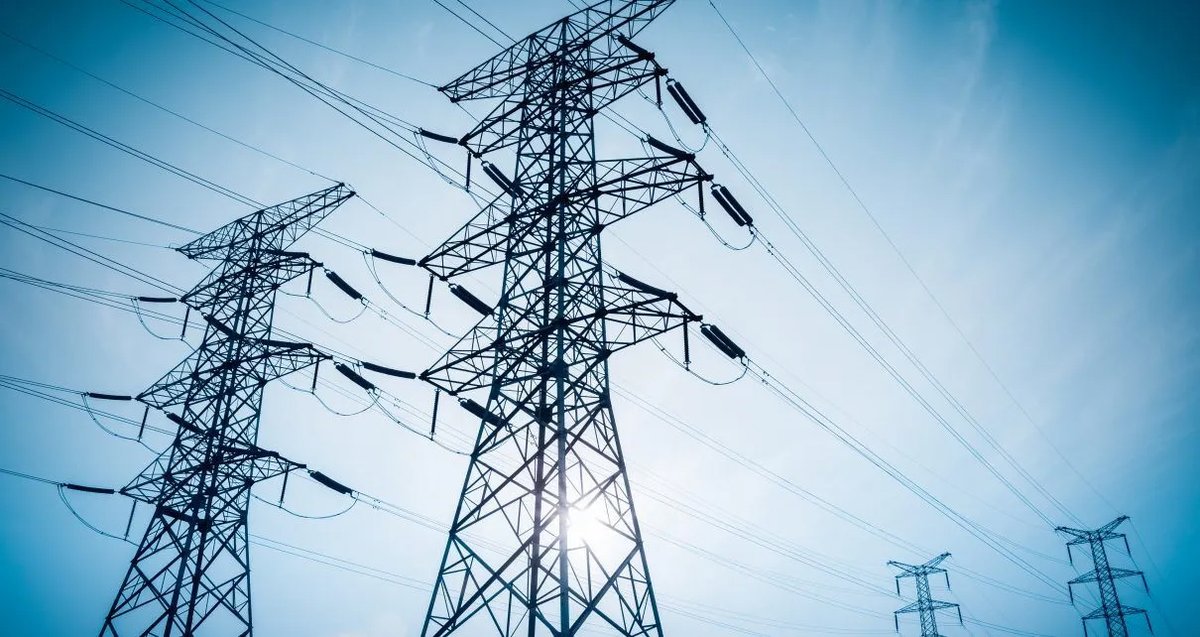
Innovation across every possible source of electricity – large and small scale nuclear, natural gas, solar, geothermal (a big wild card), novel solutions such as linear motors and other advances – ensures that grossly overpriced electricity will soon end. californiaglobe.com/fr/ringside-wh…
Edward Ring tweet media
English
0
0
0
51
Edward Ring
Edward Ring@edring·
AZ/NV pay construction cost for SoCal desal - they get CO River water, CA gets desalinated seawater and only pays operating costs. Dredge delta, built safe new ways to divert MILLIONS of acre feet. And restore Hetch Hetchy Valley. Everybody wins. californiaglobe.com/fr/ringside-bu…
Edward Ring tweet media
English
0
0
1
101