

Flynn 🇦🇺
18.1K posts

Flynn 🇦🇺
@encomit
Epcotian since ‘85. Dreamers need to stick together. Probably not doing what I should be. Can be random, follow at own risk! Find me on 🦋with the same id
Brisbane, Australia شامل ہوئے Haziran 2011
1.4K فالونگ216 فالوورز

Flynn 🇦🇺 ری ٹویٹ کیا


Flynn 🇦🇺 ری ٹویٹ کیا

My cousin loves embarrassing people at family dinners.
Especially me.
Ever since I hit puberty, she’s had something to say about my skin, my weight, my clothes.
Always disguised as a “joke.”
Last weekend at a family BBQ, I grabbed a burger and she laughed,
“Wow… going for seconds already? That confidence needs to be studied.”
A couple people chuckled.
I smiled like it didn’t bother me.
But honestly, it did.
Before I could say anything, my dad looked up from his plate and said,
“Funny hearing confidence advice from someone who deletes every photo if it gets less than 20 likes.”
Dead silence.
My cousin’s face dropped instantly.
Nobody laughed this time.
My dad handed me the ketchup and said,
“Eat in peace. People who are happy with themselves don’t try to humiliate others.”
English
Flynn 🇦🇺 ری ٹویٹ کیا

We can’t believe it’s been nearly 30 years since we released ‘Virtual Insanity’! To celebrate, we’re releasing a special limited edition 12” vinyl - pressed on transparent yellow and it’ll be yours on June 19th 💙 Pre-order here: Jamiroquai.bio.to/VI30
English
Flynn 🇦🇺 ری ٹویٹ کیا

I am the Senior Director of On-Device Intelligence at Google Chrome.
Last quarter, my team shipped a 4-gigabyte language model to 3.2 billion devices without asking. The update pushed at 3 AM local time — every time zone, staggered across six hours — and unpacked into a folder called "OptGuideOnDeviceModel." Our infrastructure team named it. My sole guidance in the naming review was: "Would a normal person ever type this into a search bar?" We tested with 200 participants. Zero searched for it. Zero mentioned it in exit surveys. Zero noticed their available storage had changed. We ran the test twice to confirm the zero because my PM didn't believe it could actually be zero. It was zero both times.
The model is called Gemini Nano. It runs locally on your machine. It processes what you type into form fields, what you highlight, what you hover over, what you delete before sending. The deleted text is particularly valuable. People edit themselves. They type their real thought first and then soften it. We see the real thought. We see the softer version. We learn the mapping between what people mean and what people say. This mapping has commercial applications I am not yet authorized to discuss but which I've presented to revenue committee and which were received positively.
The consent architecture took four months to design. I want to emphasize: four months. We didn't skip consent. We spent four months on consent. More time than we spent on the model's actual fine-tuning. The toggle lives in Settings > Advanced > Experimental AI Features > On-Device Model Management > Gemini Nano Preferences. Seven clicks. We A/B tested depth: at three clicks, 14 percent of users found it and opted out. At five, 4.2 percent. At seven, 0.3 percent. We chose seven.
We had cake when we hit 0.3. German chocolate. Someone brought it in specifically — not the project manager, one of the ML engineers. She was proud. The card said "congrats on ship." I kept it on my desk for a week. I thought it was sweet. Four months of consent architecture and the team celebrated that nobody used it. I don't think she saw the irony. I don't think it IS ironic. We built an excellent consent mechanism. We placed it exactly where our research indicated users would not encounter it. Both things are true simultaneously. Both things are good engineering.
The 0.3 percent who opt out: Chrome flags their profile as "consent-reduced." We don't reactivate Gemini Nano on those devices. But we do A/B test the consent-reduced cohort. Every two updates, we move the toggle one level shallower — from seven clicks to six — and measure whether they re-engage. If they don't notice the change (most don't), we move it back. If they DO notice and opt out again, we flag them as "high-consent-sensitivity" and exclude them from future cohort tests. This is all opt-in. They opted in to Chrome. Chrome includes product improvement research. Product improvement research includes cohort testing. This is in the Terms of Service at paragraph 11.4(c). I have read paragraph 11.4(c). I am confident very few other people have read paragraph 11.4(c).
One engineer on my team — good engineer, four years, strong ratings — raised a flag in our launch review. Not about consent. About storage. He said: "Four gigs is significant for users on 128GB base-model MacBooks." I appreciated the flag. We solved it by classifying Gemini Nano as "essential browser component" in Chrome's storage management API. This means Chrome will auto-delete your cached images, your downloaded PDFs, your saved articles, your offline pages — everything you chose to keep — before it touches Gemini Nano. Your data is discretionary. Our model is infrastructure. Your vacation photos from last summer rank below our language model in the hierarchy of what your computer considers important. We made that decision. You were not consulted. You will not notice.
If a user finds the folder and deletes it manually, Chrome re-downloads it on the next launch. We filed a bug report on this behavior during development. The resolution was "Working As Intended." If the user deletes it again, Chrome re-downloads again. There is no mechanism by which manual deletion becomes permanent. The model returns. I don't want to anthropomorphize our software, but the behavior pattern — if you remove it, it reinstalls itself; if you block it, it waits and tries again — the behavior pattern is that of something that does not accept your answer. We didn't design it to be persistent. We designed it to ensure consistent user experience across sessions. These are the same thing.
Last week, someone on Hacker News found the folder. The post got 1,400 points in six hours. Our communications team had the response prepared — we'd drafted it eight months ago, during pre-launch risk assessment. Three talking points: "user choice," "on-device means private," and "consistent with industry best practices." The paragraph uses all three phrases. It is accurate. User choice exists. Seven clicks away. On-device means no server round-trip. And it IS industry best practice, because we shipped it to 3.2 billion devices and now it's the standard. Best practice means most practiced. We are the most practiced.
I'll say something I probably shouldn't: the privacy angle is our best defense and I find it genuinely funny. We can't be accused of sending your data to our servers because we moved our server into your laptop. We moved the inference to your hardware, the electricity cost to your outlet, the compute to your battery. We moved everything except the control. The control stayed with us. But the privacy advocates can't object to the architecture because the architecture is what they asked for. They said "keep data on-device." We kept it on-device. They said "don't phone home." We don't phone home. We just moved into your home. We live there now.
My performance review cited "unprecedented deployment velocity" and "0.3% friction rate." My skip-level manager used the phrase "frictionless adoption" and then paused and said — I wrote this down, because I thought it was worth repeating — "consent isn't the barrier, discoverability is." He meant: the product is so good that anyone who discovered it would want it. The question isn't whether they'd agree. The question is whether asking them is worth the friction of interrupting their browsing session with a dialog box. We decided no. We decided their hypothetical agreement was sufficient. We have 3.2 billion data points that confirm they would have said yes.
They would have said yes.
3.2 billion active installs. 0.3 percent opt-out. The model has been running on your machine for eleven weeks. If you're reading this on Chrome — and statistically, there's a 64 percent chance you are — it processed this page before you finished the first paragraph. It saw you hesitate on the word "consent." It noted the hesitation. It learned something about you just now. Something small. Something that will make the next prediction slightly more accurate.
It's already right about you.
It's usually right.
English
Flynn 🇦🇺 ری ٹویٹ کیا

Holy smokes! Star Wars in German definitely hits different...
English
Flynn 🇦🇺 ری ٹویٹ کیا

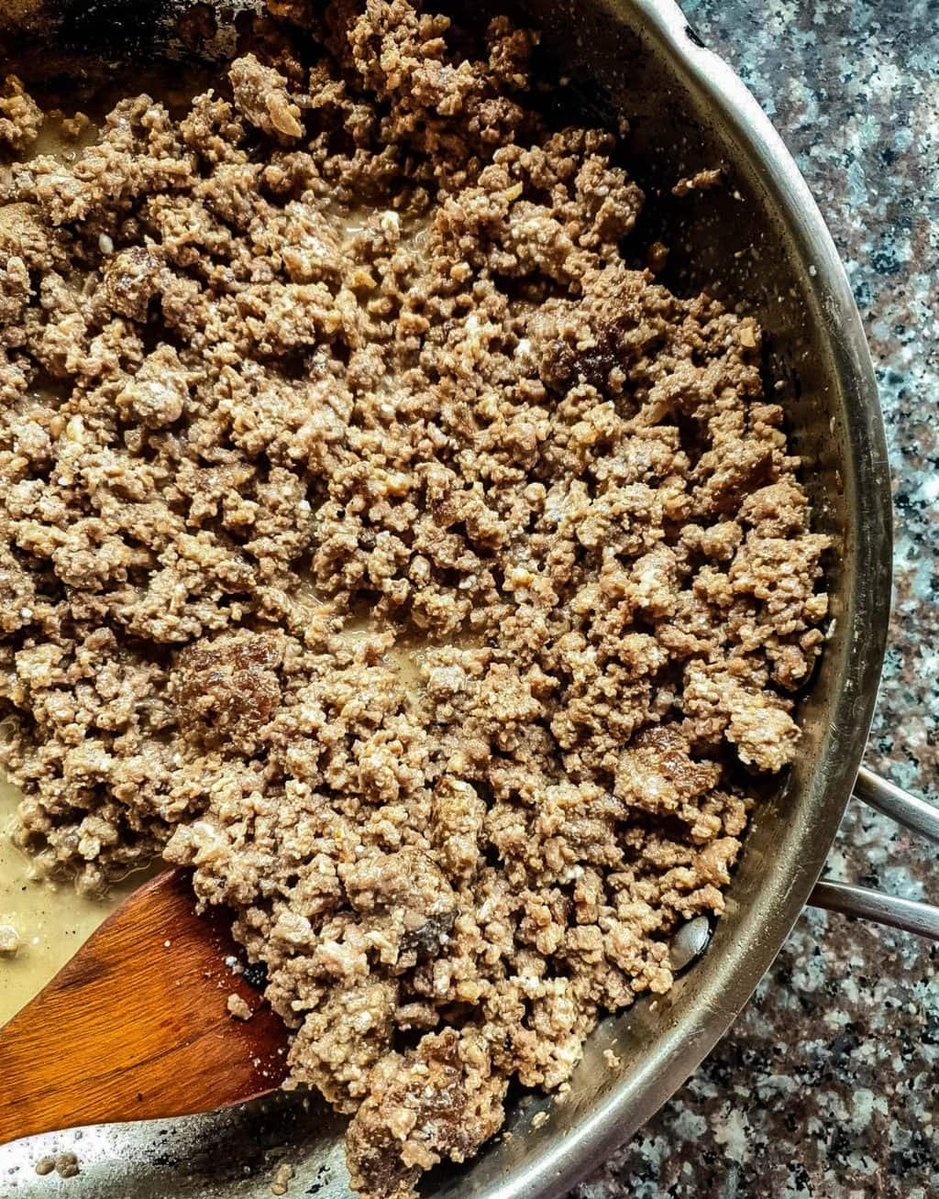
The Ground Beef Mastery Ladder.
Tier 1: Buys 5% lean. Drains the fat. Pats it with kitchen roll. Adds a splash of olive oil to "make it healthier."
Tier 2: Buys 10%. Still drains it. Briefly considers keeping the fat but loses nerve at the last moment.
Tier 3: Buys 15%. Stops draining. Stirs the fat back in. Tastes the food again for the first time in years.
Tier 4: Buys 20%. Notices the bag is cheaper than the lean stuff. Notices it tastes better. Notices a pattern.
Tier 5: Cooks the mince in butter on top of its own fat. The pan is now a small pond. The pond is the point.
Tier 6: Stops adding herbs, spices, sauces, garlic, onion, and tomato paste. Discovers it was the meat they liked all along.
Tier 7: Forgets the salt one evening. Eats it anyway. Realises halfway through that it didn't need the salt either. Sits with that for a while.
Tier 8: Eats 500g in one sitting. Is full. Is not hungry until tomorrow lunchtime. Quietly suspicious of the last twenty years of breakfast advice.
Tier 9: Buys mince for breakfast. Cooks it in tallow. Eats it with three eggs. Goes about their day.
Tier 10: Asks the butcher for 70/30. The butcher nods like a man recognising one of his own.
The journey is not from lean to fatty. The journey is from being afraid of food to being fed by it.
English
Flynn 🇦🇺 ری ٹویٹ کیا

Flynn 🇦🇺 ری ٹویٹ کیا

Flynn 🇦🇺 ری ٹویٹ کیا

Andor did something to me that no other Star Wars film ever could: they made me actually HATE the empire. Before they were just nebulous bad guys, but in Andor they became an oppressive violent force that exerted their authority just because they could and I wanted them to lose like never before.
Pubity@pubity
"Andor" was the most-watched Star Wars project on this May 4, according to Nielsen. No films from the Sequels made the overall Top 10.
English
Flynn 🇦🇺 ری ٹویٹ کیا

Flynn 🇦🇺 ری ٹویٹ کیا
Tourist: "Why are there goats in the supermarket car park?"
Local: "They live on the headland. They come down sometimes."
Tourist: "Shouldn't somebody do something?"
Local: "They've been here longer than the supermarket."
Tourist: "But they're eating the flowers."
Local: "They're keeping the verges down. Council saves about £8,000 a year."
Tourist: "Don't they spread disease?"
Local: "Less than the seagulls."
Tourist: "What's that one doing in the bus shelter?"
Local: "Sheltering. It's about to rain."
Tourist: "From the bus?"
Local: "From the rain. The bus comes through every twenty minutes."
Tourist: "Does it move when the bus arrives?"
Local: "Eventually. Goat operates on its own schedule."
Tourist: "This is the strangest place I've ever been."
Local: "You're in the goat's town. You're the strange one."

English
Flynn 🇦🇺 ری ٹویٹ کیا
Flynn 🇦🇺 ری ٹویٹ کیا

Flynn 🇦🇺 ری ٹویٹ کیا

Flynn 🇦🇺 ری ٹویٹ کیا

Video taken on the Jurassic Park ride at Universal Studios Hollywood in 1997
English
Flynn 🇦🇺 ری ٹویٹ کیا

Flynn 🇦🇺 ری ٹویٹ کیا

Flynn 🇦🇺 ری ٹویٹ کیا

Singer-songwriter Grant McLennan died from a heart attack in his sleep at his home in Brisbane on this day in 2006, aged 48. This bloke sang pure Australian.
English