
Giacomo Melani ری ٹویٹ کیا
Giacomo Melani
9.6K posts


Giacomo Melani
@gmelani
#Strategy, #Innovation, #Digital. Seguimi anche su Instagram (@gmelani), tutti i giorni nuovi contenuti di business nelle storie!
Milan | Arezzo شامل ہوئے Kasım 2008
2.4K فالونگ2K فالوورز

Molti aspettano l’idea giusta.
I migliori usano metodi per generarla.
Uno dei più efficaci è SCAMPER.
Ho creato un programma pratico di 15 giorni per impararlo:
giacomomelani.com/scamper-master…

Italiano
La resistenza al change #management dice due cose diverse:
A) "Non riesco a valutare se il cambiamento è nell'interesse mio e dell'azienda"
B) "Ho informazioni che il piano non ha considerato"
Stessa superficie, risposta diversa. Ne parlo qui:
gmpicks.substack.com/p/perche-il-ca…
Italiano
Quasi il 70% dei cambiamenti organizzativi fallisce.
Dato invariato da trent'anni, nonostante framework nuovi, corsi, consulenti.
Forse stiamo facendo la domanda sbagliata.
Ne parlo nel nuovo numero di GMPicks: l'architettura del cambiamento.
open.substack.com/pub/gmpicks/p/…
Italiano

I've created a full guide on how to design anything with Claude Design
You also get exact copy-paste prompts for interactive immersive websites, animated pitch decks, app mockups, social banners, infographics, and pricing pages
Grab it FREE
Like + Comment "CLAUDE DESIGN" and I'll DM you the full guide
No opt-in, no BS

English
Il 70% delle trasformazioni aziendali fallisce. Colpa della strategia? Del budget? Della tecnologia?
No. Colpa dei leader che trattano il cambiamento come un problema di ingegneria quando è un problema di psicologia.
giacomomelani.com/larchitettura-…
Italiano
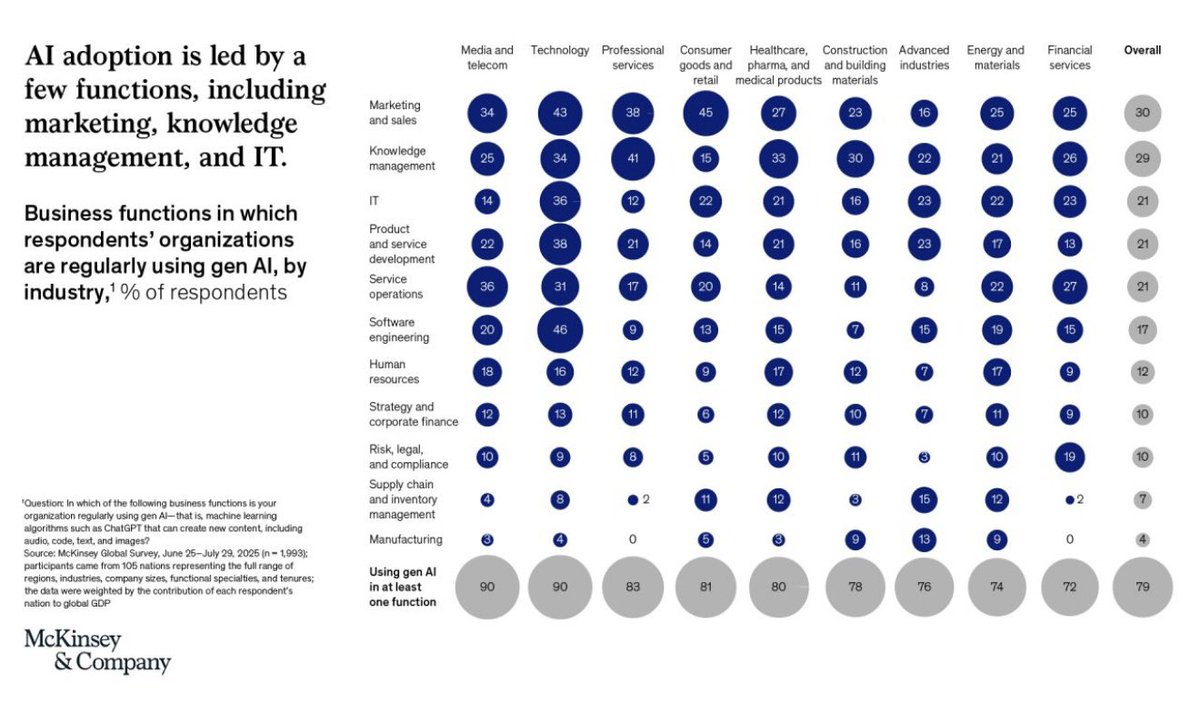
Il 79% delle aziende utilizza l'IA in almeno una funzione. Supply chain e produzione sono rappresentate da percentuali a una cifra.
Il divario tra l'utilizzo attuale e il potenziale di valore è l'area su cui molto si stanno concentrando.
In che funzione state adottando l’IA?
Italiano
5 segnali che il tuo #businessmodel sta invecchiando:
👉Competizione sul prezzo
👉Crescita che richiede sforzo enorme
👉I migliori clienti cambiano comportamento
👉Modello di revenue è invariato da 5+ anni
👉Non sai rispondere a "Perché voi?"
Parliamone!
gmpicks.substack.com/p/il-tuo-busin…

Italiano
5 segnali che il tuo business model sta invecchiando:
👉Competizione sul prezzo
👉Crescita che richiede sforzo enorme
👉I migliori clienti cambiano comportamento
👉Modello di revenue è invariato da 5+ anni
👉Non sai rispondere a "Perché voi?"
Parliamone!
gmpicks.substack.com/p/il-tuo-busin…
Italiano
Giacomo Melani ری ٹویٹ کیا

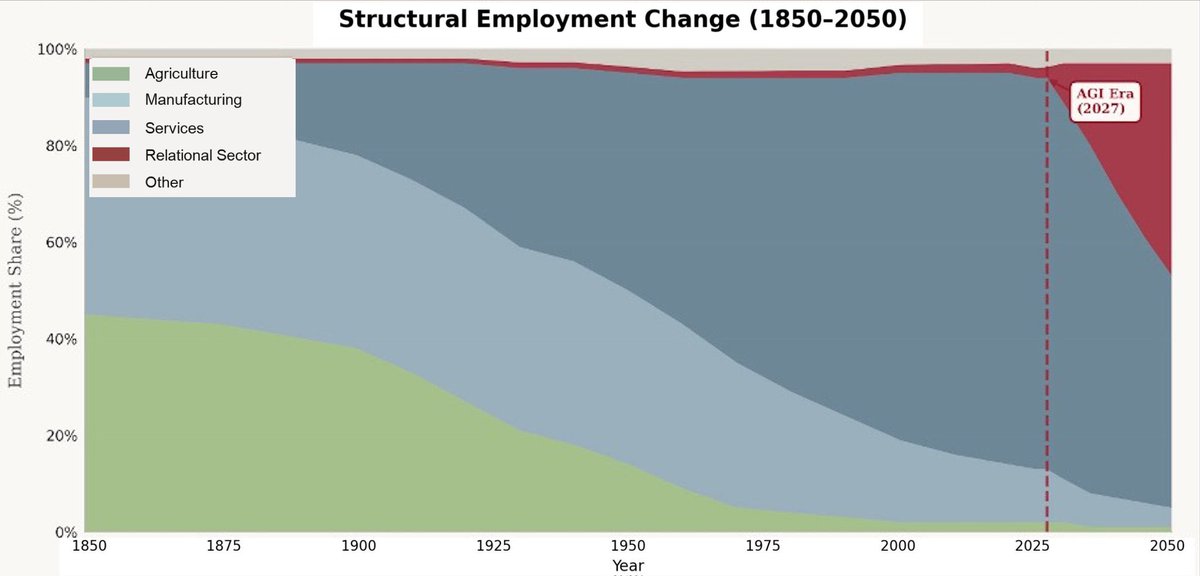
Il lavoro “rubato” dall’AI si sposta nei settori relazionali, dove la scarsità non è nella funzionalità del prodotto/servizio, ma nella psicologia della relazione umana.
É l’antica legge dello status sociale: desideriamo di più ciò che altri non possono avere.
Bellissimo saggio di @alexolegimas sul futuro del lavoro.
Alex Imas@alexolegimas
New essay on the economics of structural change and the post-commodity future of work. 1. Almost any question about the impact of advanced AI on the economy needs to start at the same place: what is still scarce? Answer that, and the analysis becomes pretty straightforward. This essay explores what becomes scarce if AI really can replicate most of what humans do in production, and what this mean for the future of jobs. 2. My conjecture, working through the economics: labor reallocates across sectors, and the sector it reallocates to has properties that keep labor a meaningful share of the economy. Ultimately this is about the structure of demand itself. For this, we have to go back to Girard, Augustine and Rousseau: once people's base needs are met, their preferences shift to comparative motives (e.g., status, exclusivity, social desirability). This motive is inherently non-satiated. 4. The key paper is Comin, Lashkari, and Mestieri (Econometrica 2021). As people get richer, they don't buy proportionally more of everything. They shift spending toward sectors with higher income elasticity. They estimate income effects account for 75%+ of observed structural change. 5. The ironic consequence: the sector that gets automated becomes a smaller share of the economy, not a larger one. Agriculture got massively more productive and its share of employment collapsed. Manufacturing too. The "stagnant" sectors absorb the spending and the jobs. 6. So the question is: which sectors have high income elasticity in a post-AGI world? I argue it's what I call the relational sector. Categories where the human isn't just an input into production, it is part of the value. 7. Why does the relational sector have high income elasticity? Because human desire has a mimetic, relational dimension. We don't just want things for their intrinsic properties. We want what others want, and we want it more when others can't have it. Girard, Rousseau, Augustine, and Hobbes all saw this. 8. In work with Kristóf Madarász, we showed this experimentally: WTP roughly doubles when a random subset of others is excluded from the good. And in new work with Graelin Mandel, AI involvement kills the premium. Human-made art gains 44% from exclusivity; AI-made art only 21%. 9. This all comes together for the core argument. The sector that absorbs spending as AI makes commodity production cheap is one where human provenance is part of the value, and demand for it grows faster than income. Exactly the profile that keeps labor meaningful. 10. To be clear about the claim: I'm NOT saying aggregate labor share must rise. It may fall. The claim is about sectoral composition, i.e., where expenditure and employment go once commodities get cheap, and the fact that the sector that will absorb reallocated labor maps to a substantial component of human preferences and desire. 11. If you're interested in the formal model, a linked companion technical note works out all the economics. Read the essay here: aleximas.substack.com/p/what-will-be…
Italiano
Ho condotto oltre 100 workshop SCAMPER per aziende.
Prima di ogni sessione, fornisco un semplice modello per stimolare la riflessione.
L'ho messo gratis su Gumroad.
𝘀𝗰𝗮𝗿𝗶𝗰𝗮𝗹𝗼 𝘀𝘂𝗯𝗶𝘁𝗼.
giacomomelani.gumroad.com/l/scamper-meth…
Italiano
Leggi questo articolo se vuoi approfondire:
open.substack.com/pub/gmpicks/p/…
Italiano
Nel Q2 in cui si scopre chi sa decidere e chi sa solo pianificare.
I dati ci sono. Il problema è avere il coraggio di agire su ciò che ti dicono, anche quando significano ammettere che il piano era sbagliato.
Quante decisioni stai rimandando in attesa di "più certezza"?

Italiano
Finalmente, un CRM per le PMI.
Facile da usare, potente, AI powered.
Iscriviti come early user
tipak.io
Italiano
💥 𝗦𝘁𝗲𝗳𝗮𝗻𝗼 𝗚𝗮𝗯𝗯𝗮𝗻𝗮 𝘀𝗶 𝗱𝗶𝗺𝗲𝘁𝘁𝗲, 𝗮𝗹𝗹𝗼 𝘀𝘁𝘂𝗱𝗶𝗼 𝗹𝗮 𝗰𝗲𝘀𝘀𝗶𝗼𝗻𝗲 𝗱𝗲𝗹𝗹𝗮 𝘀𝘂𝗮 𝗾𝘂𝗼𝘁𝗮
Lo stilista ha lasciato la presidenza di Dolce & Gabbana aprendo una fase cruciale per la maison #fashion
it.fashionnetwork.com/news/Stefano-g…
Italiano

I'm not a writer
I'm don't have a big team
English is my second language
Yet I make $50,000/month publishing nonfiction books on Amazon.
The best part?
• I don’t write a single word.
• I keep more of what I earn.
• I don’t handle shipping or logistics.
Like + reply 'Book' and I’ll send you the 53-page Claude prompts guide that makes it possible.
Usually $99
Now FREE for 48 hours.
(Make sure to follow so I can Dm)


English