Ruslan Trad@ruslantrad
On March 20, OFAC quietly removed Yurii Korzhavin and Lidiya Korzhavina from its Specially Designated Nationals (SDN) list, issuing no press release and giving no stated reason. The two had been originally designated on May 1, 2024, after Treasury identified them as shareholders of the sanctioned Russian firm Elfor TL.
The "Non-Proliferation" label on the May 2024 filing is the critical detail here. Non-proliferation designations by OFAC typically target networks supplying weapons programs - most commonly Iran's or North Korea's - with dual-use technology or components. Whether Elfor TL itself served as a conduit in the Russia-Iran military-technology supply chain is strongly implied by this classification. However, OFAC has not made a direct public statement connecting the delisting to any diplomatic quid pro quo.
The broader geopolitical backdrop makes the timing hard to dismiss. Politico reported that Moscow proposed a deal to Washington under which the Kremlin would stop sharing intelligence with Iran, including the precise coordinates of US military assets in the Middle East, if Washington halted intelligence support to Ukraine. Russia's envoy Kirill Dmitriev publicly dismissed the report as "fake news", but the existence of such a channel is now confirmed to be in discussion. Removing shareholders of a firm linked to non-proliferation activity fits neatly into a transactional framework in which symbolic sanctions relief is offered as a confidence-building gesture between Moscow and Washington.
The March 20 batch went well beyond Korzhavin and Korzhavina:
- Imre Laszloczki - a Hungarian citizen and former executive of the International Investment Bank, a Moscow-dominated multilateral development bank that Hungary controversially hosted. His removal comes three weeks before Hungary's parliamentary elections on April 12.
- Gilad Piflaks - listed in 2023 as the adult child of a Zimenkov network associate - supported the Russian defence exporters Rosoboronexport and Rostec. His removal suggests the US is unwinding not just primary targets but family-member designations used to maximize pressure.
- Reliable Freight Services FZCO - a UAE-based transport company that Treasury had found in 2023, was shipping x-ray systems, batteries, and aircraft parts to Russia - all high-priority dual-use goods for the war economy.
ℹ️ Gilad Piflaks is a dual Uzbek-Israeli national born in 1992 in Tashkent, Uzbekistan. TASS described him by his Uzbek citizenship. As it is known, Gilad Piflaks was designated by OFAC on February 1, 2023, under the "adult child of a sanctioned individual" provision, specifically because his father, Maks Borisovich Piflaks (also Uzbek), was a director of Mateas Limited, a Cyprus-based company embedded in the Zimenkov network. That network, led by Russia- and Cyprus-based arms dealer Igor Zimenkov, was one of the most significant Russia sanctions-evasion structures uncovered during the war in Ukraine.
Mateas Limited was controlled by Cyprus-based arms broker Alexander Volfovich - a man who formally owned six Zimenkov network companies simultaneously. Gilad and Maks Piflaks were also associates of D.E.S. Defense Engineering Solutions LTD, an Israeli company linked to Russian state military manufacturers, including Rosoboroneksport and Rostec. The network's core function was supplying the Russian military-industrial complex with high-technology components |electro-optic devices, infrared systems, and dual-use electronics), specifically after Russia's full-scale invasion of Ukraine in February 2022.
March 20 was not an isolated move. It was the fourth Russia-connected removal in less than three weeks, including:
- March 6: Globe Trekkers LLC (Dubai), which shipped high-priority goods to Russia.
- March 13: Nikita Kovalevsky (Finnish-Russian dual national) and his three Finnish freight companies - GCH Finland, Unicum Trade, and ACEX - originally designated for helping an FSB-linked firm acquire sensitive US maritime technologies. Two Russian nationals from the same FSB-connected network were cleared simultaneously.
- March 18: Evgeniya Tyurikova (Sberbank private banking head); Berk Turken and his Turkish companies BSB Group and Turken Digital (designated for enabling Russian intelligence to route restricted goods through Türkiye); Boris Vorontsov (Russian state corporation official); and Futuris FZE (UAE company that sourced microelectronics production equipment for weapons manufacturing).
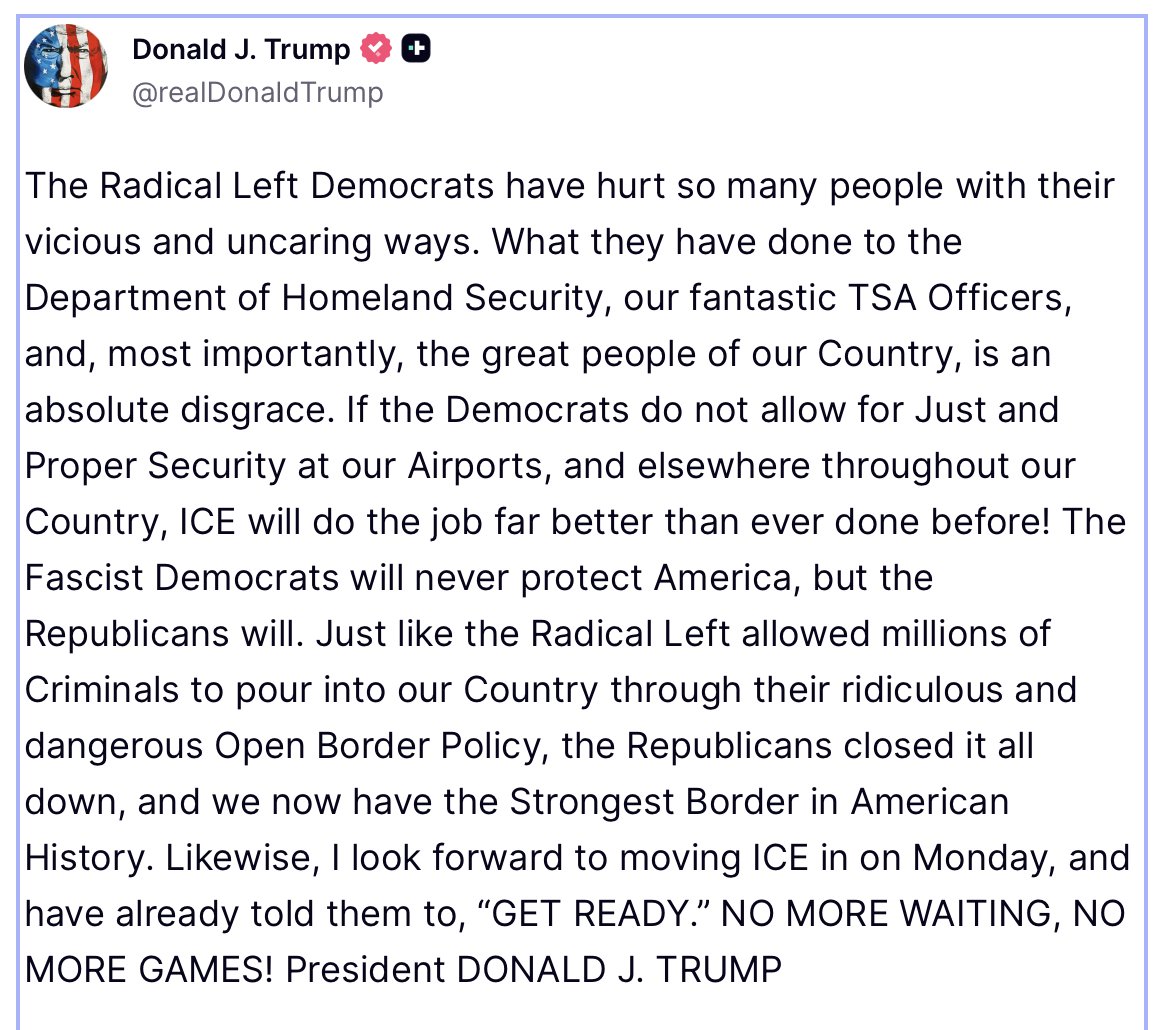
The clearest explanation for the pace of these delistings lies in the current US-Iran war. With Iran blocking oil tankers in the Strait of Hormuz and crude prices rising, Trump has publicly justified easing pressure on Russia as a measure to stabilize the energy market. Treasury Secretary Scott Bessent has said Washington may also lift sanctions on 140 million barrels of Iranian oil stranded at sea — applying the same commodity-relief logic to the adversary the US is actively fighting. Trump himself said Russian oil sanctions would return "as soon as the crisis is over", though he gave no timeline, and the Iran war shows no sign of ending.
The removal of non-proliferation-linked figures like Korzhavin and Korzhavina, whose original designation explicitly invoked proliferation authorities, while the US simultaneously fights Iran over its weapons program, suggests a compartmentalized diplomatic logic: Washington is using targeted sanctions relief as a lever to pull Russia away from the Iran axis, even as it bombs Tehran. Whether Moscow delivers on any reciprocal commitment remains unverified and, given the pattern of quiet delistings with no stated rationale, is unlikely to be confirmed through official channels for now.