Core of the core of the core

40.5K posts

Core of the core of the core

Core of the core of the core

@hateag

This is a football account with occasional forays into oil & gas. Little to no original content

شامل ہوئے Mart 2010
403 فالونگ1.7K فالوورز
Core of the core of the core ری ٹویٹ کیا

I Don’t Watch Film (Football Analytics)
The Jets bragging about going from relying on Madden to fully embracing AI right as large corporations who were early to this stage start pulling back from the use of AI after realizing majority of AI-led projects are failing is genuinely hilarious. Elite comedic timing
ProFootballTalk@ProFootballTalk

The Jets have come a long way from relying on Madden ratings; the team is now fully embracing AI. nbcsports.com/nfl/profootbal…

English

1
4
12
1.6K
Core of the core of the core ری ٹویٹ کیا
Zaid Jilani
Zaid Jilani@ZaidJilani·
TXSEN is so funny to me, because by any normal person's definition John Cornyn is a reliable conservative Senator but Texas Republicans still want to throw him out for a guy mostly known for corruption and adultery.
English
37
175
1.9K
36.2K
LWYO
LWYO@Lyndsey5280·
I fucking hate you for bringing an enormous male pitbull to a children's outdoor concert and I wish nothing good for the remainder of your generations if your kids even survive.
English
3
0
16
609
Core of the core of the core ری ٹویٹ کیا
Brian Tashman
Brian Tashman@briantashman·
“The recruitment of Colombian private military contractors adds to a growing body of evidence that the UAE provides military support to the Rapid Support Forces, which have repeatedly carried out heinous atrocities in Sudan” middleeasteye.net/news/atrocitie…
English
0
3
2
166
Core of the core of the core ری ٹویٹ کیا
JH
JH@CRUDEOIL231·
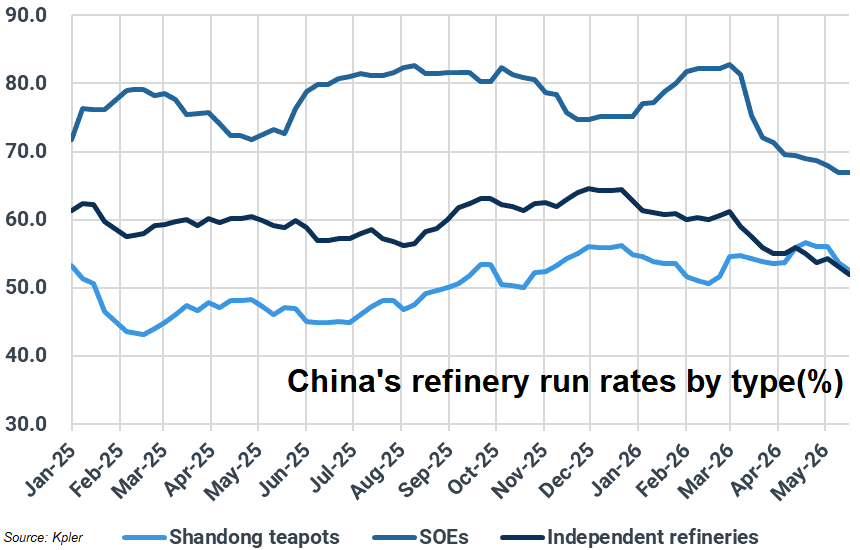
I’ve been grinding away trying to map out China’s recent crude plays, but after going through today's report, I have to hand it to OIES—they scripted the plumbing way better than me. Here is my quick breakdown after running through their print, alongside the Chinese refinery throughput chart to help connect the dots. - Three months into the Hormuz crunch, and Beijing is completely blindsiding the market with its crude playbook. A heavyweight that easily sucked in 11mb/d over the last five years just saw its import prints plunge to 9.3mb/d in April. Now, the forward data says May and June seaborne arrivals are about to crater straight into the gutter at 6.5mb/d. Instead of running its usual playbook of panic-dumping the SPR to backstop the market during a supply crisis, Beijing just completely cock-blocked refiners from touching the strategic vaults, only greenlighting commercial stock draws. To make it worse, refiners aren't even willing to bleed their own commercial inventories, while state traders are acting like total penny-pinchers—happily flipping premium WAF cargoes back into the market and hoarding dirt-cheap Russian barrels instead. This is a complete 180 from the 2021 power crunch, when Beijing panicked and ordered everyone to grab supply 'at any cost.' The heavyweights and policymakers in Beijing clearly think they can outmaneuver this supply shock and keep the economic damage locked down by playing a few smart, tactical micro-levers. China’s true red line for freezing out imports is hardwired to the scale of their run cuts. If they try to copy-paste their five-year average throughput of 14.1mb/d, the exact moment seaborne arrivals drop below 9.2mb/d, they’re trapped—they either have to open the strategic taps wide or start chasing expensive market barrels. Instead, chopping runs by 5% down to a 13.4mb/d baseline is hands-down their most realistic, long-term survival play. In this setup, if domestic crude extraction and pipeline taps keep humming, they can easily coast for a few months without taking a single economic hit, even with seaborne prints scraping a measly 7.9–8.5mb/d, because transportation fuels like gas and diesel will still be taken care of. However cranking run cuts to a nuclear 10% scenario means they could survive without chasing a single market barrel even if seaborne flows dry up to 7.2mb/d—but they'd have to throw petrochemical feedstocks like naphtha and LPG under the bus just to keep gas and diesel flowing, a desperate move that runs on borrowed time and stalls out after a few months unless the whole economy is in a total tailspin. To micromanage this whole run-rate circus, China's refining complex is pulling a highly responsive lever: the yield shift. Beijing explicitly told state majors like Sinopec and PetroChina to ditch chemical feedstocks and prioritize flooding the market with gas and diesel, and these plants immediately saluted by shifting their product yields by several percentage points on a dime. As a result, the real bloodbath isn't happening at the refining gate—it's completely decimating the downstream petrochemical chain. With Hormuz blocked, their seaborne naphtha inflows were already sliced in half, but a 5% run cut is about to bleed domestic naphtha and LPG supplies by tens of millions of tons a quarter, sending a compounding, fatal shock straight through the petchem feedstock backbone. They are keeping wheels turning by guaranteeing gas and diesel, but the squeeze on industrial chemical feedstocks is completely running on borrowed time. To paper over the massive raw material hole in the petchem chain, Beijing is shoving its massive 'Coal-to-Chemicals' complex into the spotlight, branding it as a strategic shield against volatile crude under the 15th Five-Year Plan. Thanks to dirt-cheap, stable domestic coal, inland plants churning out olefins and methanol are running hot to boost volumes, but this quick fix hits a hard ceiling when it comes to replacing lost barrels at scale due to structural bottlenecks. The core infrastructure is trapped deep in the northwestern sticks like Inner Mongolia, meaning slamming those products down to the massive manufacturing teeth on the southeastern coast comes with a punishing logistics and freight premium. Most importantly, coal gasification routes physically cannot clone key aromatics or specialized LPG chemical chains—the feedstock deficit is mathematically locked in. On top of that, the fact that Beijing is sitting on a massive 1.1-1.3 billion barrel pile without tapping it proves that institutional red tape is locking up the plumbing. The 100 million barrels buried deep in dark underground rock caverns—completely invisible to satellites—are almost entirely SPR, requiring endless red tape like complex auctions and market disclosures, so Beijing is hoarding it as a nuclear option. Even for the commercial barrels that are accessible, refiners are terrified to draw down because plotting out the repayment timeframe to replace that crude is a total mathematical nightmare in this chaotic macro environment. Beijing is pulling off a highly calculated micromanagement script here: they are completely freezing out the inventory draw requests from state-owned heavyweights like Sinopec, who are nakedly exposed to global benchmarks and were the first to aggressively slash throughput. Instead, they are using the Shandong teapots as a human shield—handing these independent refiners tax breaks and strict run-rate mandates because they have the flexibility to stomach toxic, illicit Iranian and Russian barrels to cushion the margin bleed. Bottom line, this entire web of macro levers—starving imports, shifting yields, hunting for distressed barrels, and burning through coal-to-chem assets—will keep the lights on and protect the economic skeleton through the peak of summer, but only under that tight 5% run cut baseline that keeps seaborne arrivals pinned at roughly 8mb/d. But with May and June seaborne prints already locked in at a subterranean 6.5mb/d, the expiration date on this makeshift band-aid play cannot stretch into autumn. Short of letting their entire national refining infrastructure suffer a catastrophic meltdown, Beijing is running straight into a hard physical wall. Before late summer wraps up, they will be forced to either open the strategic floodgates and dump their massive stockpiles or make a frantic U-turn right back into the international physical market, chasing heavy volumes aggressively at any price. #oott #iran
JH tweet media
English
73
105
638
122.5K
Core of the core of the core ری ٹویٹ کیا
SIRAJ
SIRAJ@SIRAJ_SYRIA·
من خط اليد إلى الإحداثيات الدقيقة… “سراج” تحلل خرائط ألغام تركها ضباط نظام الأسد في اللاذقية بعد هروبهم من مواقعهم في ريف اللاذقية، ترك ضباط جيش الأسد خرائط لتسع حقول ألغام، تستعمل تلك الخرائط نظاماً مترياً خاصاً لا يعتمد الإحداثيات المترية الدقيقة، وهو ما يجعل قراءة تلك الخريطة مهمة صعبة. حلل الصحفيون بالتعاون مع خبراء وباستخدام المصادر المفتوحة تلك الخرائط، وترجموها إلى لغة تفهمها نظم الملاحة المعتمدة عالمياً مثل “غوغل مابس”، اكتشف الصحفيون مواقع حقول الألغام بدقة في ريف اللاذقية وقرب قرى "كبانة" و"عكو" و"بوز الخربة" و"بشرفة". اقرأوا تحقيقنا الكامل “خرائط سريّة تركها جيش الأسد تكشف لأول مَرة أماكن حقول ألغام في ريف اللاذقية ” على موقع سراج، عبر الرابط التالي: 👉 buff.ly/2UCDUhy 👈 @ahmad_haj_bakri #الألغام_في_سوريا #ريف_اللاذقية #سوريا #حقول_الألغام #مخلفات_الحرب #تحقيق_استقصائي #سراج #إزالة_الألغام #وزارة_الطوارئ_وإدارة_الكوارث #وزارة_الدفاع
العربية
2
12
97
5K
Core of the core of the core ری ٹویٹ کیا
JH
JH@CRUDEOIL231·
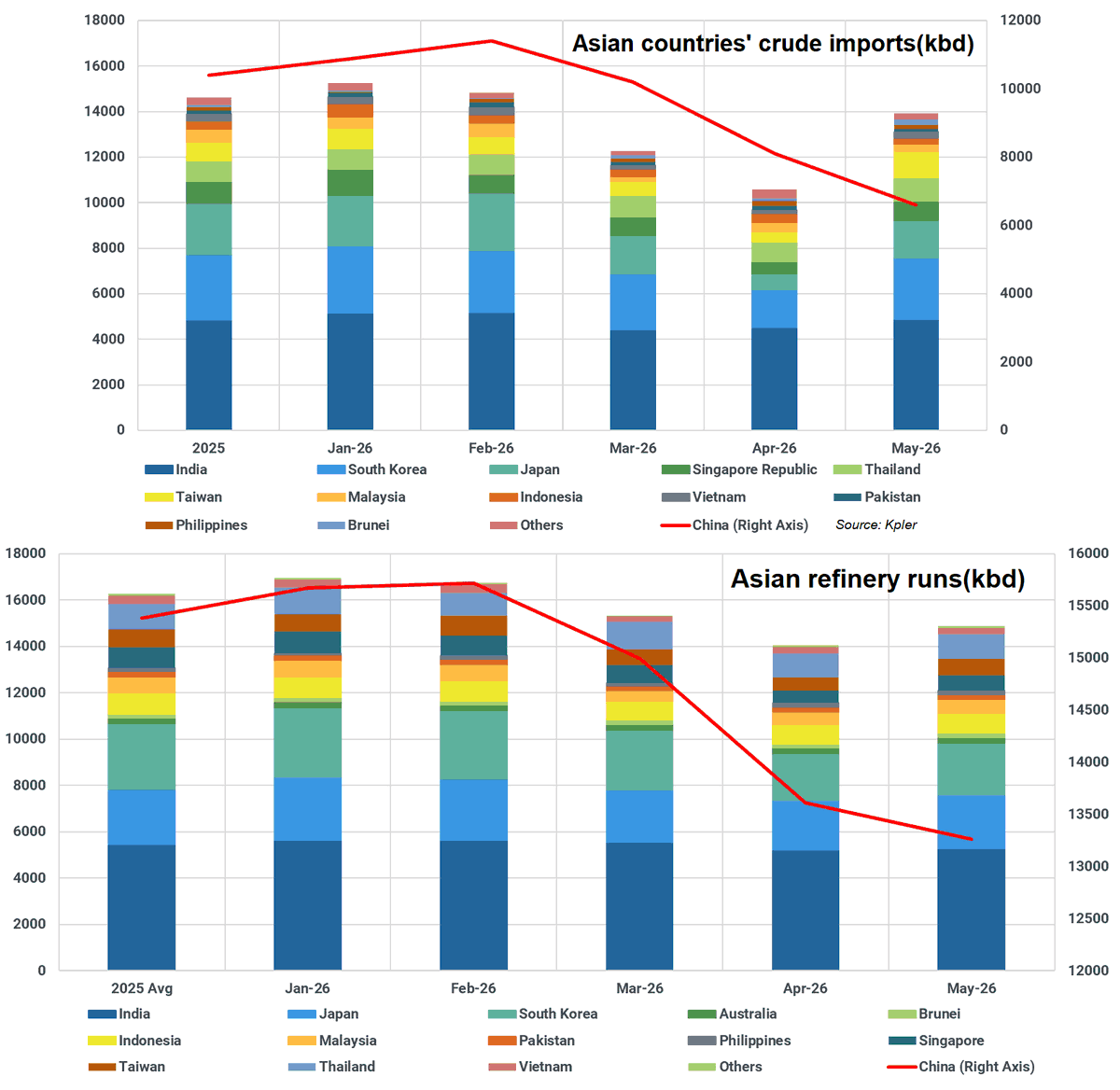
China’s steep pullback in crude imports has thrown a major bone to the rest of Asia, throwing a blanket over the region's feedstock shortage. Other Asian buyers swooped in on May-arrival barrels left on the table by China, giving regional refinery runs a bit of bounce. Make no mistake, runs across the board is still severely depressed compared to baseline levels. But if Chinese refining runs and import prints stay in the gutter, rest of Asia will keep reaping the rewards. Intentionally or not, Beijing just played savior to Asia's sourcing needs. However the macro picture says this won't last forever—China's import drop is vastly outpacing its run cuts right now, which means this divergence is running on borrowed time. #oott #iran
JH tweet media
English
13
71
400
42.9K
Core of the core of the core ری ٹویٹ کیا
Bryan Fischer
Bryan Fischer@BryanDFischer·
Things have changed since the last time the Knicks made the Finals.
Bryan Fischer tweet media
English
0
1
4
1.9K
Core of the core of the core ری ٹویٹ کیا
💫🅰️♈️🆔
💫🅰️♈️🆔@ADavidHaleJoint·
It is crazy to consider the driving force behind a lot of 24 talk isn't about audience size or TV contracts or bowls or preserving the regular season but... People paid for their trophies in advance & now we owe them something.
English
4
2
15
9.8K
Core of the core of the core ری ٹویٹ کیا
Rory Johnston
Rory Johnston@Rory_Johnston·
30 days ***AFTER*** a deal? Guys, we can't even land a deal, which over the weekend was supposed to be signed Sunday and include near-immediate Hormuz transit relief. Now the deal timeline continues to slip and the new Hormuz position is a month *after* whenever that manages to land? Bad, bad, bad.
Al Jazeera Breaking News@AJENews

BREAKING: The US and Iran have discussed a plan under which Tehran would open the Strait of Hormuz about 30 days after a deal to end hostilities, reports Asian media outlet. 🔴 More on Aljazeera.com

English
90
132
912
113.4K
Core of the core of the core ری ٹویٹ کیا
Jim Gardner-Johnson
Jim Gardner-Johnson@DatDudeJD·
BAR OWNER: “You’re OK at making drinks, but are you good at changing the channel on a TV?” BARTENDER INTERVIEWEE: “I am the literal worst channel changer of all time.” BAR OWNER: “You start tomorrow.”
English
183
2.9K
70.6K
2.8M
Core of the core of the core ری ٹویٹ کیا
Arjun Narayan
Arjun Narayan@narayanarjun·
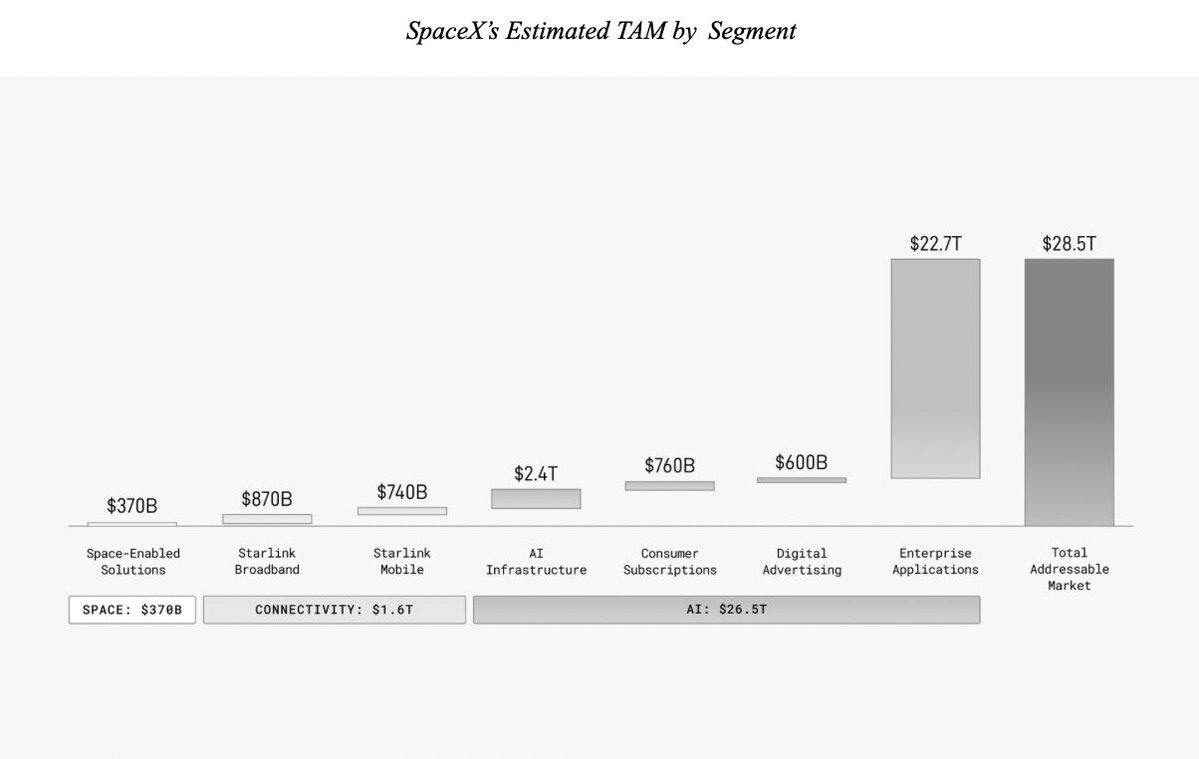
SpaceX drops the hypiest IPO filing and says "we believe we have identified the largest TAM in human history", and you're like, my interplanetary east India company, what delectable spice have you decided to ship across the stars, and it's like... 22 trillion dollars of b2b saas
Arjun Narayan tweet media
English
44
126
1.6K
467.3K
Core of the core of the core ری ٹویٹ کیا
Konrad Curze Banquent
Konrad Curze Banquent@OpsecCurze·
lmao, literally 'MMMM these veggies are SO TASTY''d his crew.
Dr. M.F. Khan@Dr_TheHistories

Captain Cook loaded 7,860 pounds of sauerkraut onto the HMS Endeavour in 1768. His crew refused to eat it, so he served it exclusively to the officers and made sure they ate it visibly in front of the crew every single day until the sailors decided they wanted some too. Not one man died of scurvy on the entire three-year voyage. Cook circumnavigated the world on his first voyage without losing a single man to scurvy and the Royal Society of London awarded him the Copley Medal on his return, one of the most prestigious scientific honours in Britain, specifically for his methods of preserving the health of his crew. The achievement was genuinely extraordinary. Scurvy had been killing sailors on long voyages for centuries, with some estimates suggesting it killed more sailors than enemy action, storms and all other causes of death combined. Cook solved it with fermented cabbage and a very specific understanding of human psychology. A typical daily menu aboard the Endeavour consisted of breakfast with boiled wheat and sugar, a midday dinner of salted beef stew and vegetables, and an evening meal of soup with ship's biscuits so hard they had to be broken up with a marlin spike. The ship carried approximately 5,500 litres of beer, 7,300 litres of spirits, 16 tonnes of bread, 2 tonnes of salted beef and over 3 tonnes of sauerkraut. The sailors ate approximately 5,000 calories a day to sustain the physical demands of running an 18th century sailing ship. Cook also carried portable broth made from cattle offal, forty bushels of malt, vinegar, mustard and concentrated citrus juice as additional anti-scurvy measures. He was running what was effectively the first controlled nutritional experiment in naval history across three years and 40,000 miles of ocean. The sauerkraut psychology is the detail that stay with me in this story. Cook noticed that Dutch sailors suffered far less from scurvy than their British counterparts and observed that they carried barrels of sauerkraut. He ordered his ships to do the same but his British sailors refused the unfamiliar foreign food entirely. His solution was to serve it only to the officers while making sure they ate it visibly in front of the crew. Within weeks the sailors were demanding their share, and Cook understood that sailors suspicious of an unfamiliar food would eat it the moment they believed someone of higher status was being given something they were not. © Eats History #drthehistories

English
36
1.9K
37.3K
2.2M