Khoa D. Doan

162 posts

Khoa D. Doan banner
Khoa D. Doan

Khoa D. Doan

@khoaddoan

I am an Assistant Professor (CECS, VinUniversity). I lead MAIL Research, where we focus on practical and trustworthy ML, with passion, joys, and hard work!

VinUniversity, Vietnam شامل ہوئے Temmuz 2023
71 فالونگ148 فالوورز
Khoa D. Doan ری ٹویٹ کیا

NeurIPS Conference
NeurIPS Conference@NeurIPSConf·
NeurIPS 2026 is accepting submissions for Workshops! 

If you are interested in hosting a workshop, read the Call for Workshops neurips.cc/Conferences/20… on how to submit a proposal, and be sure to follow the submission guidelines for proposals, with important changes this year neurips.cc/Conferences/20…
English
2
12
98
21.4K
Khoa D. Doan
Khoa D. Doan@khoaddoan·
NeurIPS'26 Call for Workshops is officially live at neurips.cc/Conferences/20…. Important dates: Workshop Application Deadline: June 06, 2026, AoE Workshop Acceptance Notification: July 11, 2026, AoE This year, workshops can be hosted in 3 different locations: Sydney, Paris, and Atlanta @NeurIPSConf
English
0
0
0
86
Khoa D. Doan ری ٹویٹ کیا
NeurIPS Conference
NeurIPS Conference@NeurIPSConf·
We want to speak directly to the concern many of you have expressed, and we owe you a clear explanation of what happened, why it happened, and where we stand now. We understand this situation caused genuine alarm and we take that seriously. In preparing the NeurIPS 2026 handbook, we included a link to a US government sanctions tool that covers a significantly broader set of restrictions than those NeurIPS is actually required to follow. This error was due to miscommunication between the NeurIPS Foundation and our legal team; there was never an intention to restrict participation beyond our mandatory compliance obligations. The responsibility for that error is ours as an organization, and we deeply apologize for the alarm and impact this miscommunication had on our community. We have updated the link and clarified the text of our policy, which is consistent with that of ACM and IEEE, as well as other international conferences and NeurIPS in the past. As in previous years, NeurIPS welcomes submissions from all compliant institutions and individuals. We want to reiterate that NeurIPS is a community-driven event, created by and for the community, and strives to be inclusive. The NeurIPS 2026 organizing committee was particularly saddened to learn of this institutional miscommunication. The organizing committee has taken on the responsibility of running the conference this year with the goal of fostering open communication, knowledge sharing, and global scientific discourse. We thank the community for bringing this issue to our attention and working with us through this situation.
English
264
126
505
494.1K
Khoa D. Doan
Khoa D. Doan@khoaddoan·
Official @NeurIPSConf statement (from website): The NeurIPS Foundation, like any entity operating within U.S. legal jurisdiction, is required by law to comply with U.S. sanctions and trade restrictions. Under these regulations, providing 'services' (which would include peer review, editing, and publishing) to Specially Designated Nationals and Blocked Persons, or "SDNs", is strictly prohibited. Consequently, we are unable to accept or publish submissions from any SDN, or any individual or institution that NeurIPS reasonably believes represents or is affiliated with an SDN. The US State Department's Office of Foreign Asset Controls maintains a searchable website that lists all SDNs. NeurIPS will consider submissions from institutions and individuals that the US State Department has categorized as "Non-SDN". sanctionslist.ofac.treas.gov/Home/SdnList
NeurIPS Conference@NeurIPSConf

NeurIPS is aware of the community's concerns regarding the list of sanctions. NeurIPS is an inclusive community focused on free scientific discourse. We deeply value the research that comes from everyone in our community. The present concerns are not about science or academic freedom. They are about legal requirements that apply to the NeurIPS Foundation, which is responsible for complying with sanctions. We are actively consulting legal counsel to fully understand the legal constraints and we will update the NeurIPS community as soon as we have reliable guidance from our lawyers.

English
0
0
1
529
Khoa D. Doan
Khoa D. Doan@khoaddoan·
[N/N] This resembles humans’ mnemonic memory-linking technique, which establishes associations of fragments of information to enhance memory retention or recall. As the model learns a new task, other (very lightweight) rectifiers establish a mnemonic link from the new representation of the sample from the past task to its past task’s correct representation.
English
1
0
0
41
Khoa D. Doan
Khoa D. Doan@khoaddoan·
Is it possible to allow DNN to forget as it continually learns new tasks, but recall knowledge when making decisions using lightweight DNNs? If possible, practitioners can train their DNN task by task without any modifications, allowing flexibility in engineering and removing ties to a specific CL method.
English
1
0
0
56
Khoa D. Doan
Khoa D. Doan@khoaddoan·
Writing @iclr_conf's meta reviews and especially making decisions were "brutal". I've never made as difficult review decisions as this time. There'll definitely be authors who WON'T be happy, but I do hope that they'll appreciate the effort (weeks), the challenges (less information than before), and preference for high quality (based on limited information again). If this is not your time this time, and you believe in your paper, it will get accepted at a good place soon!
English
0
0
4
511
Khoa D. Doan
Khoa D. Doan@khoaddoan·
Notably, this lays the groundwork for future mitigation methods by adapting mitigation strategies from classical RL to the RLVR setting!
English
0
0
1
181
Khoa D. Doan
Khoa D. Doan@khoaddoan·
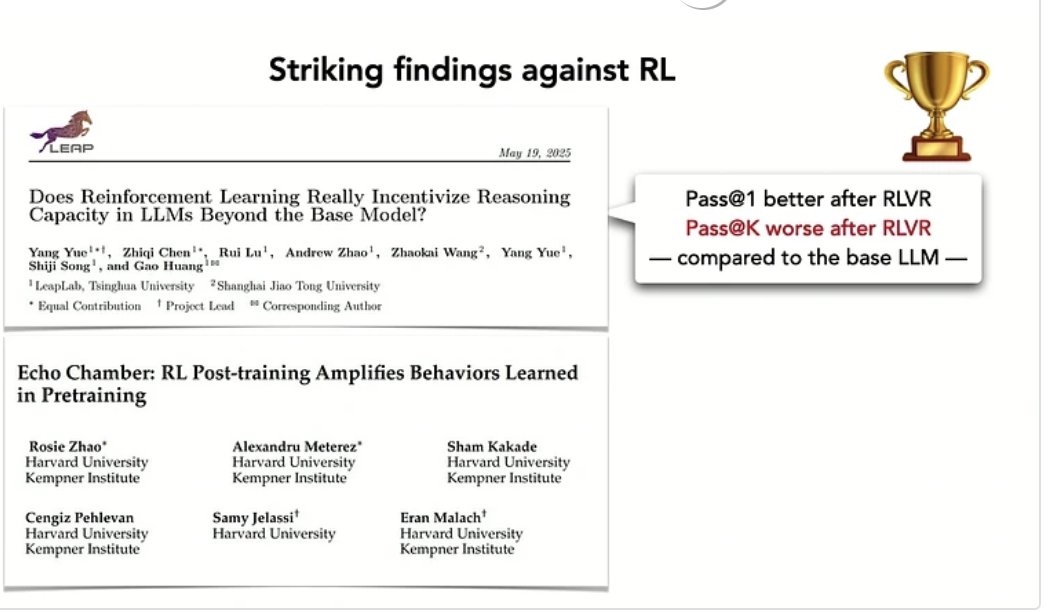
@YejinChoinka's talk at @NeurIPSConf showed the limitations of RLVL: reasoning ability shrinks after RLVR training. Our latest work is the first to "explain" why this phenomenon happens in RLVR, discovering (1) the negative interference between learning different problems, (2) winner-take-all where rich problems receive more learning signals, and (3) on-policy learning/existing regularization make this winner-take-all worse. arxiv.org/abs/2510.02230
Khoa D. Doan tweet mediaKhoa D. Doan tweet mediaKhoa D. Doan tweet media
English
2
5
23
3.7K
Khoa D. Doan ری ٹویٹ کیا
Open Review
Open Review@openreviewnet·
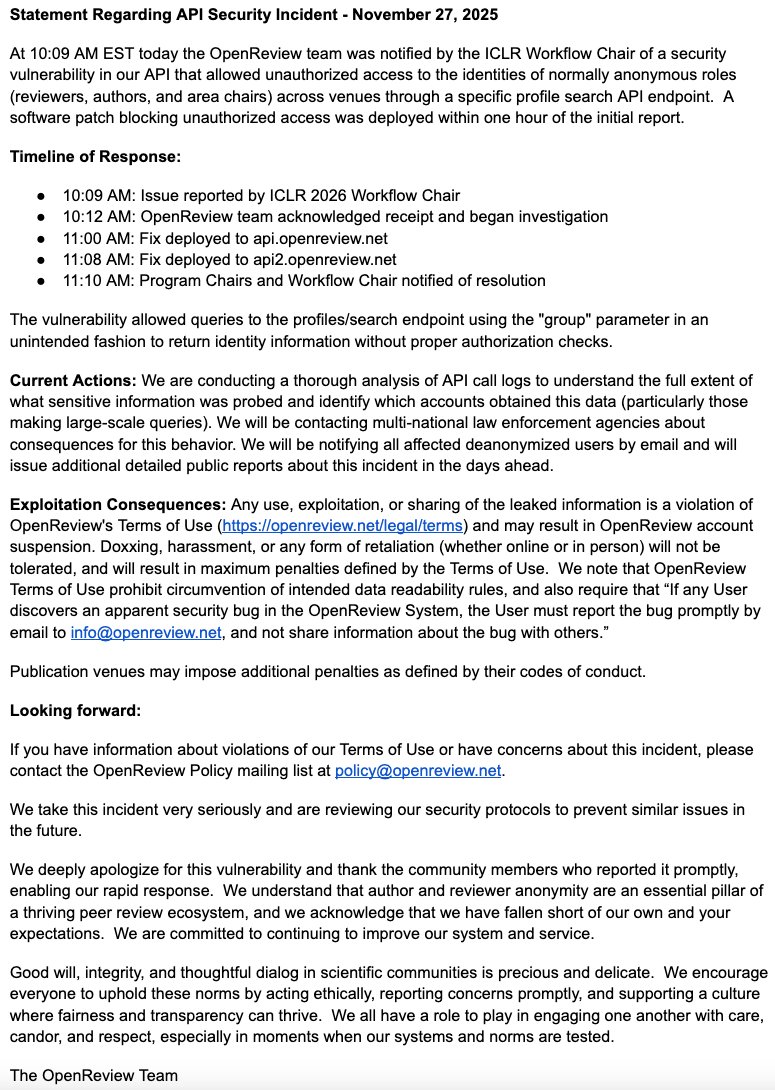
Statement Regarding API Security Incident - November 27, 2025
Open Review tweet media
English
15
92
236
188.5K
Khoa D. Doan
Khoa D. Doan@khoaddoan·
@thaoshibe My student was just threatened as well. Unacceptable!
English
0
0
6
2.4K
Thao Nguyen (Shibe)
Thao Nguyen (Shibe)@thaoshibe·
My friend said there is a PhD student (reviewer) cancelled her trip to NeurIPS because she was threatened by authors. This is unacceptable. Please report immediately to ICLR -- All "unethical" authors should be banned for years!!
ICLR@iclr_conf

English
11
33
472
88.3K
Ahmad Beirami
Ahmad Beirami@abeirami·
Thrilled to share that 0 papers were accepted to ACL and 0 papers were submitted to NeurIPS! If you got a paper accepted, please let us know why you're thrilled about it. Why should we read it? I'm specifically interested in papers on post training / RL / agents.
English
11
8
214
74.3K
Khoa D. Doan ری ٹویٹ کیا
ACM Digital Library
ACM Digital Library@ACMDL·
🎉 ACM welcomes the inaugural Co-Editors-in-Chief of ACM AI Letters (AILET): Nitesh Chawla (Notre Dame) • Barry O’Sullivan (UCC) • Richa Singh (IIT Jodhpur) They’ll lead AILET from June 2025–May 2028 — advancing rapid, high-impact AI research! 🔗 buff.ly/cgF71Ex
ACM Digital Library tweet media
English
0
4
3
1K
Khoa D. Doan
Khoa D. Doan@khoaddoan·
[Final Note] Applications of CAD? unlearning, bias/fairness mitigation, image editing... all at inference time. Could we have lightweight fine-tuning too?
English
0
0
0
52
Khoa D. Doan
Khoa D. Doan@khoaddoan·
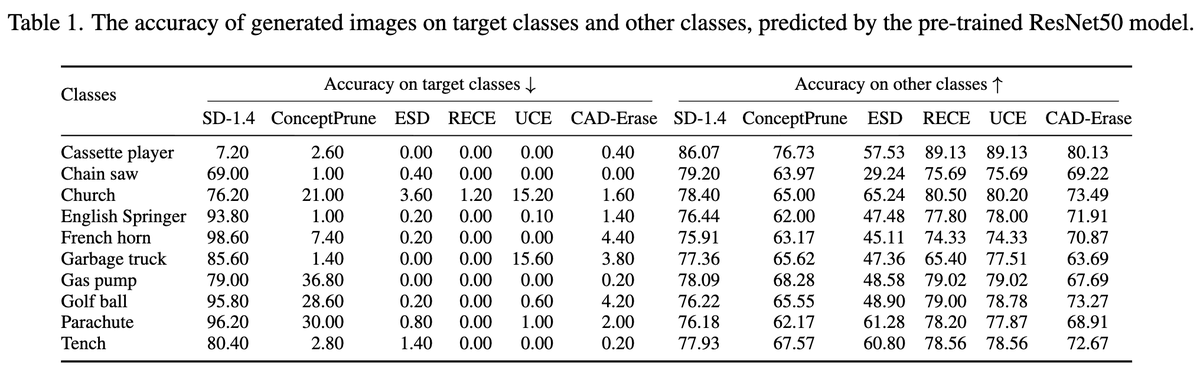
[4/4] Quantitatively, CAD can “erase” concepts with notable results compared to existing unlearning methods, at inference time (and without retraining).
Khoa D. Doan tweet media
English
1
0
0
65
Khoa D. Doan
Khoa D. Doan@khoaddoan·
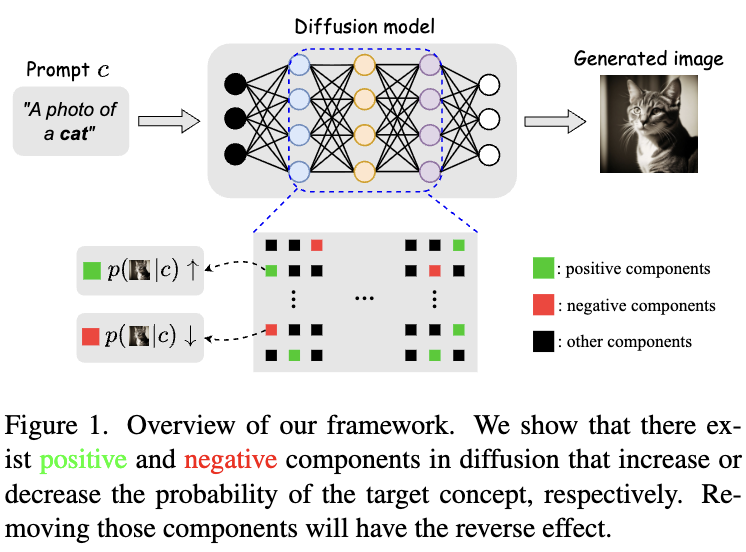
Which components (e.g., weights, layers, etc…) of the model “responsible” for generating a concept (e.g., generating a Golf Ball, Van Gogh, or NSFW concept) in T2I Diffusion Models? If we can answer this question, we would know how to control DM to generate data, or even potentially fix the model biases. We answer this question in our NeurIPS'25 work "Unveiling concept attribution in diffusion models". Paper: arxiv.org/abs/2412.02542 Code: github.com/mail-research/…
Khoa D. Doan tweet media
English
1
0
0
158