

luckless513
2K posts
luckless513 ری ٹویٹ کیا

¡Ya puedes inscribirte a Spingo 🟠 en tu ventana de desafíos! 🕺
Mientras tanto, ¿sabes cuál es la bola misteriosa que puede ayudar a Nick a marcar ❌ una combinación superior que Spraggy? 👀
Responde correctamente junto con tu [PS ID] + #Spingo antes del lunes 23:59 ET. Hay 10 tickets de US$5 para jugar Spin & Go. 🎫
T&C: psta.rs/TyCLatam
Español
luckless513 ری ٹویٹ کیا

Sólo faltan días para las series HighFive!🔥
⏰SORTEO $22 TKT!
1⃣Seguir
@AcrPokerLatam
@ACR_POKER
@ProgressiveDre1
2⃣ Dejá tu MG❤️
3⃣ Comentá tu nick de ACR
Revisá si tenés alguna llave en el Venom Vault!! 🤑😎

Español
luckless513 ری ٹویٹ کیا

🥳Happy Free Money Friday!
🔴Live at twitch.tv/gripsed
💸$16.50 Giveaway➡️Repost to Enter
🃏The Party's @ACR_POKER
What's Happening Today
🥇 Team Online Turbo Bounty Bash
🥈 $500 Added Homegame
🥉 Blackjack, Slots & BIG-O Tourneys
🏆$100 Giveaway👉 x.com/Gripsed/status…
GIF
Evan Jarvis | Gripsed | ACR Team Online Pro@Gripsed
🐣April 411 & $100 Giveaway🤑 To Enter ✅Repost This ✅Watch the video (2x speed) ✅Tag 3 Poker Buddies ✅Comment Your Favorite High Five event Need an @ACR_POKER Account? 1) Sign up👉gripsed.com/acr 2) Ref Code = GRIPSED 3) Deposit & DM me for a Bonus (New accts only)
English
Indonesia
luckless513 ری ٹویٹ کیا

🎟️Spingo has arrived and there are free tickets up for grabs🎟️
Who is favourite to win between @nickwalshtv @Adammckola and @chelsearory?
Reply with answer + [Stars ID] + #FridayGiveaway by 18:00 CET, Sun. 10 winners get 10x $1 SAG tickets.
T&Cs: psta.rs/TCsGL

English
luckless513 ری ٹویٹ کیا

I am giving away a $11 50k and $22 75k ticket! Comment your ACR name below👇🏻

English
@vxunderground Is the Trojanized HWMonitor hash correct? @vxunderground
English

I'd like to apologize to my colleagues for not sharing the IoCs.
Portable HWMonitor Installer (1.63):
3d91f442ddc055e19e3710482e1605836c799249dacd43d99843257a3affd2d2
Fake CRYPTBASE.dll:
a27df06c7167eced1ddaeb8adccaa5f60500f52bc7030389eed2a0903cdf8286
Trojanized HWMonitor:
02db6764d1f13b837b0a525e5931bdbc67e7a2a4d071e849c7e087255d4a2d5b
Can't remember what this file did:
4547f3c7854413f9ae0806c51564684b796399bea0511a8b6c4d63a136c8ad56
Can't remember what this file did (1):
f633b48d5281709bcf3b1d8f54703792e51bb38ab507e9caa9c2fbe79b78aa53
Can't remember what this file did (2):
058f45b11fdd43ef51571577ec2ed9bcabe039a6615d05900aeb3655e9cec7e9
.cs file:
788d3f14ff6a701b114e0b40990379c0302e26c1bbbce22a7ee5c872c7df1d1f
.NET assembly:
47c17003d58cd609bff8ab788b51803b3b0de0648b40cd4e5591948298914753
C2:
https://welcome[.]supp0v3[.]com/d/callback
vx-underground@vxunderground
Yeah, so pretty much this cpuid.com malware is a pain in the ass. I'd have to spend a good bit of time trying to bonk it with a stick and reconstruct some of it. Whoever developed this malware actually cares about evasion and made some intelligent decisions when developing this malware payload. This appears to only impact HWMonitor 64bit. It appears (based on user reports) cpuid became malicious around 7PM EST, April 10th, 2026. However, it is possible it was much earlier than this, this is just when people began noticing and discussing it online. From an extremely high-level overview, it appears the ultimate goal of this malware is data theft, specifically browser credentials. However, I could be wrong in that assessment, but I'm fairly confident in it. I'm guessing this is the end goal because when I emulated it I can see it messing with Google Chrome's IElevation COM interface (trying to dump and decrypt saved passwords). However, between this it does a bunch of other stuff too. 1. They (an unknown Threat Actor) compromised cpuid.com to deliver malware from HWMonitor. It impacts the actual installer as well as the portable installer. It downloads stuff from supp0v3-dot-com, the same domain used from a previous malware campaign targeting FileZilla in the beginning of March, 2026 initially reported by MalwareBytes. 2. HWMonitor comes packaged with a malicious CRYPTBASE.dll. CRYPTBASE.dll is a legitimate Windows library, but they made a fake one to blend in (malware masquerading). This DLL is responsible for connecting to their C2 and downloading the other malware stages. 3. It tries to detect emulation and prevent reverse engineering by checking for the presence of specific registry keys on the machine. However, they failed doing this and didn't account for everything. Notably, they only check for VirtualBox (whomp, whomp). 4. It downloads a .cs file from a remote C2 and then compiles it manually on the machine by invoking .NET stuff. This is an interesting strategy. It does all of this via Powershell (LOLBIN nonsense). 5. The .cs file it compiles is a .NET binary with NTDLL exports. The main HWMonitor binary performs process injection using this compiled .NET binary. This is an interesting strategy. 6. Almost everything it does is performed in-memory. I would have to do through this and manually bonk all of this stuff with a stick and determine precisely how it operates. However, I don't think that is necessary because at this point we know this is malware and we know it's trying to steal browser credentials. +2 points for IElevation COM Interface credential dumping +1 point for inline Powershell CLI DLL compilation +1 point for .NET assembly NTDLL export proxying -1 point for botched anti-emulation +2 points for website compromise and supply chain attack +1 point for memory persistence -3 points for recycling the same C2 from March, 2026 campaign Overall I give this malware a B-. This is pretty good malware.
English
luckless513 ری ٹویٹ کیا
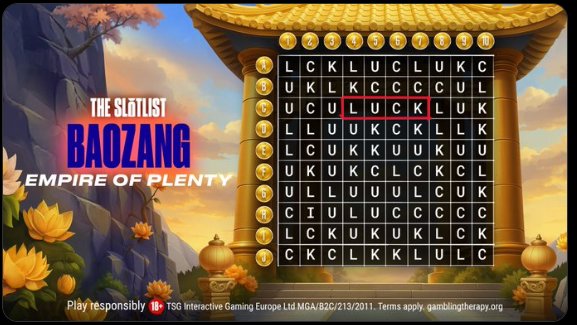
Play our new Slotlist game, Baozang Empire Of Plenty, for free.
We've hidden the word 𝐋𝐮𝐜𝐤 in our grid below, find it for the chance to win.
Reply with your answer + [Stars ID] + #Slotlist by 18:00 CET, Fri. Five winners receive $5 Instant Bonus.
T&Cs: psta.rs/TCsGL
Give Slotlist a spin👉psta.rs/SlotlistCasino
#PokerStarsCasino

English
luckless513 ری ٹویٹ کیا

Essa tá fácil! Se liga: UM de OITO tíquetes de US$11 pode ser seu. Responde aí!
⏰ Até amanhã, às 20h, no formato: X [StarsID] + #PokerStarsBrasil
ℹ️ Termos se aplicam: psta.rs/TermosBR.

Português
@Gripsed @ACR_POKER The Highest 5 - Phil's $25K Puff & Bluff
@Juantwp @michellpr5 @cottageartelf
Nick: SiMorenoQ
English
luckless513 ری ٹویٹ کیا
🐣April 411 & $100 Giveaway🤑
To Enter
✅Repost This
✅Watch the video (2x speed)
✅Tag 3 Poker Buddies
✅Comment Your Favorite High Five event
Need an @ACR_POKER Account?
1) Sign up👉gripsed.com/acr
2) Ref Code = GRIPSED
3) Deposit & DM me for a Bonus
(New accts only)
English
luckless513 ری ٹویٹ کیا
Play our new Slotlist game, Baozang Empire Of Plenty, for free.
Find the hidden PokerStars Spade in our grid below for the chance to win $5 Instant Bonus.
Reply with your answer + [Stars ID] + #Slotlist by 18:00 CET, Mon. Five winners receive $5 Instant Bonus.
T&Cs: psta.rs/TCsGL
Give Slotlist a spin👉psta.rs/SlotlistCasino
#PokerStarsCasino

English
I am giving away FIVE $11 Sunday Splash tickets 🎟️ as well.
English
I am giving away FIVE $22 Sunday Smash tickets 🎟️
For your chance to win
☑️ Repost
☑️ Comment your ACR name

English