Peter Phan

2.9K posts

Peter Phan

Peter Phan

@peterphan88

Investment Manager at Castlereagh Equity. Life Sciences and Technology. Always Learning.

Sydney, Australia شامل ہوئے Mart 2023
269 فالونگ442 فالوورز
Peter Phan ری ٹویٹ کیا
Bilim Dünyası
Bilim Dünyası@dunyasalbilim·
Basit ve güzel bir anlatımla " tüm çokgenlerin dış açılarının toplamının neden 360 derce olduğunun ispatı. Hiç bir çocuk bu şekilde anlatıldığında bunu unutmaz.
Türkçe
98
3.4K
19.6K
875.9K
Peter Phan ری ٹویٹ کیا
Manthan Bhadiyadra
Manthan Bhadiyadra@ManthanTweets1·
$TMDX ‘Igloo’ box companies refused to provide their device to participate in OCS2.0 trials comparison for DBD Heart and Lung. Guess what Waleed did? Today TransMedics will unveil its new controlled, active cooling preservation device, the Controlled Hypothermic Organ Preservation System (CHOPS), aimed at facilitating the enrollment of the control arms of the OCS ENHANCE Heart Part B and OCS DENOVO Lung clinical trials. CHOPS will be regulated by the U.S. Food and Drug Administration (FDA) as a new, stand-alone device for controlled hypothermic preservation. Importantly, TransMedics will submit an Investigation Device Exemption (IDE) amendment to allow CHOPS to serve as the control arm for both Part B of ENHANCE Heart and DENOVO Lung Trials.  if approved, this approach would also expand TransMedics' product offerings to include true controlled active cooling preservation devices to serve a broader segment of heart and lung transplant patients globally, based on prospective level 1 evidence. $TMDX enters in cooling preservation devices market as at the end of trials, they will have clinical evidence for OCS2.0 superiority AND alternative offering of Product that dominate DBD market today. So most probably, $TMDX will get PMI post trials for OCS2.0 and CHOPS.
English
3
15
117
47K
Peter Phan
Peter Phan@peterphan88·
@TGTM_Official haiyaa...in the end, the whole ruckus was caused by the passenger to leverage demand for compensation money
English
0
0
29
6.4K
The Great Translation Movement 大翻译运动
Summing up the "Chongqing vs AirAsia" event and all the memes surrounding it. 1. Malaysians are honest: "We didn't take pictures, we just recorded videos" 2. The Denmark has "Hygge" (comfortable and warm), Sweden has "Lagom" (no more or less, just right), Japan has "small luck" (small but certain happiness) attitude, Malaysia reflects the "Rilek Lah" philosophy of life (relax, easygoing, don't put things too tight) 3. The international language is English, to rank second is also Spanish (many people speak it). Even if Chinese is to be ranked on the list, people will not want to be the Chinese version, because it is loud 4. Gucci sister (the one who was invited to get off the plane) is not that she can't hear the applause and cheers of the melon eating crowd. They are mocking her and she want to save face. 5. Not every Chinese is like this, but every time it is Chinese who got into this situation. 6. Not every time Air Asia delay is due to Chinese, but more recently because of Chinese, Air Asia delay 7. The insurance industry is also not good industry to stay in. Although there is incentive for those active millions of sales, travel award can only take low-cost airlines.
The Great Translation Movement 大翻译运动 tweet mediaThe Great Translation Movement 大翻译运动 tweet mediaThe Great Translation Movement 大翻译运动 tweet mediaThe Great Translation Movement 大翻译运动 tweet media
English
34
361
1.7K
140.2K
Peter Phan ری ٹویٹ کیا
Pythia Cap: Partially Conductive
As persnickety as it is this is the issue. $NOW is an interesting one to watch becuase they were early on the transition to more consumption based business with NowAssist, but you're seeing the problem everyone is going to have with the transition: it's margin dilutive. Which means you need to cut fat below the GM line if you're a SaaS company. Yes they can all do this, but it's not necessarily going to be linear/matched timewise with the revenue transition. Which makes the whole space a hard long. I don't think anyone seriously is debating whether SoR's are going to be around. But there is still SO much debate about what the economics of that "around" look like, and I dunno why you want to be a hero and dive into a debate that isn't going to be resolved for a while?
Brian Stoffel@Brian_Stoffel_

Consider the margin compression. Right now, 50% of new revenue is NON-SEAT BASED Great, right? Except, cost of good sold grew 44% while revenue grew 22% Subs gross margins contracted 360 basis point y-o-y


English
12
5
93
32.9K
Peter Phan ری ٹویٹ کیا
竹間
竹間@a4241112779·
亞航中國籍奧客事件 如果不說 光看周圍馬來西亞人的反應我會以為是在求婚 好喜歡馬來西亞人的精神狀態
竹間 tweet media竹間 tweet media
中文
232
2.4K
19.4K
3.6M
Peter Phan ری ٹویٹ کیا
Macro_Lin|市场观察员
Jukan (@jukan05) wrote a sharp memo on how the US let China's display industry grow unchecked while drawing the line at semiconductors. The strategic analysis is right. But there's a second layer he didn't touch, and it matters more if you actually invest in this space. China's display industry won. Its shareholders lost. And the same pattern is about to replay in memory. BOE controls 25% of the global display panel market. Revenue approaching $29 billion. Net margin: 2.7%. ROE: 3.1%. The stock has gone nowhere for years. Jukan's point is that the US made a mistake by not sanctioning China's display equipment imports the way it sanctioned semiconductor equipment. He's correct. BOE bought the same tools from Applied Materials that Samsung used. No CFIUS review, no Entity List, no restrictions. The result is exactly what he describes. China now holds 70% of global LCD production and just crossed 50% of OLED shipments. Korea is hanging by a thread. But here's what the geopolitical framing misses. Even inside China, the winners of this industrial war weren't the display companies themselves. The value destruction mechanism has four moving parts. First, the capex treadmill. A single Gen 8.6 OLED line costs $4-9 billion. BOE's latest Chengdu fab alone is $8.7 billion. The moment one investment cycle finishes, the next generation demands even more. Profits never accumulate. They get recycled into the next fab before shareholders see a cent. Second, perpetual dilution. Every fab requires massive equity raises, JV structures with state-owned partners, and government co-investment. BOE's share count has expanded enormously over two decades while earnings-per-share growth has been negligible. The pie grows, but each slice keeps getting thinner. Third, the principal-agent problem. BOE's six largest shareholders are SOEs from Beijing, Chongqing, and Hefei. Their KPI is employment, industrial upgrading, and supply chain control. Return on equity was never the objective. When the people running the company don't care about stock returns, the stock doesn't return. Fourth, self-inflicted overcapacity. Four Chinese firms are building Gen 8.6 OLED lines simultaneously. They compete on price against each other, not just against Samsung. Panel prices recover, producers ramp utilization, prices crash again. BOE's gross margin sits at 14%. Even at the top of the cycle, current prices barely keep panel makers above break-even. Market dominance and shareholder value destruction, simultaneously. The industry won. The stocks lost. Now watch CXMT and YMTC. CXMT is pursuing a STAR Market IPO at roughly $42 billion valuation, raising $4.2 billion. YMTC plans to list in H2 2026. CXMT posted cumulative losses exceeding 30 billion yuan across 2022-2024, then reported its first profitable year in 2025, timed perfectly for the IPO window, during the hottest memory supercycle in years. Check the four forces against them. Capex treadmill? CXMT plans to expand from 200,000 to 300,000 wafers per month this year, then to 400,000. The IPO proceeds of $4.2 billion are earmarked almost entirely for fab expansion and R&D. Not a dollar returns to shareholders. YMTC is breaking ground on its third Wuhan fab, targeting production in 2027. Perpetual dilution? CXMT's IPO alone issues 10.62 billion new shares. This is round one. Scaling to 400,000 wafers requires tens of billions more in capital that doesn't exist yet. More raises will follow. Principal-agent misalignment? CXMT was founded by the Hefei government. YMTC is a creation of Tsinghua Unigroup and the National IC Fund. The controlling interest is the state. The mission is memory self-sufficiency, not EPS. Self-inflicted overcapacity? Both are scaling aggressively at the same time. UBS estimates Chinese memory capacity expansion could reach 120,000-140,000 additional wafers per month in 2026, with further increases in 2027. When this capacity hits the market, commodity DRAM and NAND pricing will compress. Samsung and SK Hynix will respond with price cuts in segments where their fabs are fully depreciated. CXMT and YMTC, running brand-new fabs with heavy depreciation, get squeezed hardest. Jukan asks whether the West's semiconductor hegemony will last. That's the right question at the geopolitical level. At the investment level, the question is different. Even if CXMT and YMTC succeed in displacing Samsung and Micron from commodity memory segments, their shareholders will likely suffer the same fate as BOE's. The pattern is structural, not accidental. When the state's objective is industrial displacement and the industry requires perpetual multi-billion-dollar reinvestment, market dominance and shareholder value destruction travel together. So how do you actually profit from this? You don't buy the miners. You sell them pickaxes. Every dollar CXMT raises in its IPO, every dollar of government subsidy flowing to YMTC, a significant portion ends up as revenue for semiconductor equipment suppliers. These companies capture the capex regardless of whether the end customer ever earns a return on its fabs. Three names sit at the center of this flow. Naura Technology is China's largest equipment maker, now ranked sixth globally. Revenue growing 30%+ annually, net margins around 17%, ROE of 17%. That margin profile is six times BOE's. The product portfolio spans etch, PVD, CVD, ALD, furnaces, and cleaning. AMEC is China's etch specialist, founded by a former Applied Materials executive. Revenue expected around 12.4 billion yuan in 2025, up 37%. Etching tools deployed across more than 100 production lines. R&D intensity runs at 30% of revenue, aggressively expanding from etch into thin-film deposition. ACM Research focuses on cleaning and electroplating. Smaller and more specialized, but cleaning is one of the most repeated process steps in memory manufacturing. Dual-listed on STAR Market and Nasdaq. The asymmetry is clean. CXMT and YMTC will spend tens of billions building fabs. Their shareholders will be diluted, margins will compress, and the cycle will punish them. The equipment suppliers earn 17% margins selling the tools that build those fabs, cycle after cycle. One risk. Naura was added to the US Entity List in December 2024. If Washington extends restrictions to Chinese equipment makers more broadly, the thesis gets complicated. And none of these trade cheaply. Naura sits at 52x earnings. But the structural logic holds. In the display industry, the correct trade was never BOE. It was the companies selling BOE the tools to build its fabs. The same logic applies to memory today. Jukan is right that China's display dominance is a cautionary tale for the West. For investors, the cautionary tale is different. The industry succeeds. The value just accrues somewhere else in the chain.
English
21
70
388
183.1K
pastperformer
pastperformer@pastperformerAU·
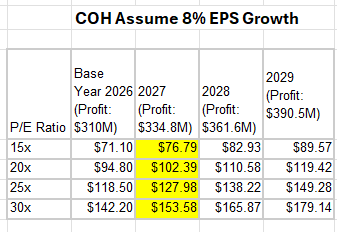
That $COH trading update. Makes $CSL look good. How do you want to pay? 15x like csl? 20x? 25x?
pastperformer tweet media
English
4
0
9
1.3K
Andy Constan
Andy Constan@dampedspring·
100% yes. Go to three far apart spots Over three weeks. Exact distance draws a circle. Three circles intersect at box. If truly exact distance should be trivial but physical search and 49 other tests and it's easy.
Andy Constan tweet media
English
20
3
129
26.4K
Peter Phan
Peter Phan@peterphan88·
Depends on your current wealth level, health status and age but taken on average…. only one way to remain alive and be moderately wealthy. virtually countless number of ways to die, and to make it worse, the nature of death is not specified. what a lousy trade!
Hazel Appleyard@HazelAppleyard

Absolutely not????

English
0
0
0
144
Peter Phan
Peter Phan@peterphan88·
The number of people chasing $TMDX tails on my timeline ebbs and flows in tandem with the share price. Truly demonstrating that narratives follow price.
English
0
0
1
294
Peter Phan ری ٹویٹ کیا
NASA
NASA@NASA·
Welcome home Reid, Victor, Christina, and Jeremy! 🫶 The Artemis II astronauts have splashed down at 8:07pm ET (0007 UTC April 11), bringing their historic 10-day mission around the Moon to an end.
English
6.8K
107.6K
389.3K
85.4M
Eric
Eric@StockDaddy6597·
@peterphan88 @mike98572986 There’s a reason no orals have worked well for any of these indications over all of the history of medicine. Also neither of those indications are what is actually going to move the needle
English
1
0
1
59
mike
mike@mike98572986·
$clpt a year from now the market is going to wake up and realize they missed a huge part of the story. Market has no clue what clearpoint is involved in. Market thinks Clearpoint= ced real time mri, Intraparenchymal delivery Real World= Clearpoint is involved with a shitload of programs that are using ICV and the market doesn’t understand how close Clearpoint actually is to having a blockbuster that isn’t Amt-130. You don’t even need amt-130 for this to work out quite well. I’m not saying the program below is a blockbuster, I’m telling you might want to look into how many programs “clearpoint” is likely involved in and what stage they are in. Just because they aren’t on the presentation or announced doesn’t mean they aren’t there. LTS-101 (AAV.Ep⁺.TPP1) is an investigational AAV gene therapy candidate that encodes a functional copy of the human TPP1 gene. Its design is based on AAV-Ep+ – a novel and proprietary AAV capsid variant that targets ependymal cells and neurons in the central nervous system after intracerebroventricular (ICV) administration.
English
2
1
27
4.8K
Peter Phan ری ٹویٹ کیا
Mukund Iyengar
Mukund Iyengar@mukundiyngr·
Cancer used to be a death sentence. Now many are >90% survivable. Childhood leukemia: 5% → 92% HER2+ breast: 25% → 90% CML: 22% → 87% This is not "luck". Its decades of funding towards time & infra that compounds discovery. Pancreatic cancer today is the breast cancer of 1985, and Glioblastoma ≈ leukemia of 1970. The scientists who will solve them are already in labs NOW. The question is whether we fund them long enough. Funding doesn’t just support science. It literally rewrites outcomes. This plot is proof. Source: SEER + NIH via @Jori_health
Mukund Iyengar tweet media
English
24
208
595
71.8K
Peter Phan ری ٹویٹ کیا
Keith Siau
Keith Siau@drkeithsiau·
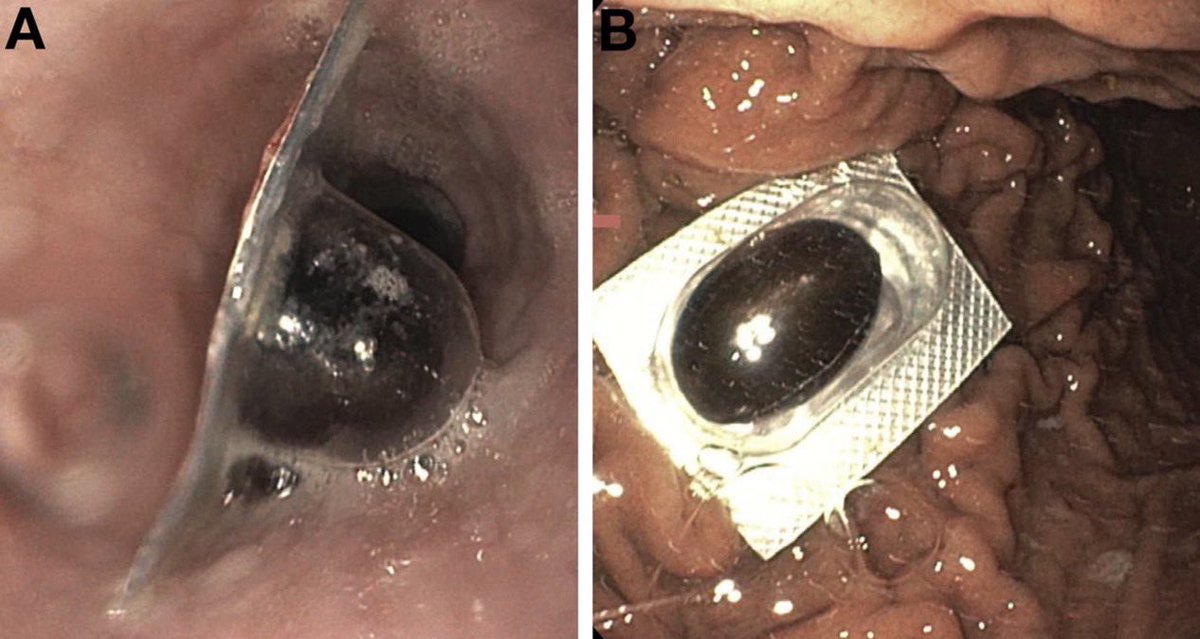
One example why a medication has been taken but doesn’t work. What other examples are there?
Keith Siau tweet media
English
743
2K
49.1K
14.3M
Peter Phan ری ٹویٹ کیا
George Noble
George Noble@gnoble79·
$315 BILLION in stablecoins are now backed by US Treasuries. And I don't understand why no one's questioning this. Goldman's David Solomon and former Treasury Secretary Steve Mnuchin just did a victory lap on stablecoins. Their pitch: Stablecoins strengthen the dollar, create demand for Treasuries, make it easier for people outside the United States to hold dollars. Sounds great. Until you look at what's actually happening underneath... The GENIUS Act passed in July 2025. First federal stablecoin framework in US history. Stablecoin market cap has grown 50% year over year. Tether alone holds $141 billion in US Treasuries, making it one of the largest holders of American government debt on the planet. Washington's pitch is simple: every time someone in Argentina, Turkey, or Nigeria buys USDT, they're buying Treasuries by proxy. Dollar dominance strengthened. Problem solved. And here's the part they REALLY love... The US ran an $1.8 trillion deficit in fiscal 2025. CBO projects $1.9 trillion this year. National debt just crossed $39 trillion. Interest payments alone now exceed $1 trillion annually. Meanwhile, the biggest foreign buyers of Treasuries (China, Japan, Canada) have been pulling back for years. ARK Invest found that the share of Treasuries held by the largest foreign creditors dropped from 23% to just over 6% in the past 13 years. The Fed is STILL running down its balance sheet. So who's going to buy all this debt? Washington's answer: stablecoin issuers. Treasury Secretary Bessent said it himself: "A thriving stablecoin ecosystem will drive demand from the private sector for US Treasuries and help rein in the national debt." Think about what that actually means. The government is counting on a $315 billion crypto product (run largely by a company in El Salvador that just got its first real audit last week) to help finance a $1.9 TRILLION annual deficit. Stablecoin issuers currently hold less than 2% of outstanding Treasury bills. Even if the market hits $2 trillion by 2028 like Standard Chartered projects, that's still just a rounding error against $39 trillion in total debt. This is literally a NARRATIVE designed to make the debt problem sound manageable. But the Federal Reserve published a study showing that for every $1 that moves from bank deposits into stablecoins, bank lending contracts by roughly 50 cents. Stablecoin issuers can't make loans. The GENIUS Act prohibits it. They can ONLY hold Treasuries, reverse repos, and cash equivalents. So when deposits leave banks and flow into stablecoins, that money stops funding mortgages, small business loans, and commercial credit. It starts funding government debt instead. The US Treasury itself estimated stablecoins could drain up to $6.6 TRILLION from the banking system. That's not "strengthening the dollar." That's redirecting the lifeblood of the real economy into government IOUs while starving Main Street of credit. And then there's the run risk nobody wants to discuss. Fed Governor Michael Barr said it yesterday: Stablecoin issuers have every incentive to chase higher returns on their reserves. But unlike banks, they CANNOT access the Fed's discount window. If a stablecoin run happens, issuers dump Treasuries into the market all at once. Stablecoin inflows push Treasury yields down 2-2.5 basis points. Outflows spike yields UP 6-8 basis points. Easy in. Ugly out. Meanwhile, Tether is the 800-pound gorilla. $185 billion in circulation. 550 million users. And until last week, it had never had a Big Four audit. It just hired KPMG after 12 years of operating with nothing but quarterly attestations. This is the entity Wall Street is celebrating as the future of dollar dominance. A company headquartered in El Salvador that fought transparency in court twice and LOST both times. Here's what Solomon and Mnuchin are actually telling you if you listen carefully: Stablecoins create captive demand for short-term US government debt. Foreign governments don't want to hold Treasuries anymore. So Washington's solution is to get 550 million retail users in emerging markets to hold them instead through a digital wrapper called a "stablecoin." The holders get zero interest. The GENIUS Act explicitly prohibits it. The issuers pocket the Treasury returns. Tether made $10 billion in profit last year. And the real economy loses credit while the government gets cheaper funding. This is a classic Wall Street pitch to sell financial innovation as progress: "This strengthens the system. This is good for everyone." Then the leverage builds, the risks concentrate, and the people who sold you on it are nowhere to be found when it unwinds. Stablecoins are NOT saving the dollar. They're a $315 billion shadow money market fund with no Fed backstop, no deposit insurance, and run dynamics that could destabilize the very Treasury market they're supposed to support. If you want to hold dollars, hold dollars. If you want to own the asset that central banks are actually buying instead of Treasuries, you already know what that is... 🥇
English
97
187
556
90.1K