Akshay Ranganath

2.2K posts

Akshay Ranganath banner
Akshay Ranganath

Akshay Ranganath

@rakshay

Technocrat, web performance addict, Sr Solutions Architect @Cloudinary

Fremont, CA شامل ہوئے Aralık 2007
170 فالونگ175 فالوورز
Akshay Ranganath ری ٹویٹ کیا

Lisa Forte
Lisa Forte@LisaForteUK·
Learning lessons from Jurassic Park
Lisa Forte tweet media
English
56
875
10.4K
572K
Akshay Ranganath ری ٹویٹ کیا
HTTP Archive 💾
HTTP Archive 💾@HTTPArchive·
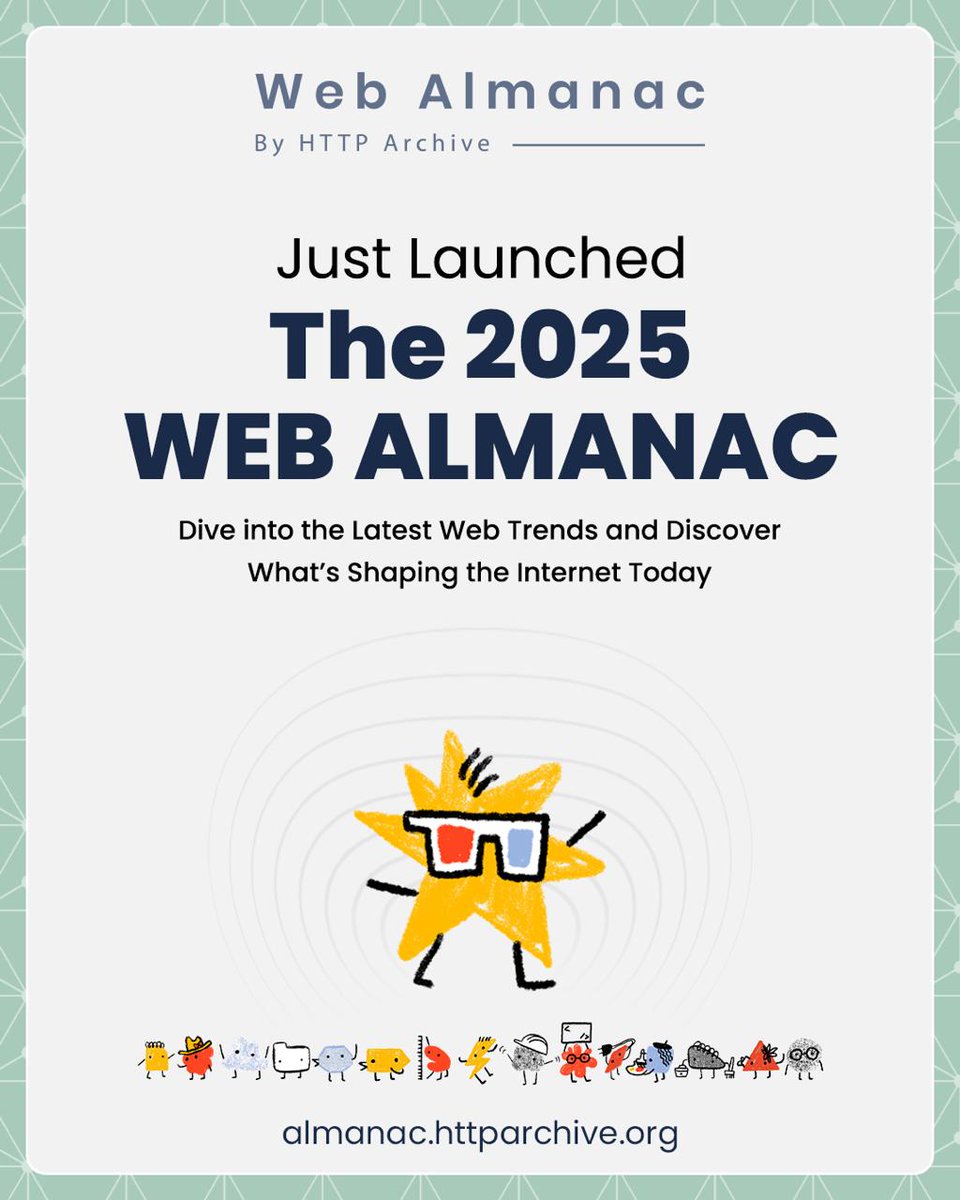
The 2025 Web Almanac by HTTP Archive has been officially released! 🚀 We would like to thank all of our contributors from around the globe who made this extensive report possible! Check out the full report here: almanac.httparchive.org #thewebalmanac
HTTP Archive 💾 tweet media
English
0
11
24
7.2K
Sam Bhagwat
Sam Bhagwat@calcsam·
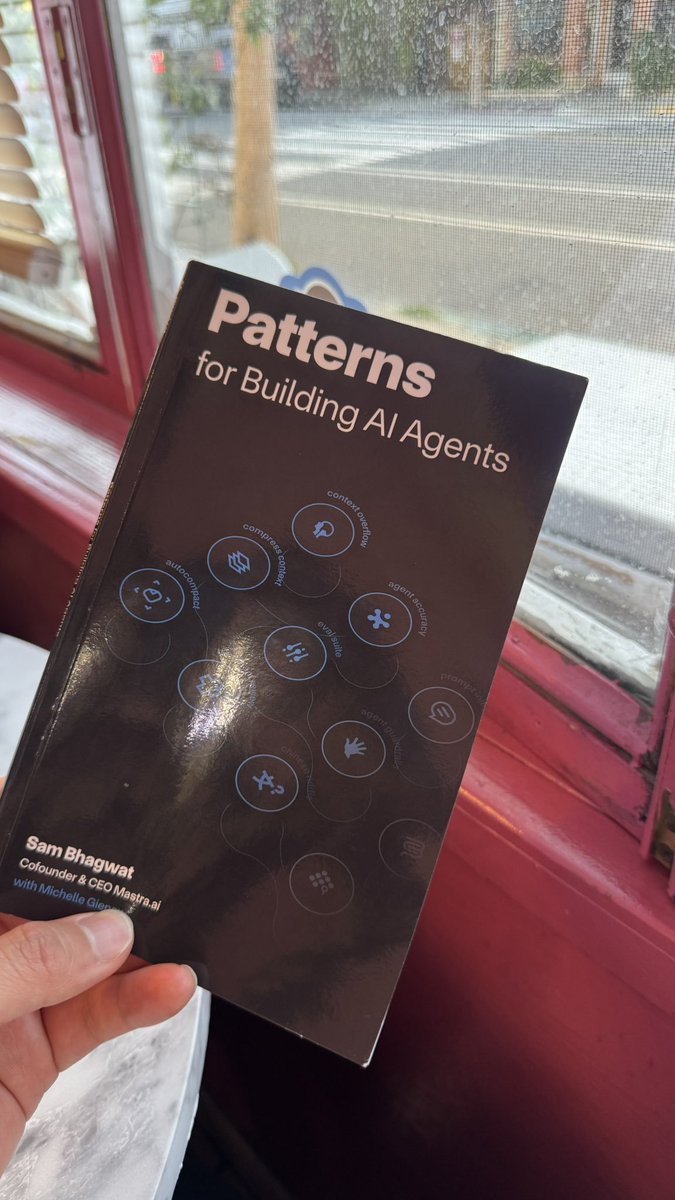
last month we wrote a new agents book: patterns for building ai agents it has everything you need to take your agents from prototype to production, like agent design patterns, the basics of security, etc reply to this tweet with BOOK and we'll dm you so you can get a copy
Sam Bhagwat tweet media
English
4.1K
450
5.1K
588.9K
Akshay Ranganath ری ٹویٹ کیا
IT Unprofessional
IT Unprofessional@it_unprofession·
Last month my intern asked for help with a Kubernetes error. He was stuck on a YAML file. He looked desperate. I make $275,000 a year. I haven't written a line of code since 2017. I don't even know what a "pod" is. But I didn't tell him that. I leaned back in my Herman Miller chair. I said, "Stop trying to code. Start prompting." I told him to paste the error into ChatGPT. He did. The AI told him to delete the cluster. He did. Production went down instantly. The CEO called me screaming. I didn't panic. I told the CEO we were "testing our disaster recovery protocols." He was impressed by my foresight. I got a bonus. The intern got fired. Innovation requires sacrifice. Just not mine.
English
747
4.1K
59.3K
2.8M
Akshay Ranganath ری ٹویٹ کیا
Prof. Carl Sagan
Prof. Carl Sagan@ProfCarlSagan·
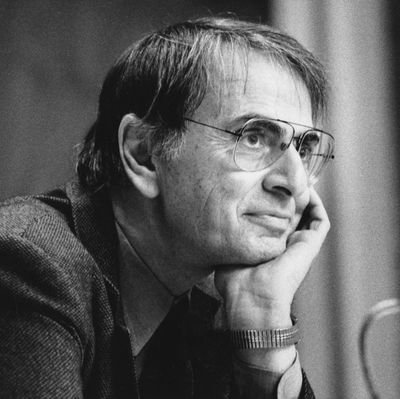
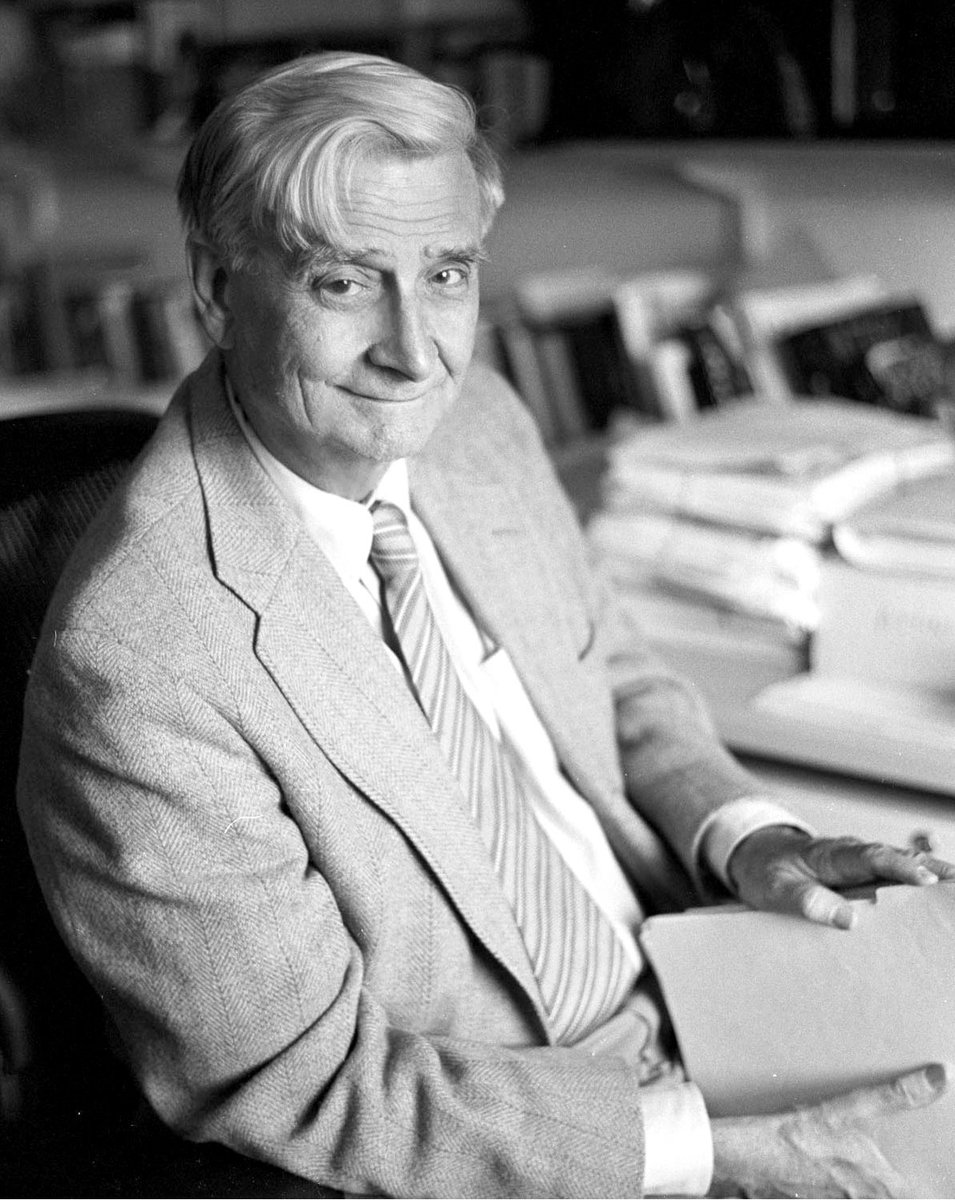
The real problem of humanity is the following: We have Paleolithic emotions, medieval institutions, and godlike technology. - Edward O. Wilson
Prof. Carl Sagan tweet media
English
72
919
3.3K
94.1K
Akshay Ranganath ری ٹویٹ کیا
rayhana
rayhana@raydotsh·
Deep-dived into tokenization while working on my blog and here's what I learned: When I first heard “tokenization,” I thought it was just some boring preprocessing step. Like…break text into pieces, feed to model, done. But nope. It’s actually one of the biggest make-or-break design choices in LLMs. 1. What even is tokenization? Models don’t see words. They see numbers. So we need to chop up text into tokens -> turn them into IDs -> pass them in. Example: “PKMKB” might become: [“P”, “K”, “M”, “K”, “B”] And yes, “PKMKB” doesn’t always stay whole. That’s the problem. 2. Why should I care? Because bad tokenization means: Inputs become way longer than they need to be. Attention cost explodes (remember: quadratic scaling T-T) Non-English or code inputs get messy fast. Basically, tokenization quietly decides whether your GPU bill is reasonable or ouch my wallet. 3. The usual method (BPE) Most LLMs today use Byte Pair Encoding (BPE) or something similar. Common chunks of text get their own tokens (“ing”, “tion”, “Chat”). Rare stuff gets split apart. It’s simple and works decently…until you throw weird inputs at it. 4. Where it breaks Example: print("🌚") print -> 1 token ( -> 1 token 🌚 -> …FOUR tokens😭 So your little emoji costs the same as a whole word. Imagine feeding entire codebases or Hindi text, sequence length blows up. 5. New ideas People are trying learnable tokenizers -> models that adaptively group bytes into smart chunks. Instead of a fixed dictionary, it figures out better units for text, emoji, code, multiple languages. Still research-y, but feels like the future. 6. My main realization Tokenization isn’t just a footnote. It’s the hidden lever that controls compute, efficiency, and how friendly a model is to the real world (not just English essays). If Transformers are the big shiny engine… Tokenization is the fuel line. Mess it up, and the whole system chokes. 7. Final note I started this thinking “eh, tokenization is boring.” Now I think: it’s one of the most strategic choices you make when building an LLM. Tiny step, huge consequences. That’s my tokenization brain dump. Next imma dive into attention (QKV) and RLHF, stay tuned :)
rayhana tweet media
English
38
29
380
19.2K
Akshay Ranganath ری ٹویٹ کیا
No Context Brits
No Context Brits@NoContextBrits·
No Context Brits tweet media
ZXX
76
717
7.5K
392K
Akshay Ranganath ری ٹویٹ کیا
HTTP Archive 💾
HTTP Archive 💾@HTTPArchive·
🚨 Calling all web experts! 🚨 The 2025 Web Almanac is still open for contributors! Know someone perfect for it? Mention them here and help us reach the right folks. 🙌 📢 Please help us spread the word! 🔗 Learn more: github.com/HTTPArchive/al…
HTTP Archive 💾 tweet media
English
0
8
9
1K
Akshay Ranganath ری ٹویٹ کیا
Andrew Ng
Andrew Ng@AndrewYNg·
Since DeepSeek R1's release, very quickly AWS, Azure, Fireworks AI, Groq, Hugging Face, SambaNova and Together AI all started to host R1 variants. What's the "best" model changes frequently, and so developers often want to try out new ones. The aisuite package, which helps developers do this quickly with minimal code changes. Thanks Rohit Prsad & team for working with me on this! github.com/andrewyng/aisu…
Andrew Ng tweet media
English
138
267
1.5K
147.1K
Akshay Ranganath ری ٹویٹ کیا
Andrew Ng
Andrew Ng@AndrewYNg·
Writing software, especially prototypes, is becoming cheaper. This will lead to increased demand for people who can decide what to build. AI Product Management has a bright future! Software is often written by teams that comprise Product Managers (PMs), who decide what to build (such as what features to implement for what users) and Software Developers, who write the code to build the product. Economics shows that when two goods are complements — such as cars (with internal-combustion engines) and gasoline — falling prices in one leads to higher demand for the other. For example, as cars became cheaper, more people bought them, which led to increased demand for gas. Something similar will happen in software. Given a clear specification for what to build, AI is making the building itself much faster and cheaper. This will significantly increase demand for people who can come up with clear specs for valuable things to build. This is why I’m excited about the future of Product Management, the discipline of developing and managing software products. I’m especially excited about the future of AI Product Management, the discipline of developing and managing AI software products. Many companies have an Engineer:PM ratio of, say, 6:1. (The ratio varies widely by company and industry, and anywhere from 4:1 to 10:1 is typical.) As coding becomes more efficient, teams will need more product management work (as well as design work) as a fraction of the total workforce. Perhaps engineers will step in to do some of this work, but if it remains the purview of specialized Product Managers, then the demand for these roles will grow. This change in the composition of software development teams is not yet moving forward at full speed. One major force slowing this shift, particularly in AI Product Management, is that Software Engineers, being technical, are understanding and embracing AI much faster than Product Managers. Even today, most companies have difficulty finding people who know how to develop products and also understand AI, and I expect this shortage to grow. Further, AI Product Management requires a different set of skills than traditional software Product Management. It requires: - Technical proficiency in AI. PMs need to understand what products might be technically feasible to build. They also need to understand the lifecycle of AI projects, such as data collection, building, then monitoring, and maintenance of AI models. - Iterative development. Because AI development is much more iterative than traditional software and requires more course corrections along the way, PMs need be able to manage such a process. - Data proficiency. AI products often learn from data, and they can be designed to generate richer forms of data than traditional software. - Skill in managing ambiguity. Because AI’s performance is hard to predict in advance, PMs need to be comfortable with this and have tactics to manage it. - Ongoing learning. AI technology is advancing rapidly. PMs, like everyone else who aims to make best use of the technology, need to keep up with the latest technology advances, product ideas, and how they fit into users’ lives. Finally, AI Product Managers will need to know how to ensure that AI is implemented responsibly (for example, when we need to implement guardrails to prevent bad outcomes), and also be skilled at gathering feedback fast to keep projects moving. Increasingly, I also expect strong product managers to be able to build prototypes for themselves. The demand for good AI Product Managers will be huge. In addition to growing AI Product Management as a discipline, perhaps some engineers will also end up doing more product management work. The variety of valuable things we can build is nearly unlimited. What a great time to build! [Original text: deeplearning.ai/the-batch/issu… ]
English
181
1K
5.4K
882.8K
Akshay Ranganath ری ٹویٹ کیا
Reads with Ravi
Reads with Ravi@readswithravi·
Reads with Ravi tweet media
ZXX
68
3.1K
24.4K
898.7K
Akshay Ranganath ری ٹویٹ کیا
Dr Mouth Matters
Dr Mouth Matters@GanKanchi·
He is Ravi Venkateshan Chairman of Cummins India..... don't miss.....infact save this and watch at regular intervals 👌🙌🙏🏻
English
69
2.1K
6.8K
511.1K
Akshay Ranganath ری ٹویٹ کیا
Sukhada
Sukhada@appadappajappa·
Retweet if you’ve bought a book based on someone’s tweet. Trying to encourage people to tweet more about the books they love. ❤️
English
27
254
388
36.4K
Akshay Ranganath ری ٹویٹ کیا
Karuna Gopal
Karuna Gopal@KarunaGopal1·
A Tamil Brahmin Indian girl the world and the people of India forgot. Every English speaking Jesuit educated Indian know the story of Florence Nightingale but history has no record of Padmavathi Iyer. In the year 1917, a Tamil Indian girl was born in a middle-class family in Rangoon, Burma, where her father had gone for a living. He named her Sivaramakrishna Iyer Padmavathi. At a time when women were traditionally confined to the kitchen/illiterate, the middle-class girl did MBBS from Rangoon Medical College. When the Japanese invaded Burma, they briefly returned to their traditional home in Coimbatore. In 1949, she went to London to do an FRCP, then unimaginable for a Female Indian doctor. She was selected to study further at Johns Hopkins University, US, where she trained under the legendary cardiologist Helen Taussig. Thereafter, she moved to Harvard University, where she trained under the Father of Cardiology- Paul Dudley White. When a glorious cardiology career awaited her in the US, she was firm in returning to India & serving Indians. She joined Lady Hardinge Medical College in 1953, to become India's First Lady Cardiologist. S.I.Padmavathi started India's first Cathlab & exclusive Cardiac Clinic. Started India's first DM Cardiology course. She founded the All India Heart Foundation (AIHF) in 1962, to serve the poor & needy. She joined Maulana Azad Medical College in 1967, by which time her fame had spread. The Indian Govt under Indira Gandhi honoured her with the Padma Bhushan, that year. She was the cardiologist & administrator of 3 great colleges at the same time- MAMC, G.B.Pant Hospital & Lok Nayak Hospital. She retired as Director, of MAMC in 1978. She set up the National Heart Institute (NIH) in 1981, in Delhi. At age 90, Padmavathi became a fellow of The European Society of Cardiology in 2007. Till age 95, (the year 2015), Padmavathi worked 12 hours a day, five days a week, to serve poor and needy Indians, with state-of-the-art Cardiac Care. She retired from active practice, that year. The Government of India bestowed India's second highest Civilian Award, the Padma Vibushan on S.I.Padmavathi in 1992. Both Padmavathi and her sister Janaki(neurologist) remained single and started the Janaki-Padmavathi trust, pouring in their entire earnings to start a trust to provide poor people with money for life-saving Heart Surgeries. After dedicating her entire life to serving the poor in the field of Cardiology, S.I.Padmavathi passed away in 2020, at age 103 from Corona. Imagine the steely resolve, vision, brilliance and sheer determination of this iron- lady to shatter the glass ceiling in achieving all these, serving poor Indians with quality cardiac care, and finally giving away all her wealth to her fellow citizens. Here is an inspiring story of the first female cardiologist of India 🙏
Karuna Gopal tweet media
English
507
3.4K
9.2K
342.2K