How much land did the Fins loose after ww2
Searching the web
30 results
In short: Finland lost around 45,000–46,000 km² of land permanently after WWII, equivalent to about 10% of its territory.
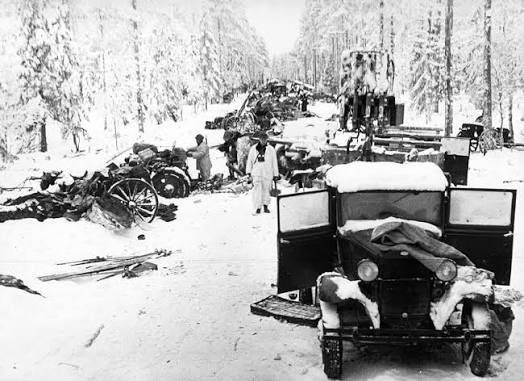
This figure is the most commonly cited for the final post-war settlement.After World War II, Finland lost a significant amount of territory to the Soviet Union as a result of the Continuation War (1941–1944) and the subsequent Moscow Armistice (1944) and Paris Peace Treaty (1947).
These losses confirmed and expanded on the earlier cessions from the Winter War (1939–1940).Exact Land LossFinland permanently ceded approximately 45,000–46,000 square kilometers (about 45,792 km² according to some historical records).link.springer.com
This represented roughly 10% of Finland's pre-war (or interwar) territory
.en.wikipedia.org
The main areas included
:Most of Finnish Karelia (including the city of Viipuri/Vyborg, Finland's second-largest city at the time).
The Petsamo (Pechenga) region in the far north (giving the USSR access to the Arctic Ocean and nickel mines).
Parts of Salla and Kuusamo.
Some islands in the Gulf of Finland.
Additionally, Finland was forced to lease the Porkkala Peninsula (near Helsinki, about 380–384 km²) to the Soviet Union as a naval base for 50 years.
This was not a permanent cession and was returned to Finland in 1956
.Context and ImpactThe Winter War (1940) had already forced Finland to cede around 35,000–40,000 km² (mostly parts of Karelia and Salla). During the Continuation War, Finland briefly regained some of that land but lost even more overall by the end, including Petsamo.
Over 400,000 Finns (about 11–12% of the population) were displaced from the ceded territories and had to be resettled within the remaining Finland.facebook.com
The lost areas included valuable farmland, industrial capacity, and strategic regions, but Finland retained its independence (unlike many other countries that fought the USSR).
With their Nazi comrades they helped starve to death 1,000,000 Russian women and Children at Leningrad
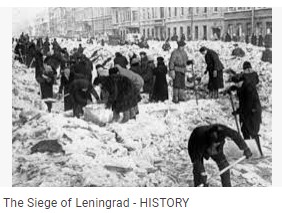
Approximately one million Soviet civilians and soldiers died from starvation and disease during the 872-day Siege of Leningrad (1941–1944). Finnish forces were active participants alongside Nazi Germany in encircling the city from the north, completing the blockade that cut off all land-based food and fuel supplies.
📷Wikipedia +2
Key Facts of the Leningrad Starvation
Death Toll: Estimates of civilian deaths vary, with the most widely accepted figure being around one million, though some modern historians estimate up to 1.5 million total deaths.
Finnish Involvement: Finnish troops advanced from the north and seized territory to complete the encirclement. While the Finnish government resisted direct German pressure to storm the city, they maintained their half of the blockade until the siege was broken in 1944.
Survival Rations: During the deadliest winter of 1941–42, rations for many residents dropped to just 125 grams of bread per day, which was often bulked with sawdust and other inedible fillers.
Causes of Death: Approximately 97% of deaths during the siege were caused by starvation and cold, while only 3% resulted from German and Finnish artillery or air bombardments.
Extreme Measures: The famine was so severe that residents resorted to eating pets, wallpaper paste, and leather. Historical records confirm roughly 2,000 arrests for cannibalism.
The "Road of Life": The only supply route available was a treacherous path across the frozen Lake Ladoga, which allowed for limited food deliveries and the evacuation of roughly 1.4 million people.📷Wikipedia +8
English