scripta manent

4.9K posts

scripta manent

scripta manent

@scripta81265778

Geschiedenis en Aardrijkskunde

Prov. Anrwepen. شامل ہوئے Temmuz 2021
654 فالونگ379 فالوورز
scripta manent
scripta manent@scripta81265778·
@archeohistories Laudanum, my father was doctor and I got sometimes , when I was in a lot of pain,a few drops.( 1950 )
English
0
0
1
164
Archaeo - Histories
Archaeo - Histories@archeohistories·
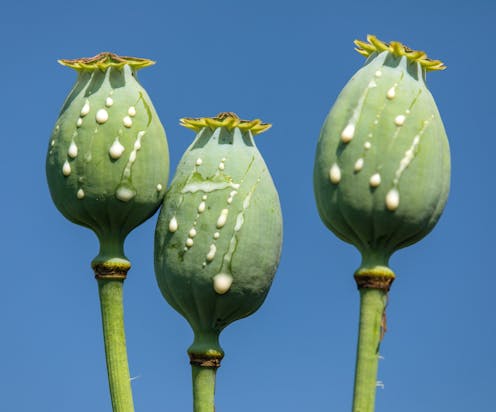
The opium poppy is cultivated in lower Mesopotamia. Sumerians refer to it as Hul Gil, the 'joy plant.' Sumerians would soon pass along the plant and its euphoric effects to the Assyrians. The art of poppy-culling would continue from the Assyrians to the Babylonians who in turn would pass their knowledge onto the Egyptians. In the capital city of Thebes, Egyptians begin cultivation of opium thebaicum,grown in their famous poppy fields.The opium trade flourishes during the reign of Thutmose IV, Akhenaton and King Tutankhamen. The trade route included the Phoenicians and Minoans who move the profitable item across the Mediterranean Sea into Greece, Carthage, and Europe. On the island of Cyprus, the "Peoples of the Sea" craft surgical-quality culling knives to harvest opium, which they would cultivate, trade and smoke before the fall of Troy. Hippocrates, "the father of medicine", dismisses the magical attributes of opium but acknowledges its usefulness as a narcotic and styptic in treating internal diseases, diseases of women and epidemics. Alexander the Great introduces opium to the people of Persia and India. Opium thebaicum, from the Egytpian fields at Thebes, is first introduced to China by Arab traders. Opium disappears for two hundred years from European historical record. Opium had become a taboo subject for those in circles of learning during the Holy Inquisition. In the eyes of the Inquisition, anything from the East was linked to the Devil. The Portugese, while trading along the East China Sea, initiate the smoking ofopium. The effects were instantaneous as they discovered but it was a practice the Chinese considered barbaric and subversive. During the height of the Reformation, opium is reintroduced into European medical literature by Paracelsus as laudanum. These black pills or "Stones of Immortality" were made of opium thebaicum, citrus juice and quintessence of gold and prescribed as painkillers. Residents of Persia and India begin eating and drinking opium mixtures for recreational use. Portuguese merchants carrying cargoes of Indian opium through Macao direct its trade flow into China. Ships chartered by Elizabeth I are instructed to purchase the finest Indian opium and transport it back to England. English apothecary, Thomas Sydenham, introduces Sydenham's Laudanum, a compound of opium, sherry wine and herbs. His pills along with others of the time become popular remedies for numerous ailments. Dutch export shipments of Indian opium to China and the islands of Southeast Asia; the Dutch introduce the practice of smoking opium in a tobacco pipe to the Chinese. Chinese emperor, Yung Cheng, issues an edictprohibiting the smoking of opium and its domestic sale, except under license for use as medicine. The British East India Company assumes control of Bengal and Bihar, opium-growing districts of India. British shipping dominates the opium trade out of Calcutta to China.nLinnaeus, the father of botany, first classifies the poppy, Papaver somniferum- 'sleep-inducing', in his book Genera Plantarum. The British East India Company's import of opium to China reaches a staggering two thousand chests of opium per year. British East India Company establishes a monopoly on the opium trade. All poppy growers in India were forbidden to sell opium to competitor trading companies. China's emperor, Kia King, bans opium completely, making trade and poppy cultivation illegal. The British Levant Company purchases nearly half of all of the opium coming out of Smyrna, Turkey strictly for importation to Europe and the United States. Friedrich Sertuerner of Paderborn, Germany discovers the active ingredient of opium by dissolving it in acid then neutralizing it with ammonia. The result: alkaloids-Principium somniferum or morphine. Physicians believe that opium had finally been perfected and tamed. Morphine is lauded as "God's own medicine" for its reliablity, long-lasting effects and safety. #archaeohistories
Archaeo - Histories tweet media
English
22
176
792
42.1K
Zeros
Zeros@HolyMujahid·
@thegabriel72 Europeans literally didn’t know how to wash their own ass until they learned from Muslims to bathe daily and what soap was tooth paste and how to make sewage systems and running water supplies this guy would still be rolling around in his own shit and piss if it wasn’t for us
English
16
0
6
1.9K
GABRIEL 🪽
GABRIEL 🪽@thegabriel72·
A phobia is an irrational fear, it’s not a phobia when that threat is real. Glad it was recorded and not afraid to speak his mind lol
English
576
1.6K
6.3K
58.6K
IKENNA
IKENNA@kena_ewuru·
Now this is comedy 🤣
English
36
52
67
2.3K
͏Uncle 🪂
͏Uncle 🪂@unclelawr·
The boy thought his father was going to play a game with him 🎬😱
English
17
61
929
256.3K
Joost Niemoller
Joost Niemoller@JoostNiemoller·
Er is een boerkaverbod in Nederland. Daarop wordt niet gehandhaafd. Wanneer een visboer besluit om in de geest van de wet te handelen, komt juist die voor de rechter! Wat moeten we met dit land? nu.nl/discriminatie/… via @NUnl
Nederlands
485
1.7K
6.8K
88K
The Intellectualist
The Intellectualist@highbrow_nobrow·
Student to J.D. Vance: When did you decide there were “too many immigrants,” and why sell us a dream? We spent our youth here..., paid what you asked, followed your path. How can you say we don’t belong... and remove people here rightfully? (October 2025)
English
717
2.4K
15.9K
1.3M
scripta manent
scripta manent@scripta81265778·
@Microinteracti1 The Persians constantly besieged Greece; fortunately, they had poor ships. The same applied to Rome and Byzantium. The ultimate battle against Byzantium exhausted them so much that Islam could emerge.
English
0
0
0
610
Gandalv
Gandalv@Microinteracti1·
Iran has been invaded and conquered before. Repeatedly, comprehensively, and by people who didn’t have the faintest idea what GPS was. Alexander the Great, who had the admirable habit of personally leading cavalry charges into situations any sensible person would have avoided, forced the Persian Gates in 330 BCE through a combination of frontal pressure and a night march that caught Darius III’s defenders looking entirely the wrong direction. The mountains were formidable. The Arab Muslim armies that arrived several centuries later brought no siege towers, no elaborate engineering works, and no particularly sophisticated logistics. What they had was mobility, extraordinary cohesion, and the misfortune to be fighting an empire that had essentially punched itself unconscious fighting Byzantium. The Sasanians had nothing left. By 651 CE they were gone, and Persia was something else entirely. The Mongols, who approached military problems with the cheerful thoroughness of people who genuinely enjoyed them, were simply methodical about it. Horse archers, encirclement, psychological terror, and siege machinery borrowed from wherever they’d last been. The terrain was an inconvenience. They treated it as such. And then there is 1941, which is the most sobering example of the lot. Britain and the Soviet Union divided Iran between them in roughly a week. A week. Armor from the north, naval landings from the south, air strikes on anything worth hitting. The Iranians, fatally, neglected to destroy their own road and bridge infrastructure. Resistance dissolved. The mountains are real. The difficulty is entirely real. But “it’s never been done” is not, historically speaking, the argument anyone should be making. The argument is what happens on day eight. That is where every previous conqueror discovered that taking a country and holding it are, as it turns out, quite different propositions.​​​​​​​​​​​​​​​​ Stay informed, Follow Gandalv @Microinteracti1
English
47
80
311
60.9K
VRT NWS
VRT NWS@vrtnws·
Kris uit "Restaurant misverstand" hoopt zelf niet over euthanasie te moeten beslissen: "Als ik mijn vrouw niet meer herken, mag het voor mij stoppen" vrtnws.be/p.dLAe1AxA4?t=… #vrtnws
Nederlands
8
4
14
9.3K
scripta manent
scripta manent@scripta81265778·
@Kasparov63 Putin mentioned the invasion of Ukraine also a military operation.
English
0
0
1
231
Paul Norton
Paul Norton@PaulPorts23·
@BagpussV @stellacreasy The book 'The Handmaid's Tale' was written by Margaret Attwell & her writing was directly inspired by the Islamic Revolution in Iran 1979!!!!! Let that sink in!
English
1
0
0
47
stellacreasy
stellacreasy@stellacreasy·
They are saying the quiet parts out loud now. They want you to hate women for not having enough babies. For daring to want to lead equal lives. They want you to hate someone who holds a different religion to you. For daring to practice it and pray. They want you to hate someone for disagreeing with them. For not sharing their values and standing up to them. They want you to hate. Its the currency of their world. Don't let it be the currency of yours.
Danny Kruger@danny__kruger

Nick Timothy and Nigel Farage are right, and Sadiq Khan and Keir Starmer are wrong. Small groups of people, of whatever religion, praying in public places is fine. And as a Christian country we should allow a special privilege for churches to lead services in our national spaces, like the Palm Sunday celebration that happens in Trafalgar Square. What we don't want is mass ritual observances intended to claim the civic realm for another religion, or assert the domination of another culture over our own Christian traditions. What happens in our national spaces is not neutral. People use Trafalgar Square, for celebrations and demonstrations, to make a point about the kind of country they want us to be. The Palm Sunday pageant reminds us of who we are - not as individuals (many or most of us don't identify as Christians at all) but as a national community, with the roots of our institutions in the ground of the Bible and our most solemn communal moments, from coronations to funerals, mediated through the liturgies of the Church. A mass Adhan held there, or in any town square, is making a different point: that Britain is not a Christian country, and that - inshallah - one day it shall be Muslim. This is unacceptable to the British public and indeed incompatible with our constitution. As ever with these debates, the issue is partly one of kind and partly one of degree. There is an issue with Islam itself as a religion which in most interpretations does not admit of pluralism or freedom of conscience, and therefore is inherently aggrandising, including over territory. But with a bit of confidence and a bit of toleration we could handle that - if it were not for the issue of degree. It is the scale of Islam in Britain, and the ambition of its leaders for greater scale, that makes the problem. The numbers of people who assembled for the adhan in Trafalgar Square, clearly and openly claiming the territory for a faith with no connection (indeed, with strong doctrinal disagreement) with the model of Western liberal democracy that Britain has developed and exported to the world - that is the problem. The numbers, whether everyone there understood it this way or not (and I suspect many did), convey an explicit threat to the foundations of our country. Being relaxed about other people's religion is a good thing, a very British thing. I don't mind modern druids dancing around Stonehenge in my constituency (arguably, though the historicity is tenuous, they have a claim to the place). I don't mind small groups of Hindus or Buddhists or Muslims demonstrating the reality of Britain's religious toleration by worshiping in Trafalgar Square. But let's not kid ourselves about this adhan, or pretend that we're just seeing another harmless expression of Britain's religious diversity. We are seeing an abuse of liberalism, led by people who are not themselves liberal; or - let us imagine they are acting in good faith - who are themselves deceived about what they are doing. It should not happen again. And it would be good to hear the Church of England say so.
English
863
215
775
91K
Rob Verr
Rob Verr@ro_verr·
@CartwrightPah Zucht. De vijand van mijn vijand is mijn vriend. Iedereen doet dat, overal. Soms met goede, soms met slechte gevolgen. Dacht je dat België in Congo anders handelde?
Nederlands
1
0
2
110
Rob Verr
Rob Verr@ro_verr·
Op 22 maart 2026 herdenken we dat 10 jaar geleden 35 mensen gruwelijk vermoord werden door moslimterreur in Zaventem en Maalbeek. Als overlevende van die aanslag heb ik nu een paar vraagjes: waar organiseren de zangers, cultuur-BV's en politici hun grote herdenkingsconcert, om tegelijk te waarschuwen voor het moslimextremisme? In welke grote Vlaamse cultuurzaal wordt het toneelstuk in première gebracht dat de slachtoffers herdenkt? Welke grote gezamenlijke uitzendingen worden gepland door VRT en VTM om te gedenken en te waarschuwen? In een land dat jaarlijks een half miljard euro belastinggeld geeft aan cultuur zullen zangers, muziekgroepen, scenaristen, theatermakers, dichters, TV-makers en schrijvers ongetwijfeld volop aan het werk zijn met de voorbereidingen. Ja toch?
Rob Verr tweet media
Nederlands
77
811
2.4K
30.8K
Lord Bebo
Lord Bebo@MyLordBebo·
🇺🇸🇮🇷 Joe Kent gave a pretty good analysis on the Iran war in 2024: - The US probably can penetrate the air-defense for a shock and awe campaign - There will be quick results to celebrate - But in the long run it will be messy - Iranians will rally around their leaders, and this will unite them - “Iran has been an empire for centuries they will not go anywhere” - it would be “very bloody”
Lord Bebo@MyLordBebo

🇺🇸🇸🇾 Did you know that Joe Kent lost his wife to ISIS in Syria after US military leadership sabotaged withdrawal? In his resignation letter, he explicitly blames Israel for the death of his wife, calling it the "manufactured war"

English
120
2.7K
10.3K
851.7K
Interesting STEM
Interesting STEM@InterestingSTEM·
LASEK is a modern laser eye procedure that improves vision by reshaping the cornea, offering a safe solution for common sight problems.
English
5
20
71
38K
scripta manent ری ٹویٹ کیا
Interesting STEM
Interesting STEM@InterestingSTEM·
We are watching a bacteriophage: a virus that infects bacteria. It adheres to the cell, injects its DNA, and turns it into a factory for new viruses until the bacterium finally bursts.
English
3
18
83
10K
Aaron Rupar
Aaron Rupar@atrupar·
Trump: "We're also slashing drug prices at record levels, with price differences of 700 percent. Can you believe it?"
English
68
31
116
27.8K
scripta manent
scripta manent@scripta81265778·
@HalalNation_ Naturally, Jesus and Mary stand in the Koran, the origin of Islam is a split-off from Christianity. As Christianity from Jewish teachings.
English
0
0
0
55
Halal Nation ☪︎
Halal Nation ☪︎@HalalNation_·
Arab Christian SHOCKS Tucker Carlson. Muslims And Christian’s Live In Peace 🤍
English
72
1.7K
7.6K
148K
scripta manent
scripta manent@scripta81265778·
@PhRoose Filmpje bekeken. Totale degeneratie. Enfin ik ben oud en « après moi le déluge. »
Français
0
0
3
184
Philip
Philip@PhRoose·
Kijk, wat men in de slaapkamer uitspookt, interesseert mij niet. Maar indien men er een publieke zaak van maakt, en mensen/kinderen verplicht er onrechtstreeks aan deel te nemen, dan gaat de overheid er zich mee moeten moeien.
Philip tweet media
Nederlands
11
11
118
3.3K
Dr. M.F. Khan
Dr. M.F. Khan@Dr_TheHistories·
In 1833, when Britain passed the Slavery Abolition Act, the government committed an enormous sum of money to end slavery across most of the Empire. It spent about £20 million, roughly 40 percent of the national budget, to compensate slaveowners for the loss of their enslaved laborers. This was one of the largest public expenditures of the century, financed through long-term loans that British taxpayers continued paying off until 2015. None of the money went to the people who had been enslaved; every penny went to plantation owners in the Caribbean, Mauritius, and the Cape. The scale of the payout shows how deeply slavery was tied to Britain’s political and economic elite. Many of the compensated slaveowners were members of Parliament, aristocrats, bankers, and even religious institutions. The formerly enslaved received freedom but no land, wages, or reparations, and many were forced into an “apprenticeship” system that kept them working for their former masters for years. The 1833 act ended legal slavery in most of the Empire, but the financial and social consequences of that decision continue to shape discussions about justice and reparations today. #drthehistories
Dr. M.F. Khan tweet media
English
4
33
88
5.3K