Tech Buzz China

3.8K posts

Tech Buzz China banner
Tech Buzz China

Tech Buzz China

@TechBuzzChina

Exclusive Insights into China’s Tech & Innovation Landscape. Trips, bespoke research, and an investor-focused newsletter.

San Francisco, CA شامل ہوئے Haziran 2018
347 فالونگ13.3K فالوورز
پن کیا گیا ٹویٹ
Tech Buzz China
Tech Buzz China@TechBuzzChina·
We recently published a report on Chinese AI apps on our Substack channel. You can now download a free PDF version with improved layout on our homepage. Enjoy! techbuzzchina.com
Tech Buzz China tweet media
English
0
1
9
5K
Tech Buzz China
Tech Buzz China@TechBuzzChina·
Despite our fixation with humanoids, we continue to monitor the application of robotics and AI to distinctively unsexy tasks. Here's one: Horist Technology (北京霍里思特科技有限公司), a Tsinghua-backed ore sorting equipment company founded in 2010, closed a ~$28 million Series C led by China Merchants Capital, with Jingguorui, Daxing Chantou, Beijing Creation Investment, Kaiyuan Sichuang, and Chuhui Capital following. Founder Guo Jin holds a Tsinghua precision instruments master's degree and spent time at GE Healthcare's CT division. That background shows up in the product: Horist's core machine uses X-ray spectroscopic imaging plus AI classification to sort ore dry, with 99.9% accuracy in three-dimensional blowing separation. No water, no chemicals, payback under one year. The technical moat runs three layers deep: self-developed X-ray detectors (over 15 years of R&D, with internationally leading capture speed and precision), a multi-ore AI algorithm platform trained across five ore categories, and equipment processing specs that combine high belt speed with low failure rates. Clients include Zijin Mining, a major Chinese copper-gold mining conglomerate, and China Minmetals, alongside National Energy Group and Shaanxi Coal. Horist achieved China's first-of-its-kind installations on antimony, phosphate, fluorite, and uranium ore types. Shipments have exceeded 100 units annually for two consecutive years, with 40%+ compound growth and annual output in the hundreds of millions of yuan. The company already exports to Colombia, Turkey, Brazil, and Indonesia, and Guo Jin says they're now competing directly against Norwegian, German, and Polish incumbents in global markets. Production runs out of a 40,000-square-meter smart manufacturing center in Anji, Huzhou, Zhejiang. China's mining industry is moving away from both manual hand-sorting (labor scarcity, occupational health risk) and wet processing (water consumption, chemical regulation under dual-carbon policy). Horist built for exactly that shift. How far they can push international market share against entrenched European players is the open question.
English
0
1
1
287
Tech Buzz China
Tech Buzz China@TechBuzzChina·
Alibaba's Qianwen platform upgraded its "Deep Research" feature on April 7, 2026, adding financial analysis modules and connecting to real-time market data for over 13,000 stocks via a partnership with Tonghuashun, a major Chinese financial data platform. The integration covers minute-level price feeds across those 13,000 stocks plus roughly one million financial reports, earnings announcements, and institutional research notes. Output exports as Word or PDF with auto-generated charts, free to all users on qianwen.com and the Qianwen app. This is a great example of why it's so difficult to build AI applications in China, because Chinese Big Tech productize quickly, even for small verticals.
English
0
14
69
3.6K
Tech Buzz China
Tech Buzz China@TechBuzzChina·
When Meituan reported revenue growth of 8% to 364.9 billion yuan in 2025, the headline number of 23.4 billion yuan in net losses ($3.4 billion) stole the show. But Meituan’s net losses aren’t the story. Look at its losses per order instead. These narrowed from Q3 to Q4, and may well improve further in Q1 2026. If so, it shows the company is becoming more efficient at losing money. China’s “involution-style” competition is often described as chaotic price wars. But Meituan’s strategy looks deliberate. It is dropping cash in the form of subsidies, while winning with logistics. Xiaotuan AI assistant (100M+ uses, millions of merchants onboarded) helps. It smoothes over merchant decision-making and adds demand prediction, which feed into logistics efficiency. In short it is lowering marginal cost per order, and this is where profitability will come from. Meituan is a food delivery business. But it is also an instant retail success, with its own supply (Xiaoxiang supermarket), and a busy innovator with satellite stores and group-buy options. The losses make sense because Meituan is building density, not just fulfilling meal orders.
English
0
0
2
526
Tech Buzz China ری ٹویٹ کیا
Weijin Research
Weijin Research@WeijinResearch·
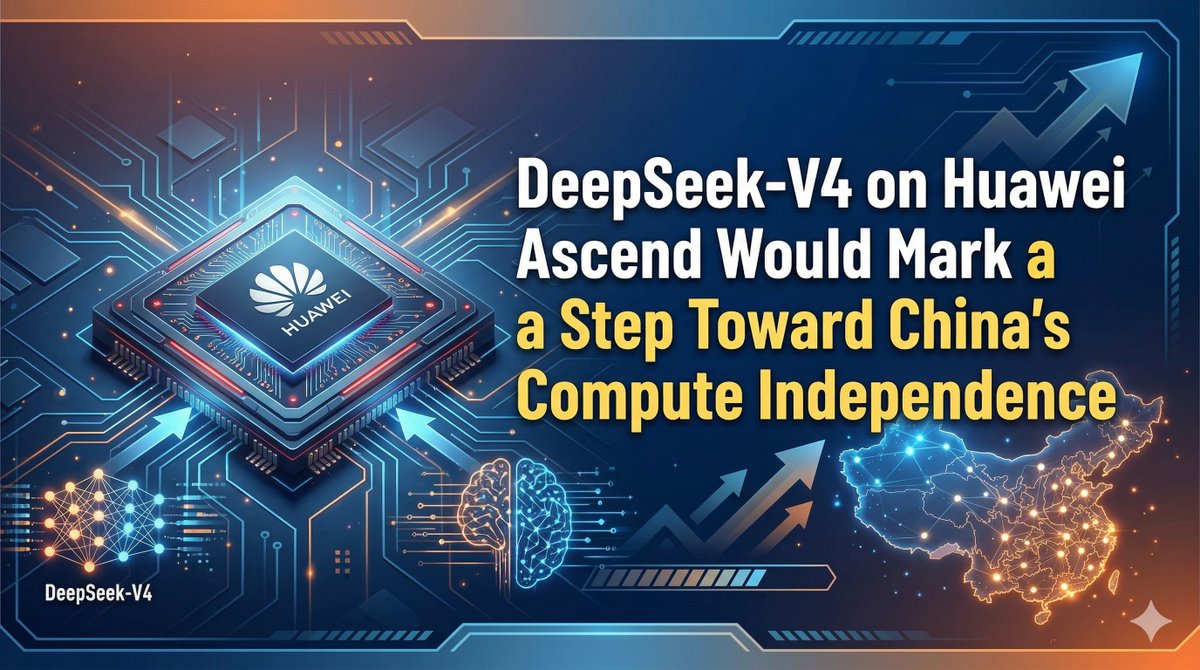
From our latest piece, maybe DeepSeek has other goals besides releasing a new model. "For DeepSeek, who wants to build models rather than applications, the most important thing may not be the release of DeepSeek-4 itself. Any individual model in China will eventually face commoditization. What matters is the role it can play in China’s AI compute and application ecosystem. If DeepSeek actively adapts to domestic chips, it is effectively endorsing and energizing the entire domestic compute supply chain. Every Chinese developer building applications on top of DeepSeek’s open-source models would then channel compute demand toward domestic hardware. The value of that for companies such as Huawei Ascend, Hygon, Cambricon, Moore Threads, and Suiyuan would be immeasurable. So yes, DeepSeek-4 is taking a little longer."
Weijin Research tweet media
English
2
4
20
7.7K
Tech Buzz China
Tech Buzz China@TechBuzzChina·
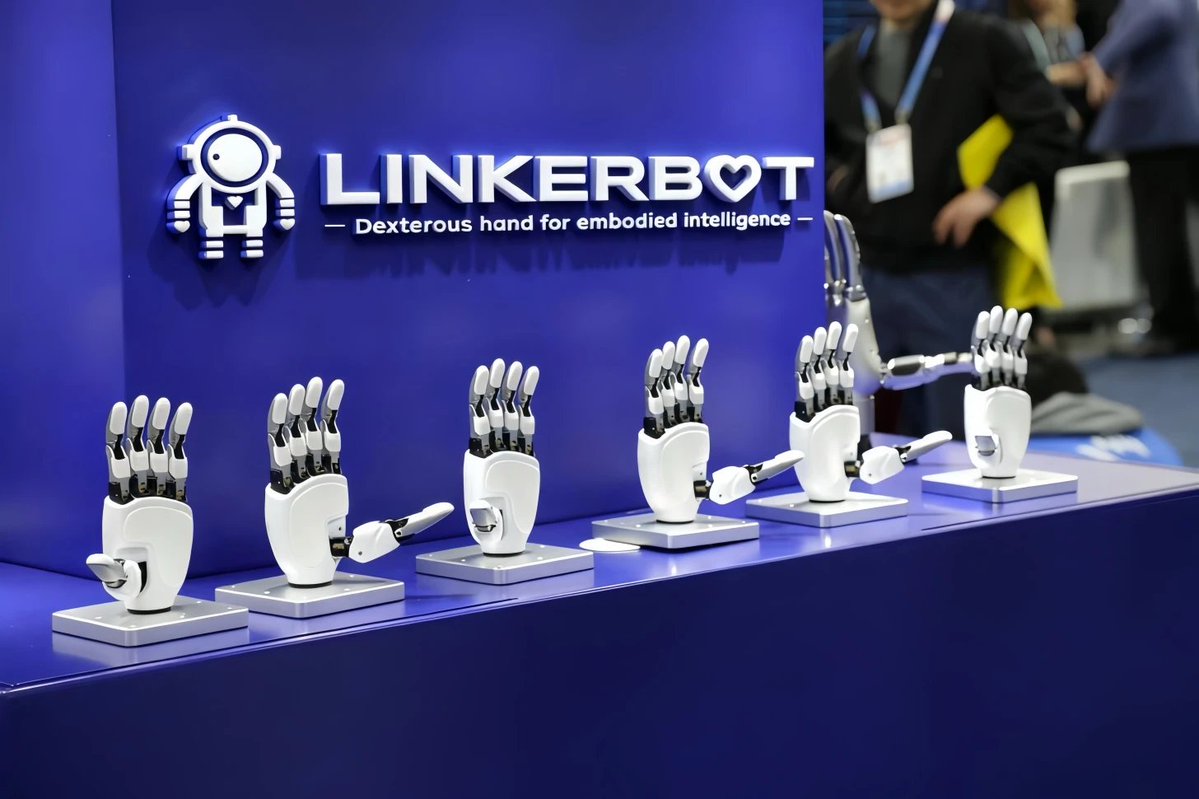
Great founder interview from @thePandaily on Zhou Yong, or Alex Zhou, of Linkerbot (灵心巧手), the dexterous hand company that has quietly become one of the most interesting stories in Chinese robotics. A few things jumped out at us: Zhou got into Huazhong University’s Youth Class (for prodigies) at 14, then went on to build a product with 300 million users, fewer than 1% of them in China, before pivoting into robotics. The core idea for Linkerbot took shape around 2018 to 2019. When he founded the company in 2023, he set one hard rule: the first mass-produced product had to have 20 degrees of freedom. Not 6. Not 10. For context, a human hand has about 27 degrees of freedom. Most commercial grippers have 1 to 6. The UK’s Shadow Hand has 24 and costs $140,000 to $280,000. Linkerbot’s L20 has 21 degrees of freedom at roughly one-twentieth the price. They are also the only company building across all three major dexterous-hand architectures: linkage, tendon drive, and direct drive. Nobody else is doing all three. They delivered more than 10,000 units in 2025. Customers include Cambridge, Stanford, Peking University, and Tsinghua. The most interesting detail: they want to build an automated production line where robotic hands assemble robotic hands. Zhou says one such line would be like “a cluster of 1,000 robots working in parallel.” And his long-term thesis? Once 1 million robots with dexterous hands are deployed in real environments, they could generate more manipulation training data in a single day than the world collected in all of 2025. That is when embodied AI really starts to compound.
Tech Buzz China tweet media
English
1
1
16
4.1K
Tech Buzz China
Tech Buzz China@TechBuzzChina·
Marketing is about to break. When AI agents choose what we buy, they won’t care about brand, and what it means to us. They'll be 100% rational about what they recommend. It will be all data, no feeling. So “Just do it” loses out to arguments like "+2% durability, -1.5% return rate, and $5 cheaper." In what way will this not upturn marketing as we know it? Tech Buzz China has a new report out on Qwen and the popularization of agents in China.
English
4
0
5
930
Tech Buzz China ری ٹویٹ کیا
Weijin Research
Weijin Research@WeijinResearch·
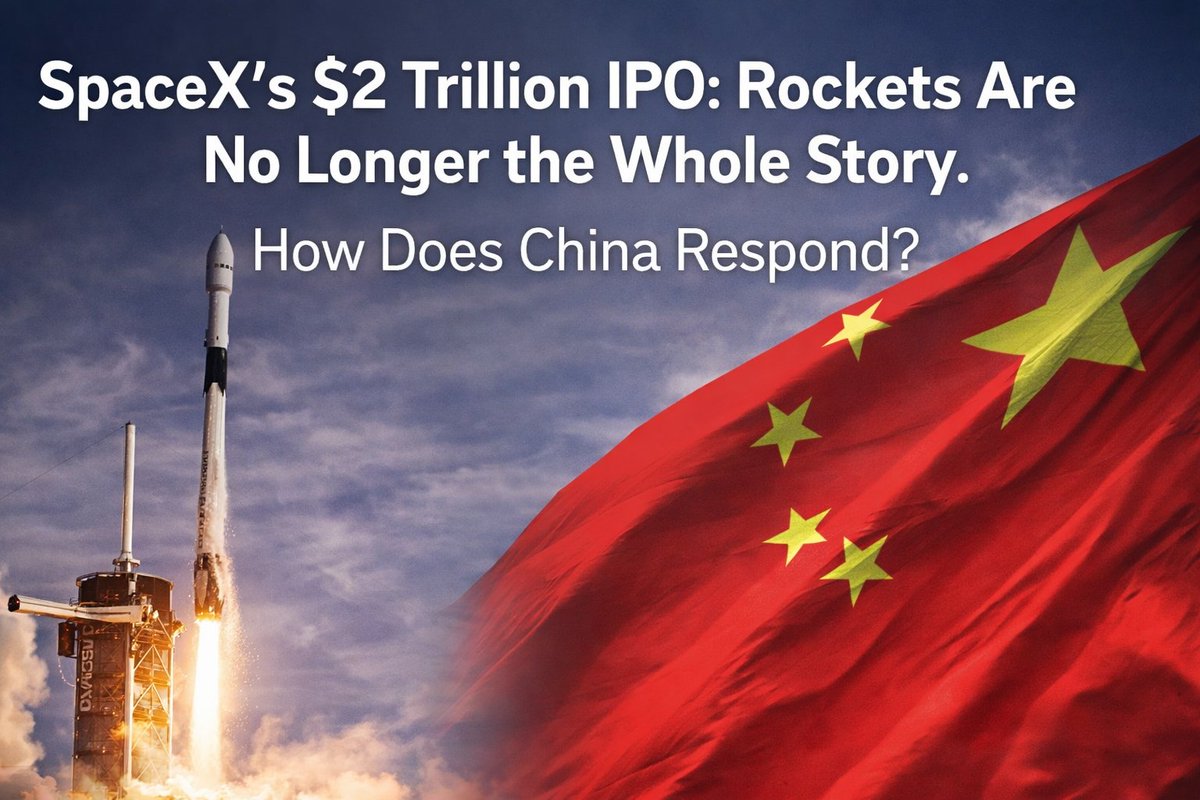
In its 15th Five-Year Plan (2026–2030), commercial space has been designated a new strategic industry. Satellite internet is classified as “new-type infrastructure,” and deep space exploration is listed as a frontier technology priority. Earlier this year, China submitted orbital filings to the ITU for over 200,000 satellites, and today the “Space Computing Power Special Committee” was formally established with ten major R&D priorities. Rather than saying China “lags behind” in commercial space, it might be more accurate to say that China’s terrestrial communications and energy infrastructure has been too successful, so much so that, for a long time, space simply was not an urgent industrial problem. If SpaceX goes public at around $2 trillion, it would immediately become the world’s sixth most valuable company, surpassing both Meta and Tesla. More importantly, for the first time, space infrastructure would be systematically priced in public markets. SpaceX is also reportedly aiming to raise $75 billion in the IPO, potentially creating a major siphon effect on capital markets. The core challenge for China is not just launch capability. It is industrial structure. CAS Space plans to raise ¥4.2 billion, with more than half earmarked for reusable rockets. LandSpace plans to raise ¥7.5 billion, with nearly all of it going toward reusable technology R&D and capacity expansion. But what Chinese commercial space still lacks is a true “chain leader” capable of anchoring the industry, setting prices, and driving integration across the sector.
Weijin Research tweet media
English
2
9
60
13.1K
Tech Buzz China
Tech Buzz China@TechBuzzChina·
Bytedance has been busy with updates. Doubao, ByteDance's large model series or underlying AI, released daily token usage figures showing they have surpassed 120 trillion, doubling in three months and up 1,000x since May 2024. Enterprises with cumulative usage exceeding 1 trillion tokens grew from 100 to 140 since late last year. The latest Doubao 2.0 series claims breakthroughs in multimodal understanding, spatial and motion reasoning, complex long-horizon task execution, and multi-turn instruction following At infrastructure level, ByteDance's cloud and enterprise tech platform Volcano Engine, which deploys and commercializes Doubao for business users, opened its Seedance 2.0 video AI API to enterprise beta today in Wuhan. Peter Steinberger, founder of OpenClaw, meanwhile announced China mirror site called ClawHub with Volcano Engine.
English
0
0
4
680
Tech Buzz China
Tech Buzz China@TechBuzzChina·
One person, one computer, one AI assistant. Hangzhou’s gotten behind a new form of tech company: the One Person Company. Peng Qingyun was laid off as a designer and wrote an AI short drama that received 20 million views. He and one colleague now make tens of thousands of yuan a month turning out short dramas. Jing Hang, a former data engineer, runs multiple product lines simultaneously, with AI handling everything from coding to marketing. Hangzhou authorities say they will build 10 OPC communities this year, while Ningbo is offering free workspaces and computing power. Is the infrastructure going up quickly enough to drive a similar form of AI-driven productivity in the US? I doubt it. However, looking a bit beyond the headlines, do OPCs scale beyond early adopters. Can these kind of solo operations build competitive advantage in a crowded market at stays the course?
English
2
5
35
3.2K
Tech Buzz China ری ٹویٹ کیا
Weijin Research
Weijin Research@WeijinResearch·
Zhipu, which released its first annual report since going public last night, reported that: - open platform and API revenue nearly tripled over the past year to RMB 190 million ($26.4 million) - this growth far outpaced the company’s overall revenue growth - API ARR reached roughly RMB 1.7 billion ($236 million), representing a 60x year-over-year increase - even after raising API prices by 83% in Q1, usage volume still rose 4x MiniMax also disclosed strong API momentum in its annual report: - API revenue reached about RMB 180 million ($25 million), up roughly 200% - as of February, ARR reached $150 million token consumption for its M2 series models grew 6x since the end of last year USD figures above are translated from company documents using a 7.2 CNY/USD exchange rate for 2025.
Weijin Research@WeijinResearch

x.com/i/article/2039…

English
0
2
18
4.8K
Tech Buzz China
Tech Buzz China@TechBuzzChina·
China logs 540,000 sudden cardiac deaths per year, and its 12 million heart failure patients average 3.3 hospitalizations annually. High stress, getting less than 6 hours sleep, and high salt diets generally intersect with acute triggers. AEDs are widely deployed in subways and airports, but who knows how to use them? With AI, prevention can move upstream. Risk labels (mild, moderate, severe) can be tied to individual health indices, for an output of referral to ER in the case of a dangerous reading. Clinicians interviewed by Chinese media site 36Kr describe multimodal devices integrating lung fluid, heart rate, respiration, and temperature data as a future direction for AI-assisted clinical decisions regarding cardiac health. We’re not there yet, but this kind of AI intervention is coming soon.
English
0
0
6
1K
Tech Buzz China
Tech Buzz China@TechBuzzChina·
Capital follows commercial inflection point, not parameter count. Kimi's parent company Moonshot AI went from "not rushing to IPO" to exploring a listing in 86 days. Valuation hit $18 billion by early March 2026, up from $4.3 billion three months prior. The MAU story is rough: Kimi dropped from 21.65 million monthly active users in Q1 2025 to 9.03 million by Q4, a 58% decline after DeepSeek disruption forced Moonshot to stop spending. Then K2.5 launched. Payment orders surged 8,280% in January 2026. ARR crossed $100 million within a month, making Kimi the first of China's "AI Six Tigers" to hit that milestone. Cursor, the $50 billion AI coding unicorn, quietly built its Composer 2 model on K2.5, released March 19, 2026. China's weekly AI token calls reached 4.69 trillion as of March 15, 2026, surpassing the US for two consecutive weeks, with Chinese models occupying all three top global positions.
English
1
1
7
935
Tech Buzz China
Tech Buzz China@TechBuzzChina·
Zhipu AI and MiniMax, each worth about $400 billion HKD, are seeing triple digit revenue growth. Zhipu grew 132%, and brought in roughly $99 million; MiniMax grew 159%, with revenue of $79 million last year. So far, so similar. But there’s a lot that distinguishes the two. Firstly, Zhipu is a Beijinger, while MiniMax is Shanghainese. And everyone knows the mentality arising from these two cities is very different. Zhipu is betting B2B model capability to drive API pricing power. MiniMax is going for efficiency savings and consumer customer scaling. Both are still burning through cash at a combined rate of over $1.8 million per day. But while Zhipu's adjusted net loss widened 29.1% to $437 million, MiniMax's loss reached $250 million, but grew only 2.71% year-on-year. Losses are accelerating for Zhipu, while MiniMax's losses are nearly flat. Low-complexity tokens trend toward zero pricing, while high-reliability, high-complexity tokens retain pricing power, says Zhipu. Let's hope their own strategy aligns with their observation.
English
0
1
12
1.3K
Tech Buzz China
Tech Buzz China@TechBuzzChina·
The supply of synthetic video is reaching infinity, but our attention isn't. This imbalance will squeeze margins, concentrate power, and force differentiation away from quality toward control. Of users, of workflows, and of ecosystems. We've given Kling, Seedance, Hailuo, Wanx and their pals a review, focusing on how lasting their business models are looking.
English
0
1
5
602
Tech Buzz China
Tech Buzz China@TechBuzzChina·
Toothpaste…wait a second. Where’s the tech angle? On March 27, oral care brand Canban filed for a Hong Kong IPO as Shenzhen Xiaokuo Technology. On paper it looks like a goer: ¥2.5B revenue, 71.9% gross margin. Canban started small in Shenzhen. In 2018, its founder used Little Red Book seeding campaigns to survive a cash flow crisis. In 2020, its probiotic mouthwash hit 100 million RMB in sales via Douyin and Little Red Book. And it took just 80 days. But mouthwash was always just an entry point: toothpaste was the target. By 2025, toothpaste and toothbrush products accounted for 92.9% of total revenue. But the model tells a different story. Canban was built on traffic. It ploughs 55% of revenue back into marketing, making net margins just 6.2%. Toothpaste is still over 60% offline. If Canban’s marketing stopped, how would the viral success story fare against offline incumbents Yunnan Baiyao and Colgate? Legacy toothpaste brands spent decades attaining shelf dominance. Canban sells 80% online. While it proved it can go viral, now it has to show it can endure.
English
0
0
7
589
Tech Buzz China ری ٹویٹ کیا
Rui Ma
Rui Ma@ruima·
As we just wrote about in the latest @techbuzzchina deep dive that focused on video AI from China, short video dramas is the first industry to get crushed by the new technology. Some nuggets from an interview from JuRilu founder Jiefu (it's a one-stop-creation platform for AI anime short video, so he's not unbiased): According to Jiefu, by April 2026 AI short-drama production could reach “one person, one drama per day.” That would flip the industry’s cost structure: technical costs like compute and tokens rise from 20% to 80%, while labor costs fall from 80% to 20%. He projects commercial-quality AI short dramas will cost just RMB 5,000-50,000 (700-7000 USD) next quarter, down from roughly RMB 200,000 today and RMB 500,000+ (30K to 70K+) for traditional productions. This cost compression should create a supply glut within 2-3 months, but not necessarily market contraction. Instead, the market shifts away from chasing a handful of top-charting hits and toward serving niche audiences. Vertical content platforms built around specific hobbies, genres, or subcultures become viable because a library of roughly 5,000 titles can support a standalone platform. The balance of power also shifts from platforms looking for content to content looking for distribution. As that happens, 保底 or protective minimum-guarantee funding (that platforms pay) largely disappears by late 2026 to early 2027, except for the very top tier, effectively the 0.01% of elite creators or studios. Another major trend is interactive film-games, which Jiefu expects to take off around May-June 2026. By late 2026 or early 2027, he expects real-time branching narrative generation to become mainstream. That would make interactive storytelling commercially viable by giving users much more direct agency over plot and narrative outcomes. This transition likely favors small, fast-moving teams over large traditional studios burdened by legacy workflows and infrastructure. Smaller producers can compete through high-volume, low-cost output targeted at specific audience segments. In his view, the industry’s survival logic splits into two models: - scale model: produce something like 2,000 AI dramas (minimum) per year and make RMB 10,000-20,000 (1500-3000 USD or 3-6mm USD annually) profit per title - premium model: focus on a much smaller volume of highly differentiated creative content that can command premium pricing He also sees opportunity in both domestic and overseas markets, especially as niche platforms emerge to serve more specialized demand. I can see this happening for sure. There are lots of subculture / niches out there that are almost certainly very much under-served.
English
2
4
32
3.5K