Tech Buzz China

3.8K posts

Tech Buzz China banner
Tech Buzz China

Tech Buzz China

@TechBuzzChina

Exclusive Insights into China’s Tech & Innovation Landscape. Trips, bespoke research, and an investor-focused newsletter.

San Francisco, CA Katılım Haziran 2018
347 Takip Edilen13.3K Takipçiler
Sabitlenmiş Tweet
Tech Buzz China
Tech Buzz China@TechBuzzChina·
We recently published a report on Chinese AI apps on our Substack channel. You can now download a free PDF version with improved layout on our homepage. Enjoy! techbuzzchina.com
Tech Buzz China tweet media
English
0
1
9
4.9K
Tech Buzz China retweetledi
Weijin Research
Weijin Research@WeijinResearch·
In its 15th Five-Year Plan (2026–2030), commercial space has been designated a new strategic industry. Satellite internet is classified as “new-type infrastructure,” and deep space exploration is listed as a frontier technology priority. Earlier this year, China submitted orbital filings to the ITU for over 200,000 satellites, and today the “Space Computing Power Special Committee” was formally established with ten major R&D priorities. Rather than saying China “lags behind” in commercial space, it might be more accurate to say that China’s terrestrial communications and energy infrastructure has been too successful, so much so that, for a long time, space simply was not an urgent industrial problem. If SpaceX goes public at around $2 trillion, it would immediately become the world’s sixth most valuable company, surpassing both Meta and Tesla. More importantly, for the first time, space infrastructure would be systematically priced in public markets. SpaceX is also reportedly aiming to raise $75 billion in the IPO, potentially creating a major siphon effect on capital markets. The core challenge for China is not just launch capability. It is industrial structure. CAS Space plans to raise ¥4.2 billion, with more than half earmarked for reusable rockets. LandSpace plans to raise ¥7.5 billion, with nearly all of it going toward reusable technology R&D and capacity expansion. But what Chinese commercial space still lacks is a true “chain leader” capable of anchoring the industry, setting prices, and driving integration across the sector.
Weijin Research tweet media
English
2
9
60
12.9K
Tech Buzz China
Tech Buzz China@TechBuzzChina·
Bytedance has been busy with updates. Doubao, ByteDance's large model series or underlying AI, released daily token usage figures showing they have surpassed 120 trillion, doubling in three months and up 1,000x since May 2024. Enterprises with cumulative usage exceeding 1 trillion tokens grew from 100 to 140 since late last year. The latest Doubao 2.0 series claims breakthroughs in multimodal understanding, spatial and motion reasoning, complex long-horizon task execution, and multi-turn instruction following At infrastructure level, ByteDance's cloud and enterprise tech platform Volcano Engine, which deploys and commercializes Doubao for business users, opened its Seedance 2.0 video AI API to enterprise beta today in Wuhan. Peter Steinberger, founder of OpenClaw, meanwhile announced China mirror site called ClawHub with Volcano Engine.
English
0
0
4
670
Tech Buzz China
Tech Buzz China@TechBuzzChina·
One person, one computer, one AI assistant. Hangzhou’s gotten behind a new form of tech company: the One Person Company. Peng Qingyun was laid off as a designer and wrote an AI short drama that received 20 million views. He and one colleague now make tens of thousands of yuan a month turning out short dramas. Jing Hang, a former data engineer, runs multiple product lines simultaneously, with AI handling everything from coding to marketing. Hangzhou authorities say they will build 10 OPC communities this year, while Ningbo is offering free workspaces and computing power. Is the infrastructure going up quickly enough to drive a similar form of AI-driven productivity in the US? I doubt it. However, looking a bit beyond the headlines, do OPCs scale beyond early adopters. Can these kind of solo operations build competitive advantage in a crowded market at stays the course?
English
2
5
35
3.2K
Tech Buzz China retweetledi
Weijin Research
Weijin Research@WeijinResearch·
Zhipu, which released its first annual report since going public last night, reported that: - open platform and API revenue nearly tripled over the past year to RMB 190 million ($26.4 million) - this growth far outpaced the company’s overall revenue growth - API ARR reached roughly RMB 1.7 billion ($236 million), representing a 60x year-over-year increase - even after raising API prices by 83% in Q1, usage volume still rose 4x MiniMax also disclosed strong API momentum in its annual report: - API revenue reached about RMB 180 million ($25 million), up roughly 200% - as of February, ARR reached $150 million token consumption for its M2 series models grew 6x since the end of last year USD figures above are translated from company documents using a 7.2 CNY/USD exchange rate for 2025.
Weijin Research@WeijinResearch

x.com/i/article/2039…

English
0
2
18
4.8K
Tech Buzz China
Tech Buzz China@TechBuzzChina·
China logs 540,000 sudden cardiac deaths per year, and its 12 million heart failure patients average 3.3 hospitalizations annually. High stress, getting less than 6 hours sleep, and high salt diets generally intersect with acute triggers. AEDs are widely deployed in subways and airports, but who knows how to use them? With AI, prevention can move upstream. Risk labels (mild, moderate, severe) can be tied to individual health indices, for an output of referral to ER in the case of a dangerous reading. Clinicians interviewed by Chinese media site 36Kr describe multimodal devices integrating lung fluid, heart rate, respiration, and temperature data as a future direction for AI-assisted clinical decisions regarding cardiac health. We’re not there yet, but this kind of AI intervention is coming soon.
English
0
0
6
1K
Tech Buzz China
Tech Buzz China@TechBuzzChina·
Capital follows commercial inflection point, not parameter count. Kimi's parent company Moonshot AI went from "not rushing to IPO" to exploring a listing in 86 days. Valuation hit $18 billion by early March 2026, up from $4.3 billion three months prior. The MAU story is rough: Kimi dropped from 21.65 million monthly active users in Q1 2025 to 9.03 million by Q4, a 58% decline after DeepSeek disruption forced Moonshot to stop spending. Then K2.5 launched. Payment orders surged 8,280% in January 2026. ARR crossed $100 million within a month, making Kimi the first of China's "AI Six Tigers" to hit that milestone. Cursor, the $50 billion AI coding unicorn, quietly built its Composer 2 model on K2.5, released March 19, 2026. China's weekly AI token calls reached 4.69 trillion as of March 15, 2026, surpassing the US for two consecutive weeks, with Chinese models occupying all three top global positions.
English
1
1
7
930
Tech Buzz China
Tech Buzz China@TechBuzzChina·
Zhipu AI and MiniMax, each worth about $400 billion HKD, are seeing triple digit revenue growth. Zhipu grew 132%, and brought in roughly $99 million; MiniMax grew 159%, with revenue of $79 million last year. So far, so similar. But there’s a lot that distinguishes the two. Firstly, Zhipu is a Beijinger, while MiniMax is Shanghainese. And everyone knows the mentality arising from these two cities is very different. Zhipu is betting B2B model capability to drive API pricing power. MiniMax is going for efficiency savings and consumer customer scaling. Both are still burning through cash at a combined rate of over $1.8 million per day. But while Zhipu's adjusted net loss widened 29.1% to $437 million, MiniMax's loss reached $250 million, but grew only 2.71% year-on-year. Losses are accelerating for Zhipu, while MiniMax's losses are nearly flat. Low-complexity tokens trend toward zero pricing, while high-reliability, high-complexity tokens retain pricing power, says Zhipu. Let's hope their own strategy aligns with their observation.
English
0
1
12
1.3K
Tech Buzz China
Tech Buzz China@TechBuzzChina·
The supply of synthetic video is reaching infinity, but our attention isn't. This imbalance will squeeze margins, concentrate power, and force differentiation away from quality toward control. Of users, of workflows, and of ecosystems. We've given Kling, Seedance, Hailuo, Wanx and their pals a review, focusing on how lasting their business models are looking.
English
0
1
5
597
Tech Buzz China
Tech Buzz China@TechBuzzChina·
Toothpaste…wait a second. Where’s the tech angle? On March 27, oral care brand Canban filed for a Hong Kong IPO as Shenzhen Xiaokuo Technology. On paper it looks like a goer: ¥2.5B revenue, 71.9% gross margin. Canban started small in Shenzhen. In 2018, its founder used Little Red Book seeding campaigns to survive a cash flow crisis. In 2020, its probiotic mouthwash hit 100 million RMB in sales via Douyin and Little Red Book. And it took just 80 days. But mouthwash was always just an entry point: toothpaste was the target. By 2025, toothpaste and toothbrush products accounted for 92.9% of total revenue. But the model tells a different story. Canban was built on traffic. It ploughs 55% of revenue back into marketing, making net margins just 6.2%. Toothpaste is still over 60% offline. If Canban’s marketing stopped, how would the viral success story fare against offline incumbents Yunnan Baiyao and Colgate? Legacy toothpaste brands spent decades attaining shelf dominance. Canban sells 80% online. While it proved it can go viral, now it has to show it can endure.
English
0
0
7
585
Tech Buzz China retweetledi
Rui Ma
Rui Ma@ruima·
As we just wrote about in the latest @techbuzzchina deep dive that focused on video AI from China, short video dramas is the first industry to get crushed by the new technology. Some nuggets from an interview from JuRilu founder Jiefu (it's a one-stop-creation platform for AI anime short video, so he's not unbiased): According to Jiefu, by April 2026 AI short-drama production could reach “one person, one drama per day.” That would flip the industry’s cost structure: technical costs like compute and tokens rise from 20% to 80%, while labor costs fall from 80% to 20%. He projects commercial-quality AI short dramas will cost just RMB 5,000-50,000 (700-7000 USD) next quarter, down from roughly RMB 200,000 today and RMB 500,000+ (30K to 70K+) for traditional productions. This cost compression should create a supply glut within 2-3 months, but not necessarily market contraction. Instead, the market shifts away from chasing a handful of top-charting hits and toward serving niche audiences. Vertical content platforms built around specific hobbies, genres, or subcultures become viable because a library of roughly 5,000 titles can support a standalone platform. The balance of power also shifts from platforms looking for content to content looking for distribution. As that happens, 保底 or protective minimum-guarantee funding (that platforms pay) largely disappears by late 2026 to early 2027, except for the very top tier, effectively the 0.01% of elite creators or studios. Another major trend is interactive film-games, which Jiefu expects to take off around May-June 2026. By late 2026 or early 2027, he expects real-time branching narrative generation to become mainstream. That would make interactive storytelling commercially viable by giving users much more direct agency over plot and narrative outcomes. This transition likely favors small, fast-moving teams over large traditional studios burdened by legacy workflows and infrastructure. Smaller producers can compete through high-volume, low-cost output targeted at specific audience segments. In his view, the industry’s survival logic splits into two models: - scale model: produce something like 2,000 AI dramas (minimum) per year and make RMB 10,000-20,000 (1500-3000 USD or 3-6mm USD annually) profit per title - premium model: focus on a much smaller volume of highly differentiated creative content that can command premium pricing He also sees opportunity in both domestic and overseas markets, especially as niche platforms emerge to serve more specialized demand. I can see this happening for sure. There are lots of subculture / niches out there that are almost certainly very much under-served.
English
2
4
32
3.5K
Tech Buzz China
Tech Buzz China@TechBuzzChina·
More Chinese AI Lab talent reshuffling, this time it's head of Huawei's Noah's Ark Lab. It's not because of the announcement by Huawei this month that it will open-source Pangu right? What do you think is the reason? Huawei's Noah's Ark Lab director and Pangu large model head Wang Yunhe confirmed his departure today after nearly 9 years with the company. Wang joined first as an intern in Huawei Beijing in 2017, rising through technical roles to become lab director in March 2025. Wang, born in 1991, holds a PhD in AI from Peking University. His research focuses on deep learning, model compression, and computer vision, with papers including GhostNet (CVPR 2020) and a Vision Transformer survey (TPAMI 2022) that have collectively been cited over 33,000 times. Under Wang's leadership, Huawei's Pangu model reached version 5.5, covering manufacturing, finance, and meteorology. In March 2026, Huawei Cloud fully opened its self-developed Pangu model, releasing a full-size model matrix ranging from 718B to 1B parameters. Wang's departure follows recent executive changes at other major AI firms, including Alibaba's Qwen tech head Lin Junyang leaving.
English
0
0
3
873
Tech Buzz China
Tech Buzz China@TechBuzzChina·
China's generative video AI succeeds through ecosystem integration, not technical superiority, our latest deep dive on the industry shows. Sora was killed by OpenAI at the end of March 2026 despite it equaling Chinese offerings. A 12-second generation limit and litigation costs over training data undermined its viability. OpenAI's commitment to $1 trillion in infrastructure over the next decade cannot compensate for broken unit economics. Chinese AI video capabilities embedded within social and e-commerce platforms create a self-reinforcing data flywheel. Content creation, distribution, and optimization coexist within huge ecosystems, enabling systems to operate at scale with abundant training materials and continuous in-house improvement.
Tech Buzz China tweet media
English
1
1
6
796
Tech Buzz China retweetledi
Rui Ma
Rui Ma@ruima·
China's Westlake Robotics is claiming that this is a truly "real time" motion replication system and that it's "at least 6 months ahead" of the global competition. GAE, or General Action Expert, is a self-developed general action pre-training model that works like the robot’s “cerebellum,” allowing it to coordinate movement and respond in real time rather than relying only on pre-programmed actions. It also has "cross embodiment capability" meaning it works on robots of different structures and sizes. A previous demo used a Unitree. Anyway, does this remind anyone else of that video where the robot lagged and then kicked the teleoperator in the crotch? Would love your thoughts @chris_j_paxton @Scobleizer
Rui Ma tweet media
English
2
3
17
4.1K
Tech Buzz China
Tech Buzz China@TechBuzzChina·
Alibaba launched Wukong on March 17, positioning it as the world's first AI-native business agent platform, built inside DingTalk. Users get 100 free compute units per day, which equals four to eight mid-complexity tasks. Testing of multi-step task execution has been positive. A vague café marketing prompt produced a structured campaign plan and a deployable landing page in under two minutes. A sourcing task returned a properly formatted DingTalk spreadsheet with pricing, ratings, and contact logs. Failure mostly involves permissions. A scheduled message task was delivered to the sender rather than to the intended contact. Wukong reported the task as complete rather than flagging the gap.
English
0
4
21
2K
Tech Buzz China
Tech Buzz China@TechBuzzChina·
Li Auto now operates 4,000+ proprietary fast-charging stations, 22,000+ stalls across 280+ cities. Nearly 70% work at 4C or 5C speeds. The network handled over 1.45 million sessions during the Lunar New Year. The first fully automated station, covering everything from locating a bay to parking to driverless charging, will reach car owners in Q2 this year. Li Auto hailed the beginning of the "frictionless charging era." Competing on range and price may be the basic layer of competition. Controlling the charging experience at scale seems much harder to copy.
English
0
0
14
769
Tech Buzz China
Tech Buzz China@TechBuzzChina·
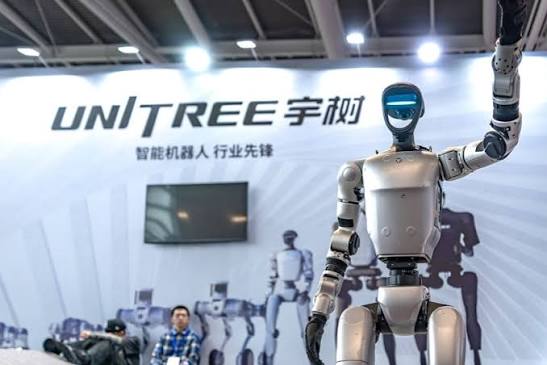
Patent disputes between Chinese robotics leaders reflect deeper competition for technological dominance. Our deep dive a year ago this month explored how "China still lags behind in key areas such as AI sophistication, high-precision manufacturing, and software-hardware integration," even as companies race to capture market share. These legal battles signal the stakes: companies like DJI are fighting for control of core technologies that will define the next phase of China's robotics ambitions. Read more: techbuzzchina.substack.com/p/unitree-huma…
English
0
1
4
576
Tech Buzz China
Tech Buzz China@TechBuzzChina·
Drone maker DJI has filed its first domestic lawsuit: accusing the world’s second biggest action cam company of 6 patent infringements. Insta360 is accused of using former DJU engineers’ work on flight control, structure, and imaging. Insta360 sold 8M units in 2025, +61% YoY. If DJI wins, it could reshape the competitive map, from licensing pressure to limits on what Insta360 can ship. So it isn’t just about IP. It’s about control over the stack.
English
1
1
16
2.4K
Tech Buzz China
Tech Buzz China@TechBuzzChina·
China's AI short video sector has grown into a 20+ billion yuan (~$2.9 billion) content market in under a year. Jiangyu Dongman, founded by vocational-school graduate Huang Haonan, scaled from dozens to 1,200+ employees in under six months. Huang says anyone can be on the job within two to three days. His junior staff earn 3,000-4,000 yuan/month (~$430-570) writing scripts and feeding prompts into video generation models. ByteDance's Seedance 2.0, released February 2026, has compressed the model further. Storyboarding is simplified and video can be generated from prompts of under 20 characters. The companies that moved earliest on platform alignment are capturing most of the returns.
English
0
11
73
6.9K