Xalecta
3.4K posts


@milesdeutscher the gap between people who use these tools daily and people who don't is getting insane. it's not even about being technical anymore, it's about being curious enough to try
English

If your friends aren't talking about:
• Claude
• Perplexity Computer
• Openclaw
• Fitness
• Investing
• Ownership
• Automated workflows
It's time to find new friends.
English

GOODBYE, FUND MANAGERS. GOODBYE, BLOOMBERG TERMINAL.
No more $24,000/year subscriptions.
Claude just turned my laptop into a private quant analyst.
Here are 07 prompts to build your own hedge fund at home ↓
English
Xalecta ری ٹویٹ کیا



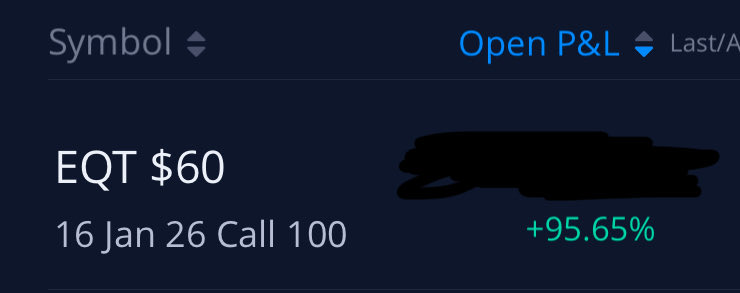
95% gains on some $60s I had and still looks very strong! $EQT …holding long.
Xalecta@xalecta
$EQT $80 long term target. ‘27 leaps.
English

Xalecta ری ٹویٹ کیا

For those who cannot listen 👇
I. The Philosophy of Resilience and Failure
A central and recurring theme is Bill Ackman's belief that resilience in the face of failure is the single most important determinant of long-term success. He argues that many high-achieving students are ironically unprepared for the real world precisely because their history of success has shielded them from the necessary experience of failure, a phenomenon he calls the "preparation paradox".
A. The Inevitability and Necessity of Failure
Ackman posits that failure is not a possibility but an absolute certainty in any ambitious career. He states, "Every successful person I know has… their key to success was how they dealt with failure". He uses his own career as a primary example, noting it was "not a straight line up" and citing monumental setbacks, including losing "$4 billion on one investment".
B. Navigating Crisis with a Compounding Mindset
When confronted with an overwhelming crisis, which he describes as being in a "very deep mine," Ackman's strategy is to apply the financial concept of compounding to personal recovery. His advice includes:
Focus on daily progress: "Make a little bit of progress every day". He notes that this progress may not be noticeable for 30 or 90 days, but after six months, the cumulative effect becomes significant.
Ignore the past: "Don't look at where you fell from… focus on where you are, focus on the next step".
Reframe setbacks as opportunities: Ackman firmly believes that "the good always comes from the bad, you just have to look for it". He cites a personal "brim moment" in 2017 when his firm was down 35%, investors were redeeming capital, and he was going through a divorce. This period of extreme difficulty led him to solve a fundamental business problem by creating a permanent capital vehicle, which he now considers a "huge advantage".
II. The Foundation of Personal Well-being
Ackman asserts that you cannot effectively navigate major challenges unless you are physically and mentally healthy. He views personal well-being as a non-negotiable prerequisite for high performance and resilience. His prescribed regimen includes four pillars:
Nutrition: He strongly advocates for a "zero sugar" diet, calling sugar "poison" and the decision to give it up "life-changing". He also believes seed oils are not good for you.
Exercise: He specifically recommends weightlifting, noting it is beneficial for both muscles and the brain.
Sleep: Good sleep is identified as an essential component of health.
Support System: This is described as the most important factor. He emphasizes surrounding yourself with people who love you, such as family and close friends. He recalls taking nightly walks with a close friend during the intense pressure of the Eliot Spitzer investigation, which provided crucial companionship and support.
III. Investment Doctrine and Strategy
Ackman's investment philosophy is built on deep analysis, a contrarian mindset, and a highly concentrated portfolio.
A. Core Investment Principles
Contrarian Imperative: Ackman believes the "best investments are generally ones where everyone else thinks you're wrong". His strategy seeks to profit from breakdowns in market consensus, which requires the psychological fortitude to withstand being an outlier.
Business Quality and Predictability: Pershing Square seeks businesses that are predictable over long periods, allowing for an accurate calculation of intrinsic value. A key part of this is assessing a company's durability and protection from technological or competitive disruption, which he calls "the hardest part about investing".
Concentrated Portfolio: The firm typically owns only 10-12 stocks. Ackman argues that "diversification protects you from ignorance," while concentration is appropriate for those who have done deep homework. He notes that most of the Forbes 400 made their fortunes in a single company.
Patience and Temperament: The firm maintains a "library" of high-quality companies and waits for market volatility to make them available at "really cheap prices". He stresses the importance of being an "unemotional person about investing" and cultivating a dispassionate temperament, which runs counter to the biological instinct to follow the crowd.
B. Key Case Studies
MBIA (Short): Ackman concluded that MBIA, a bond insurer with a AAA rating, was a "totally fraudulent company" and "basically insolvent". Despite insuring safe municipal bonds, it had expanded to guarantee risky assets like subprime mortgages and CDOs with insufficient capital. He used credit default swaps to bet against it but faced intense backlash, including media attacks and investigations by Eliot Spitzer and the SEC, which forced him to wind down his first fund, Gotham Partners. The bet was ultimately vindicated during the 2008 financial crisis, generating a $1.5 billion profit on a roughly $30 million investment. A key figure, Joe Steinberg, witnessed Ackman's conviction and provided the seed capital for Pershing Square.
General Growth Properties (Long): In what he calls "the most contrarian investment you can make," Ackman bought 25% of the shopping mall operator for $60 million after it declared bankruptcy and its stock fell from $63 to 34 cents. The market consensus was that the equity was worthless. Ackman's analysis showed the underlying assets were high-quality and worth more than the liabilities. He joined the board and helped steer the company through bankruptcy, with the stock ultimately recovering to $31 a share.
Hertz (Long): A more recent investment, described as a "mispriced probabilistic investment". The stock was crushed after a disastrous decision to buy 100,000 Teslas, leading to huge losses on residual values. Ackman is betting on a new, capable management team and the potential impact of auto tariffs, which would raise the value of Hertz's existing fleet of used cars. He sees it as a high-risk/high-reward play that could be a "7 or 10x" return but could also go to zero in a deep recession.
IV. Evolution as an Activist and Pershing Square's Culture
Ackman's approach to shareholder activism has matured over two decades. Initially, he had to "barge into the boardroom," but after building "reputational equity," he is now often "invited in" to share his views. His firm's unique culture is also a key asset. Pershing Square is a lean firm, managing $15 billion with only 41 people. The first hiring criterion is being a "fundamentally a good human being". Compensation is based on the performance of the entire portfolio, not individual ideas, which makes it "as important to reject a bad idea" as it is to find good ones.
V. Commentary on Contemporary Issues
A. U.S. Tariff Strategy Ackman is critical of the broad application of U.S. tariffs, arguing it creates massive uncertainty that could trigger a recession. He believes the U.S. should have worked with allies to focus on adversaries like China, rather than launching a "tariff war against 170-80 countries at the same time". He supports using tariffs for specific, legitimate purposes like achieving reciprocity or onshoring the production of strategic assets.
B. Critique of Elite Universities Ackman argues that elite universities like Harvard have undergone an "ideological capture". He contends they have abandoned meritocracy and excellence for a divisive framework focused on race and gender, dividing the world into "oppressors" and "the oppressed". This has led to a lack of viewpoint diversity, citing a survey where only 2% of Harvard faculty identified as conservative. He believes the most likely catalyst for reform is financial pressure, advising alumni to stop donating and the federal government to withdraw funding.
VI. Guiding Principles for Life and Career
A. The Long Game A long-term perspective is a "superpower" and one of the greatest competitive advantages in life. To illustrate this, he frequently cites that 99.5% of Warren Buffett's net worth was created after the age of 50. For young people, he advises prioritizing experience over salary in their first job and finding a passion they would pursue even if they weren't paid.
B. The "Eulogy Test" To define personal success, Ackman recommends a thought exercise: imagine your own funeral and what you would want your best friend to say in your eulogy. Then, "work backwards" and live your life in a way that makes that eulogy true. This exercise led him to his own personal mission: to have the "largest beneficent impact on the largest number of people".
English
Seen a lot of crypto try to do good — fast aid, fairer payments, new ways to back creators. But most fizzle: unsustainable, low user adoption, no real alignment, impact hard to prove.
Still looking for the one that nails it:
• real problem solved
• sustainable beyond grants
• user adoption & trust
• clear, measurable impact
• simple UX
Find me that project — truly doing lasting good — and I might just get sucked back in.
#crypto
English
@HaydenWalford I made the same decision a few months ago and I haven’t looked back. These moments with our kids are a blessing and we never get the time back!
English

Yesterday I made one of the biggest decisions in my journey so far, I’ve chosen to sell over 70% of my crypto and NFT holdings 💔❤️.
My original plan was to put this into a MAYC and finally achieve my goal of joining the Bored Ape family. After a lot of reflection, I’ve decided to take a step back from crypto and NFTs for now and redirect that energy where it matters most, to my kids and family. Creating lifelong memories with them is a chapter I don’t want to miss.
This isn’t goodbye forever. One day as my kids grow older and need me less I’ll return to this space with the same passion and vision. But until then, my focus is on being present for the moments I can never get back ❤️.

English

At the end of the day, there’s nothing more valuable than real friends and family. Having endless conversations with people you’ll never truly know outside of crypto don’t add up to much. What matters is the people you can call, laugh with, lean on, and actually share life with. Everything else is noise. #crypto #lifelessons
English