Jose Guilherme Zago

14.7K posts

Jose Guilherme Zago banner
Jose Guilherme Zago

Jose Guilherme Zago

@zaago

prof de história

Sao Paulo شامل ہوئے Temmuz 2009
2.7K فالونگ613 فالوورز
Jose Guilherme Zago ری ٹویٹ کیا
Anish Moonka
Anish Moonka@anishmoonka·
You’ve seen the meme of the guy eating soup in pouring rain. It’s a joke about acceptance. The joke is real. Scientists at Harvard and MIT proved it on a brain scan in 2017. A Roman philosopher who started life as a slave figured it out in 125 AD. In the study, 21 women with severe anxiety went into a brain scanner. Researchers read out their personal worries and gave three different instructions: keep worrying, push it away, or just accept it. Worrying lit up the brain’s panic button, the same area that flashes when a snake crosses your path. Acceptance was the surprise. The panic button quieted. A different region took over, the part that handles tough choices, with a much stronger line of communication to the alarm system. The brain stopped wrestling with itself. A Roman philosopher named Epictetus, who started life as a slave, opens his handbook around 125 AD with the same point. Some things are up to you, he writes. Most are not. Your judgments belong on the first list. Your body, your reputation, the weather, what other people do, all go on the second. Mix the two up and you suffer. Sort them out and almost nothing can hurt you. Not accepting has real costs. When you can’t stop replaying a worry, a specific brain region fires harder than it should. A study combining 14 brain scans of 286 people found this pattern is one of the most reliable markers of depression. The body pays too. A 2026 study tracked more than 205,000 UK adults and found those with the most long-term stress damage were over twice as likely to develop heart disease. Stress hormones also chew away at the part of your brain you need to manage stress in the first place. In 1967, Martin Seligman and Steven Maier shocked dogs that couldn’t escape. Later, in a box where escape was easy, the dogs didn’t try. The textbook called this “learned helplessness.” In 2016, Seligman and Maier published a paper saying they’d had it backward. Giving up is the default, hardwired by an old deep brain region. What animals learn, when they learn anything, is the opposite. They learn that what they do can change things. Helplessness is the starting state. Agency is the achievement. Now look at the guy with the soup. He’s seen the rain, worked out he can’t argue with it, and decided to keep eating. This is the scarce skill. Acceptance and Commitment Therapy, developed by Steven Hayes in the 1980s, has been tested in more than 325 randomized clinical trials. It teaches people to act on what they can change and stop wrestling with what they can’t. The American Psychological Association lists it as a well-supported treatment for chronic pain. Two thousand years apart, a Roman handbook and a Boston brain scanner are finding the same answer. The rain keeps doing what rain does. You keep eating.
andrés.@andresmiguer

aceptando que hay cosas fuera de mi control y que no puedo hacer nada al respeto
English
6
58
416
63.5K
Jose Guilherme Zago ری ٹویٹ کیا
Amir Labaki
Amir Labaki@amirlabaki·
Minha série documental “1961” está entre os concorrentes às indicações, na votação em primeiro turno, ao Prêmio Grande Otelo 2026 da Academia Brasileira de Cinema e Artes Audiovisuais. Convido às amigas e aos amigos que são membros da Academia a conferir a reconstituição da crise da renúncia de Jânio Quadros, com a tentativa de golpe militar vetando a posse na Presidência de João Goulart e a campanha da Legalidade que galvanizou em 1961 o país em favor de Jango. A votação já está aberta!#premiograndeotelo @gp_academia @canalbrasil
Amir Labaki tweet media
Português
0
7
30
588
Jose Guilherme Zago ری ٹویٹ کیا
Fundação FHC
Fundação FHC@fundacaofhc·
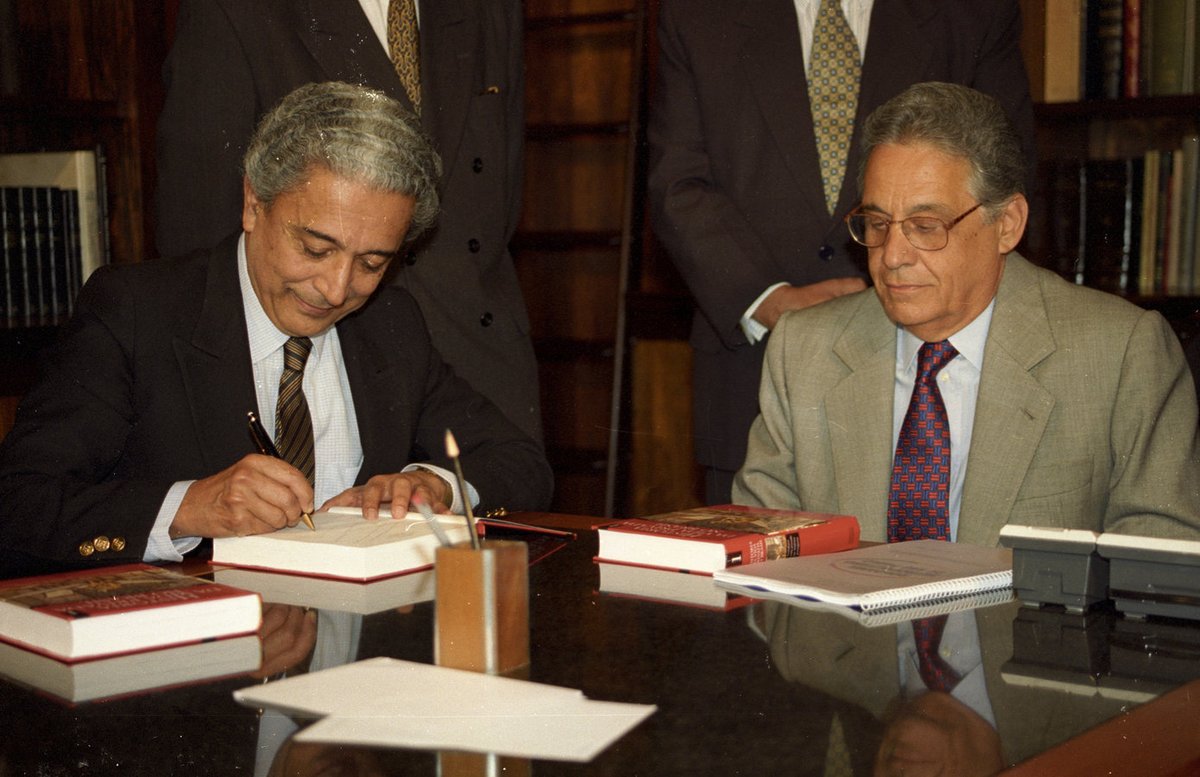
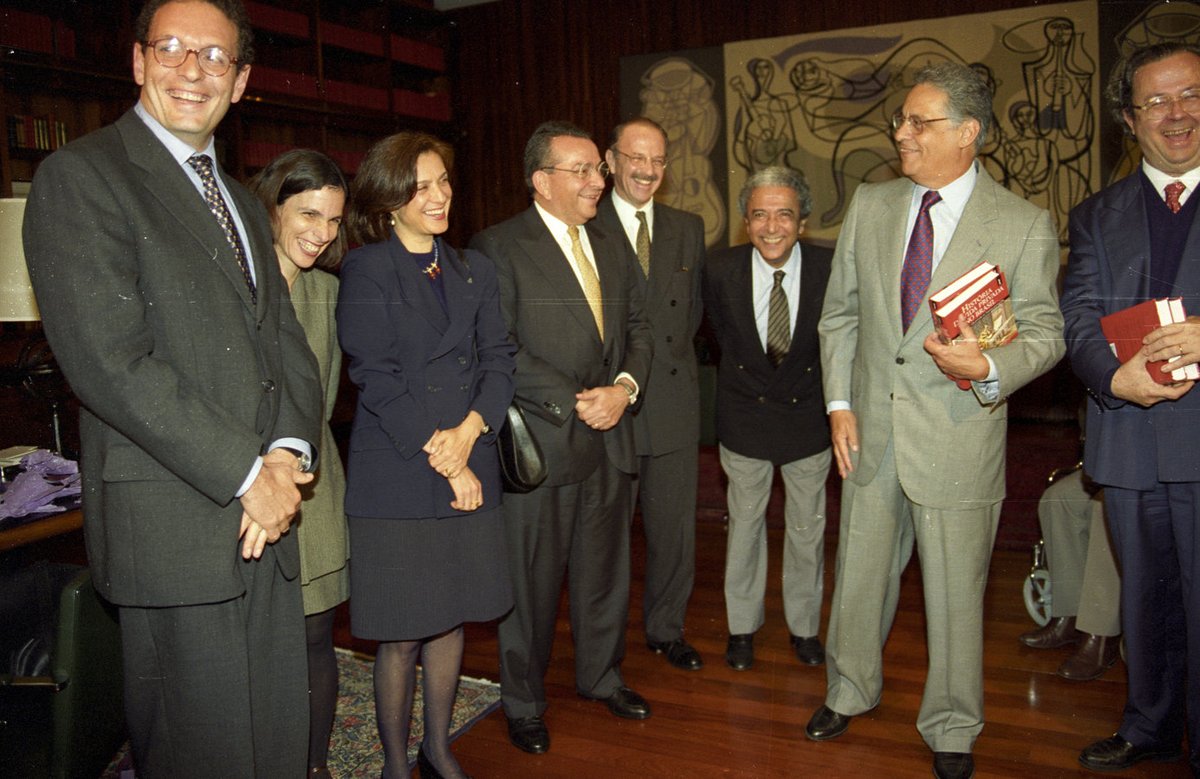
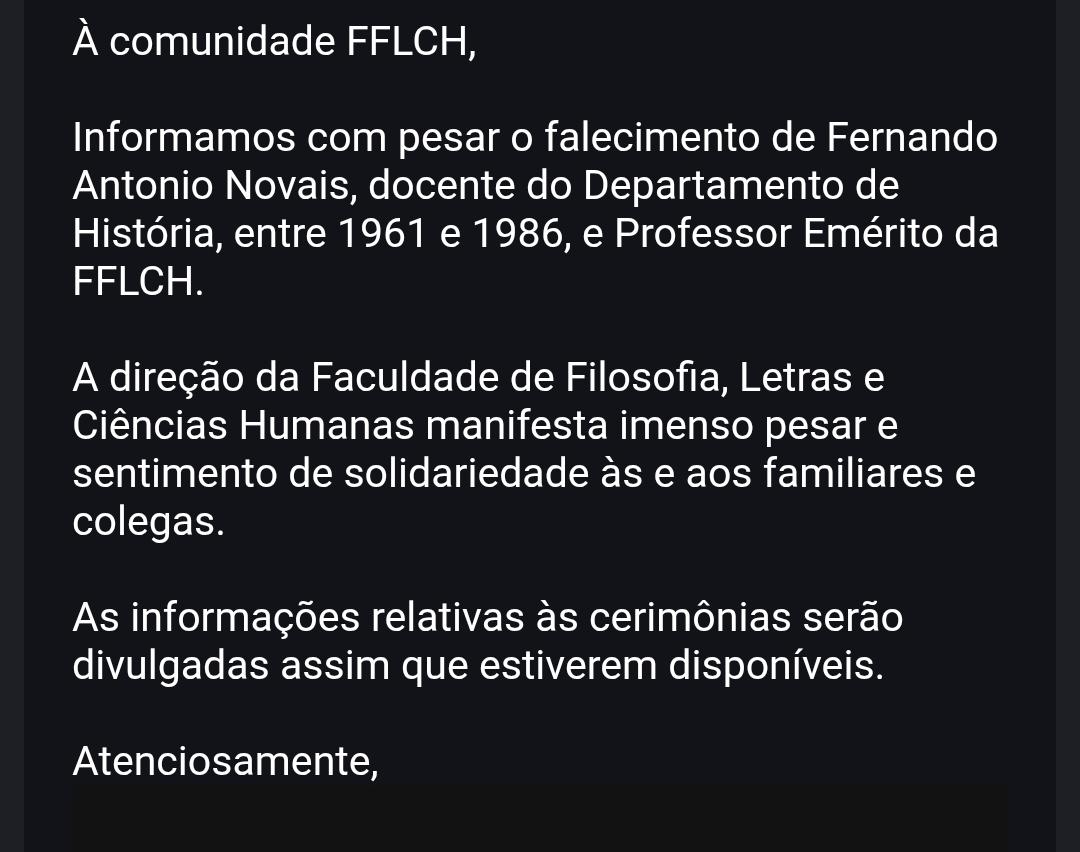
É com imenso pesar que recebemos a notícia do falecimento do historiador Fernando Novais. Professor emérito da @usponline e aposentado da @unicampoficial e autor do clássico “Portugal e Brasil na Crise do Antigo Sistema Colonial (1777–1808)”, Novais foi, ao longo de décadas, amigo próximo de Fernando Henrique Cardoso. Ambos compartilharam o mesmo ambiente universitário e intelectual, especialmente na USP, em um período de grande efervescência das ciências humanas no Brasil. No fim dos anos 1950 e início dos anos 1960, ao lado do filósofo José Arthur Giannotti, foram fundadores de um importante seminário na USP, conhecido como “Seminário Marx”, que estudou a obra do intelectual alemão de uma maneira rigidamente acadêmica e interdisciplinar, ao contrário do que era feito até então, quando o livro era usado como base para a formação de partidos e doutrinas políticas. Referência na historiografia brasileira, Fernando Novais destacou-se por suas análises sobre o sistema colonial e o capitalismo mercantil. Já Fernando Henrique Cardoso, em parceria com o sociólogo Enzo Faletto, desenvolveu a Teoria da Dependência. Em perspectivas distintas, suas trajetórias dialogam no esforço de compreender a formação econômica e social da América Latina. Compartilhamos aqui fotografias presentes em nosso Centro de Memória e Pesquisa que mostram um encontro de Fernando Henrique com editores da coleção “História da Vida Privada no Brasil” (@cialetras), dirigida por Fernando Novais, em junho de 1997, em Brasília. A Fundação FHC se solidariza com seus familiares, amigos, leitores e alunos. 📷 Domingos Tadeu de Oliveira Pinto
Fundação FHC tweet mediaFundação FHC tweet mediaFundação FHC tweet media
Português
1
7
41
825
Jose Guilherme Zago
@glauber_doc Eu fiz tomo e exames complementares no PS por causa de hemograma alterado. Teve uma famosa que descobriu leucemia por isso. Dependendo dos sintomas (aí fodeu né) tem como um bom clínico pegar.
Português
0
0
0
152
Glauber
Glauber@glauber_doc·
Querer que o atendimento de PS diagnostique câncer? Meio complicado. Mas é verdade que pelo menos pedir um hemograma ou um exame de imagem já poderia indicar o linfoma. Acho que no Brasil isso não teria muito problema. Mas pelo que vejo na Europa os médicos estão mais a fim de dizer que não tem nada e tomar um chazinho.
Alba@albihm

Nunca he contado esto, pero cada vez que veo post de médicos que se quejan de la gente que va a urgencias por tonterias, me hierve la sangre. Porque yo también fui un día a urgencias, me dijeron que no era nada… y a que no sabéis que era? Cáncer🤡⬇️

Português
10
4
96
10.5K
Jose Guilherme Zago ری ٹویٹ کیا
America Elects
America Elects@AmericaElige·
Peru, Ipsos poll: Presidential election (second round) Fujimori (FP, right): 50% Sánchez (JPP, left): 50% Fieldwork: 23-24 April 2026 Sample size: 1,208 #Peru #Ipsos #Elecciones2026 #EG2026
America Elects tweet media
Română
34
91
1.3K
239.4K
Jose Guilherme Zago ری ٹویٹ کیا
José Correia Guedes
Então, pá? A coisa esteve "preta" hoje em São Paulo Congonhas. Boeing 737-800 da GOL vinha em aproximação à pista 17R (direita) de Congonhas tendo sido instruído a continuar e aguardar autorização para aterrar. Tudo normal. Ao mesmo tempo um Embraer 195 E2 da Azul foi autorizado a descolar da mesma pista só que demorou uma eternidade (1 minuto e 15 segundos) e quando começou a acelerar já o B737 estava a ser intruído a borregar (arremeter🇧🇷) pelo controlador de serviço. Entretanto o mesmo controlador chamou várias vezes o avião da AZUL mandando abortar a descolagem. Ninguém respondeu (muito grave) e o Embraer continuou a acelerar até que descolou. Pouco depois ambos os aviões encontraram-se no ar separados por uns ínfimos 75 pés (22 metros) segundo o site Aviation Safety Network. O piloto do GOL confirmou a ativação de um alerta de TCAS (sistema anti colisão) mas não informou qual o grau (advisory ou resolution). O que aconteceu é grave e só por milagre não acabou em tragédia. As comunicações estão disponíveis na Internet e deixam poucas dívidas: os pilotos do Embraer da AZUL vão agora ter uma conversa muito séria com o chefe e explicar por que razão não obedeceram à ordem do controlador para abortarem a descolagem. A ANAC, autoridade aeronáutica do Brasil, também vai querer saber
José Correia Guedes tweet media
Português
33
32
730
44.6K
Mikaa Blugeon-Mered
Mikaa Blugeon-Mered@Mikaa_BM·
L'occasion de rappeler que la + longue frontière terrestre de la 🇫🇷 n'est PAS entre la Guyane et le Brésil (730 km). 😇 La plus longue frontière terrestre de la 🇫🇷 est avec l'Australie, en Antarctique, entre la Terre Adélie et le Territoire Antarctique Australien : ≈ 5200 km.
Mikaa Blugeon-Mered tweet mediaMikaa Blugeon-Mered tweet media
Louis Duclos@ObsDelphi

🇫🇷🇧🇷Nouvel exercice important entre la France et le Brésil. La plus longue frontière terrestre de la France est avec le Brésil et se trouve en Guyane. L'exercice Jeanne d'Arc 2026 (pas mal comme nom au passage), a rassemblé près de 2000 militaires français et brésiliens qui se sont entraînés ensemble. L'opération a intégré des moyens amphibies, aéronavals et plusieurs navires dont des frégates. L'objectif est de « travailler notre interopérabilité entre les forces armées brésiliennes et les forces armées françaises » et de pouvoir « être en mesure d’être projetés sur une opération, aux côtés des forces armées brésiliennes » d'après le capitaine Simon, commandant des unités tactiques embarquées sur le Dixmude (porte-hélicoptères français). La France est une puissance militaire de choix présente au Groenland, dans les pays baltes, dans le Golfe Persique (Émirats), en Méditerranée, en Afrique, en Amérique et en Indo-Pacifique. Ceux qui veulent vous faire croire que la France est larguée militairement se trompent. Le Brésil est aussi un partenaire important en matière de sécurité et de défense pour nos territoires d'outre-mer. La région n'est pas menacée seulement par le narcotrafic et l'orpaillage illégal mais bel et bien par des tensions fortes. En effet, en plus des actes de guerre entre les États-Unis et le Venezuela en janvier, il y a également eu des tensions récemment entre le Venezuela de Maduro (on verra si cela continue sans lui) et le Guyana dont une partie de son territoire, l'Esequibo, est revendiqué par Caracas, notamment pour des histoires de pétrole. La France et le Brésil sont des alliés stratégiques, cet exercice est le signe d'une relation forte avec beaucoup de potentiel 🇫🇷👏🇧🇷

Français
39
84
845
125.2K
Jose Guilherme Zago ری ٹویٹ کیا
Nota T
Nota T@NotaT240400·
Linguistic map of the Roman World 100 AD taivaansusi.net/maps/
Nota T tweet media
English
1
96
583
24.5K
Jose Guilherme Zago
@thiamparo Thiago, qual obra do Jorge Messias é refêrencia na área do direito? Qual área do direito ele é especialista? Onde ele atuou? Quais são os elementos que o torna um jurista respeitável?
Português
0
0
1
50
Jose Guilherme Zago ری ٹویٹ کیا
Aakash Gupta
Aakash Gupta@aakashgupta·
Brian Cox is pointing at one dot. The dot is a galaxy with 100 billion stars. There are 200 billion more on the same map. The thin line at the top of that map represents a billion light-years. At the speed of light, it would take a billion years to cross that sliver. The math gets stranger. The observable universe holds roughly 30 sextillion stars. Every grain of sand on every beach on Earth combined is about 7.5 sextillion. The universe has 4x more stars than Earth has sand. The deeper number is which of those galaxies you can ever actually reach. Dark energy is accelerating cosmic expansion. Space itself is stretching faster than light can cross it. The cosmic event horizon sits at roughly 16 billion light-years from Earth. Anything past that is moving away from us faster than light can chase. We can see those galaxies because their photons left billions of years ago when the gap was small enough. We cannot reach them. We cannot send a signal. We cannot know what they look like now. 97% of the galaxies on Cox's map are already disconnected from our future. Visible artifacts of a past that has ended. Now look forward. In about 150 billion years, accelerating redshift will push every galaxy outside our Local Group beyond detection. Andromeda will have merged with the Milky Way. The other 199,999,999,999 galaxies will be invisible. Civilizations on planets around future stars will look up and see only one galaxy. Their telescopes will tell them the universe ends at the edge of the Local Group. They will not see cosmic background radiation. They will not observe expansion. They will not know about the Big Bang. The evidence will have receded past their light cone. Every astronomy textbook they could ever write would conclude the universe is small, static, and made of one galaxy. We exist in a 100-billion-year window where the universe is still legible. Before us, too hot, too dense, too young. After us, the lights go out one galaxy at a time. 30 sextillion stars on the map. A 100-billion-year window in which to read it. We exist inside the only overlap.
English
24
77
464
52.5K
Jose Guilherme Zago ری ٹویٹ کیا
Carlos De la Guardia
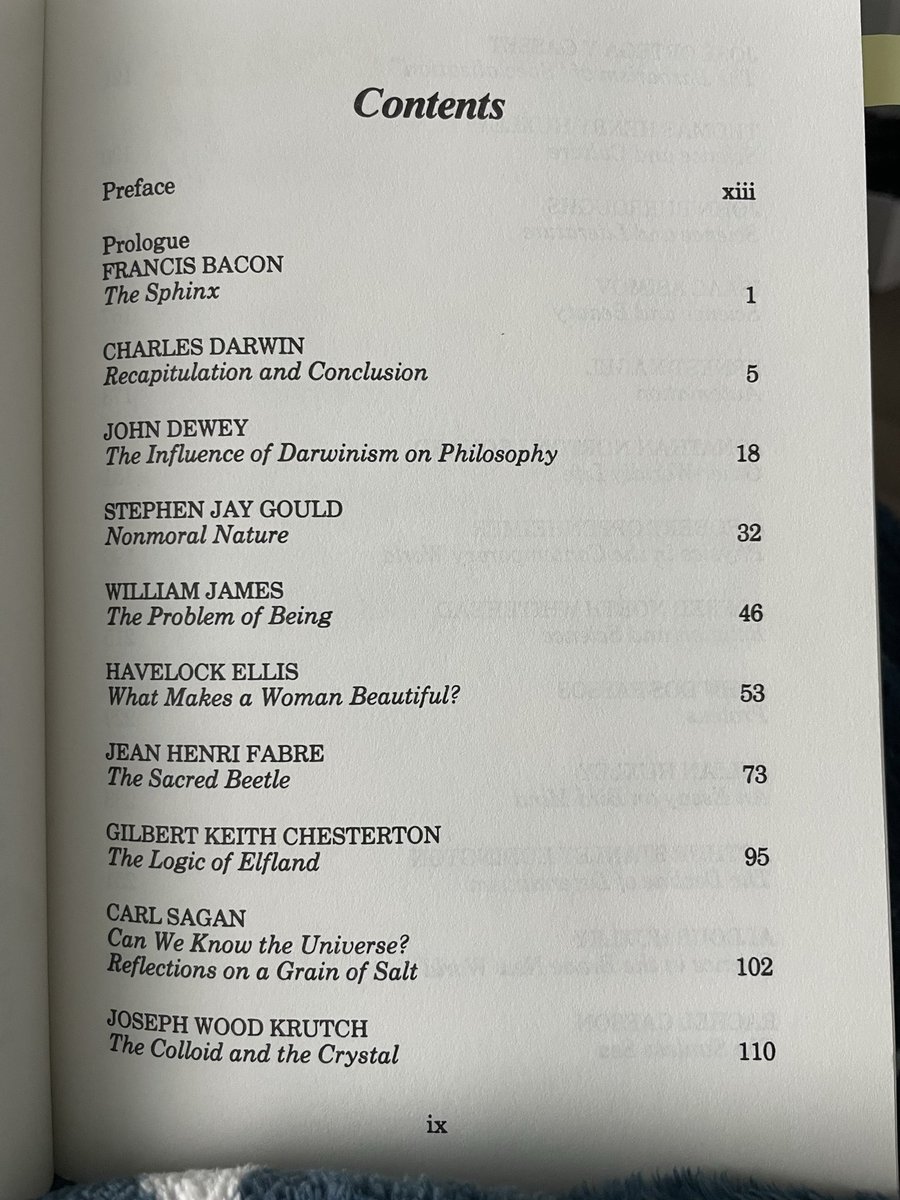
Currently reading: Great Essays in Science, edited by Martin Gardner
Carlos De la Guardia tweet mediaCarlos De la Guardia tweet mediaCarlos De la Guardia tweet media
English
6
58
622
22.1K
Jose Guilherme Zago ری ٹویٹ کیا
Antonin Cavelier
Antonin Cavelier@CavelierAntonin·
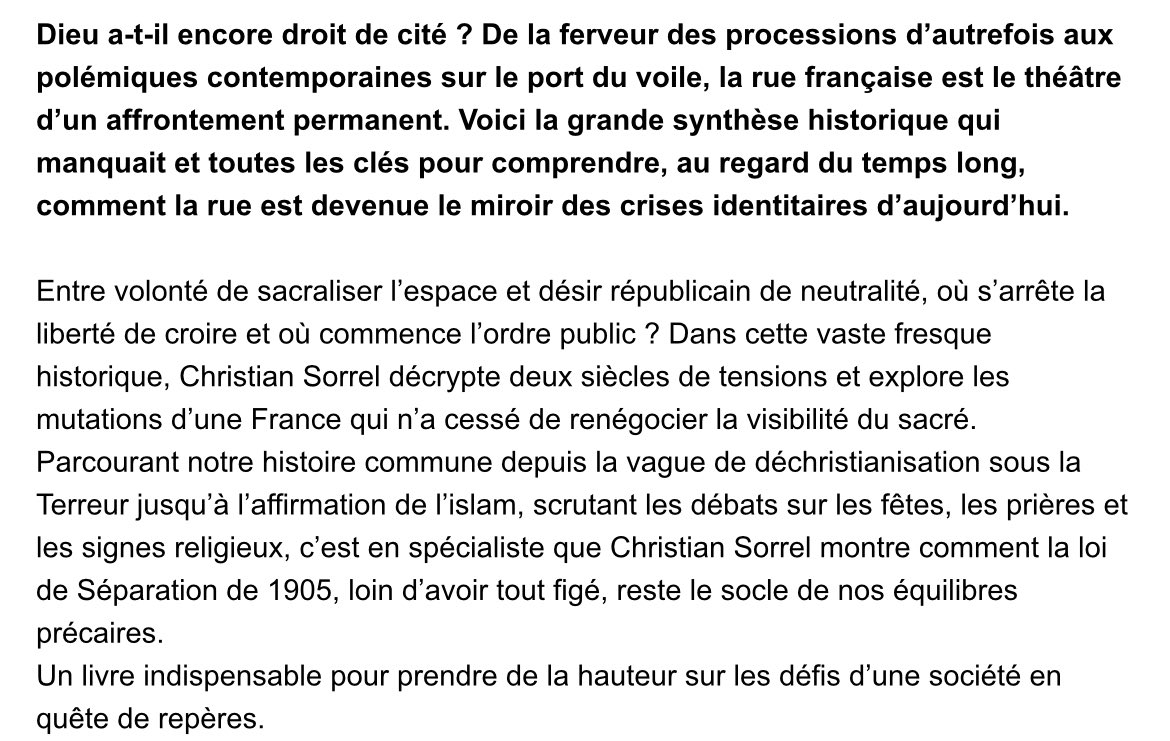
A paraître en mai @EditionsduCERF Dieu et la rue. De la Révolution à aujourd’hui - Christian Sorrel
Antonin Cavelier tweet mediaAntonin Cavelier tweet media
Français
0
4
17
1.6K
Jose Guilherme Zago ری ٹویٹ کیا
Alexandr Rakitko
Alexandr Rakitko@AlexRakitko·
🧬A new @Nature study of 258 ancient genomes from Germany shows that Early Medieval southern Germany was not formed by a simple barbarian replacement of the Roman population.🏺 Some striking findings: - Instead, between 400 and 700 CE it was shaped by a long process of mixing between northern European groups already living near the former Roman frontier and diverse late Roman provincial communities. - Northern European groups were present in the region earlier than previously thought. - Strontium isotopes suggest that the first non-local individuals in Altheim were women. Burial patterns also point to a mostly, but not strictly, patrilocal society: women often moved to their husband’s family, but the rule was flexible. The genetic data also suggest lifelong monogamy and strong avoidance of close-kin marriage, with very low evidence of inbreeding. - One remarkable individual, Alh_245, dated to 528–553 CE, had about two-thirds East Asian ancestry and one-third western Steppe ancestry. He also shared long IBD segments with people from the Berel necropolis in modern Kazakhstan. - Grave goods did not neatly match genetic ancestry. - By age 10 about 25% of children had lost at least one parent, but most still grew up with living grandparents. Overall, Early Medieval southern Germany looks less like a story of sudden invasion and more like one of local communities, mobility, intermarriage, and gradual mixing after the collapse of Roman Empire. nature.com/articles/s4158… #aDNA #RomanEmpire #Admixture #PCA #PopulationGenetics #PedigreeReconstruction
English
4
28
150
30.4K