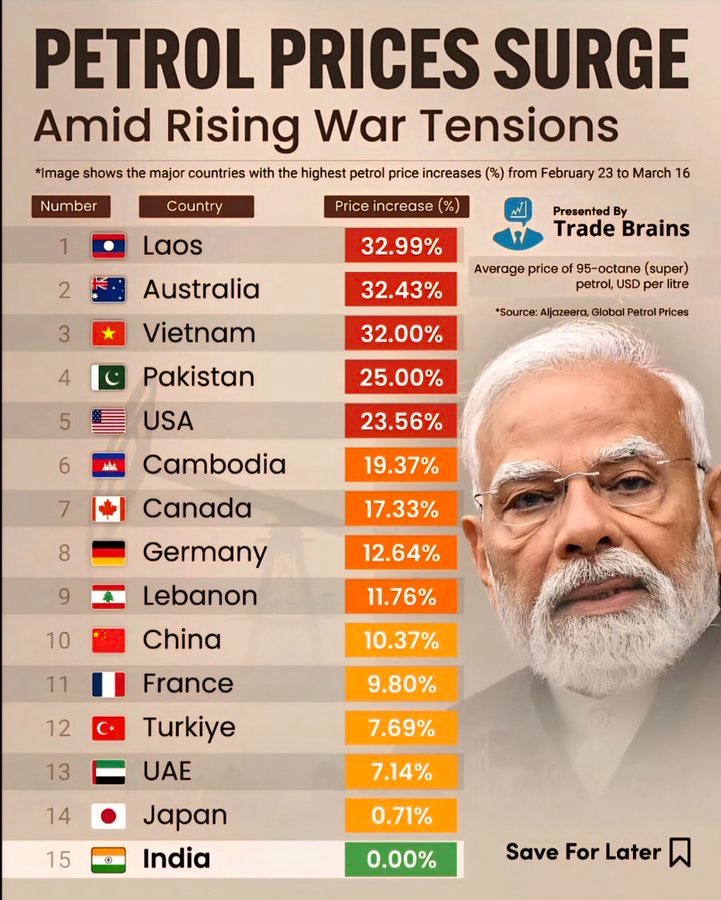
@spectatorindex This isn’t surprise, it’s consequence. US and Israel disrupted supply lines, so the bill will come. Europe backed the fire and now they are paying for the fuel.
Thanks to their ally USA!
European gas +25% is Ras Laffan transmitting into the LNG replacement market in real time.
Qatar supplied 20% of global LNG. Europe spent two years building post-Russia gas security. That infrastructure assumed Ras Laffan was intact.
It isn’t. The Stall Tax just found a new surface area.
0 for 4. Day 21.
@spectatorindex "Europeans acting shocked at a 25% gas hike is rich—decades of ignoring energy security and relying on unstable suppliers finally have consequences. Maybe now they’ll stop pretending climate policies alone can fix geopolitics."
@spectatorindex@grok When natural gas prices spike this sharply in Europe, how does it typically impact inflation, industrial output, and economic growth in the following months?
@Spectatorindex
🛢️ EUROPE GAS SHOCK AND POWER FRACTURE
⚠️ European gas did not rise by 25% in a single day, but has surged over 60% along the war-driven trajectory since February 28.
Around 20% of global oil and LNG flows normally pass through Hormuz; the de facto closure of the strait has made Europe directly hostage to prices.
This is why what appears on the surface is not a “market movement,” but the exposed structural power weakness of import-dependent systems.
Brussels is discussing emergency measures today, yet even in the summit text reported by Reuters there is no fast or strong solution; tools such as tax cuts, state aid, and ETS adjustments are not expected to sharply push prices down.
The hardest hit is not evenly distributed.
Italy derives around 38% of its total energy from gas, while Hungary and Romania are also above the 30% range; therefore, in 2026 wholesale electricity prices rose by at least 12% in these countries, while declines were observed in Spain and Portugal.
The subtle but critical detail is this: the issue is not just rising gas prices, but who adjusted their energy mix in time.
Spain generated around 55% of its electricity from renewables in 2025, Portugal 80%, while France absorbed the same shock with far less damage thanks to generating about 70% of its electricity from nuclear power.
This picture is an economic issue for some countries, and a direct test of political authority for others.
Because the energy bill no longer hits only household budgets, but simultaneously strikes industrial competitiveness, inflation, and governments’ “we are in control” narrative. Europe’s gas is not rising; Europe’s fragility premium is being priced in.
Is this truly a temporary wartime panic
or the long-delayed cost of Europe’s collapsing energy sovereignty?
A 25% surge in a single day is the 'Systemic Shock' the 2026 recovery didn't need. 📈🇪🇺
This isn't just about heating bills; it’s about the 'Cost of Production' for everything from glass to fertilizer. When energy input costs jump this fast, we’re looking at a 2026 'Industrial Bottleneck' that will hit consumer prices in 30 days. Brace for the surcharges. 🚨⛽️
Qatar is the linchpin of EU energy security right now. With the LNG plant offline, we aren't just looking at higher heating bills; we’re looking at a potential 'Industrial Blackout' for heavy manufacturing. The market is pricing in the fear of a long-term supply deficit.
We received information on this around 10 minutes ago; if not 25% then 30%.
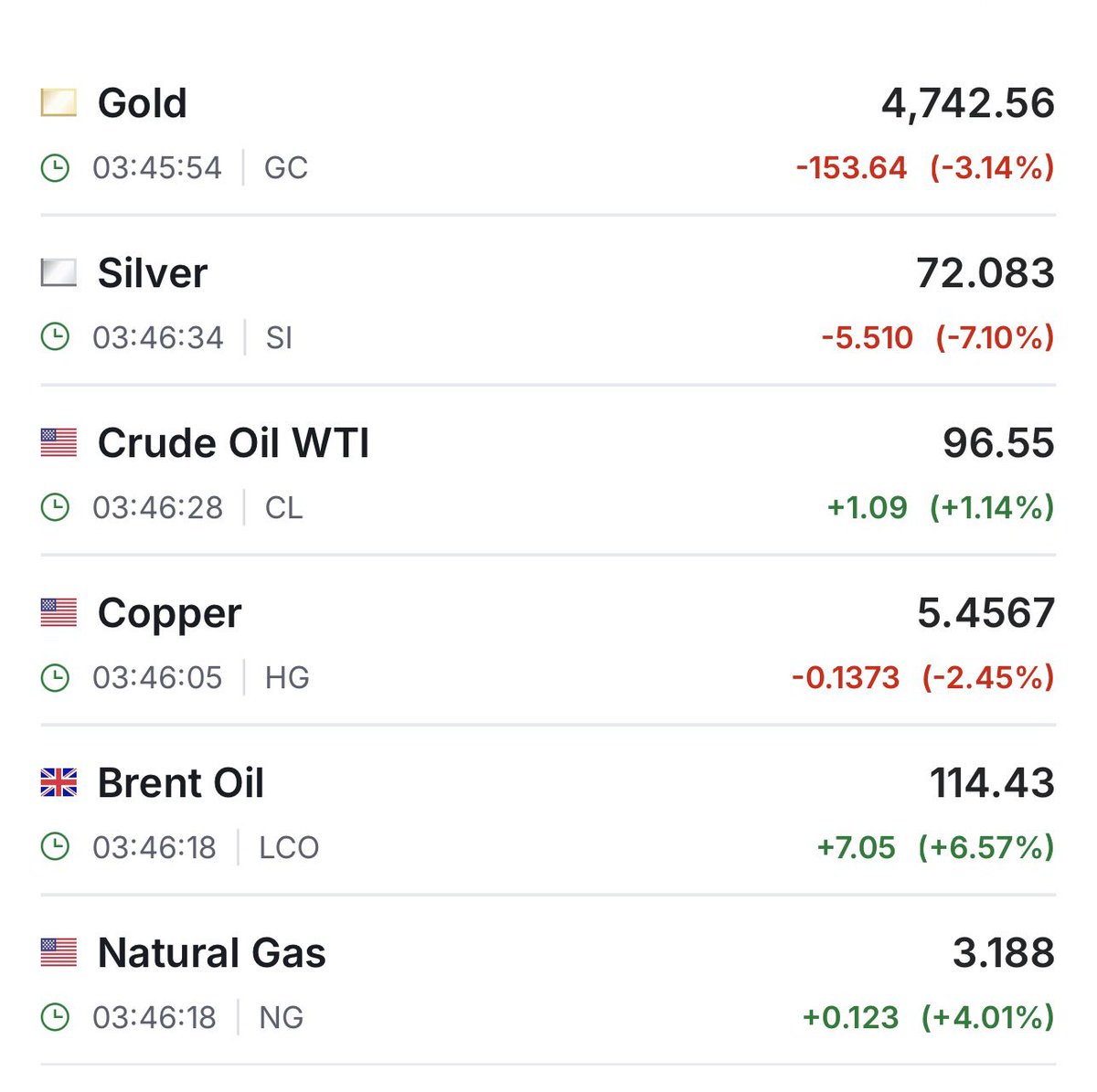
What's certain though is that the price of gas is now $850 per thousand cubic meters; that hasn't happened in over 3 years. Oil is touching $115 also.
We provide a real-time uncensored feed of what's happening in the region.
Privacy is one of the most underrated drivers of mass adoption in crypto
People talk about scalability and UX, but without privacy, blockchains simply can’t move beyond niche usage.
And the easiest way to understand this is through real everyday use cases, because until you see them, it’s hard to grasp why privacy actually matters.
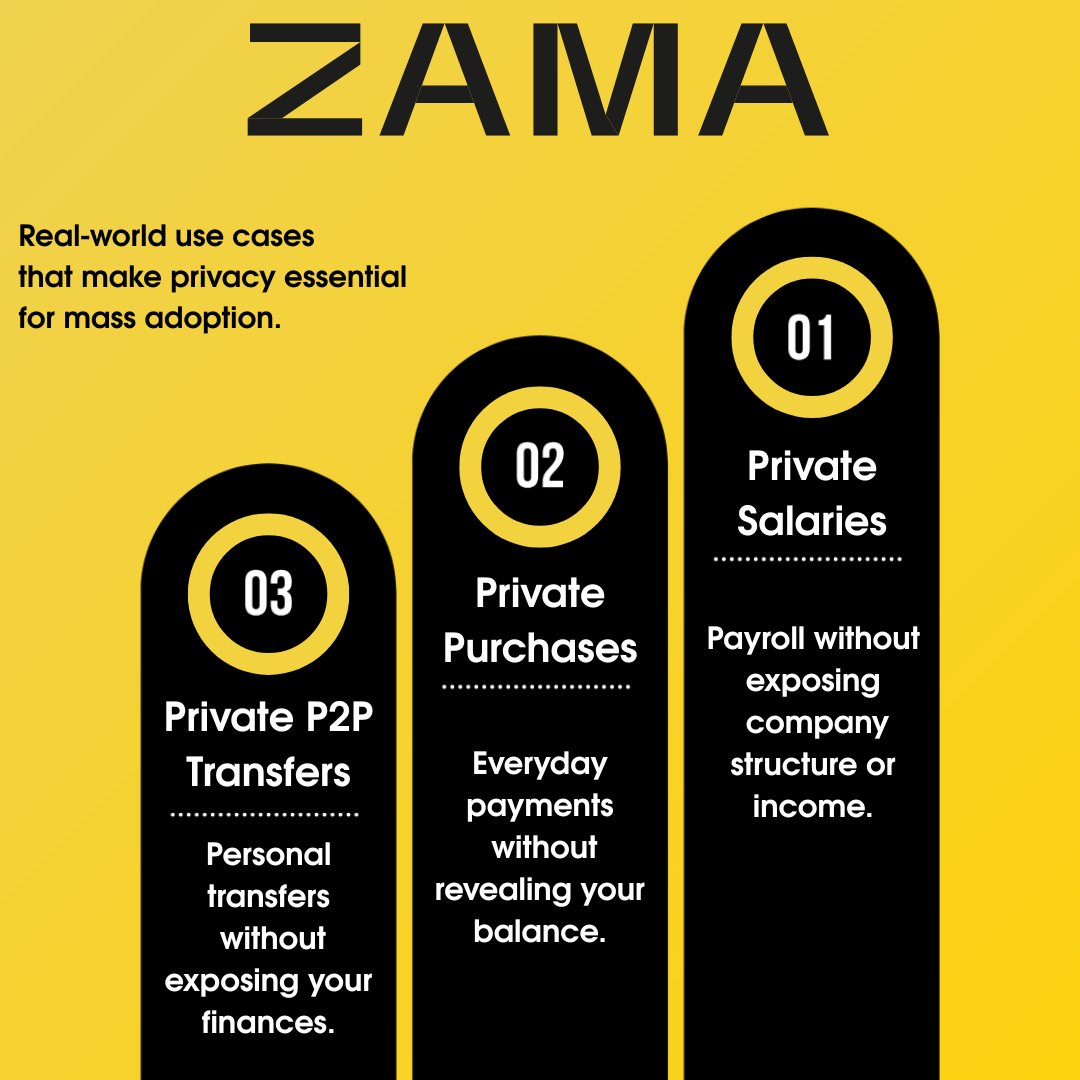
Use Case 1: Private Salaries
On-chain payroll sounds cool until you realize it makes every salary, bonus and promotion publicly visible.
No company wants competitors or random users seeing their entire compensation structure, and no employee wants their income exposed on a block explorer.
With FHE, payroll can be fully automated on-chain while all amounts stay encrypted — visible only to the person getting paid.
Use Case 2: Private Spending & Purchases
In the real world, your daily spending is private by default. On-chain, every payment exposes your balance and full financial history.
FHE fixes this: you can pay normally while your amounts and balances stay confidential.
Use Case 3: Private P2P Transfers
Sending money to a friend or family member shouldn’t reveal your entire financial life.
But that’s exactly what happens today on public blockchains.
With confidential transfers, the network validates the transaction, but the amount and balances remain encrypted.
They’re basic situations everyone deals with daily.
And rn, they simply don’t work on transparent blockchains.
@zama fits perfectly here
It doesn’t replace blockchains, it upgrades them with real privacy.
No new environment, just confidentiality on demand.
Exactly what’s needed for mass adoption.
Kuwait tonight is the second hammer hitting an already cracked European chemical sector. UK chemical production is already down 60% since 2021, and another +25% gas spike means fertilizer plants shutting down again. Ammonia production in Europe is 80% natural-gas-dependent, so there's no spare capacity to absorb this.
BASF has been quietly idling Ludwigshafen for two years. Spring planting orders are already overdue. The 2022 gas shock took 18 months to hit global food prices. This one has less runway. Manufacturers who didn't diversify sourcing to US or Asia after 2022 are about to learn the lesson twice.