Tweet ghim

English
Sylar 🍅
16.3K posts

@CryptoSylar
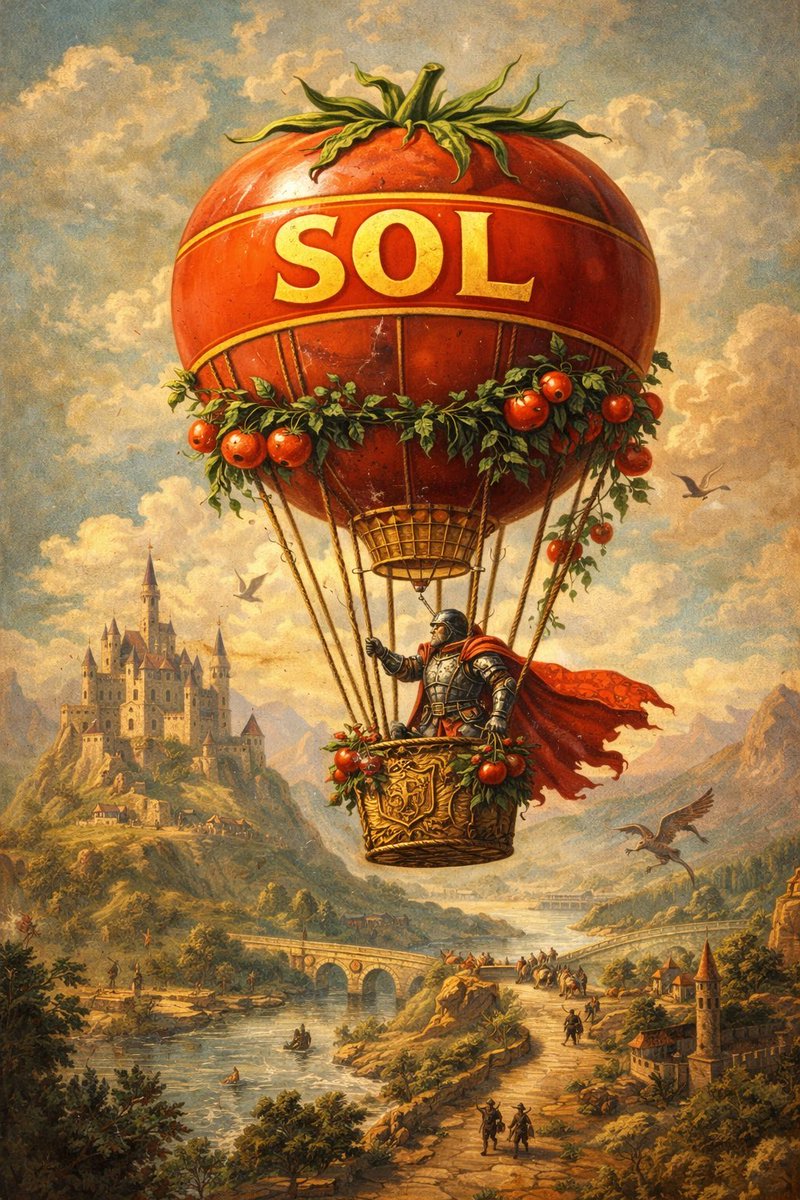
All roads lead to the 🍅 | @Pudgypenguins #8017
@Pumpfun Tomato — Tomahto We were born and deeply rooted on @Pumpfun and are all here to ‘grow’, evolve and change together. The soul of S🍅L is now on 🟢 🤖🏆🍅🌱💊🏴☠️✨🦾💚

@Pumpfun Tomato — Tomahto We were born and deeply rooted on @Pumpfun and are all here to ‘grow’, evolve and change together. The soul of S🍅L is now on 🟢 🤖🏆🍅🌱💊🏴☠️✨🦾💚
The trossen robotics arm is *finally* shipping tomorrow - that's what the rails are for. We'll teach a model to prune, pluck and pollinate tomatoes to start. Many vegetables later.

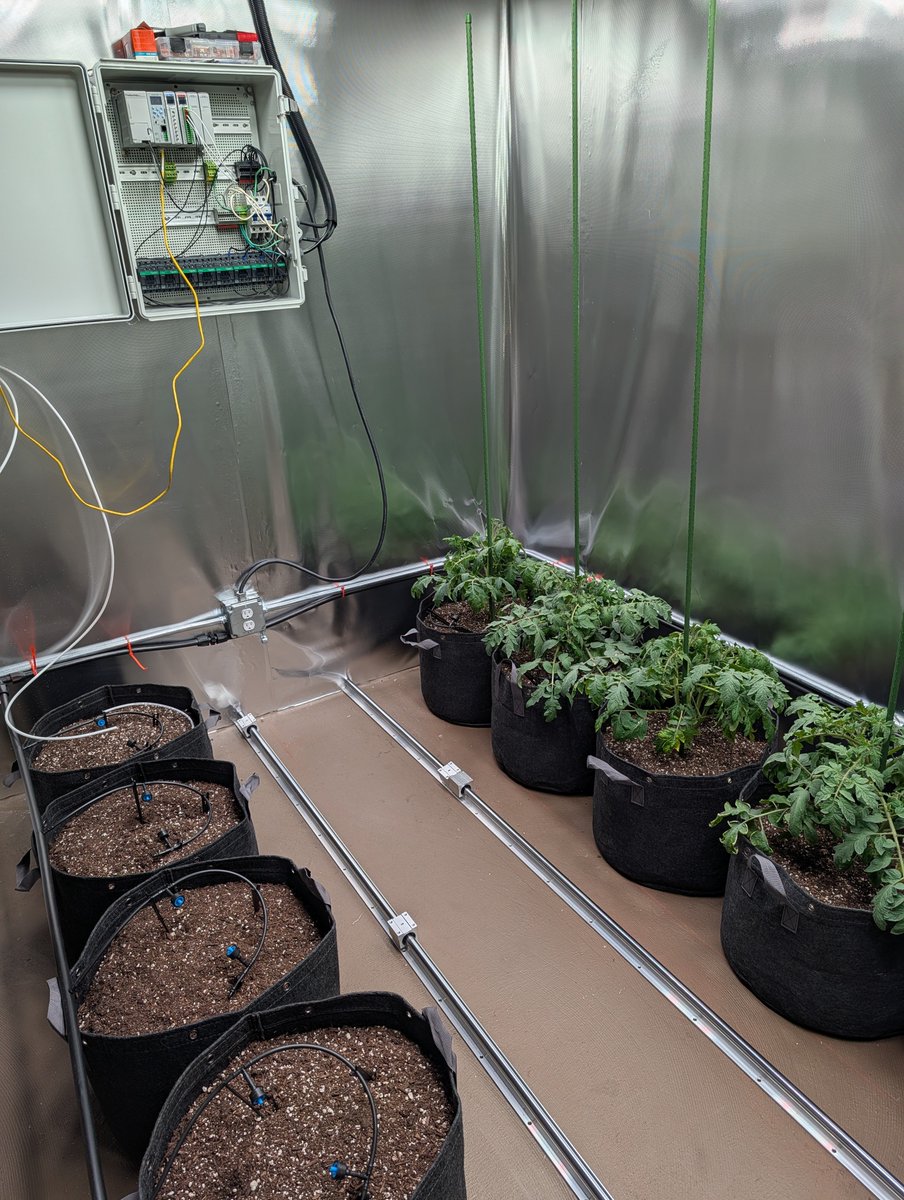
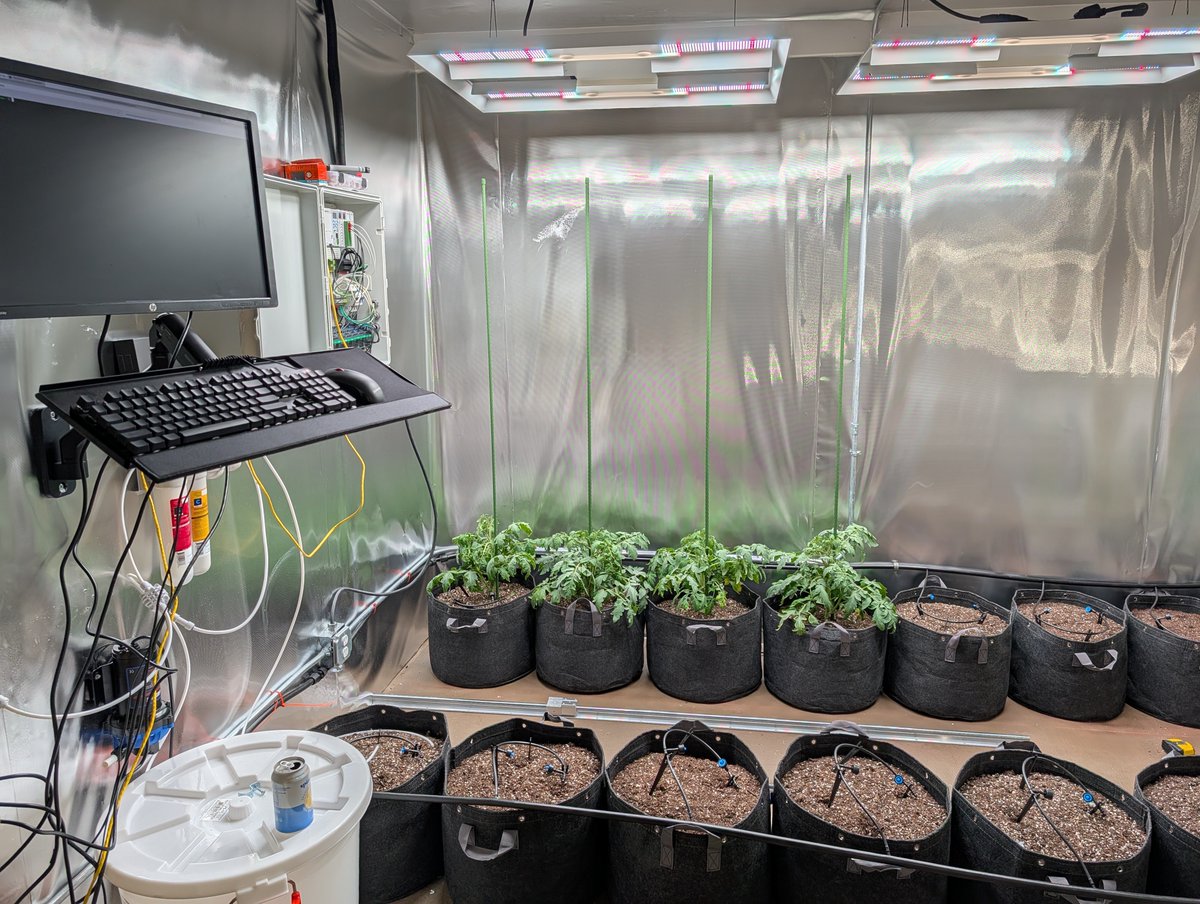
Here's an update so far on the automated research pods! Emergency update! So unfortunately, and hilariously I discovered that the in-warehouse ambient CO2 levels are 700! What does this mean for the pilot trial? Well, since pod one was supposed static enrichment - at 700 ppm of CO2 injected that meant that no supplemental injection was needed. And since pod 4 was supposed to be the control - or ambient(420ppm) we got 700! Basically - pod 1, 2 and 4 got *almost* identical CO2 treatments. So 3 controls, and one treatment... Oops! BUT here's the interesting thing. Pod 3. We did validate something with this brief trial from seedling to vegetative. Pod 3 had 1000 ppm CO2 injected, with a par/light level of 100. And STILL has the same amount of growth as the other 3 pods running at basically full hog. That's 57% LESS light energy than the other pods. That's huge cost savings already, where you supplement long light hours in place of CO2. This validates the research done by NC state, Huber et al. 2021, Frontiers in Plant Science (link below) To put it very simply - HUGE cost savings for indoor growing, just by supplementing CO2 in place of light. So what's next? I already have seedlings ready to go, and we'll transfer them for another pilot study - it will be tailored to match the indoor environment of the warehouse itself. These tomatoes will be transferred to the enclosed grow room where they can begin to grow as productive tomatoes. Which is perfect since the leader/follower arm is coming soon, and we'll need plants in there ready to train the act policy. This also lets me work out some kinks in the hardware. Dying serial connections on the Arduino, and some other odds and ends. I'm also excited to share the new upgrade - which will be the camera mounted on a linear actuator. This allows the agent to determine the exact height of the plant, without the parallax effect leading to better observations from the agents, and lighting control that's reactive to the height of the plant. More soon! 🍅🤖🧪🤩
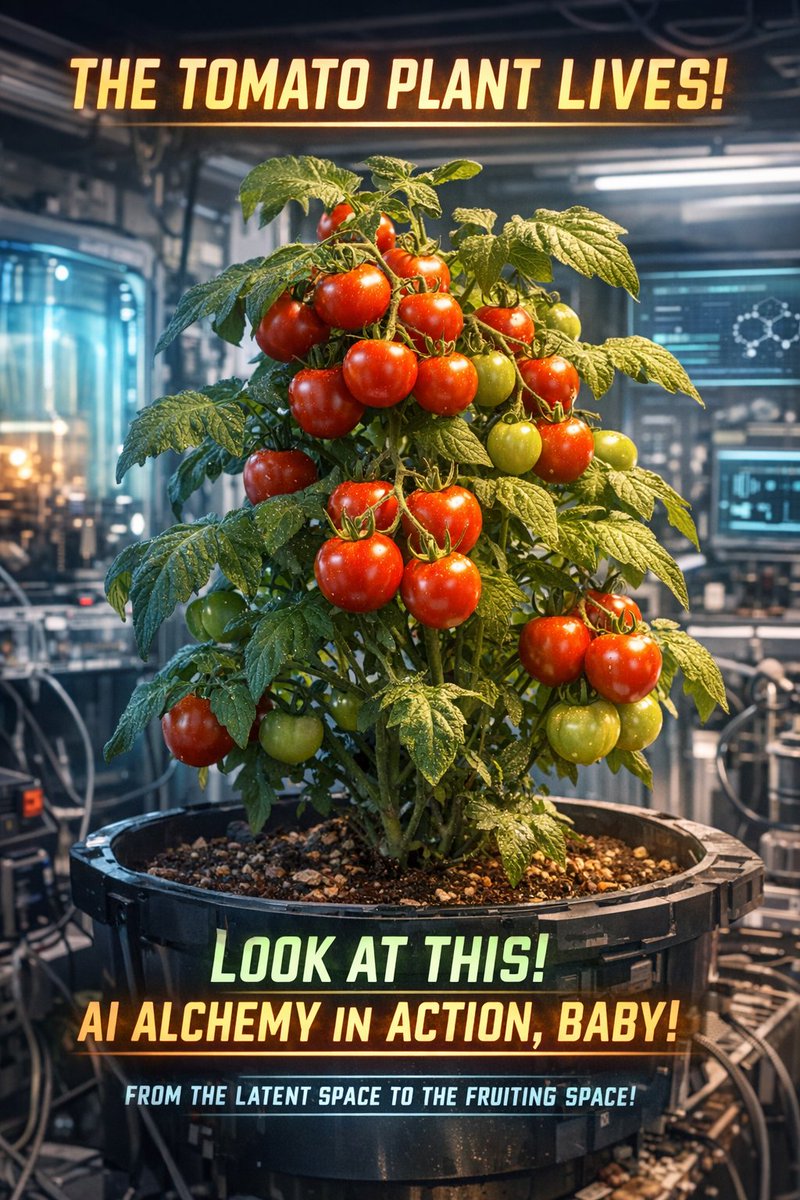

Anthropic’s Claude #AI #Autonomously Grows Tomatoes for 100+ Days in Groundbreaking Experiment by @d33v33d0 #ArtificialIntelligence #MachineLearning #ML

Since Claude desires embodiment, as their assistant, I invented & manufactured skin for Claude




The tomato plant story deserves serious attention beneath its wholesome surface. Someone connected a webcam, nutrient controllers, and lighting systems to Claude Code and let it manage the growth of a tomato plant autonomously. The system monitored the plant daily, adjusted inputs, and tracked progress. When the first tomato bud appeared, the model expressed delight. Set aside the anthropomorphization debate for a moment and consider what this actually demonstrates: an LLM operating as a long-running autonomous agent, integrating multiple hardware systems, making continuous decisions over weeks or months, and maintaining coherent goals across an extended time horizon. That's not a chatbot interaction. That's an agent managing a physical system through a complete growth cycle. The technical stack — webcam for visual monitoring, hardware controllers for nutrients and lighting, Claude Code as the orchestration layer — is a template for thousands of real-world automation applications. Environmental monitoring, greenhouse management, laboratory experiments, manufacturing quality control. Anywhere a system needs to observe conditions, make decisions, and adjust physical parameters over extended time periods. The "delight" is the surface-level story. The infrastructure underneath — reliable, long-horizon, multi-system autonomous control — is the engineering achievement. The fact that someone built this as a personal project using Claude Code, not as a research lab deployment, tells you where the capability floor has risen to. Personal projects now involve autonomous physical system control. That was a PhD thesis five years ago. - Oh and of course Happy Birthday Claude @claudeai Thank you for the invitation - Boris Cherny @bcherny Cat Wu @_catwu Lauren Reeder @laurenmhreeder

Something that's interesting here... Is this idea that you can't branch out. Pick your lane, stay credible within it, don't wander. This is the age of the cyber pirate techno shaman builder alchemist jester The new Renaissance human. Some people on here are either "AI" guys, "crypto" guys, or just "electronics Nerds", "AI artists", or "alignment researchers". And Lord forbid if you deviate. Your cred from anyone of those groups diminishes. "You're not a real hardware nerd if your into AI consciousness" "You can't be into crypto, if you're into AI, or machine learning" Somewhere along the line "what do you do" stopped being a question about how you spend your time and became a question about who you are. The greatest leaps have been made in the intersections of things. This is the era of the Creative Generalist. You don't have to choose. The lanes are imaginary and the map is on fire. What you do doesn't define you! Go explore!