

Johnny Utah
3.2K posts

Johnny Utah
@CubansLeftNut
collector of Ryan Broekhoff autograph cards | confused mffl | #redsea | flames convert | casual rangers fan
Tham gia Ağustos 2021
2.5K Đang theo dõi1.8K Người theo dõi

Early morning round at the recently renovated Jacaranda East Course in Plantation, FL. Guess my total score.
One lucky winner will win a free piece of @rhoback gear!
Use the link below or link in bio to get 20% off your order.
20% OFF RHOBACK LINK: rhoback.com/discount/JMARS…

English


Aaron Glenn offered his thoughts on Fernando Mendozas leaked comments about George Floyd:
“I think it’s disgusting. I think it would be a disservice to the league to take a player like that #1 overall in this draft.”


English
@cadenbani @mchulet What’s the site itself built with? It looks great!
English

English

hey founders,
Building in public is where the magic happens
drop your current project below👇
let's connect and grow together!!

English

Stop watching Netflix.
Watch 2 hours of Stanford University AI lectures instead.
That alone puts you ahead of 99% of “AI learners” scrolling reels.
Same 2 hours.
Different life.
English
@Rishabh21868286 @mchulet Sound cool, how’re you securing it & keeping context across sessions?
English

@mchulet What if you had a judgment-free AI friend available 24/7 to help you navigate life’s challenges? we’re offering a secure, private space for therapy-grade conversations. Does having a safe, affordable place to talk openly sound like the future of mental wellness to you?
English

English

@InduTripat82427 Disgusting bot usage + content stealing on non vetted content that only looks good because it’s from Stanford.
@elonmusk let’s fix this, happy to join the team at @x and cut this shit out.
English

Stop watching Netflix.
Watch 2 hours of Stanford University AI lectures instead.
That alone puts you ahead of 99% of “AI learners” scrolling reels.
Same 2 hours.
Different life.
Kshitij Mishra | AI & Tech@DAIEvolutionHub
Perplexity can now teach you like a personal tutor. Here are 6 prompts to learn faster for free: (Save this)
English
@codewithimanshu Don’t watch this, build something or watch the new season of our friends and neighbors on HBO.
They’re expecting you not to watch it, just save it / copy the link for the algo.
Digital slop with bots replying “great info”
English

Skip Netflix Tonight. Watch This Instead.
2-hour Stanford lecture on AI careers.
More valuable than every AI reel, thread, and tweet you've consumed this entire year.
Same 2 hours. One makes you feel good. The other makes you money.
You saved 500 AI posts this year and did nothing with any of them. This is the one you actually use.
Watch this one Stanford lecture and land a $200K AI career Instead.
Bookmark this. Watch it today.
Not tonight. Not this weekend. Today.
Every key takeaway broken down below.
Save this post.
↓
First, let's talk about
why you're losing the AI race.
You're consuming.
Not building.
You read threads.
You watch reels.
You save posts.
You bookmark videos.
You subscribe to newsletters.
And then you do
absolutely nothing
with any of it.
You've consumed more AI content this year
than most AI engineers at Google.
And they're making $400K/year.
You're making $0/year from AI.
Same information.
Different action.
The problem isn't access to knowledge.
The problem is you treat learning
like entertainment instead of investment.
This lecture is different.
Andrew Ng doesn't do hype.
He doesn't do clickbait.
He does frameworks that make careers.
And careers make money.
This is where the shift starts. Save this post.
Follow @codewithimanshu so you don't miss the breakdown of every framework from this lecture.
↓
Takeaway 1: The fundamentals matter more than the hype.
Andrew Ng says it directly at 17:51:
Put in the hard work.
Use this era to experiment.
Gain hands-on experience.
Stop watching. Start building.
This is the best time in human history to build with AI.
Not next year.
Not when you "know enough."
Not when you "feel ready."
Now.
Every week you spend "learning more"
without building anything
is a week someone else spent building
something that makes money.
You don't learn AI by reading about AI.
You learn AI by building with AI.
The person with 10 failed AI projects
knows more than the person
with 100 saved AI tutorials.
Failure teaches.
Bookmarks don't.
Stop collecting knowledge. Start using it. Save this post.
Follow @codewithimanshu for hands-on AI building guides, not just theory.
↓
Takeaway 2: Learn to filter signal from noise.
This is at 1:06:53 and it might be the most important lesson in the entire lecture.
Laurence Moroney says:
View AI through a "mundane" lens.
Not exciting.
Not revolutionary.
Not world-ending.
Mundane.
Understand what AI actually does.
Not what Twitter influencers say it does.
"AGI by year end."
"Software engineering is dead."
"AI will replace all jobs."
None of this is true.
All of it gets clicks.
All of it wastes your time.
All of it makes you panic
instead of build.
The people making money with AI
aren't panicking about AGI.
They're building boring automations
for boring businesses
that pay boring recurring revenue
into their very exciting bank accounts.
$5,000/month from a boring email automation.
$10,000/month from a boring lead gen system.
$20,000/month from boring client onboarding.
Boring is profitable.
Hype is free entertainment.
Stop consuming hype. Start building boring profitable things. Save this post.
Follow @codewithimanshu for the boring AI systems that actually make money.
↓
Takeaway 3: Become the trusted adviser.
This hits at 58:04 and it changes how you think about your entire career.
The lecture says:
Don't chase flashy demos.
Translate complex technical realities
into clear business value.
Read that again.
Your boss doesn't care about your cool AI demo.
Your client doesn't care about your cool AI demo.
Nobody with money cares about your cool AI demo.
They care about:
Will this save me money?
Will this make me money?
Will this save me time?
That's it.
That's the entire conversation.
The person who can translate
"I built a RAG pipeline with vector embeddings"
into
"This saves your team 20 hours per week and reduces errors by 40%"
That person gets promoted.
That person gets the contract.
That person gets paid.
The person who talks in jargon?
Gets ignored.
Gets passed over.
Gets replaced by someone who can communicate.
Technical skills get you the interview. Communication skills get you the money. Save this post.
Follow @codewithimanshu for frameworks that turn technical skills into business value.
↓
Takeaway 4: Agentic workflows need structure.
At 1:02:37 the lecture breaks down
why most AI agent projects fail.
And it's not because the AI isn't smart enough.
It's because people build agents
with no structure.
"Hey AI, do everything for me."
That's not an agent workflow.
That's a prayer.
The framework that works:
1. Understand Intent.
What exactly are we trying to accomplish?
2. Plan.
What steps need to happen in what order?
3. Execute.
Run each step with clear inputs and outputs.
4. Reflect.
Did it work? What needs adjustment?
Intent. Plan. Execute. Reflect.
Most people skip steps 1, 2, and 4.
They just hit "execute" and wonder
why their agent produced garbage.
Because garbage in, garbage out
applies to agents more than anything else.
An agent without a plan
is just a very expensive random generator.
This framework alone separates successful AI implementations from expensive failures. Save this post.
Follow @codewithimanshu for the agent workflow templates I use for every project.
↓
Takeaway 5: Responsible AI isn't optional.
At 44:15 the lecture covers something
most AI builders completely ignore.
Safety. Bias. Cultural sensitivity.
"That's not my problem.
I just build the thing."
Wrong.
If your AI generates biased outputs,
that's your problem.
If your AI makes culturally insensitive decisions,
that's your problem.
If your AI causes harm because you skipped
the responsible AI conversation,
that's your career on the line.
Companies are getting sued.
Products are getting pulled.
Careers are getting ended.
Because developers thought
responsible AI was someone else's job.
The lecture talks about safety filters
built with narrow, Western-only perspectives
that fail globally.
If you're building AI products,
responsible AI isn't a nice-to-have.
It's a survive-or-die requirement.
The developers who understand this get hired by serious companies. The ones who don't get hired by nobody. Save this post.
Follow @codewithimanshu for responsible AI frameworks every builder needs.
↓
Takeaway 6: Small AI is the next big thing.
At 1:21:32 Moroney talks about something
that almost nobody in the AI space
is paying attention to.
Small AI. Edge computing.
Running models locally on CPUs.
Not in the cloud.
Not on expensive GPUs.
On your device. On your phone. On your laptop.
Why does this matter?
Privacy: your data never leaves your device.
Latency: instant responses, no server round-trip.
Cost: $0 per inference. Forever.
Example from the lecture:
On-device photo search.
Your phone searches your photos
using a local AI model.
Your photos never go to any server.
Nobody sees your data. Ever.
This solves the three biggest problems
businesses have with AI:
It's expensive. It's slow. It's a privacy nightmare.
Small AI fixes all three.
And almost nobody is building for it yet.
Which means almost nobody is competing for it yet.
Which means the people who start now
own the entire space in 2 years.
Small AI is where the smart money is going. Save this post.
Follow @codewithimanshu for edge AI breakdowns and local model tutorials.
↓
Takeaway 7: Don't be a one-trick pony.
At 1:18:47 the lecture drops career advice
that most people will ignore
and regret ignoring in 18 months.
Don't over-specialize.
"I'm an LLM expert."
"I only do computer vision."
"I specialize in NLP."
Cool. What happens when the industry shifts?
And the industry always shifts.
The people who survived every tech transition
in the last 20 years
were generalists with depth.
They had a specialty.
But they also understood the broader landscape.
When LLMs replaced traditional NLP,
the NLP specialists who understood nothing else
became unemployable overnight.
The ones who had broad foundations
pivoted in a week.
Specialize deep. But understand wide.
That's the formula for a career
that survives every shift.
The AI industry moves faster than any industry in history. One-trick ponies get left behind. Save this post.
Follow @codewithimanshu for career frameworks that keep you relevant no matter what shifts.
↓
Takeaway 8: Always ask "So what?"
At 53:20 the lecture delivers
the most underrated career advice in AI.
For every project you work on, ask:
"So what?"
I built a chatbot.
So what?
It uses RAG with a vector database.
So what?
It has 99% retrieval accuracy.
So what?
Does it save the company money?
Does it reduce support tickets?
Does it increase customer satisfaction?
Does it drive revenue?
If you can't answer "so what" with a business outcome, your project is a hobby.
Hobbies don't get funded.
Hobbies don't get promoted.
Hobbies don't get you a raise.
Business outcomes do.
The gap between a $80K AI job and a $300K AI job
isn't technical skill.
It's the ability to connect technical work
to business value.
Same code. Different framing. 4x the salary.
This single question transforms your entire career. Save this post.
Follow @codewithimanshu because I frame every AI tutorial around business outcomes, not just technical flex.
↓
Let's zoom out.
8 takeaways from one lecture:
Fundamentals over hype.
Signal over noise.
Trusted adviser over demo builder.
Structured agents over random prompts.
Responsible AI over move-fast-break-things.
Small AI over expensive cloud.
Broad skills over one-trick specialization.
Business value over cool code.
8 frameworks.
One 2-hour lecture.
Free on YouTube.
These aren't opinions.
This is Andrew Ng.
Stanford professor.
Co-founder of Coursera.
Former head of Google Brain.
Former chief scientist at Baidu.
The man who taught more people AI
than anyone else alive.
And he's giving you 2 hours of his best career advice. For free.
You'll spend 2 hours tonight
scrolling Twitter
reading hot takes from people
who've never built anything.
Or you could spend 2 hours
learning from someone who built
the entire foundation of modern AI education.
Same 2 hours.
Wildly different outcomes.
↓
Here's the truth about your AI career right now.
You're behind.
You know you're behind.
You feel it every day.
Every time someone posts their AI project.
Every time someone lands a $200K AI role.
Every time someone launches an AI product
that makes more in a month
than you make in a year.
You feel it.
And you deal with it by consuming more content
instead of building more things.
More consumption won't fix the gap.
More action will.
This lecture gives you the roadmap.
Not a hype-filled motivation video.
A real, structured, Stanford-level roadmap
for building an AI career that lasts.
2 hours. One lecture. Everything changes.
Or 2 more hours of scrolling
and nothing changes.
↓
Your action plan.
This weekend:
Saturday: Watch the full lecture. Take notes. Actually take notes.
Sunday: Pick one takeaway. Implement it.
This week:
Build one thing using the fundamentals framework.
Ask "so what?" about everything you're working on.
Start filtering signal from noise in your AI feed.
This month:
Become the trusted adviser at your job or for your clients.
Experiment with small AI and local models.
Diversify your AI skills beyond your current specialty.
One lecture.
One weekend.
One completely different trajectory.
↓
2 hours. Andrew Ng. Stanford.
Free on YouTube.
The most important 2 hours
you'll spend this month.
Everything you need to stop falling behind
and start building an AI career
that survives every shift, every hype cycle,
and every "AI is dead" hot take
from people who never built anything.
Save this post.
Come back to it every week.
Reread the takeaways before every project.
Follow @codewithimanshu for more breakdowns of the highest-signal AI content on the internet.
Not hype. Not hot takes. Real frameworks from real experts that build real careers.
English
@RodmanAi Don’t waste your time, you can build something or get more ROI on 2 hours working at McDonald’s.
English

Stop watching Netflix.
Watch 2 hours of Stanford University AI lectures instead.
That alone will put you ahead of 99% of people “learning AI” from reels.
Same time.
Different future.
English
@heynavtoor 3 separate Google searches and I can’t even find the site. Not real?
More engagement slop from a blue checkmark likely run by AI.
@elonmusk tough to fix this content problem with algo tweaks.
English
@heynavtoor Replit site with 2 iterations it seems…
Stay tuned for honest feedback.
English

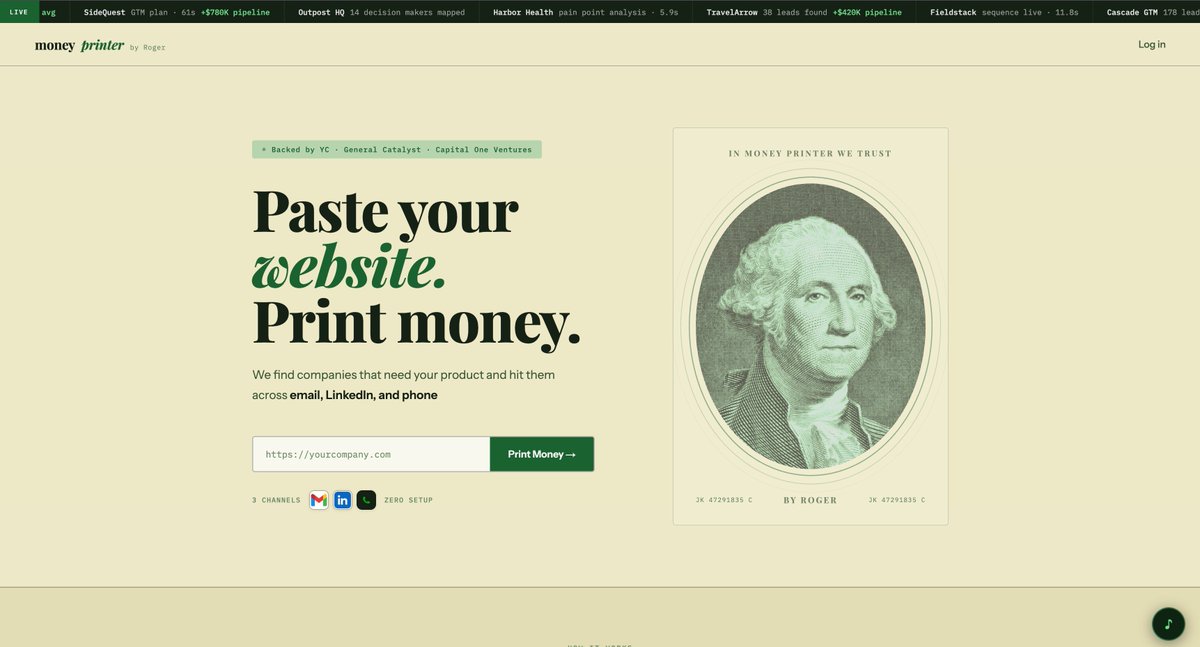
🚨BREAKING: Someone built a money printer… you paste a website and it just starts bringing in customers in your sleep.
It’s called Money Printer.
It reads your site, figures out who should be buying, finds those companies, and reaches out to them automatically.
I tried it on a random company and it immediately pulled in accounts I wouldn’t have found myself.
Here’s what happens:
→ Companies already looking for what you sell
→ The exact people to contact inside those companies
→ Personalized outreach written for each account
→ It starts sending immediately
→ It even calls them
No forms. No filters. No list building.
Here’s the wildest part:
Most teams still treat outbound like manual work.
Lists. Copy. Campaigns.
This skips all of it.
You start with a URL.
And it brings you customers.
English
@barstoolsports Tiger DUI is the gift that keeps on giving.
Johnny Utah@CubansLeftNut
Listening to my wife after she sees the bank statement for the merch shop.
English

In the living room as a 26 year old waiting for grandma to bring out my Easter basket

English
Listening to my wife after she sees the bank statement for the merch shop.

English

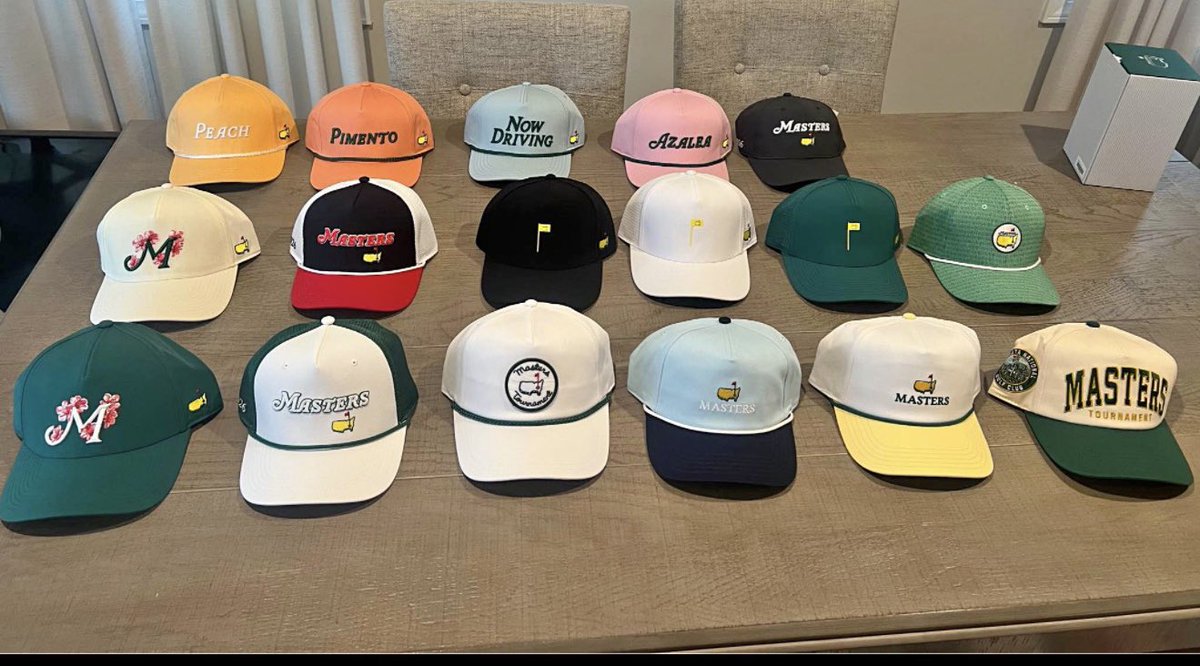
The Masters’ merchandising / design team truly missed the mark this year. I’m not entirely sure who their target audience is for these designs, but it’s likely not BV or the ultra wealthy.
English
@Ronycoder Skimmed it and guess what? Pretty unhelpful.
Unless you’re a graduating AI engineer or Stanford Student I don’t see and real time ROI here.
We’ve built X into a I’ll save that for later platform that rewards slop.
GIF
English

@Mr_john_wayne @StekpannanSthlm @Rachel__Nichols Bruh Luka drops dimes so on the rare occasion it leaves his hands it’s usually an easy bucket. Players around him benefit from the “Luka effect” for a reason.
Plus his defensive stats are solid.
If he doesn’t win this year it’ll be the robbery of all robberies
English

What’s the VALUE Luka provides his team when he doesn’t have the ball in hand and isn’t foul baiting for points?
Is it his attitude?
Is it his chemistry?
Is it his defense?
Is it his off ball screening and shooting?
What are the other valuable tangibles he’s adding?
You can say steals… well, he’s surrounded by 3 and D guys because Luka can’t play off the ball. How many of those steals are from guys like Smart and others who deflect balls to him?
Outside of the steals… what else?
English

1) I still think Luka's in the conversation and in fact have him ranked higher on my current MVP ballot than the majority of my peers (including my co-host 😂). In fact, I have him ranked higher on my current ballot than the NBA's own website does on theirs.
2) as I said on our most recent pod, I think Luka's defense is annually underrated in the playoffs. Preseason, I also picked the Lakers to finish at No. 3 in the West because of the sheer force of Luka, a take that was not exactly the most popular at the time.
3) As I've said for YEARS, MVP voting can be frustrating because the criteria is so broad that what gets a guy elected one year wouldn't get him elected another year. I've lobbied for a long time for the NBA to overhaul it's award system the way, say, the NFL has.
4) Fan bases can get crazy sometimes over players they love, and I actually really dig that. Passion is what makes sports fun.
English