Development Economics X

6.6K posts

Development Economics X banner
Development Economics X

Development Economics X

@DevEconX

The next generation of development economics. Engineering impact and scale.
Toronto 👉 Tham gia Haziran 2020
93 Đang theo dõi3.5K Người theo dõi
Tweet ghim
Development Economics X
Development Economics X@DevEconX·
Development Economics X is research on global inequalities in the present and in history with the future of development economics. Featuring .@KwekuOA
English
0
21
23
0
Development Economics X đã retweet
Kweku Opoku-Agyemang, Ph.D
Pushing the Big Push. According to media reports, the Kpetoe–Ave Afiadenyigba Road (Lot 7) is making significant progress, with its asphaltic binder now being laid along the 51.6–62.6 km stretch. Progress is reportedly ahead of schedule and could be completed within the year.
Kweku Opoku-Agyemang, Ph.D tweet media
English
0
33
168
2.8K
Development Economics X đã retweet
Kweku Opoku-Agyemang, Ph.D
A quick note on selection bias in statistics Selection bias happens when the sample isn’t representative of the wider population. Thus, the results get badly skewed. The 42.3% non-paternity figure from this 2025 Ghana report comes only from men who voluntarily paid for a test because they were already suspicious. It is thus not a random sample of Ghanaian fathers. Crucially, 87% of those tests were done purely for “personal reassurance.” That is classic selection bias. If you tested a truly representative group of men (e.g. random sampling at birth or across the general population), studies worldwide put the real non-paternity rate at 1–3% (5% is already considered very high). The same pattern occurred in a Nigerian study that reported ~25% — also based on suspicious cases only. So the accurate way to read this report is: Among Ghanaian men who already suspected their partner, about 42% turned out to be right. (In that narrow group, the figure is actually lower than many expected.) A proper scientific estimate of the national rate would require testing men without pre-existing suspicion. That’s why 42.3% is not a realistic headline for “Ghanaian paternity overall.” Hope that helps with a clearer understanding of selection bias. Statistics only work when the sample matches the population you’re trying to describe.
Joy 99.7 FM@Joy997FM

Four in 10 paternity tests in Ghana in 2025 show tested man not the biological father - Blueprint DNA Organisation Report #JoyNews #Viral #Explorepage #Ghana #JoyFM #GhanaNews #Ghana #NewsUpdate #Africa #GhPolitics #News #AfricaNews #CurrentAffairs #Vlog

English
1
11
17
1.4K
Development Economics X đã retweet
Kweku Opoku-Agyemang, Ph.D
A natural experiment of the Middle East conflict: Evidence from electric vehicles (EVs). Sales in EVs are growing right now around the world as consumers and other stakeholders wake up to just how fragile fossil fuels can be. From Brazil to Vietnam, the transportation industry and sector may be moving toward clean energy.
Kweku Opoku-Agyemang, Ph.D tweet media
English
0
2
2
178
Development Economics X đã retweet
Kweku Opoku-Agyemang, Ph.D
“The rabbit runs faster than the fox because the rabbit is running for his life while the fox is only running for his dinner.” — Aesop. (While traditionally considered Greek, many scholars and historical accounts suggest Aesop was an African storyteller born in the 6th century BCE (c. 620–560 BCE), possibly in Ethiopia, Egypt, or Cyrene (modern Libya). His name is often linked to Aethiops (Ethiopian), and his tales reflect African oral traditions. Many historical sources describe Aesop as a Black slave from northern Africa who was later taken to Greece, bridging African and Greek storytelling traditions. Ancient writers like Aristotle linked Aesop's tales to "Libyan tales," suggesting a North African origin for his style of storytelling.
Development Economics X@DevEconX

The next generation of development economics.

English
0
3
4
352
Development Economics X đã retweet
Kweku Opoku-Agyemang, Ph.D
Hesitation is fatal; once an action is begun, it must be followed through with the utmost exertion of the will.” — Napoleon Bonaparte.
English
0
3
1
246
Development Economics X đã retweet
Kweku Opoku-Agyemang, Ph.D
Ghana's Black Stars Superteam: The two back-to-back AFCON (African Cup of Nations) championships. One fascinating part about Nkrumah's 2 back-to-back AFCONs was how the Black Stars was created back then. Nkrumah did not believe in importing Ghanaian players playing abroad, but in building talent in the country. Back then, the best team in the Ghana league was not Hearts or Kotoko, but a superteam Nkrumah invented in 1961 with Ohene Djan called the "Real Republicans," also known as "Osagyefo's Own Club". (The team was banned after he was overthrown, which may be why most might not have heard of them. They were, by far, the best football team in Ghana for a reason.) They assembled the Real Republicans by picking the best two players from each team for each position, and put them together, and they became the Real Republicans. They would play in the league (and normally win it). After that, the same players would become the Black Stars. Winning AFCONs was really not a problem for the Black Stars in this era. By the time AFCON came around, they had played together for such an unusually long time for a national team, that they would then proceed to dog walk all the other African national teams. In 1965, Ghana was so dominant they used a squad with many new faces and still won the tournament on foreign soil. They were so well-drilled that the "Real Republicans" chemistry made the national team feel like a professional club side playing against amateur selections. This method, however, effectively crippled teams like Asante Kotoko and Hearts of Oak. Imagine the Premier League today if the top two players from every club joined one "super-team" that also played in the league. The resentment was massive from the other teams, but the results were undeniable. This was the era where the Black Stars became a global phenomenon, on par with the best teams in the world, not just in Africa. Usually, the question was what the goal margin would be, not whether or not they would win. They famously drew 3-3 with Real Madrid. Reportedly, Nkrumah was a Madrid fan and wanted to make sure they were at that level. Naturally, some of the local teams hated the Real Republicans, but Ghanaian fans loved them because when they became the Black Stars, they were unbeatable and won trophies. There are very few records where they drew or lost, they would just lash any given team from beginning to end. For his part, Kwame Nkrumah believed that as long as they won championships, it didn't matter what it cost to win. That Ghanaians should be able to put aside their personal interests for the national interest. Ghana came first, not individual interests. Of course, corruption in the Black Stars then was almost impossible when the selection process was strictly based on merit. What a lot of people don't understand is that developing Ghana was Nkrumah's life's work. It's all he cared about. Ghanaians deserved the best of everything in every way, and at all times, no matter what. All he cared about was Ghana winning in every possible sector. It did not matter what it cost, or what sacrifice it required. If it hurt some feelings or he had to step on toes for Ghana to win, he was more than willing to do that. After Nkrumah was removed, and the Real Republicans was discontinued, banned and mostly written out of history, the sports sector would decline: Ghana would never even dream of winning AFCONs back to back. The larger lesson is thinking outside the box, doing whatever it takes, and letting the results speak for themselves.
English
1
3
11
599
Development Economics X đã retweet
Kweku Opoku-Agyemang, Ph.D
“Knowledge isn’t free. You have to PAY attention.” —Feynman.
English
0
11
28
641
Development Economics X đã retweet
Kweku Opoku-Agyemang, Ph.D
The Political Economy of Infrastructure: Analyzing the Akosombo Dam through the lens of development economics. In their seminal work "Pillars of Prosperity", Sir Timothy Besley and Torsten Persson argue that development is not accidental—it is the result of purposeful investments in Fiscal Capacity (the ability to tax) and Legal Capacity (the ability to enforce rules). Infrastructure is more than concrete and steel; it is a manifestation of state capacity. The Akosombo Dam serves as a definitive case study for this framework. Launched by Kwame Nkrumah in 1961, the project was designed to be the backbone of Ghana’s industrialization, specifically to power the aluminum industry and reduce dependence on cocoa exports. However, from a political economy perspective, the project faced significant internal and external resistance. Applying the Besley-Persson lens, we see some critical lessons of the challenges faced at the time: The first is known as the commitment problem: Large-scale infrastructure requires long-term commitment. In fragile states, elites often prioritize short-term "rents" over common-interest public goods. Large-scale infrastructural investments like these are usually rare. The opposition to Akosombo wasn't just about the dam itself; it was a struggle over who would control the newly generated economic capacity. Besley and Persson highlight that a state only becomes prosperous when it shifts from simple redistribution (taking from one group to give to another) to productive investments (e.g. value creation). Akosombo was a move toward a productive state, which naturally threatened the "Limited Access Orders" of the time: those who benefited from the existing, less-developed status quo. The lesson for today is clear: Infrastructure projects are often resisted not because they lack merit, but because they shift the balance of power. When a population becomes less dependent on narrow elite networks for basic needs like power and water, the "pillars of prosperity" begin to strengthen, but the old structures of relevance begin to crumble. Understanding these institutional clusters is at the heart of our mission at Development Economics X. We don't just look at projects as engineering feats (although we do and respect that); we also look at the political and economic incentives that determine and elevate their success. The book is here: 👇
English
1
6
13
687
Development Economics X đã retweet
Development Economics X
We're helping the private sector fly higher than ever with next-generation development economics.
English
0
5
3
408
Development Economics X đã retweet
Kweku Opoku-Agyemang, Ph.D
A short Bloomberg documentary on how Dubai’s safe-haven status is being tested: It diversified from oil and survived the 2008 financial crisis and the global lockdowns, bouncing back by attracting foreign talent with its Golden Visas. History suggests that the area adapts very well, but managing expectations to remain an attractive haven for business will remain critical.
Kweku Opoku-Agyemang, Ph.D tweet media
English
1
1
3
269
Development Economics X đã retweet
Kweku Opoku-Agyemang, Ph.D
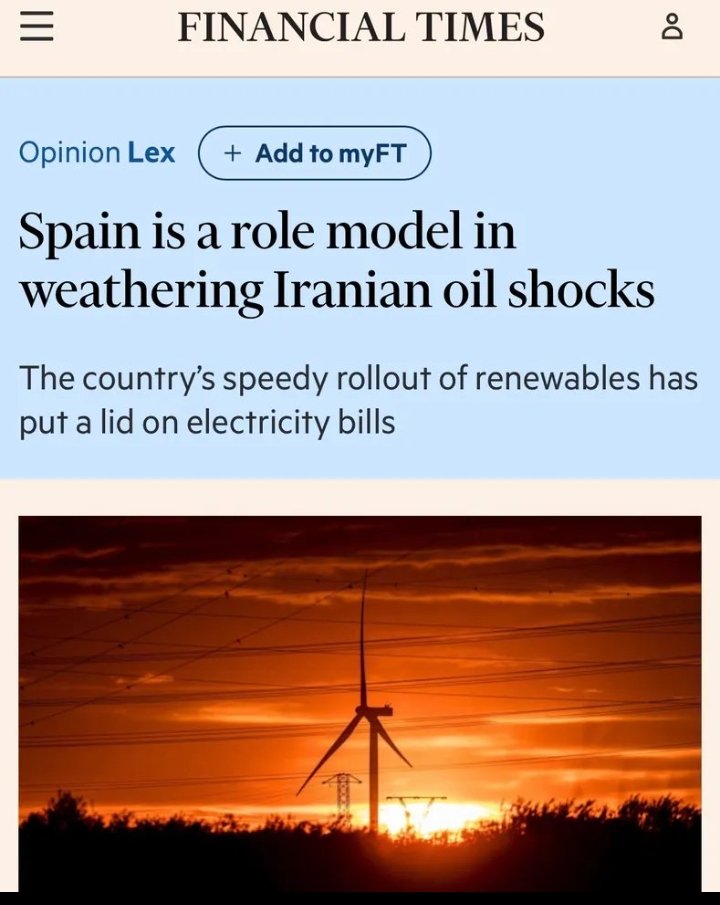
Spain's renewables scale up has structurally decoupled its electricity prices from gas markets. In Spain, gas now sets the price in only 15% of hours. In the case of Italy it's 90%. Investing early in renewables sooner rather than later can help many countries be far less exposed to fossil fuel price shocks.
Kweku Opoku-Agyemang, Ph.D tweet media
English
1
2
6
359