
Opportunity for Health
1K posts

Opportunity for Health
@OppforHealthLab
We study how economic opportunity affects health, and identify policies that can boost opportunity and improve health for all Americans.


Let’s see, many of those towns has a single factory that had been there for decades that pumped money into the local workforce. Those towns were often an hour away from other employment centers. Many factories had 2-3 generations of families working in the factory and living together in the local community. Local businesses had steady income servicing those workers. When the factory closed, everything changed. 1) The source of income for thousands of people disappeared at once. Often pensions were drastically reduced. 2) Local businesses closed their doors. Services disappeared. 3) Tax revenues collapsed. 4) The young who could got out. Families were scattered to the wind. 5) Crime and drug use increased. 6) Housing demand collapsed and housing stock began to decay. 7) Sometimes, as the factories closed, decades of toxins and contamination were left to rot in abandoned factories. Those left in the towns they grew up in and raised families in were literally left behind with a greatly diminished quality of life. These towns are scattered through the rust belt. It’s not a pretty sight. Lots of those towns went from idyllic to run-down in a few short years. It shouldn’t be a surprise that life spans dropped.


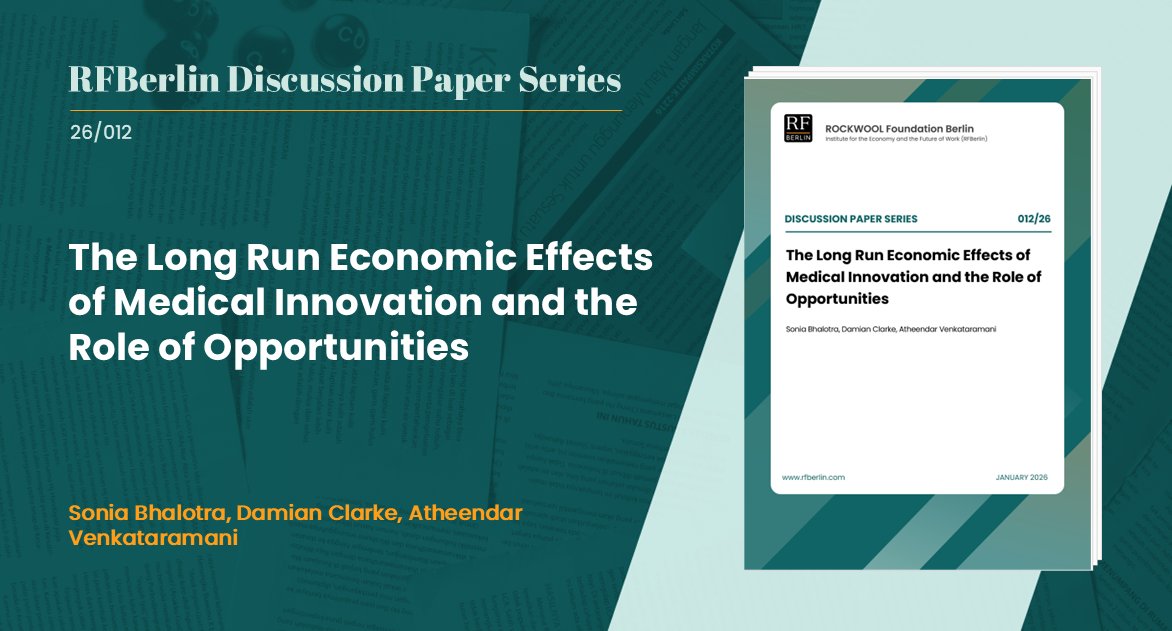
The first antibiotics reduced childhood pneumonia, boosting adult human capital and income. However, discriminatory institutions curtailed long-run gains from a healthy start, from @SoniaBhalotra , Damian Clarke, and Atheendar Venkataramani nber.org/papers/w34606


Household wealth begins to decline six years before the onset of dementia, largely because of poor financial decisions, from @JingLiUW, Kathleen M. McGarry, @lhnicholas, and @JonSkinner17 nber.org/papers/w34659


The first antibiotics reduced childhood pneumonia, boosting adult human capital and income. However, discriminatory institutions curtailed long-run gains from a healthy start, from @SoniaBhalotra , Damian Clarke, and Atheendar Venkataramani nber.org/papers/w34606