
Andy
277 posts

Andy
@OutcometApp
Founder building Outcomet AI-native product operating system Strategy → Discovery → Capabilities → Feedback Building in public



Simon Willison breaks down why using AI coding agents is a masterclass in software engineering. He tells Lenny Rachitsky that it takes every inch of his 25 years of experience to get it right. Hear his "state of the union" on Lenny’s Podcast! 💻 Enjoy full Episode on Spice:🎧 thespice.ai/episode/a450c0…
We’ve been getting a lot of projects lately where founders come in with a vibe coded app already built. And always the same problem “my app works, but looks generic and feels forgettable” Makes sense though, vibe coding gives you speed, not personality. But the upside is huge → you already have the product, the flows are clear, and what matters is obvious. So we don’t guess. We elevate. That’s where we come in: take what you’ve built → add clarity → add personality → make it feel like a real product. And honestly loving this shift we’re seeing…
I was a guest on @lennysan's podcast! We talked about agentic engineering and all sorts of other LLM-related topics for 1h39m(!), plus a little bit about kākāpō parrots - here's my selection of highlights from our conversation simonwillison.net/2026/Apr/2/len…


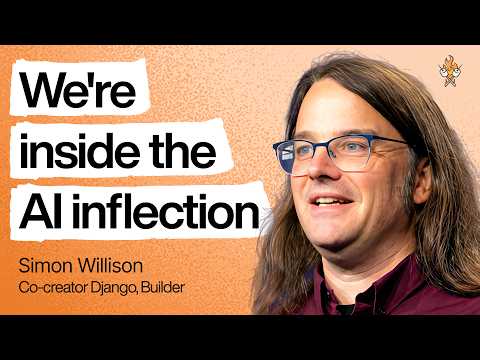
"Using coding agents well is taking every inch of my 25 years of experience as a software engineer." Simon Willison (@simonw) is one of the most prolific independent software engineers and most trusted voices on how AI is changing the craft of building software. He co-created Django, coined the term "prompt injection," and popularized the terms "agentic engineering" and "AI slop." In our in-depth conversation, we discuss: 🔸 Why November 2025 was an inflection point 🔸 The "dark factory" pattern 🔸 Why mid-career engineers (not juniors) are the most at risk right now 🔸 Three agentic engineering patterns he uses daily: red/green TDD, thin templates, hoarding 🔸 Why he writes 95% of his code from his phone while walking the dog 🔸 Why he thinks we're headed for an AI Challenger disaster 🔸 How a pelican riding a bicycle became the unofficial benchmark for AI model quality Listen now 👇 youtu.be/wc8FBhQtdsA
Cursor just mass-migrated its entire product surface from "AI helps you code" to "you manage a fleet of agents that code for you." This is a $29.3B company betting that the IDE itself becomes irrelevant. They forked VS Code two years ago because they needed control over the surface. Now they're building a second interface on top of it because even their own fork is too code-centric for where this is heading. The numbers tell the story. 35% of Cursor's internal PRs are already generated by agents running on their own VMs. They shipped Composer 2, cloud agents, automations, JetBrains ACP, and 30+ plugins in the last month alone. This isn't a feature release. This is a company trying to outrun the model providers eating their lunch from below. Because here's the constraint nobody's pricing in. Cursor pays retail for the models that Anthropic gets wholesale. Claude Code hit a $2.5B run rate with 300K+ business customers by offering the same agentic coding at lower prices with no IDE overhead. Every time Anthropic ships a better model, Claude Code gets better for free. Cursor has to reintegrate, retune, and reprice. So Cursor's move is to go vertical on the orchestration layer. Multi-agent management, parallel VMs, automation triggers from Slack and GitHub, plugin marketplace, enterprise security. They're saying: the model is a commodity, the workflow is the moat. The question is whether developers want a dedicated cockpit for managing agent fleets, or whether the terminal where the model lives is enough. That's the $29.3B bet.