
Raghava
174 posts
Raghava
@Raghava_Bio
Fundamental Biologist and Electrophysiologist. Currently a Post-doc at University of Wisconsin-Madison
Wisconsin, USA Tham gia Mayıs 2019
260 Đang theo dõi61 Người theo dõi

I am so honored to have been selected as a shortlisted finalist in neuroscience for the 2026 Takeda Innovators in Science Award with @NaturePortfolio!
I’m excited to participate in Nature’s career development programs, while building meaningful connections with my peer awardees (including my good friend and colleague, Ai Ing Lim @Princeton!).
Read about the award and the other amazing shortlisted candidates here:
nature.com/immersive/inno…
linkedin.com/company/takeda…
linkedin.com/company/nature…

English

If you want to build such modern reagents and like doing a bit of organic chemistry and some biology, do consider joining my lab (DyeCraftLab.com) at National Centre for Biological Sciences (NCBS) Paper link: lnkd.in/enGd7Q5M
English
Our collaborative paper is online! We built two types of genetically targetable live-cell permeable fluorescent reagents: biotin for organelle purification, and JQ1 for chromatin manipulation! We found how to chose the right dye for building such multifunctional dyes
David Solecki (pronounced so_lets_ki 😉)@So_lets_kiLab70
When chemistry meets neurons! Just dropped in @PNASNews Our game-changing paper on multifunctional fluorescent ligands for intracellular labeling. Luke Lavis and Pratik Kumar @prat_i_k built the epic tools; we got to unleash them! @JasonVevea & team nailed biotin-HaloTag for mitochondrial magic. My lab rocked the JQ1 version to shuffle chromatin in LIVE cells. First collab win for our Neuronal Cell Biology Division with Janelia—more to come! #Science #Neuroscience #ChemBio #scicomm #Fluorescence #HaloTag
English
@tinakim_neuro Congratulations on HHMI Freeman Hrabowski scholar funding 👏
English
English
Happy to share the lab’s latest research tagging psychedelic-activated neurons in mice. See the post below from first author @jessie_muir for a tweeprint on the work.
Thanks to wonderful collaborators @DEOlsonLab @LinTianPhD and to our reviewers/editor!
science.org/doi/10.1126/sc…
Jessie Muir@jessie_muir
Excited to share the Kim Lab’s newest paper in @ScienceMagazine with Sophia Lin (twitterless) and @tinakim_neuro ! We look at circuit mechanisms of psychedelic action underlying therapeutic-like effects in the PFC. science.org/doi/10.1126/sc…
English
English

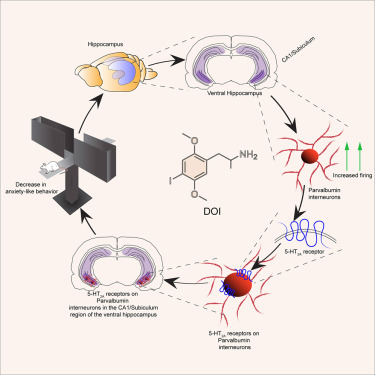
Really glad to have this work identifying the key role of PV-neurons in the ventral hippocampus in gating the anxiolytic actions of the serotonergic psychedelic, DOI, out in @NeuroCellPress @TIFRScience sciencedirect.com/science/articl…
English
And it’s out! Our lab’s very first paper is published today @naturemethods!
Our calcium-activated split-TurboID (CaST) can biochemically tag activated neurons within 10 minutes, enabling a molecular handle on functionally relevant cell ensembles: tinyurl.com/ddyecxze
tina kim@tinakim_neuro
Excited to share the first paper from our lab! tinyurl.com/5n7fvwvh We engineered a new kind of time-gated calcium integrator, CaST, that can rapidly and non-invasively tag activated neurons in vivo with a small, biochemical handle. What makes this tool special and unique? 1/6
English

Ok, 14 years after starting my lab, promoted to full professor! So @jess_cardin , time for a vacation?
English
I am happy to have contributed to this wonderful work by @actuallyeden during my previous post-doc in @johnalangray 's lab
Raghava@Raghava_Bio
D-Serine inhibits non-ionotropic NMDA receptor signaling jneurosci.org/content/early/…
English
D-Serine inhibits non-ionotropic NMDA receptor signaling
jneurosci.org/content/early/…
Română
@NeuroBill Thanks for your recommendations Bill, I would definitely consider DigitimerDS3 next, its looks great
English

@Raghava_Bio Sorry for not getting back to you. I thought I already had. I've used an iso-flex a lot. On paper they are great, but for me, the best is digitimer. DS3. The DS4 is very nifty, but I love the DS2s and DS3s. K.I.S.S.
English
@NeuroBill Hi
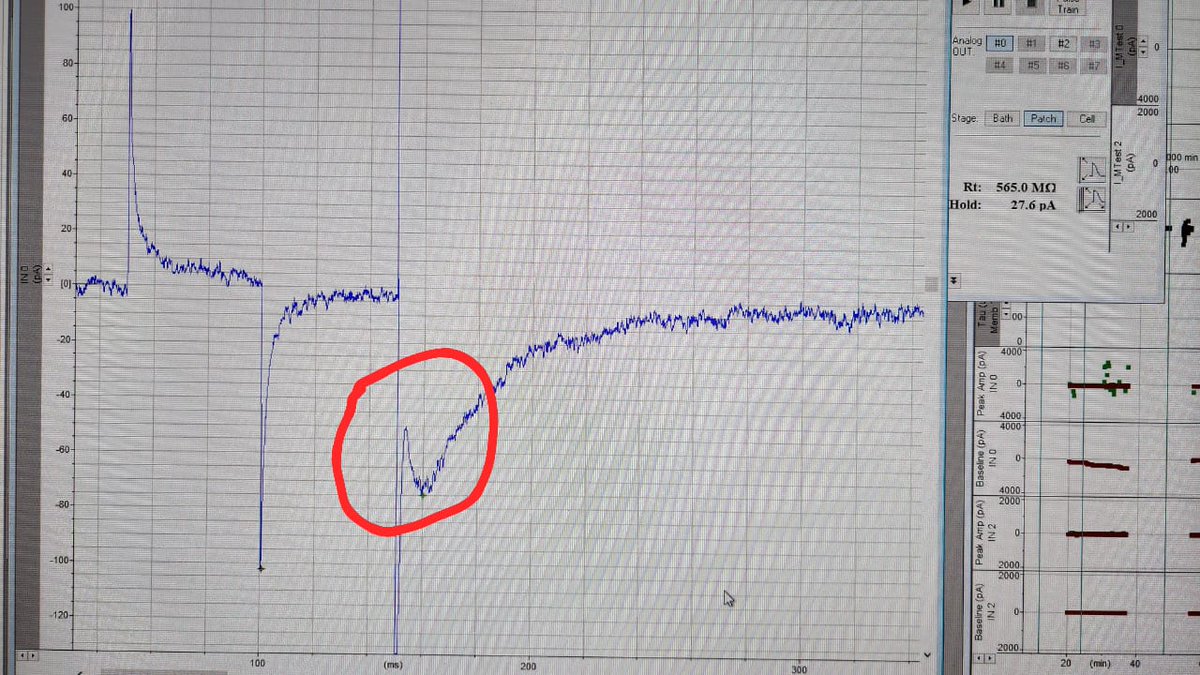
Can you help in understanding what causes this weird stimulus artefact? I get this sometimes, changing polarity works but the amplitude decreases
I am using ISO-Flex unit
English
@NeuroBill Hi Bill, did you miss this tweet from me earlier?
Thanks
English
@NeuroBill Hi Bill
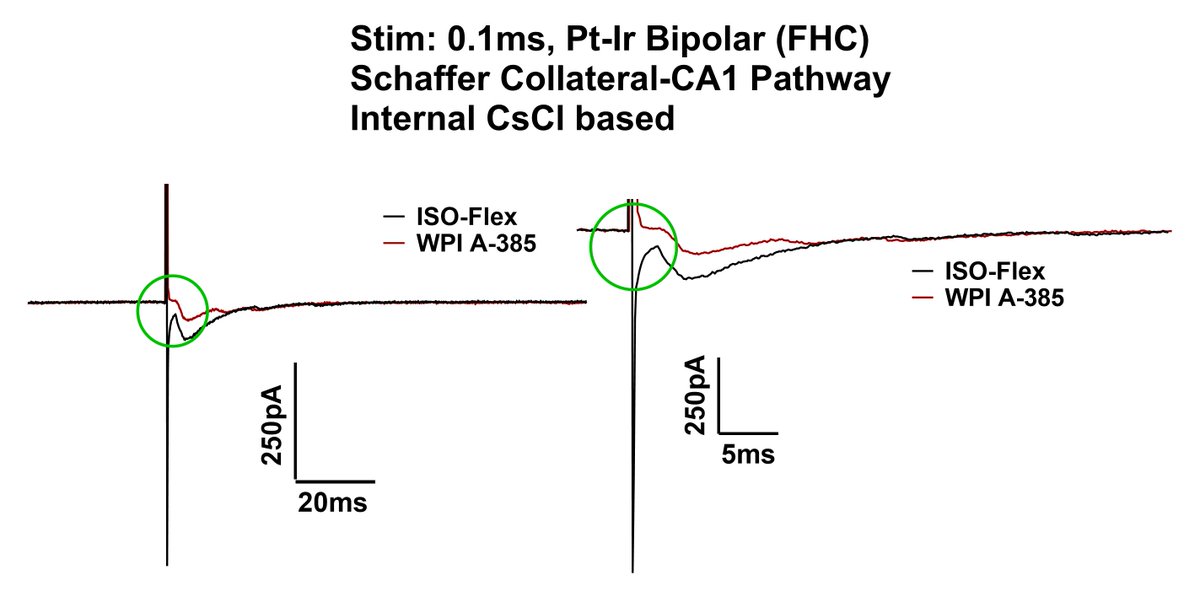
I accidentally found the origin of the issue. I suspect the stimulus isolation unit (SIU) is the culprit here. These two traces are from the same cell 10s apart but with different SIUs. The graph on the right is a scaled version of the left one for better resolution
English
@Avishek92 @NolwennCloarec @letelliermathi1 @ebazbadillo Cool, what microscopy? Two-photon? I am planning for some slice imaging but we don't have a 2p in the lab. So thinking of other options.
English

@Raghava_Bio @NolwennCloarec @letelliermathi1 @ebazbadillo Thanks! Yes @Raghava_Bio this was a parasagittal section of 300um thick on the seeding time of slice for culture
English
This was fun participating in the contest thanks to @NolwennCloarec for arranging this. I also take this moment to say thanks to @letelliermathi1, @ebazbadillo & Agata Nowacka for the guidance to single cell electroporation
Interdisciplinary Institute for Neuroscience 🧠@iins_bordeaux
#ThursdayPicture🖼️Electroporation of organotypic slices, immune staining, incubation, labelling with #NeuN, #DAPI and #GFP, epifluorescence imaging and processing... find out all about these techniques in "The venomous arthropods of CA1"! 🧪🔬 by @Avishek92 ⬇️Caption⬇️
English
Two Indian-origin professors, Venkatesan Sundaresan and Savithramma Dinesh Kumar from @ucdavis elected to the NAS, both from plant biology
National Academy of Sciences@theNASciences
We are thrilled to announce the election of 120 members and 24 international members to the National Academy of Sciences in recognition of their distinguished and continued achievements in original research. Congratulations to our new #NASmembers and welcome to the Academy!
English
@NeuroBill And those traces are AMPAR-only currents with NMDAR and GABA blocked by AP-V (50uM) and Picrotoxin (100uM), respectively.
English
@NeuroBill I have been using Iso-Flex for close to a decade but have yet to have this problem. This is due to the capacitive transients generated by the SIU. The unit I am using is a brand-new one with all-new batteries!
Any suggestions?
English