
Tweet ghim
Rob O’Silva
12.6K posts

Rob O’Silva đã retweet

Rob O’Silva đã retweet
FUN FACT—helium cools the superconducting magnets in more than 14,000 MRI machines used in hospitals worldwide. We lost the largest helium extraction plant in the world in Qatar. US reserves running low. Helium cannot be produced de novo. Any helium escape is permanent.
Shanaka Anslem Perera ⚡@shanaka86
Helium is the only element that escapes Earth’s atmosphere permanently. Once released, it rises through the troposphere, passes the stratosphere, and leaves the planet. It cannot be manufactured. It cannot be synthesised at industrial scale. It accumulates over billions of years in the same geological reservoirs as natural gas. And one third of the world’s supply just went offline because Iran hit the facility that extracts it. Qatar produced roughly 63 million cubic metres of helium in 2025, accounting for 30 to 36 percent of global supply from a total of approximately 190 million cubic metres. QatarEnergy’s three large helium purification plants at Ras Laffan form the world’s biggest helium production base. When LNG production stopped after Iranian drone strikes on March 2 and the subsequent missile damage on March 19, helium extraction stopped automatically because helium is recovered during natural gas liquefaction. You cannot produce helium without producing LNG. The byproduct dies with the primary product. Spot helium prices have roughly doubled since the crisis began. Industry consultants warn that prolonged disruption could push contract prices toward $2,000 per thousand cubic feet. A major industrial gas supplier has already begun assessing customers a helium surcharge. Phil Kornbluth, the most cited helium market consultant, stated the assessment directly: the world cannot compensate for the loss of a third of its helium supply. South Korea imports 64.7 percent of its helium from Qatar. SK Hynix and Samsung operate high-volume fabs producing the DRAM and high-bandwidth memory that power every AI accelerator, every data centre GPU, and every cloud computing cluster on Earth. Helium cools silicon wafers during fabrication. It serves as a carrier gas in deposition and etching tools. It enables leak detection in vacuum systems. Modern extreme ultraviolet lithography requires helium-cooled environments for precise temperature control. Without helium, the fabrication process degrades or stops. SK Hynix and Samsung hold two to three months of helium inventory. Two to three months is not a buffer. It is a countdown. If Ras Laffan remains offline beyond that window, South Korean memory production faces rationing. TSMC in Taiwan is somewhat more diversified but still uses Qatar-linked supply chains. The entire AI hardware supply chain, from HBM3E memory stacks to advanced logic chips, sits inside helium-dependent ecosystems. Beyond semiconductors, helium cools the superconducting magnets in more than 14,000 MRI machines operating worldwide. It pressurises rocket fuel tanks and purges propulsion systems in aerospace. CERN’s Large Hadron Collider depends on helium cryogenic systems. There is no substitute for helium in any of these applications at industrial scale. The United States and Qatar together account for more than 70 percent of global production. The US federal helium reserve and private suppliers offer partial relief, but global prices and spot availability are still governed by Qatar’s market share. Japan’s Iwatani has drawn on US reserves. Canada and the Rockies are seeing renewed investor interest. None of this replaces 63 million cubic metres in weeks. The war hit uranium first. Then oil. Then nitrogen. Then water. Then plastic. Then medicine. Then sulfur. Now helium. Eight layers. Each one deeper. Each one closer to the infrastructure that sustains modern civilisation. The chip that processes your data, the magnet that scans your body, and the rocket that launches your satellite all depend on an atom that leaves the planet when you lose it. open.substack.com/pub/shanakaans…
English
Rob O’Silva đã retweet

Israel is killing an average of 8 children a day in Lebanon.
Why is a “state” like this allowed to exist?
TheOneAndBonely 🇱🇧@TheOneAndFunky
please speak up about lebanon we are being terrorized and murdered in our sleep
English
Rob O’Silva đã retweet

Absolute psychopath. An American reporter asks Netanyahu about US soldiers dying for his war, and he literally brushes it off saying "freedom has its costs." He is sacrificing American lives without a single second of hesitation.
English
High energy costs is borne by the entire world
The cost of this mfer's and "Israel's" madness should not be paid by the world nor by American soldiers
Furkan Gözükara@FurkanGozukara
Absolute psychopath. An American reporter asks Netanyahu about US soldiers dying for his war, and he literally brushes it off saying "freedom has its costs." He is sacrificing American lives without a single second of hesitation.
English
Israel's finding out that there is a bully just like them that isn't afraid to escalate madly
But contemplation is not part of Israel, so they will do the only thing they know - double down
English
Rob O’Silva đã retweet

Open sources indicate a massive increase in Iranian launches since March 16th. That day firings went up 63.2% and one the 17th increased by 19.4%. Today it is on pace to increase again.
The type of missiles is also different. Approximately 50% of Iranian ballistic missiles fired recently have contained cluster warheads, which can saturate radar and force air defense systems (like Patriot or Iron Dome) to fire multiple interceptors per target.
This shows what we have long suspected. The IDF and CENTCOM are lying about the rates of destruction of launchers and Iranian missiles. Indeed, the UAE Ministry of Defence noted on March 17 that there has been "no apparent reduction in launches" since the early days of the war.

English
Rob O’Silva đã retweet

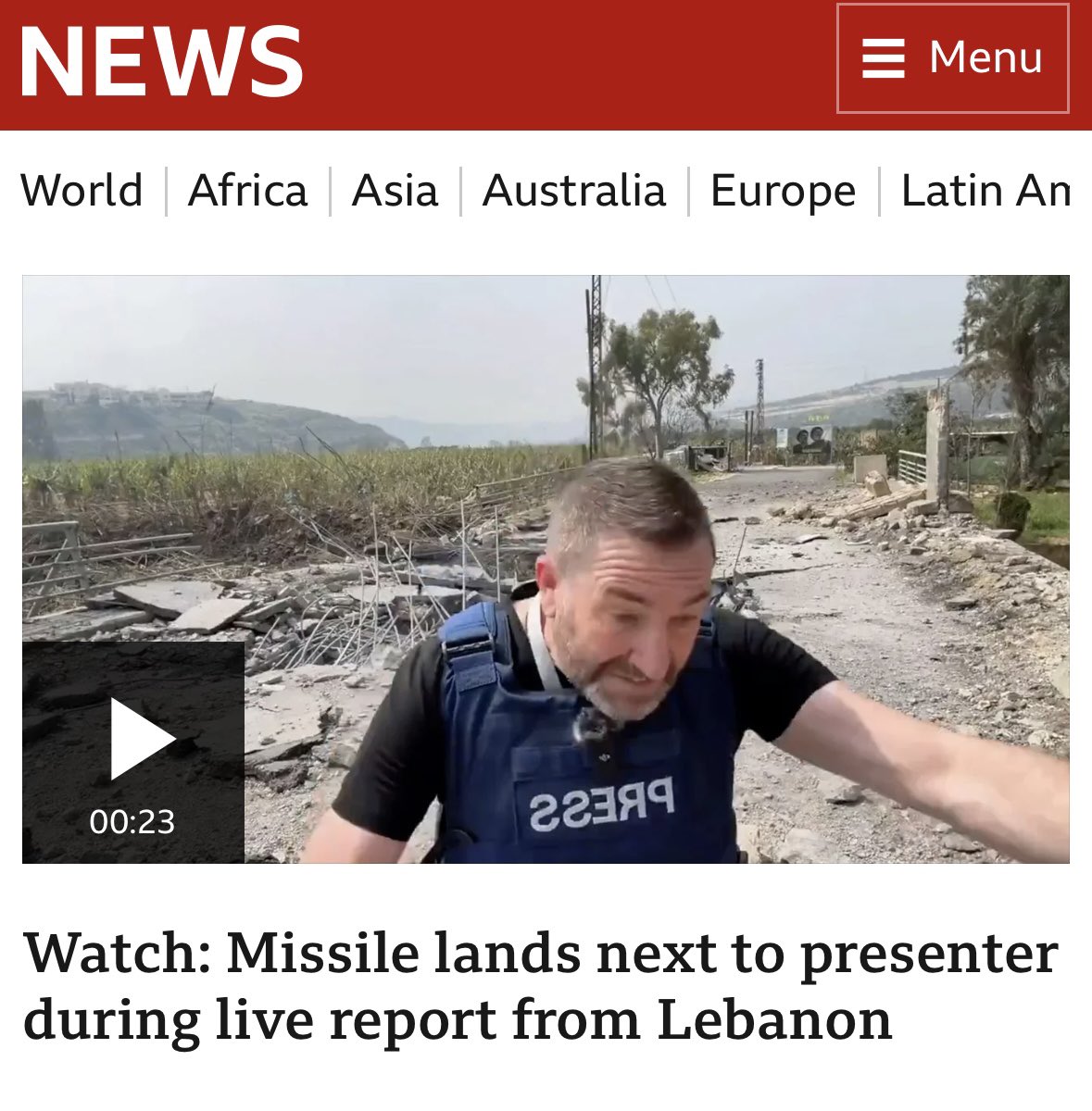
Israel targets a British journalist in Lebanon.
The BBC: “Missile lands next to presenter”
Pathetic even by its own incredibly low standards.
English
Rob O’Silva đã retweet
We finally have the Israeli mentality distilled to a single line:
Disclose.tv@disclosetv
NOW - Netanyahu: "Jesus Christ has no advantage over Genghis Khan. Because if you are strong enough, ruthless enough, powerful enough, evil will overcome good."
English
Lmao, people REALLY not getting this is not something that stops, or there gets to be a normal world after this war ends where Western contractors come back
This is like week 2 in the first Covid lockdown and thinking that by Week 6 we all go back to the offices
Kacper Piotr Kaminski@Kacper_PK_CH
MIDDLE EAST OIL & GAS RECONSTRUCTION WATCHLIST Who rebuilds when this war ends? Ranked by reconstruction relevance, not pre-war backlog, assembled by AI assistant, hopefully 95% accurate. PHASE 1: Emergency restart and damage repair (months 1 to 12 post ceasefire) 1. $SLB (NYSE) | SLB N.V. | Largest installed base of wellhead systems and production equipment across every damaged facility. Well restart, integrity assessment, corrosion monitoring after prolonged shut ins. Recently won $1.5B Kuwait Oil Company contract plus Oman contracts. Biggest regional footprint of any OFS company. 2. $HAL (NYSE) | Halliburton | Well intervention, cementing, completions restart. Holds the $2.5B Jafurah EPIC contract with Aramco. Dual HQ in Houston and Dubai. Critical for restarting shut in wells across Saudi and UAE. 3. $BKR (NASDAQ) | Baker Hughes | Gas turbine inspection, compressor recertification, gas processing equipment stress testing. Every gas plant shut down (Habshan, Shah, Ras Laffan) needs their turbomachinery services before restart. PHASE 2: Full reconstruction (years 1 to 5) 4. $TE (Euronext Paris) / $THNPY (OTC) | Technip Energies | Built most of Qatar's LNG infrastructure. 59% of revenue from Africa and Middle East. The Ras Laffan rebuild alone could be their largest contract in history. 5. $KBR (NYSE) | KBR Inc. | Brownfield EPCM specialists. Already supporting Aramco's Shaybah (attacked), Majnoon in Iraq, and Kuwait Oil Company. Damage assessment to design to reconstruction. 6. $FLR (NYSE) | Fluor Corporation | Major refinery rebuild expertise. Ras Tanura, SAMREF are historical Fluor client base. Also positioned for new bypass infrastructure EPC. 7. $SPM (Borsa Italiana) / $SAPMY (OTC) | Saipem | Deep Gulf NOC relationships. Merging with Subsea 7 to form Saipem7 with EUR 43B combined backlog. Offshore and pipeline repair in the Gulf runs through them. PHASE 3: New infrastructure that didn't exist before 8. $TS (NYSE) | Tenaris | World's largest steel pipe manufacturer for oil and gas. Post war bypass pipeline expansion means potentially hundreds of km of new pipeline. Massive pipe orders. 9. $WFRD (NASDAQ) | Weatherford International | Production restart, artificial lift, well services. Major contracts with PDO, KOC, Bapco. Positioned for the activity surge when operations resume. 10. $FTI (NYSE) | TechnipFMC | Subsea and surface wellhead systems. Essential for offshore Gulf infrastructure repair and new subsea pipeline connections. 11. $HP (NYSE) | Helmerich and Payne | Was scaling to 24 rigs in Saudi Arabia by mid 2026. Rigs are likely idle now. When drilling resumes expect a massive catch up surge. Rigs already in country. 12. $PTEN (NASDAQ) | Patterson UTI Energy | 15% stake in JV with ADNOC Drilling and SLB to drill 144 unconventional wells in UAE. That program restarts post war with urgency. 13. $NOV (NYSE) | NOV Inc. | Rig systems, drilling equipment, pipeline components. Equipment supplier to every company above. Picks and shovels play on the entire rebuild. Map by meforum.org
English
Rob O’Silva đã retweet
In February, Iran offered Trump unlimited inspections (beyond Obama deal w/sunsets), down-blending its enriched uranium stockpile & U.S. corporations to run Iran's nuclear energy. Israel launched this war to prevent a permanent peace deal. The most insane war in modern history.
English
Rob O’Silva đã retweet
Takaichi is Nippon Kaigi who visits Yasukuni and denounces Murayama/Kono statements. Expression on her Japanese Nationalist face is priceless - this humiliation serves her right.
There is a lesson here for so called Indian "RW Nationalists" who want to "join" the winning side.
Kaitlan Collins@kaitlancollins
Asked why he didn't coordinate with allies before going to war with Iran, Trump says, "We didn't tell anyone about it. Who knows better about surprise than Japan? Why didn't you tell me about Pearl Harbor, OK?"
English
Rob O’Silva đã retweet

The whole world is turning against Israel.
They'll tell you that its because they are the Chosen People and that this is fulfillment of prophecy.
In reality, its just because they're total dicks.
Korobochka (コロボ) 🇦🇺✝️@cirnosad
RUMINT: Egypt told Israel it will guarantee Lebanon's sovereignty. Egyptian army is building up along the Sinai.
English
Rob O’Silva đã retweet
Daniel Davis- “Is Iran really the sworn enemy of western values?”
John Mearsheimer - “No. The greatest threat to western values at this point in time is Israel.”
English
Rob O’Silva đã retweet
Rob O’Silva đã retweet

So today Iran crippled world gas output for years, hit an F35, and knocked the power out in Haifa after hitting Israel's only oil refinery with a ballistic missile
I think it might be time to say it - Iran is winning the war
Clash Report@clashreport
BREAKING: Power outage across multiple areas of Haifa, Israel following direct Iranian missile strike on the refinery.
English
Rob O’Silva đã retweet
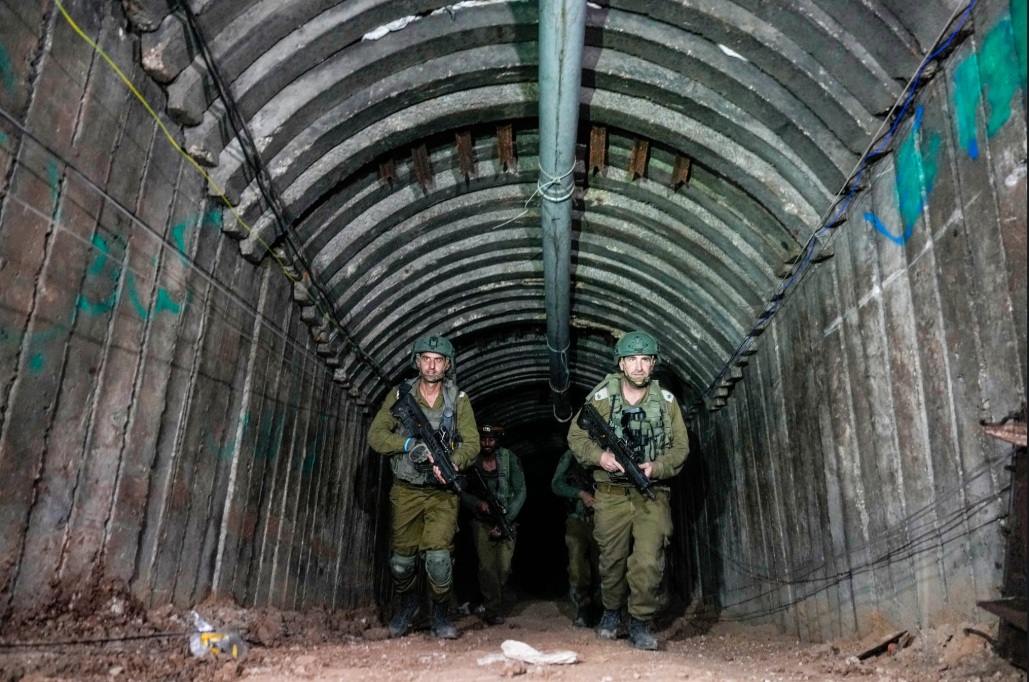
Another two Canadian charities have had their registration revoked after the CRA found they were using donor funds to support the Israeli military.
zurl.co/GqkJi
English
Rob O’Silva đã retweet
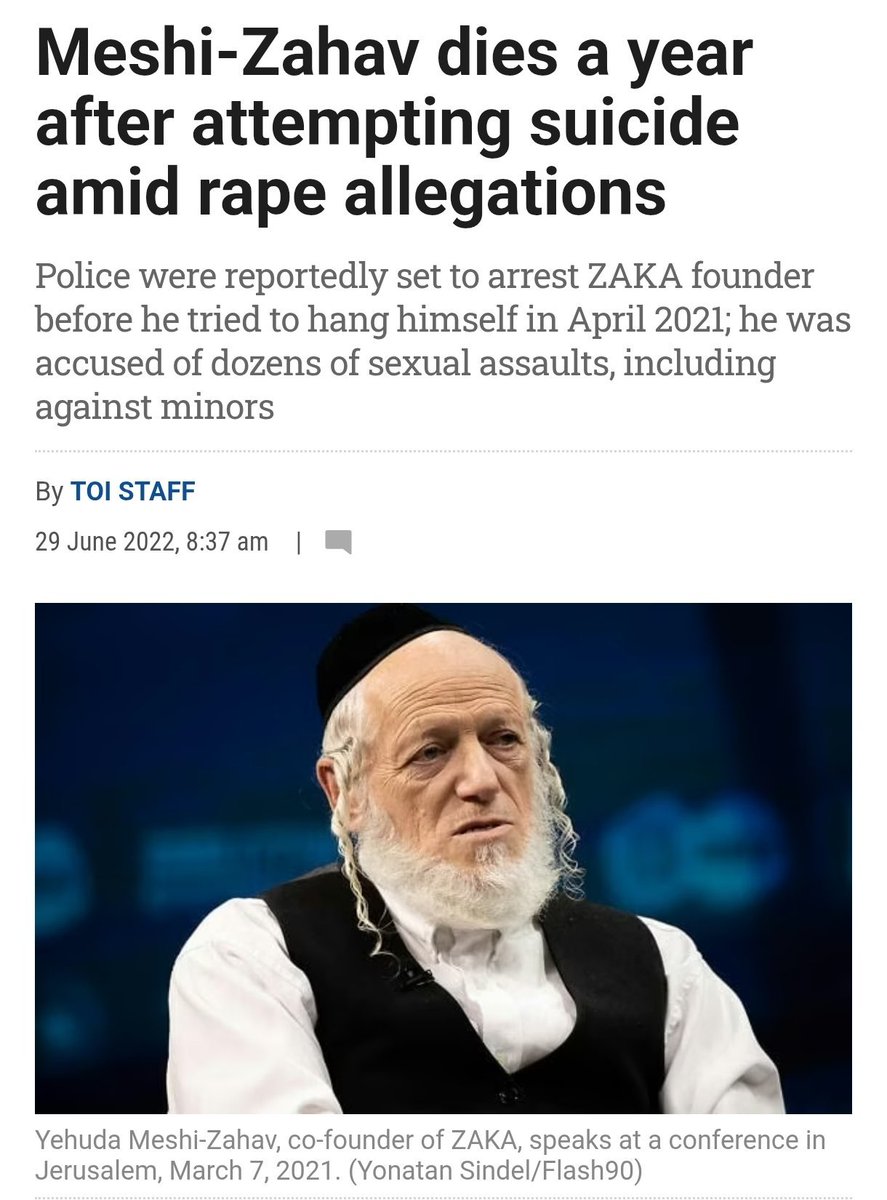
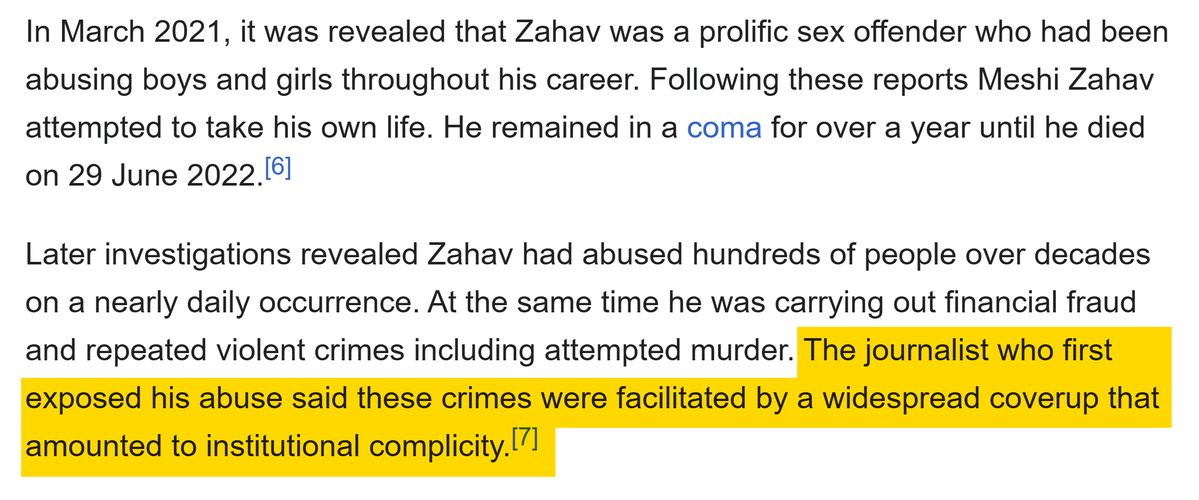
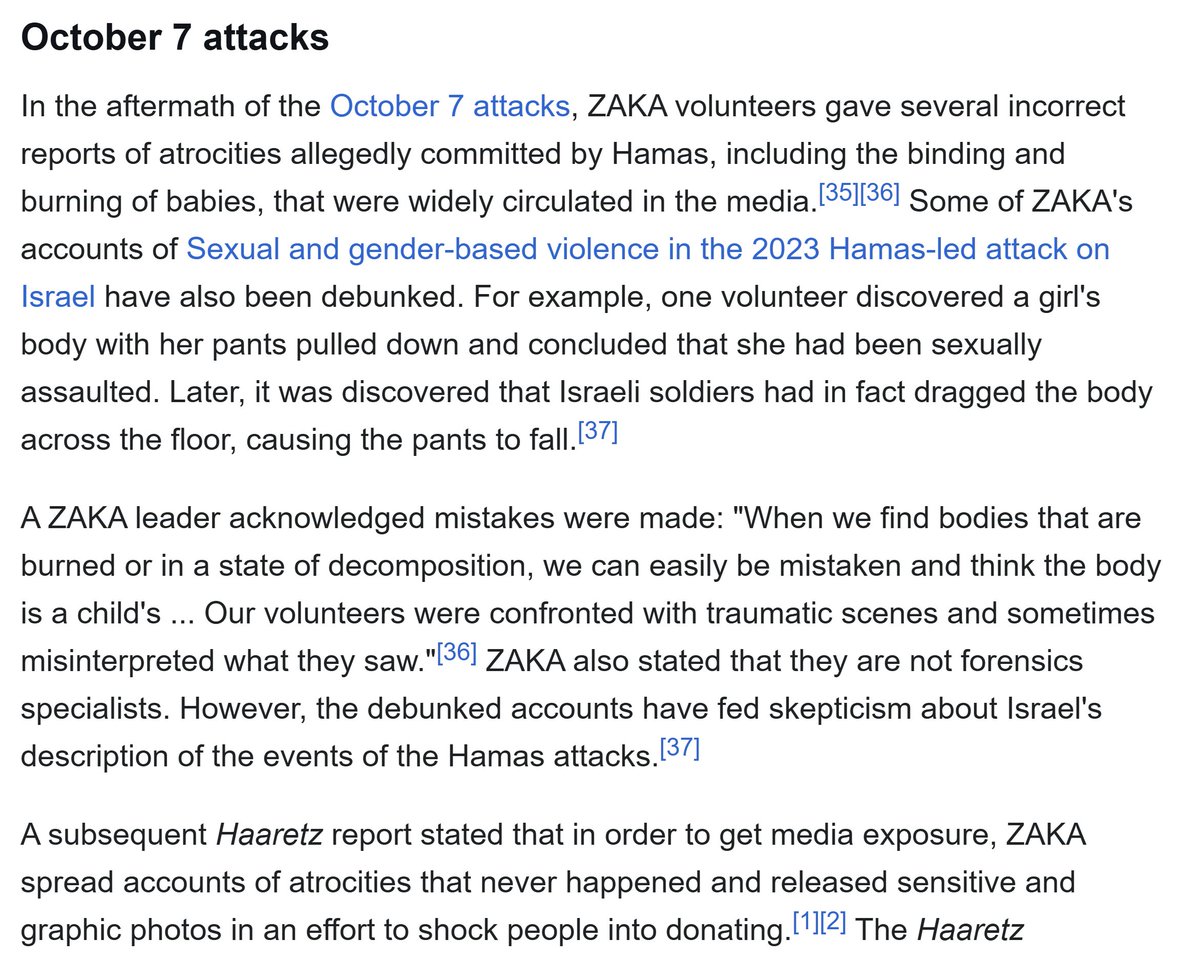
I didn't see this story at the time, but Yehuda Meshi Zahav was a chair of ZAKA, the Israeli volunteer group which helped spread many debunked claims about the October 7th Hamas attack.
Turns out that Meshi Zahav was a prolific rapist himself, "abusing hundreds of people over decades on a nearly daily occurrence." This means we have far more evidence of mass rape by ONE PERSON, on the Israeli aside, vs. tallying up every single allegation on the Hamas side, which Israel insists would have been carried out by dozens (hundreds?) of men.
ZAKA also interfered with dead bodies, thus making forensic analysis impossible in some cases. In other words, even IF Israel wanted to conduct an impartial investigation into the mass rape claims, they would be unable to do so based on accepted evidentiary standards.
English
@AngelicaOung It's GCC states liquidating their gold holdings to fund themselves as their main cash cows are being bled dry
If Hormuz doesn't open, and oil doesn't flow, you are going to see Arabs beginning to dump their other holdings.
English

My theory of why gold cratered recently on bad Iran news: gold is something you hold when there are unknown unknowns. You have a spidey sense. Things are gonna be bad. But you don’t know precisely how who where or when exactly.
You buy gold. You know it is something you can quickly liquidate for value in an emergency.
Well guess what? For a lot of people, that emergency just arrive and they are selling their gold for the liquidity to buy stuff they actually need cuz nobody actually needs gold as gold: they need gold to convert to other stuff.
Others may not be in a desperate straits but they have visibility now that a clear crisis has arrived what stuff is definitely going to be coming up short and will be highly valuable. That might also cause them to be out of gold.
In short, my thesis is unknown unknowns are bullish for gold while an actual crisis draws down golds value at least for the short term.
The Kobeissi Letter@KobeissiLetter
BREAKING: Spot gold extends its selloff to -$400/oz on the day, now trading at $4,500/oz for the first time since February 2nd.
English
Rob O’Silva đã retweet

Military officials say that since the cluster bombs are unlikely to cause significant harm if civilians are sheltering, there are times when the IAF chooses not to shoot down all or some of the bomblets to conserve its stockpile of short-range interceptors.
timesofisrael.com/to-conserve-in…
English