
Tweet ghim
Root Two
922 posts


Root Two đã retweet

@pranavvk I know... even so. I don't really believe in predicting regimes.
English
Root Two đã retweet
@macrocephalopod @0xMerridew ☝️☝️☝️
Defining useful regimes: already hard.
Predicting them: much harder.
I never succeeded at it.
English
Root Two đã retweet

Root Two đã retweet

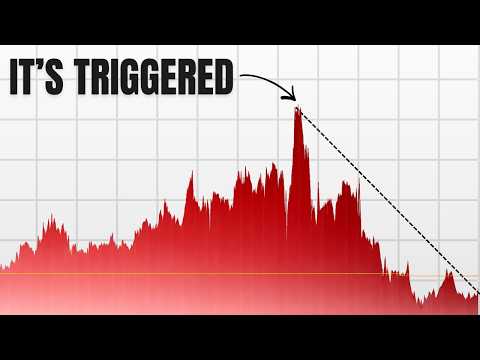
Skew dropping before implied volatility falls is NOT a good sign for the bulls.
Here's why...
youtu.be/WYWVPNxbfDc
YouTube
English
Root Two đã retweet

Extremely specific life advice: you can convert Fahrenheit to Celsius with the stops on the 6 train.
33 St =0°
42 St=5°
51 St=10°
59 St=15°
Works to 96th St!
English
Root Two đã retweet

Could someone generate me a better logo than this?
reply with it in comments, most liked one will be the one i use
Liquidity Goblin@liquiditygoblin
have been working on my own subagent harness so i can use subagents with different providers from within claude code, been working well in my own workflows looking for beta testers & contributors to take it for a spin before i make it public
English
niederhoffer only read books that were 100 years old
from now on im only reading books from the pre claude/chatgpt era, with the notable exception of anything from andrew mack or sinclair
English
@shguke @VivekVRao1 @VivekVRao1 Cannot say, I have not used codex
@shguke One thing I was thinking of was using one model to write code and another to critique/debug it, if they have different strengths. Would you say they are too similar for this approach to be useful?
English

@VivekVRao1 @RootTwo23683 not really if u have a similar agents.md/claude.md, it should imo be similar-ish. although perf could be even more predictable with the same harness (oc/pi) v/s codex/claude-code
English

I have been working on projects with Codex, now using ChatGPT 5.4, which I strongly recommend. Within weeks I hope to present one of them.
English
Root Two đã retweet

I failed the pirate treasure splitting problem at my Cambridge interview because I predicted the equilibrium will breakdown at a point in the game and that it is +EV to cooperate until then. The professor told me I should predict the game never starts.
47fucb4r8curb4fc8f8r4bfic8r@47fucb4r8c69323
there's a principle in game theory simulations where beginning cooperatively and maintaining a cooperative stance until several betrayals produces optimal outcomes for all agents. this really changed my understanding of both how to interact with people and how to understand how an alien intelligence would behave
English
@BackPedaling112 Same brother - feels like in maths solving the main thrust of a problem but having your soln be rough around the edges still gets you 80% of the way there, whereas in coding *every* bug needs to be fixed before it works
English

i always sort of hated coding: the necessary precision of it all despite my solving it “in my head” way faster than i can implement it… a personal failing to be sure, but glad that i can increasingly use technology to shore up my inadequacies
John Loeber 🎢@johnloeber
it's strange to see the world of the past fade before my eyes from 2012 through 2024, I wrote code in long sessions of sitting in vim -- sometimes typing, mostly thinking, flipping between different terminals, making changes, looking at errors, googling, reading stackoverflow... I took pride in carrying in my head these towering abstractions. I knew every nook and cranny of my business logic, like a neighborhood you live in. I felt extra fast when tab-completing a single long variable name. Nice. I placed every parenthesis, every semicolon, myself. Hundreds of thousands of them. And like a great wave washing over your sandcastle on the beach, it is now all gone. Engineering will never again be as it once was. What's especially significant about it to me is that there's barely a record of the way it was: I've spent thousands of hours writing software, and I don't think there's a single video recording of me doing it. I remember how it was: the long breaks of meditative silence, the frustration of hunting a particularly tricky bug, the relief and joy in solving it, the expressions of taste and cleverness that come with any manual craft. But it's hard to communicate how it was to someone who has never experienced it. As with all histories, the narrative is lacking in depth: you really had to be there.
English
@systematicls Good to know! Follow-up q, I’ve seen some ppl suggest forcing Claude code to spawn sonnet subagents instead of haiku (default). For your 3 subagent bug-checker or other tasks, have you noticed better results from sonnet?
English

@RootTwo23683 Yes, that works as well but I find that they have selective hearing. They might hear the first part and lose the second when context compacts
English
Root Two đã retweet

Agency is measurable and trainable. That’s the piece most people skip. They treat it as a fixed personality trait when it’s actually a cognitive skill with quantifiable dimensions: decision-making under pressure, focus maintenance, adaptive control, recovery speed. You can baseline it, stress-test it, and track improvement over time.
The whole article points at this without naming it. “Clarity of thought,” “knowing what to build,” “picking what matters” are all expressions of the same underlying variable. The bottleneck was never intelligence or access. It was always the quality of the human in the loop. AI just made that variable impossible to ignore.
Prabhakar Kudva@prabhakarkudva
English
Root Two đã retweet

As someone who builds institutional level quant systems for prediction markets, this is the closest thing to a quant desk simulation I have ever seen publicly shared.
Runnable code for every model.
Read it before someone takes it down.
gemchanger@gemchange_ltd
English
Root Two đã retweet

People romanticize informational edges because they feel earned, you found something the market missed, identified the mispricing, and you’re the one closing it. That’s a satisfying story. It also sounds like trading is supposed to sound, right?
But press most traders on what they actually want, and it’s something different: a strategy that works, that they can run without reinventing it every few weeks. Something durable. But that’s not what informational edges offer. They decay fast, almost by definition, because the market’s job is to eliminate them.
What most traders are really after is the best of both worlds: the returns of an informational edge with the effort of a behavioral one. Find the hidden pattern, lock it in, and just run it. But that’s not how it works.
Aporia@0xaporia
One of the bigger misconceptions in trading is that you need an informational edge, some insight, some pattern, some signal that others haven't found. If that's the game you're playing, you're competing against people with more data, more compute, and more capital than you'll ever have. You are not in that game, and pretending otherwise is the first mistake. The edge that's actually within reach looks nothing like that. It's (for the most part) doing what other people refuse to do, sitting in discomfort, absorbing volatility, providing liquidity to the person who simply wants out. You're not outsmarting anyone in a direct sense, but instead you're out-tolerating them. That's a less exciting framing, but it's a more honest one. The secret sauce most traders are searching for definitely exists somewhere, and they probably still couldn't execute it consistently even if they found it. The better question isn't what do I know that others don't, but what can I do that others won't.
English

my first trading job was on a bank floor and within my first weeks we got a lot of vol due to china devaluing its currency. a broker dk'd a trade during fast markets and the managing director screamed profanities into the phone and slammed the receiver so hard it shattered
Agustin Lebron@AgustinLebron3
I still like trading, but I do miss the days of occasional phone turret violence.
English
but the best part was that the associate who sat next to me quietly opened a drawer on his desk and pulled out a brand new receiver and silently handed it over to the md
love those guys hope they're all doing well
English
Root Two đã retweet
@macrocephalopod also zvi worked at jane street and is aware that the emh isn't exactly gospel lol - hence "that" false
English
Root Two đã retweet
@macrocephalopod I always frame it as: there are 2 axis for EMH error, estimating effort and estimating returns. the market is very efficient at estimating these, but there are residuals where we can make a living
English