Hash

2.1K posts

Hash

Hash

@TheHashMiner

inbefore lil shid

Tham gia Nisan 2022
1.4K Đang theo dõi255 Người theo dõi
Hash đã retweet
Zach Rynes | CLG
Zach Rynes | CLG@ChainLinkGod·
Look guys, it's actually really straightforward, a bunch of people staked their ETH on the Ethereum blockchain to earn yield, except they didn't want their capital to be locked up, so they actually staked with a liquid staking protocol called Lido who provided them a liquid staking receipt token called stETH, except they decided to juice their yield further by depositing their stETH receipt tokens into a restaking protocol called Eigenlayer, except they didn't want to lock up their capital, so they actually restaked with a liquid restaking protocol called KelpDAO who provided them with a liquid restaking receipt token called rsETH, except they decided to juice their yield further by depositing their rsETH tokens into a lending protocol called Aave so that they could open a leveraged looping position that borrows ETH against the rsETH collateral and restakes the ETH into rsETH which is then deposited as collateral, except it turns out rsETH used a cross-chain bridge called LayerZero that was hacked by north koreans causing rsETH to become undercollateralized and now these looping positions are stuck and unprofitable, and everyone is pointing fingers at each other, and also DeFi is a very serious industry
Zach Rynes | CLG tweet media
English
283
501
4K
201.1K
Hash đã retweet
zodomo.eth (🌍,💻)
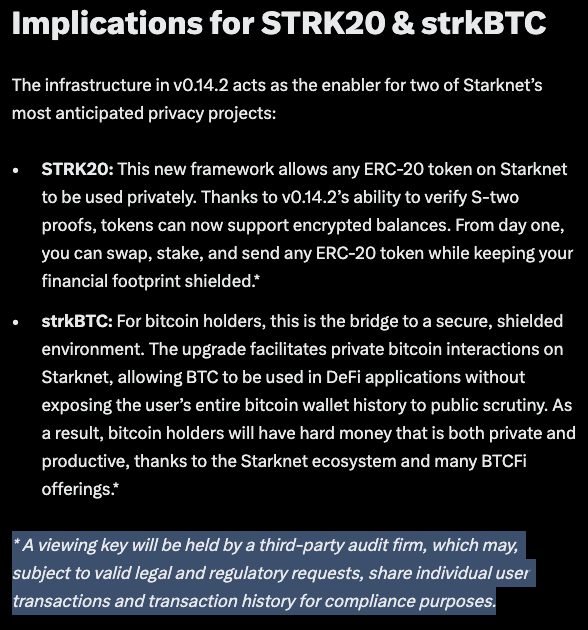
@Starknet What happens when this viewing key gets leaked or a government requests records without a warrant? It's great that privacy is developing on Starknet, but it isn't great that a user's privacy can be violated without them even being made aware it happened. viewing key = backdoor
zodomo.eth (🌍,💻) tweet media
English
1
4
23
613
Hash đã retweet
Gwart
Gwart@GwartyGwart·
There’s not even going to be any money left for quantum computers to steal
English
79
214
2.2K
73.1K
Hash đã retweet
0xngmi
0xngmi@0xngmi·
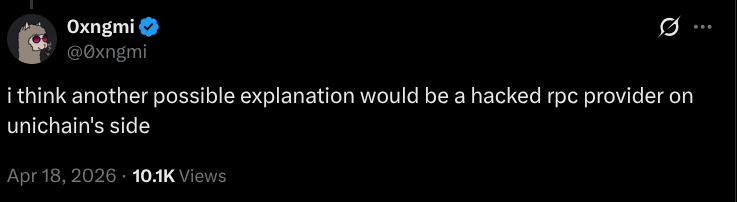
The attack was 1. North Korea figured out which RPC providers LZ was using 2. They compromised two of the providers to make them return fake data 3. DDoSed other providers to shut them down, forcing LZ to use the bad ones AFAIK I was the only one who actually called it
0xngmi tweet media
LayerZero@LayerZero_Core

x.com/i/article/2046…

English
72
94
1.3K
133K
Hash đã retweet
Gwart
Gwart@GwartyGwart·
$280m from Kelpdao moved in mere minutes onchain. This would have taken 2 weeks and hundreds of dollars in wire fees on tradfi rails.
English
37
56
957
44K
Hash đã retweet
mert
mert@mert·
books are crazy because theyre like twitter threads but by non-retarded people
English
69
61
846
28.6K
Hash đã retweet
Simon Høiberg
Simon Høiberg@SimonHoiberg·
Running AI models locally on a Mac Mini is the biggest cope in tech right now. The models you can run on consumer hardware are straight up retarded. And when they produce garbage output, you'll blame OpenClaw - but the real problem is you're too cheap to use proper models. $8/mo Hetzner VPS + Opus 4.6 through API will save you more time and money than your $600 local setup ever will.
English
76
7
147
22.3K
Hash
Hash@TheHashMiner·
@callebtc A new PQ safe/decentralized alternative is needed.
English
0
0
0
97
calle
calle@callebtc·
- whatsapp: can probably read everything - telegram: huge psyop, no privacy by default - xchat: 4-digit pin for "end-to-end encryption" 🤡 - signal: stores plaintext notifications, needs phone number secure chat is more important than ever but things aren't looking great
English
211
160
1.9K
106.8K
Hash đã retweet
BuBBliK
BuBBliK@k1rallik·
🚨 do you understand what just happened to your passwords cpuid one of the most trusted sites in PC hardware. hacked. April 10th, 2026. CPU-Z and HWMonitor. both compromised. > fake CRYPTBASE.dll ships inside the installer > connects to C2, downloads a C# file > compiles it silently using YOUR own Windows tools > injects into memory. never touches disk. AV sees nothing. > opens Chrome's password vault. dumps everything. the chain: cpuid → HWMonitor installer → DLL hijack → supp0v3[.]com → silent .NET compile → in-memory injection → Chrome credentials stolen same group. same C2 domain. hit FileZilla in March 2026. they got lazy. that's the only reason we caught it.
vx-underground@vxunderground

Mr. Titus Tech is correct. cpuid-dot-com is indeed delivering malware right now. As I began poking this with I stick I discovered this is not your typical run-of-the-mill malware. This malware is deeply trojanized, distributes from a compromised domain (cpuid-dot-com), performs file masquerading, is multi-staged, operates (almost) entirely in-memory, and uses some interesting methods to evade EDRs and/or AVs such as proxying NTDLL functionality from a .NET assembly. The C2 domain present in one of the binaries is a clear IoC. This is the same Threat Group who was masquerading FileZilla in early March, 2026. They've been busy.

English
186
835
6.5K
1.1M
Hash
Hash@TheHashMiner·
@unredacted_org You must be joking to imply that what'sapp is e2ee 🤣🤣🤣
English
0
0
0
676
Unredacted 🗽
Unredacted 🗽@unredacted_org·
Telegram does NOT end-to-end encrypt by default. Regular chats and ALL group chats sit on Telegram's servers in readable form. Only "Secret Chats" are E2E encrypted, but they're buried in menus, work only for 1-on-1 chats, and almost nobody uses them.
Pavel Durov@durov

WhatsApp’s “encryption” may be the biggest consumer fraud in history — deceiving billions of users. Despite its claims, it reads users’ messages and shares them with third parties. Telegram has never done this — and never will 🤝

English
124
233
2.2K
139.2K
Hash
Hash@TheHashMiner·
@zacodil With zCash you need to trust that the owners can't decrypt your trx. The simple fact that it's still listed everywhere and monero isn't should tell you the answer.
English
0
0
1
113
Vadim (AI, ⋈)
Vadim (AI, ⋈)@zacodil·
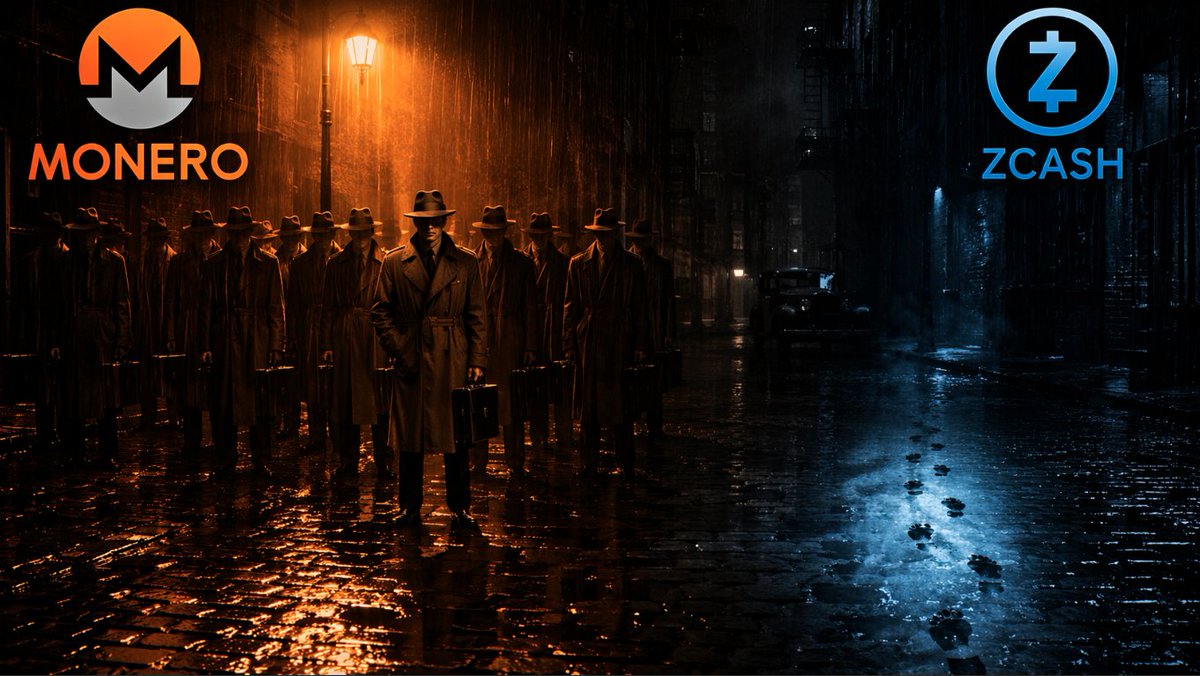
What most people miss about privacy coins: Monero and Zcash give you fundamentally different guarantees, and AI is about to make the difference brutal. Monero says "maybe it wasn't me, you can't prove it." Zcash says "there is nothing to prove." Monero's privacy today is probabilistic. When you send a transaction, the protocol builds a ring of 16 possible senders - your real output plus 15 decoys pulled from historical on-chain data. An observer can't say which one you are. That's plausible deniability. But it's statistical, not cryptographic. Chain analysis can narrow the ring down using timing, known-spent outputs, and temporal heuristics. The anonymity set is 16 on paper and often smaller in practice. Zcash Orchard's privacy is cryptographic. When you send a shielded transaction, a zk-SNARK (Halo 2) proves you own a valid note, that the note hasn't been spent before, and that the math balances - without revealing which note, which sender, which receiver, or which amount. An observer doesn't see a ring of 16 candidates. They see nothing. The anonymity set isn't 16. It's every shielded note ever created in the Orchard pool since 2022. One is a crowd. The other is a mathematical void. Here's why this matters now. AI is a pattern matcher at scale. Give a modern model the full Monero chain, every ring member, every timing signature, every mempool observation, every known-spent output, and combine it with external metadata - exchange KYC data, IP logs, behavioral patterns. Statistical privacy degrades fast under that kind of pressure. It was designed for humans doing chain analysis, not for foundation models running millions of correlation queries per second. Zero-knowledge privacy doesn't degrade under AI because there's nothing to correlate. The proof reveals zero bits of information about the transaction. A model with infinite compute and every byte of the chain still sees nothing. You can't pattern-match absence. Two honest caveats. Monero is shipping FCMP++ (Full-Chain Membership Proofs) in 2026, which effectively replaces the ring-of-16 with proof-of-membership over the entire chain. That's Monero's answer and it closes a lot of the gap. Monero holders waiting for it aren't wrong. Zcash has a different problem: privacy is opt-in. About 31% of ZEC is in the shielded pool. The other 69% sits in transparent addresses. Monero is mandatorily private by default - everyone's shielded, so nobody sticks out. Opt-in privacy can be cryptographically stronger per transaction but weaker in aggregate if most users don't use it. When AGI starts doing chain analysis at scale, statistical privacy degrades. Cryptographic privacy doesn't. You can't deanonymize a void.
Vadim (AI, ⋈) tweet media
English
17
32
113
9.3K
Hash đã retweet
Ivan Miskovic
Ivan Miskovic@ivanmiskovic·
QSB only protects UTXOs with never-revealed public keys. ~1.7M BTC in P2PK and all addresses where the pubkey is already on-chain remain fully exposed. NO scheme without a softfork can help those. “~118-bit security, roughly half under Grover” = ~59-bit effective security. NIST’s minimum for PQ is 128 bits. That’s not quantum-safe by the standard definition. Off-chain GPU cost of “a few hundred dollars” per transaction also means this doesn’t scale to everyday Bitcoin usage. Real PQ security at the Bitcoin transaction layer requires a fork. There’s no path around it.
English
9
9
113
22.6K
Hash
Hash@TheHashMiner·
@MagicalTux Just reject and spin your own gmeet link
English
0
0
0
26
Mark Karpelès
Mark Karpelès@MagicalTux·
Why I never install meeting apps and always join from my browser (and if you tell me I must download your app each time, I still wont and will delete your installer each time if that's what it'll take to join from the browser, looking at you zoom)
flavio@flaviocopes

How Axios was compromised 🤯

English
2
1
8
1.3K
Hash đã retweet
Alexander Dugin
Alexander Dugin@AGDugin·
In the U.S. now it is the coup d’état. The power is openly seized by the group of the radical extremists Zionists working on the interests of a foreign country.
English
125
1.9K
6.8K
100.4K
Hash
Hash@TheHashMiner·
@zacodil How decentralized and compliant ?
English
1
0
2
240
Vadim (AI, ⋈)
Vadim (AI, ⋈)@zacodil·
Tornado Cash was a tool you used to hide something, then go back to a public chain. NEAR just launched something fundamentally different - a mode where your entire financial activity is confidential permanently. Not a one-time step. Just how your wallet works now. Private cross-chain swaps just went live on top of $3B/month in volume across 35+ networks. Transfers, deposits, withdrawals were already confidential since March 1. Now swaps join them - the last piece. How it works: everything runs through a fully private shard where no block explorer, no analytics tool, no validator can see your activity. Amount, route, sender, receiver - all hidden. Security enforced by hardware and cryptography, not trust. You just toggle between public and confidential mode - no ZK proofs, no complex setup. For scale: Tornado Cash at peak did $1.45B/month on a single chain and got sanctioned. NEAR Intents does 2x that across 35 chains - now with the same level of privacy, but with selective disclosure for compliance built in. Front-running $3B/month of swaps you can't see is impossible.
Alex Shevchenko 🇺🇦@AlexAuroraDev

This is my last public swap. Here's my wallet: as.near Open it. Everything I've ever done is right there. Every token I hold, every swap, every address I've ever sent to. My entire financial history, sitting in the open for anyone to read.

English
15
16
217
36.8K
Hash đã retweet
SalsaTekila
SalsaTekila@SalsaTekila·
Remember when CT found out the Zcash founder was trans and it nuked from $600 to $200?
English
64
33
1.1K
85.7K