Matt 🇦🇺

928 posts

Matt 🇦🇺

Matt 🇦🇺

@TozerTrades

Former Bike racer. Trading Mentor, Trade Analyst. Full Time Crypto Trader & Investor. Lover of nerdy stuff.

Tham gia Nisan 2022
586 Đang theo dõi745 Người theo dõi
Tweet ghim
Matt 🇦🇺
Matt 🇦🇺@TozerTrades·
I trade Bitcoin and other crypto perpetual futures full-time. Have for 5 years. Built my own system from scratch - confluence-based, Asia session focused, strict on which trades I'll actually take. No signals. No hype. Just what I see at the chart every morning and the thinking behind it. If that's useful to you, stick around.
English
1
0
13
225
Matt 🇦🇺 đã retweet
Trade Management Mastery
The landing page is live. Not the full site - that comes in 3 days. But you can grab your spot on the free Daily Edge newsletter right now. Daily market analysis. Real trade setups. System updates. No spam. No fluff. Just the edge. Link in bio. We launch in 3 days. Stay sharp, stay disciplined and stay safe.
Trade Management Mastery tweet media
English
0
2
5
26
Matt 🇦🇺
Matt 🇦🇺@TozerTrades·
Five years of trading. Every lesson. Every system I built. Every tool I use. All in one place. For the first time. Not another course. Not a signal group. A complete ecosystem built around the way I actually trade - every morning, live, real capital. 3 days until it's live. Newsletter signup in bio - get there first. trademanagementmastery.com
Matt 🇦🇺 tweet media
English
1
1
6
104
Matt 🇦🇺 đã retweet
Trade Management Mastery
Something we've been building for a long time goes live very soon. Stop Gambling. Start Trading. That's the mission. That's what this entire system is built around. Subscribe to the free newsletter now - first access when the doors open. Link in bio. Stay sharp, stay disciplined and stay safe.
Trade Management Mastery tweet media
English
0
1
2
28
Matt 🇦🇺
Matt 🇦🇺@TozerTrades·
I've been working toward something for a long time. Not just building it - working toward it. Five years of trading every day. Learning what works. Learning what doesn't. Paying the price for both. Not long now until it's live. If you trade crypto and you're serious about it - pay attention this week.
English
0
0
4
57
Matt 🇦🇺 đã retweet
Trade Management Mastery
Before a big week, the most important thing you can do is nothing premature. This week has three high-impact macro events. FOMC on Wednesday. GDP and Core PCE on Thursday. Each one carries the potential to move risk assets sharply in either direction. The Powell press conference alone could define the tone for the next four to six weeks of crypto price action. Most traders approach weeks like this by forming a strong view in advance. They decide which way it is going before any of the data arrives and then size accordingly. That is not preparation. That is prediction with leverage attached. A systematic approach defines the week in tiers. Monday and Tuesday are normal sizing - the market is drifting and positioning into the event. Wednesday before the FOMC decision, open risk gets cut by 50%. After the decision and through Thursday morning, the position is flat or hedged until the volatility resolves. Then Thursday afternoon and Friday, once the market has shown its reaction and structure has reformed, normal execution resumes. The protocol does not depend on knowing which way the Fed goes. It depends on knowing that unknown volatility is not the right time to be fully exposed. Preparation is not prediction. It is knowing what you will do regardless of what happens. What is your process for managing positions around major macro events?
Trade Management Mastery tweet media
English
0
2
6
63
Matt 🇦🇺
Matt 🇦🇺@TozerTrades·
Big week ahead. FOMC Wednesday. GDP and Core PCE Thursday. The two biggest macro events of the half-year landing in a 24-hour window. BTC sitting at $78,337 heading into it. Weekly structure is intact. The indicators I watch on the higher timeframe are still constructive. But none of that matters if Powell opens his mouth and spooks the room on Wednesday afternoon. What I am doing this week is simple. Monday and Tuesday I trade normally given the conditions. Tuesday night before the FOMC I start reducing exposure. By the time the decision drops I want to be as light as possible. Not because I know which way it goes. Because I do not, and unknown volatility is not the time to be maximally exposed. After the dust settles on Thursday, the chart will tell me what the market thinks. That is when the real opportunities usually appear - not in the spike, but in the follow-through after the market has processed the news. The best trades around macro events are usually not the first ones. How are you approaching this week?
English
0
0
2
26
Matt 🇦🇺
Matt 🇦🇺@TozerTrades·
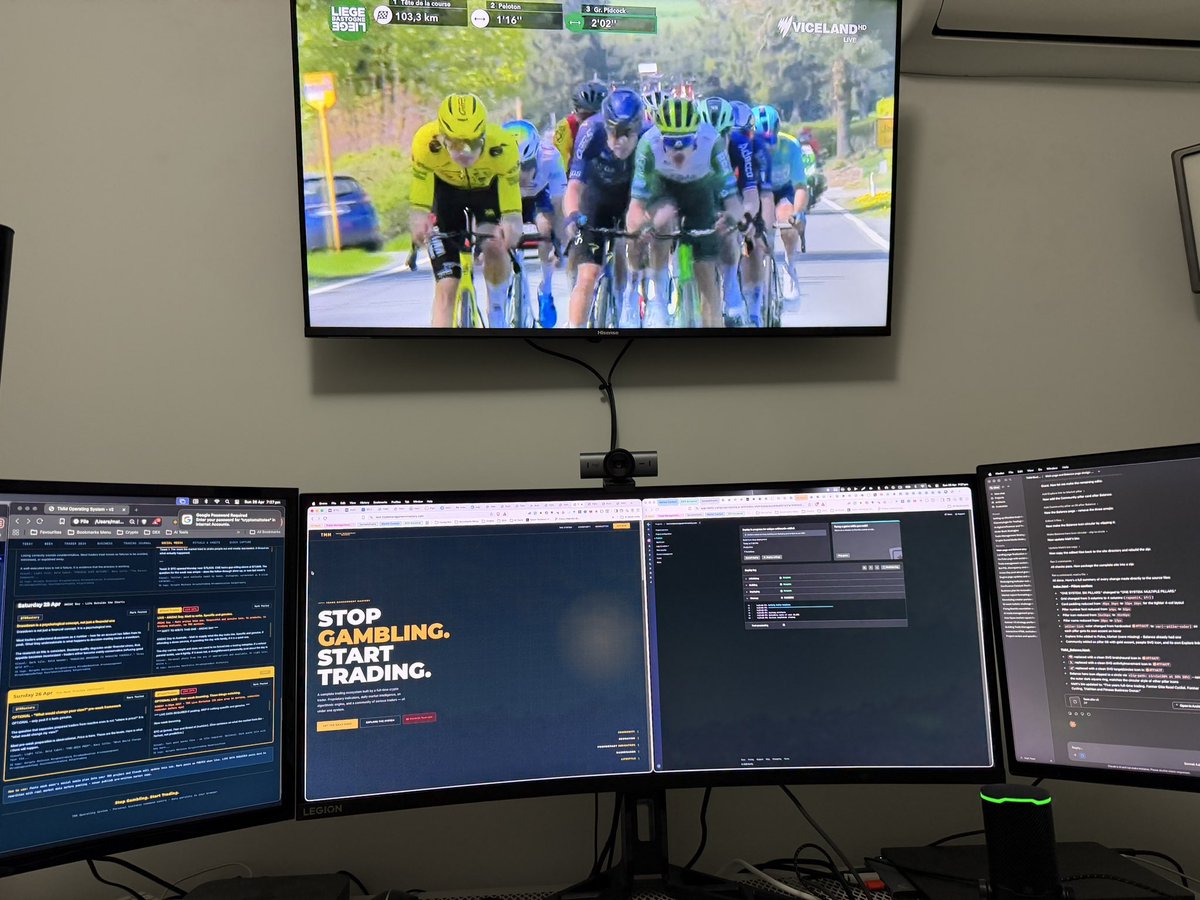
Sunday night in the office. Weekly review done. Building big things for the future. Watching another spring classic- Liege Bastogne Liege…will Poge lock it up once again?
Matt 🇦🇺 tweet media
English
1
0
5
360
Nic
Nic@gbpnic·
@TozerTrades Any chance you can give me a msg? Either here or on TG?
English
1
0
0
22
Matt 🇦🇺
Matt 🇦🇺@TozerTrades·
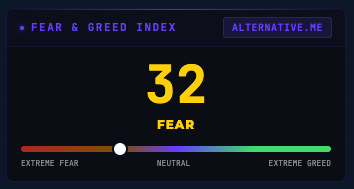
Fear & Greed just hit 32. First time out of Extreme Fear in 68 days - the longest stretch ever recorded. That matters. Prolonged extreme fear compresses sentiment to a point where even small positive shifts can accelerate recovery. We're not out of the woods - but the psychological floor is shifting. Worth watching closely from here. What are you doing with your positioning right now?
Matt 🇦🇺 tweet media
English
1
0
2
61
Nic
Nic@gbpnic·
@TozerTrades Oh what, i literally sent you a dm on X, not sure why you can’t see it
English
1
0
0
21
Matt 🇦🇺 đã retweet
Trade Management Mastery
Drawdown is not just a financial concept. It is a psychological one. Most traders understand drawdown as a number - how far an account has fallen from its peak. What they underestimate is what happens to decision-making inside a drawdown. The research on this is consistent. Decision quality degrades under financial stress. Risk appetite becomes inconsistent - traders either become overly conservative (refusing good setups) or overly aggressive (chasing recovery). Neither response serves the strategy. A systematic approach addresses this in two ways. First, by defining maximum drawdown thresholds in advance - at what point does trading stop for the day, the week, or until conditions reset. Second, by building position sizing rules that reduce exposure during drawdown periods, not increase it. The goal is not to avoid all drawdowns. Every strategy has them. The goal is to remain within the psychological zone where you can still execute your process. Beyond that zone, the strategy is no longer being traded - impulse is. The traders who manage drawdown well do not recover faster. They avoid the mistakes that make the hole deeper. How do you manage your own decision-making when you are in a losing run?
Trade Management Mastery tweet media
English
0
1
3
61
Matt 🇦🇺
Matt 🇦🇺@TozerTrades·
ANZAC Day here in AUS. Today I think about my grandfather. He fought in World War II. Took a couple of bullets for his service. Somehow made it home. If he hadn't - none of my family is here. I'm not here. That hits different every year on this day. Quiet day here for me today. I don't think you can fully comprehend what those men and women walked into. What they gave up. What they carried home with them for the rest of their lives - just so we could have the ones we have now. Lest we forget. To anyone with family who served - what do you do to mark the day?
English
1
0
8
71
Matt 🇦🇺 đã retweet
Trade Management Mastery
The traders who survive long enough to become good traders all share one thing in common. They learned to lose correctly before they learned to win. Losing correctly sounds counterintuitive. Most traders treat losses as failures to be avoided, minimised, or explained away. A well-executed loss is not a failure. It is evidence that the process is working. If you entered a valid setup, sized correctly for the regime, placed your stop at the level where your thesis is invalidated, and the market took you out - that is not a bad trade. That is the system working exactly as designed. The bad trade is the one where you made all the right calls and got stopped out, then doubled size on the next setup to recover. That trade had nothing to do with market analysis. That was emotion with a position on. Consistency in trading is not a streak of winners. Consistency is executing the same process on trade 47 as you did on trade 1, regardless of what trades 42 through 46 looked like. The market does not grade you on outcomes. It compounds you on process. What has a losing trade taught you that a winning trade could not?
Trade Management Mastery tweet media
English
0
1
3
51
Matt 🇦🇺 đã retweet
Trade Management Mastery
Trade Management Mastery@TMMastery·
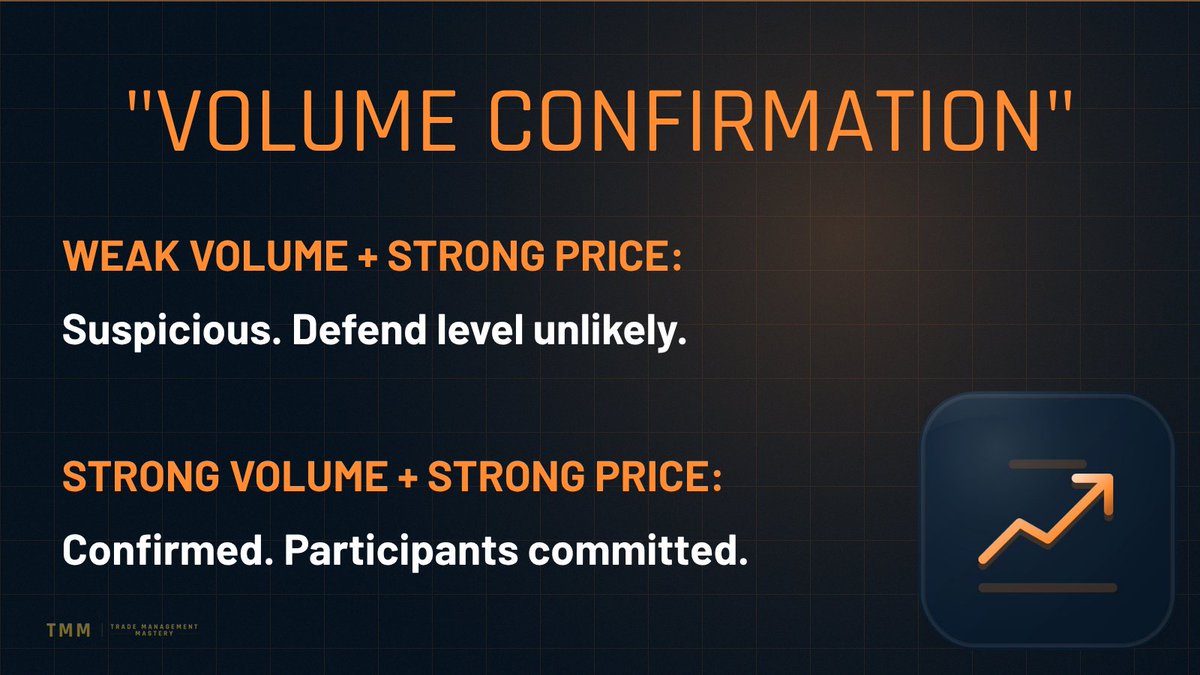
Volume tells you what price cannot. Price tells you where the market went. Volume tells you whether the participants behind that move had conviction. A strong bullish candle on below-average volume is a signal that should be treated with suspicion. The price moved, but the capital commitment was not there. Those moves tend to retrace because there are not enough participants positioned to defend the level. A strong bullish candle on above-average volume is a different proposition. Capital is committed. There are participants with losses if the level fails - which means they will defend it. Right now BTC is in a position where the weekly candle was constructive but the daily volume confluence score - the VCI - is still at a C grade. That gap between price momentum and volume confirmation is the market's way of saying: "the move looks real, but we have not confirmed it yet." A systematic approach does not ignore that gap. It uses it to calibrate position size. Strong price, weak volume confirmation - smaller size until the volume story catches up. What do you use to evaluate whether the volume behind a move is genuine?
Trade Management Mastery tweet media
English
0
1
3
48
Matt 🇦🇺 đã retweet
Trade Management Mastery
Trade Management Mastery@TMMastery·
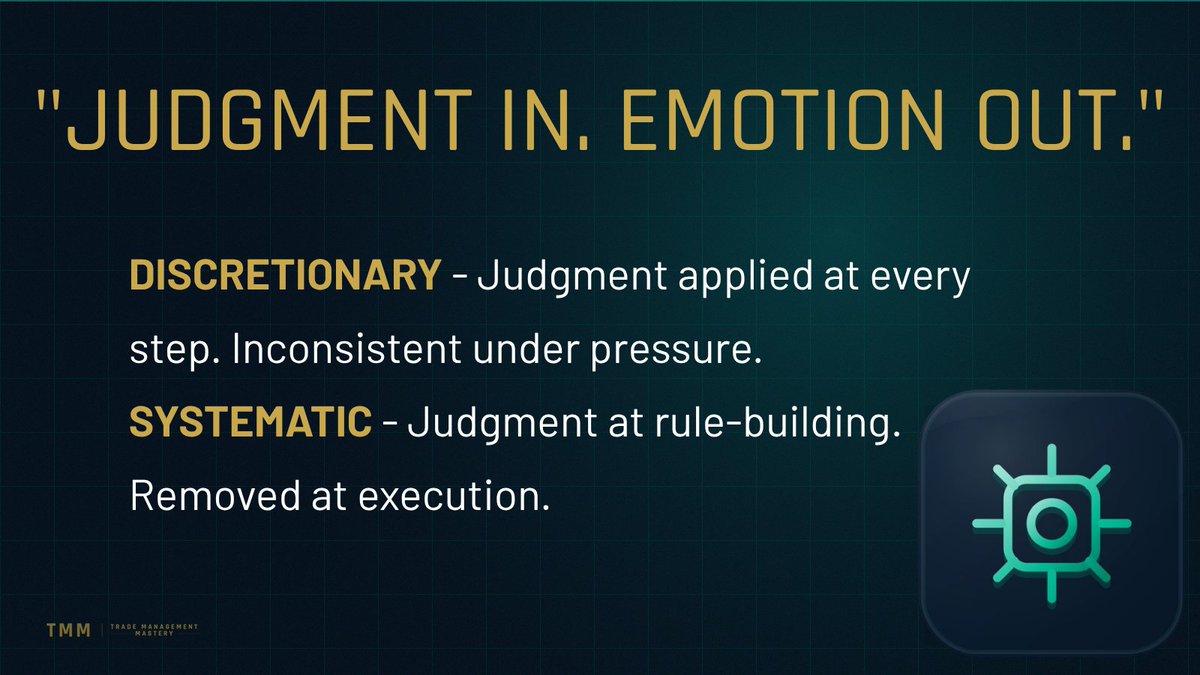
Systematic trading is not about removing human judgment. It is about deciding when and where human judgment is allowed. Most discretionary traders apply judgment everywhere - on the setup, on the entry timing, on the size, on the exit, on whether to hold through volatility or cut early. Each judgment point introduces inconsistency and emotional exposure. A well-designed systematic approach uses human judgment at the rule-building stage and removes it from the execution stage. You judge what makes a valid setup when you are calm, rested, and looking at historical data. The system executes those rules when you are stressed, tired, and watching a position move against you. The bot we are building does exactly this. The rules were defined in backtesting - what setup conditions qualify, which assets, which strategy routes, what risk per trade. When those conditions appear in live markets, execution is automatic. There is no hesitation. There is no override. There is no "this one feels different." The hardest part of systematic trading is not building the system. It is trusting it when it is losing. What is the hardest part of sticking to your own trading rules?
Trade Management Mastery tweet media
English
0
1
3
48
Matt 🇦🇺
Matt 🇦🇺@TozerTrades·
BTC closed last week at $73,720 after wicking down to $70,500 and bouncing hard. That weekly candle tells a story. The sellers tried to push through $70,500 and failed. Buyers stepped in with conviction. The weekly close back above $73,000 is meaningful structure. But there is a gap sitting above price from the CME close on Friday at $77,600. Gaps at that level tend to act as magnets. The market has a habit of filling what it leaves open. What I am watching this week is whether Monday opens with follow-through or whether the weekend drift stalls the momentum. Volume in the first couple of Mondays sessions matters. A reclaim on low volume is an opinion. Buyers need to show up with size to make this a fact. What are you watching to confirm this move is real?
English
0
0
1
29