Parvaneh

11.1K posts

Parvaneh banner
Parvaneh

Parvaneh

@cherryfigure

مرگ بر خامنه‌ای، پزشکیان و کل جمهوری اسلامی. این آخرین نبرده، پهلوی برمیگرده. جاویدشاه.

Sweden Tham gia Şubat 2018
1.4K Đang theo dõi560 Người theo dõi
Tweet ghim
Parvaneh
Parvaneh@cherryfigure·
یک روز بیدار شدیم دیدیم هموطنانمون میان اجساد دنبال جاویدنامشان میگردن، با قلب تکه پاره شده برای سپهر بابا اشک ریختیم، پیکرهای تیر خلاص خورده رو دیدیم و درد کشیدیم، حقیقتا درد کشیدیم. از زنده بودنمان شرمنده شدیم. تا صبح گریه کردیم. از به درک واصل شدن شما شادیم. همین.
فارسی

38
523
3.5K
39K
Parvaneh
Parvaneh@cherryfigure·
۴۷ سال حکومت کردید، لابی‌هاتون تو دنیا تو گوش سیاستمدارا آوازتونو خوندن، روزبه پارسی سالها مشاور دولت سوئد بود. یکبار دعوت نشدین از در اصلی وارد بشین در صحن علنی مجلس حرف بزنید. حالا خودتونو پاره میکنید که شاهزاده از در پشتی رفت؟ اون صحن علنی نبود؟ #KingRezaPahlavi‌ForIran
فارسی
0
2
2
10
Parvaneh đã retweet
هومن خان🇮🇷
امسال انتخابات داریم تو سوئد. ما فراموش نخواهیم کرد کدوم احزاب پشت ملت ایران بودند و کدوم احزاب چشمان خود رو به جنایات ج.ا بستند.
فارسی
8
39
376
2.9K
Parvaneh đã retweet
یزدان دادمهر
یزدان دادمهر@AMIRKABIRbozorg·
جمهوری اسلامی می‌خواهد یک زن و شوهر جوان را اعدام کند… آن‌ها زیر شکنجه تا مرز مرگ برده شدند، و از آن‌ها اعترافات اجباری پخش شده است. این یک حکم نیست، یک انتقام است. #محمدرضا_مجیدی‌اصل #بیتا_همتی #StopExecutionsInIran #Iran The Islamic Republic is planning to execute a young couple… They were tortured to the brink of death, and forced confessions have been broadcast. Their “crime”? Something that shouldn’t even be considered a crime… This is not justice, this is revenge. #MohammadRezaMajidiAsl #BitaHemati #StopExecutionsInIran #Iran
یزدان دادمهر tweet mediaیزدان دادمهر tweet media
فارسی
5
259
388
2.5K
Parvaneh đã retweet
Hamidreza
Hamidreza@justchangingun·
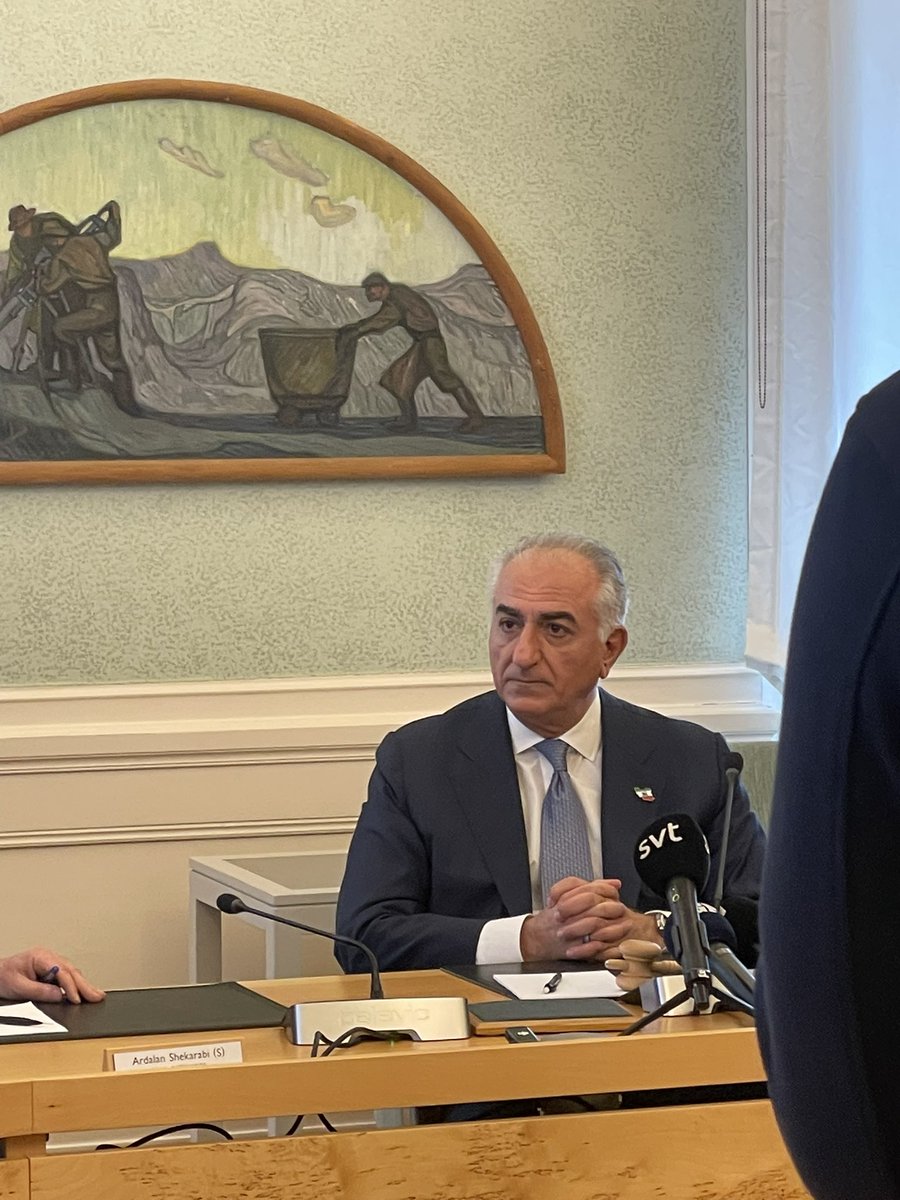
بیشتر از یک ماهه مردم اینترنت ندارن که درباره بزرگترین قتل‌عام تاریخ معاصر ایران حرف بزنند، وحشت موندن ج‌ا نفس‌شون رو بریده و تعداد احکام اعدام از شمارش خارج شده، بعد تو پارلمان سوئد دارن درباره «شکنجه‌ در ساواک» از شاهزاده سوال می‌کنند. چپ چه بلایی بود که سر این دنیا اومد؟
فارسی
33
663
3.3K
29.1K
Parvaneh đã retweet
Neo
Neo@Realneo101·
You stayed silent when the Islamic regime massacred 40,000 of my people. But now the regime is praising your ceasefire calls — so FUCK YOU, Pope Leo. You're a terrorist supporter.
Neo tweet media
English
406
2.4K
7.1K
45.7K
Parvaneh đã retweet
Omnistar🇸🇪
Omnistar🇸🇪@Omnistar763·
I have never seen a protest for a foreign country where the protesters show just as much love and respect for their host country as they do their homeland, except for the Lion and Sun protests. Whenever police walk around, we always make sure to thank them for protecting us. This is how every protest should be. And the fact this is how the Iranian people are protesting shows that this is the right side of history.
Omnistar🇸🇪 tweet mediaOmnistar🇸🇪 tweet media
English
4
30
73
340
Parvaneh đã retweet
sahar morgen
sahar morgen@netvand·
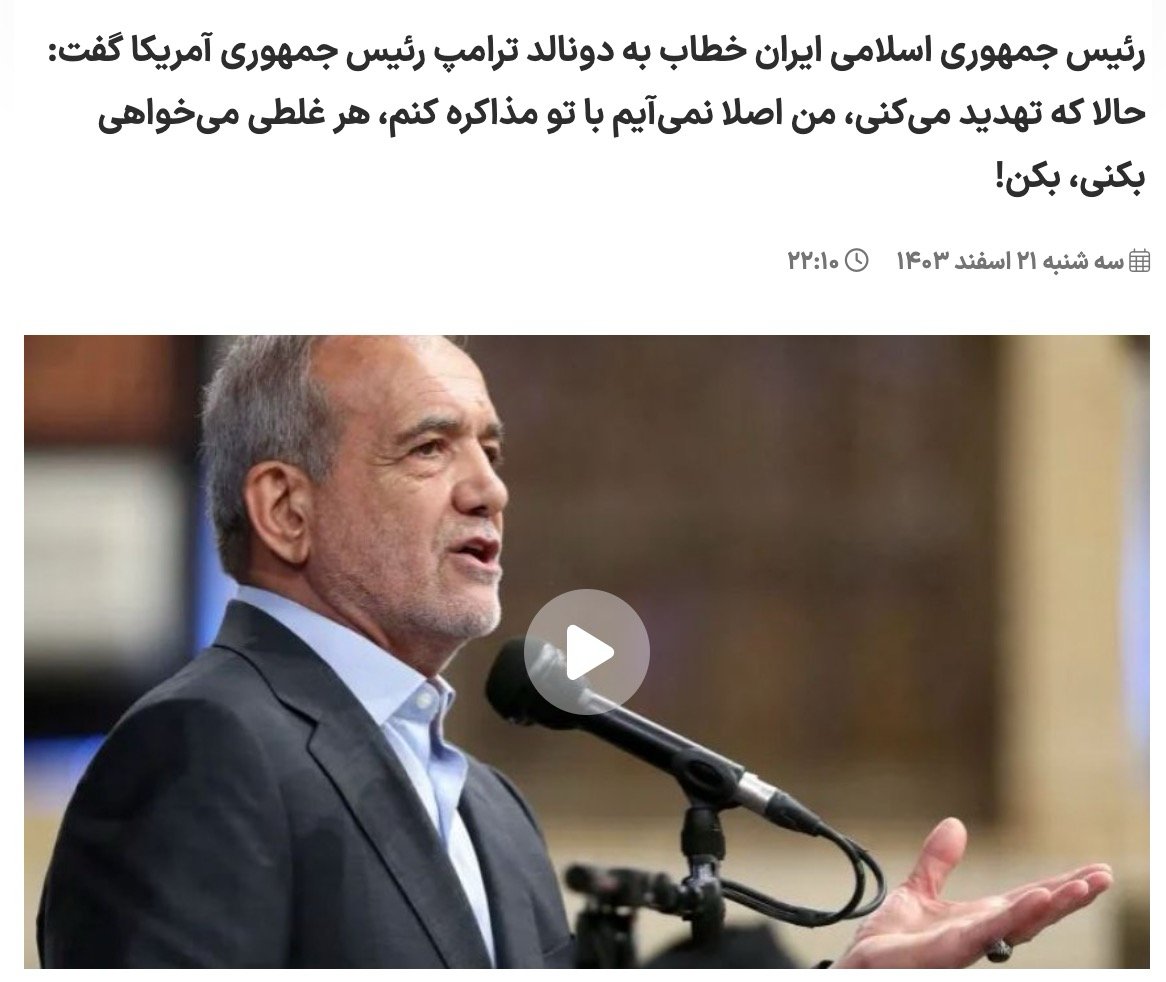
۱ سال از این زر که @drpezeshkian زد می‌گذره و تو این یه سال، آمریکای ترامپ دو بار حمله کرد به جاعش و کل تاسیسات هسته‌ای و موشکیش رو شخم زد رفت و اینام ۳ بار باهاش مذاکره کردن: - ۱ بار قبل جنگ ۱۲ روزه، ۱ بار بعدش و ۱ بارم همین دو روز پیش! - تو همه این وقایع، #پوزیده برگ چغندر بود
sahar morgen tweet media
فارسی
1
16
56
630
Parvaneh đã retweet
Neo
Neo@Realneo101·
🔴DON’T LOOK AWAY The Islamic regime is going to hang Saghar Gholami because she participated in the January protests. She’s only 19. This is pure barbarism. Share this before they kill her.
Neo tweet media
English
111
2.5K
4.3K
66.5K
Parvaneh đã retweet
Farokh
Farokh@FarokhNotes·
چرا مقامات‌ انگلیس، فرانسه و بقیه اتحادیه اروپا این‌قدر اصرار دارن لبنان بیاد زیر مفاد آتش‌بس، اما حتی حاضر نیستن وصل شدن اینترنت ۹۰ میلیون نفر رو هم به عنوان یه بند همون آتش‌بس مطرح کنن؟ ما آدم نیستیم؟!
فارسی
225
1.3K
7.4K
73.3K
Parvaneh đã retweet
Wisdom واری 
Wisdom واری @ForEveryBd·
وضعیت مردم ایران خوب نیست، اینترنت که ندارن، پول ندارن، حيدرگویان عرازشه رو اعصاب مردم راه میرند، بعد تنها دغدغه ی خارج نشین خاک بر سر اینه که اینجا "پارلمان سوئد" نیست. واقعا حیف که فحش نمیدم....🤬
فارسی
5
42
280
2.5K
Parvaneh đã retweet
sahar morgen
sahar morgen@netvand·
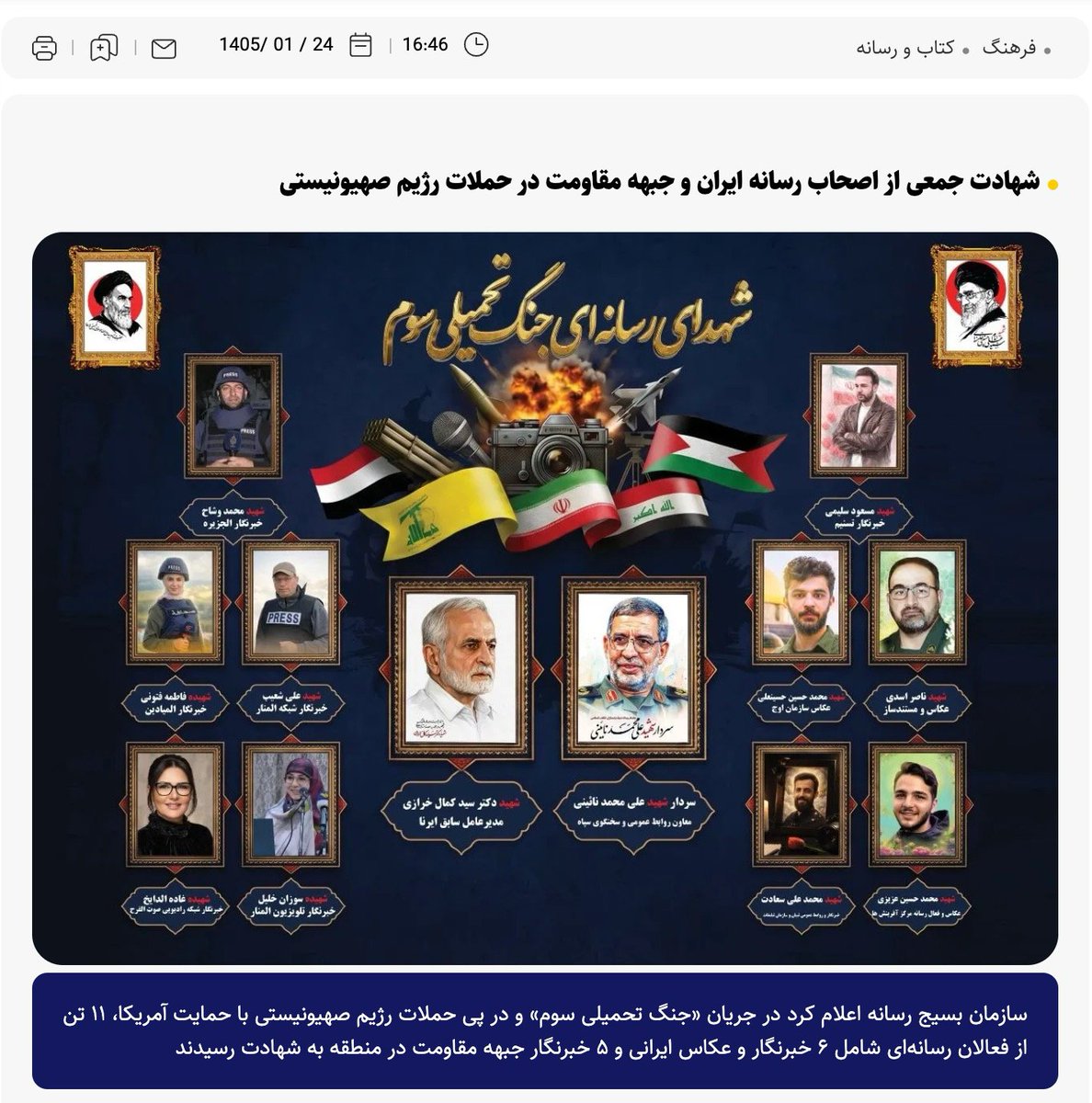
وقتی میگن «اصحاب رسانه» کشته شدن، منظورشون این تروریست‌هاست👇 - «نائینی» رو هم ژورنالیست جا زدن😂
sahar morgen tweet media
فارسی
3
27
130
1.9K
Parvaneh đã retweet
Reza Pahlavi
Reza Pahlavi@PahlaviReza·
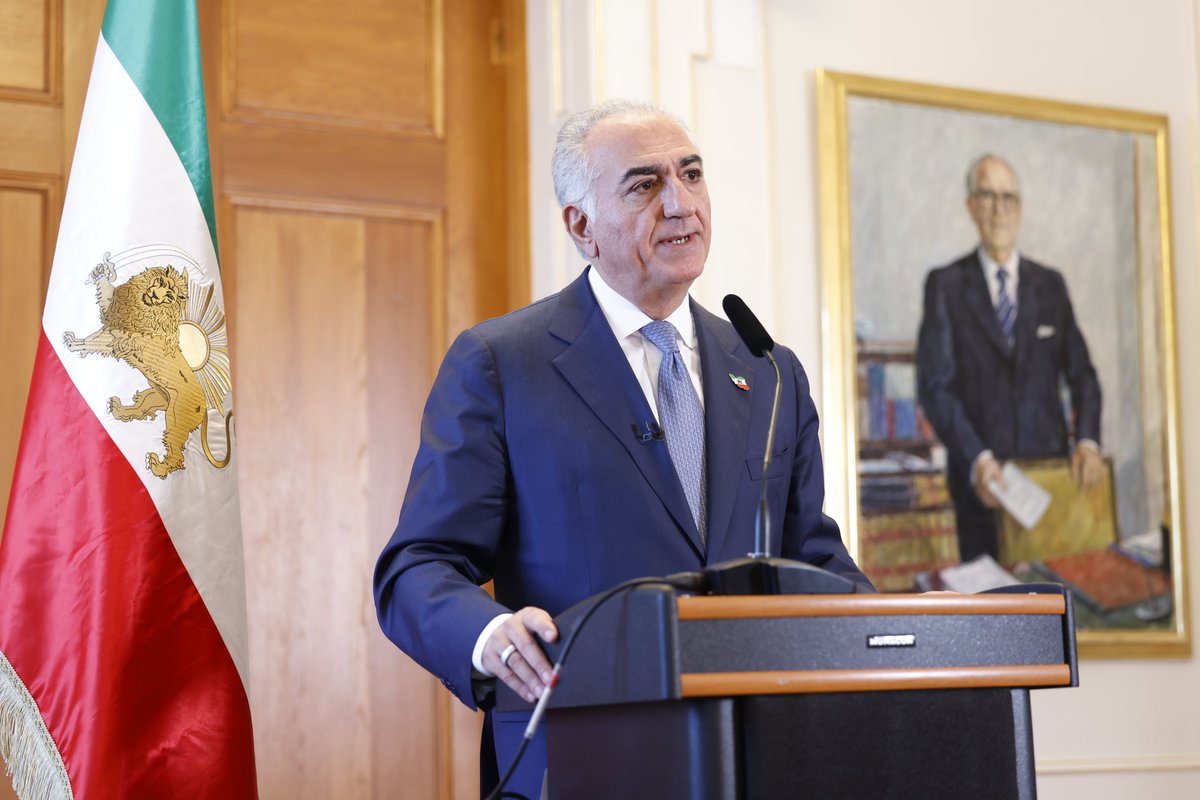
نسخه کامل سخنرانی در پارلمان سوئد (با زیرنویس فارسی) دوشنبه ١٣ آوریل ٢٠٢۶ ٢۴ فروردین ١۴٠۵/٢۵٨۵
فارسی
1.6K
8K
18.4K
382.6K
Parvaneh đã retweet
اسماعیل
اسماعیل@esmaeils1169·
سوئد همیشه به لانه تجزیه طلب، کمونیست و بخصوص اون فرقه تروریستی، شهره بود. این جمعیت عظیم امروز استکهلم فقط یک استقبال نبود، همزمان فتح لانه زنبور و به‌سان تنه درختی بود که در آستین سه فاسد فرو رفت. دلیل ضجه‌های پیاپی‌شون هم همینه، بیش باد! #جاويدشاه‌ #KingRezaPahlavi‌ForIran
فارسی
16
248
1.3K
9.6K
Parvaneh đã retweet
OuriapA
OuriapA@gh0lch0magh·
چه جمعیتی جلوی پارلمان سوئد جمع شده، همه برای حمایت از شاهزاده و مردم ایران اومدن. به هموطن بودن با شما میهن‌پرستان افتخار می‌کنیم.
فارسی
96
1.9K
6.2K
35.1K
Parvaneh đã retweet
Adele Josephi 🇮🇱
Adele Josephi 🇮🇱@JosephiAdele·
All lefties are asking Reza Pahlavi about his father. That’s the only thing they ask about. Nothing about the current situation in Iran.
Adele Josephi 🇮🇱 tweet media
English
281
770
3.5K
38.2K
Parvaneh đã retweet
sahar morgen
sahar morgen@netvand·
دو روز از «آتش‌بس» نگذشته، دوباره «مرز پر گهر» رو تحویل عراق دادن👇 #ایران
sahar morgen tweet media
فارسی
0
23
114
1.3K
Parvaneh đã retweet
Reza Pahlavi
Reza Pahlavi@PahlaviReza·
My remarks today at the Swedish Parliament: "Esteemed Members of the Riksdag, Ladies and Gentlemen, I stand before you today, not to speak of policy abstractions or diplomatic courtesies. I stand before you to speak of a people — a great, ancient, and proud people — who at mortal cost, are fighting for freedom. What is unfolding across Iran is not simply a political dispute. It is not a contest between factions within a system. It is something far more elemental: a national reckoning between a civilization, and a ruthless regime that has occupied it for nearly half a century. Since inception, the Islamic Republic has not behaved as a state among states. It has operated as a revolutionary enterprise — exporting instability through proxies, subverting its neighbors' sovereignty, fueling conflict from Baghdad to Beirut, from Sanaa to Damascus, and advancing its nuclear ambitions beneath a fog of denial. It has not sought a place in the community of nations. It has sought to overturn that community. Yet something irreversible has now changed inside Iran. The battle in my country today is not between reformers and hardliners. It is between occupation and liberation. It is a battle for the soul of a nation. What we are witnessing is not a fleeting protest movement. It is a generational revolt — the most profound uprising in Iran since 1979 — uniting workers and students, women and minorities, professionals and poets, and yes, even elements within the state apparatus itself. Together, they have rendered their verdict: this regime has forfeited all legitimacy. Indeed, it is a revolt against the 1979 revolution itself. When legitimacy dies, power begins to crumble. The regime understands this — which is precisely why it silences voices, shuts down the internet, and turns weapons against unarmed citizens. And the cost has been heartbreaking — a cost that demands this noble chamber bear witness. Men and women are being slaughtered in the streets and in their homes. More than 40,000 Iranians were massacred in a single week. The regime's operatives hunted wounded protesters in hospitals and executed them in cold blood. Bodies were collected by dump trucks. Families were forced to search through rows of unmarked body bags. 40,000… The number is almost too large to comprehend. Too abstract. It allows too many in the outside world to look at it like a mere statistic. So let me tell you some of their names and stories. Consider Hamid Mahdavi, the 38-year-old firefighter from Mashhad, who spent his final moments carrying wounded protesters to safety—only to be shot dead by regime forces for the crime of saving lives. Think of Sina Kazemi, 22 years old. He was in his final term of engineering school. He had a lifelong passion for music and technology. He chose to fight for his and his nation’s dignity. He was looking forward. Security forces shot him in the back of the head. In Bushehr, nurse Mansoureh Heydari and her husband, teacher Behrouz Mansouri, were shot dead side by side while protesting peacefully. They left behind two young children, ages 8 and 10 — a family destroyed for daring to dream of freedom. Twenty-eight-year-old biotechnology student Negin Ghadimi went out to protest despite her father’s pleas. Mortally wounded, she died in his arms whispering, ‘Dad, I’m burning’— a bright future stolen in a single night of terror. But the terror is not over. It continues every day. Access to the Internet is still blocked. And while the people of Iran are disconnected from the world, the regime continues to kill. Today the media speak of a ceasefire. What ceasefire? There has been no ceasefire in the Islamic Republic’s war on the people of Iran. At check points that mark most every street, regime thugs and their imported terrorists harass, beat, and murder innocent Iranians. For those who cry of war and its costs, this is the war you should be speaking of: the Islamic Republic’s war on my compatriots. That war that rages on everyday, far from the headlines of your Western newspapers, and the minds of your television producers. But they are not far from my mind. My brave compatriots continue to resist. Many stand with broken bodies but unbreakable wills. They would rather die standing than live kneeling. So would I. Churchill understood such a people when he said that nations do not die when their soldiers fall — they die only when their spirit surrenders. I am here to tell you, Iran’s spirit has not surrendered and it never will! Despite its brutality, the Islamic Republic is closer to collapse today than at any point since 1979. And one fact is now beyond dispute: the Iranian people will never accept a repackaged version of this regime. Too much blood has been spilled. Too many graves have been dug. The demand is not for a kinder jailer. The demand is for freedom. There is a military dimension to these events that this chamber is watching closely, and I will not pretend otherwise. But I say to you: however the military operation currently on pause turns — whether it accelerates the Islamic Republic's fall or merely deepens the fractures within it — the outcome of Iran's revolution will not be determined by any force from the outside. It will be determined by the Iranian people themselves. The Lion and Sun Revolution — the uprising that the people of Iran ignited in January with their own blood and their own courage — cannot be extinguished by any regime calculation, any diplomatic maneuver, or any military result. The people started it. The people will finish it. If the military operation pushes the Islamic Republic into the historical abyss where it belongs, we will be there — ready, organized, and determined — to build what comes after. And if the regime survives the immediate storm, we will continue the revolution until it is complete. We began this journey. We will see it to its end. History has given us no other choice. When I look at Europe, I see ambivalence and a continued inability to see the reality of the streets of Iran. I am disappointed, yet not surprised, at the rush to engage this criminal regime. The regime that has murdered tens of thousands of its own citizens. The regime is sponsoring terrorism on the streets of Europe, including in Sweden. The regime is threatening and blackmailing European Governments with hostages and violence. The Europe I believe in is supposed to stand for human rights, democracy, and equality. It has a proud record in previous struggles - fighting apartheid in South Africa, supporting the Solidarity movement in Poland, and now in backing Ukrainians in the fight for sovereignty. So why should Iran be different? Are Iranians’ human rights less important? Are their lives worth less? Perhaps to some, but not to us. Sadly this is not new. For decades Europe has appeased and emboldened this terrorist regime. It has been a policy that has helped this Regime survive and kill its own people. I hope the Swedish Government will press the European Union and other countries to stand with the people of Iran and their struggle for liberty. I am pleased and heartened that so many members of the Riksdag, across multiple parties, are here today to hear a message from the people of Iran. On behalf of my compatriots who are far too often silenced, thank you. Esteemed members of this Riksdag, this is no longer distant geopolitics — it is a security emergency on Swedish soil. The Swedish Security Service, SÄPO, together with the Swedish Police Authority, has confirmed that the Islamic Republic of Iran operates within Sweden through criminal proxy networks. These are not surveillance operations alone. They carry out acts of intimidation and violence — targeting Jewish communities, Iranian dissidents, and Swedish citizens at large. On the third of March this year, shortly after the outbreak of the current conflict in the Middle East, SÄPO issued an urgent public warning of a heightened threat level.This is not speculation. This is a statement from your own security services. And here is what makes this threat particularly corrosive: the criminal networks that Tehran employs do not cease to exist between assignments. They are embedded in Swedish society. They are the same networks already identified as a major internal threat to public safety. Sweden has responded with resolve. You have restricted visas for Iranian embassy staff. You prosecuted Hamid Noury for crimes against humanity under universal jurisdiction — setting a historic precedent. But it did not last. Sweden returned Noury to Tehran where he was given a hero's welcome by his fellow murderers. While he was allowed to return to boast of his crimes on state television, Dr. Ahmadreza Djalali was forced to continue to suffer in the regime’s torture chambers. It was ten years ago that he was taken. And he is still captive. Decisions like this embolden the Islamic Republic to take more hostages, to commit more crimes, and to further defy the world. A French senator told me a few months ago: our governments have become hostages to our hostages. But governments still have a choice whether to give in to blackmail or not. Václav Havel once said that the only genuine security in the world is a security rooted in truth. The truth is, as long as this regime remains in power, Sweden and the free world will not be safe. Why did Sweden join NATO? Because of Putin’s war of aggression against Ukraine. That decision was correct. And it was necessary. Let us not forget that the Islamic Republic is not a bystander to Russia's war. Tehran has supplied drones and missile technology to Moscow. Iranian-manufactured weapons have struck Ukrainian cities. Regime technical cooperation has sustained Putin’s capacity to wage war against a democratic neighbor. As President Zelenskyy and I have discussed and stated together: the Russian threat to Europe and the Islamic Republic’s threat to Europe are not two separate problems. They are two manifestations of a single challenge. Sweden now stands inside NATO's collective defense. But collective defense is not only military. It is political, economic, and moral. It requires that democratic nations recognize threats in their totality — and treat the Islamic regime's support for Russian aggression as the direct security concern that it is. Let me now speak, not of present dangers, but of future possibilities. The relationship between Sweden and Iran has deep roots. In the early decades of the twentieth century, Swedish experts and businesses built strong ties in Iran. During the celebrations of 2,500 years of Iranian civilization at Persepolis, Sweden was represented by then-Crown Prince Carl Gustaf. His Majesty and I sat together and spoke of the future of our nations and people. That future, with a democratic Iran, would change the security calculus of the entire region — and of Europe. It would immediately dismantle the proxy networks operating on Swedish soil. It would end the hostage diplomacy that has poisoned relations with Western nations for decades. It would cooperate on intelligence and the rule of law. It would cease its support for Russia's war machine. It would secure Europe’s energy needs for decades to come. It would emerge as a natural partner — a nation of 90 million people with extraordinary human capital, a rich civilization, and a desire to rebuild after decades of misrule. Sweden has every reason to be part of that future. Your excellence in information technology and digital infrastructure, your defense industry — Saab's world-class capabilities in aerospace and defense — your engineering heritage through Volvo and Scania, your commitment to culture, your tradition of precision manufacturing and industrial innovation: these are precisely what a rebuilding Iran will need. This is not charity. This is partnership between equals, between nations with complementary strengths and shared values. At this historic moment, as Iranians call upon me to help provide leadership toward a democratic transition, I reaffirm the commitment I have made throughout my life: to serve as a unifying national figure — not a partisan one, not a claimant to power — but a facilitator of stability, of national unity, and of a peaceful transfer to democratic governance. I am not alone in believing this is possible. Together with economists, legal experts, security professionals, and civil society leaders from across the Iranian political spectrum, we have developed detailed transition frameworks — the Iran Prosperity Project — to ensure institutional continuity, prevent instability, and allow rapid national recovery after the regime's end. There is a plan. There is a path. There is a responsible alternative. Even within the state apparatus, the fractures are deepening. Reports indicate that members of the armed forces and security institutions are increasingly refusing orders to participate in violence against civilians. Many have quietly signaled where their true loyalties lie: with the nation, not with those who repress it. When the path emerges, I am confident they will act. No government can survive once it loses the willingness of its own institutions to enforce repression. We are approaching that moment. Let me conclude, esteemed members of this Riksdag, with what I believe is the simplest and most important truth of this address. The Iranian people are not asking you to fight their revolution. They are already risking their lives doing that themselves — with a courage that should humble all of us. They are asking something far more modest: Do not legitimize those who oppress them. Do not strengthen those who terrorize them. Protect those who have sought refuge among you. Prepare for the day when Iran stands free. There are moments in history when neutrality is not a position — it is a decision. When caution is not prudence — it is complicity. When history quietly presents a question and waits, with terrible patience, for an answer. Churchill faced such a moment in 1940. Havel faced it in 1989. Zelenskyy faces it today. And in their own way — with no aircraft, no armies, no diplomatic immunity — the people of Iran face it in every street, every prison cell, every unmarked grave. The Iranian people have already answered. They have answered in the streets and in their prisons. They have answered with their lives. They have chosen freedom. History now asks the democratic world a simpler question, and Europe in particular: Will you stand with a free people? Or will you accommodate those who oppress them? Future generations will not read your statements. They will assess your actions. They will not ask what you said. They will ask what you did — and what you refused to do when it mattered. And one day soon — and I say this, not as sentiment but as strategic conviction — when Iran is free, when its people stand again among the free nations of the world, when its children inherit a country without fear, we will all know that this was the moment when history turned. The moment when a great people refused to kneel. The moment when free nations chose not to look away. Let it be written that when that day came, Sweden was ready. When the Iranian people stood for freedom, Sweden stood with them. Thank you." Stockholm, Sweden April 13, 2026
Reza Pahlavi tweet media
English
1.2K
8.2K
17.5K
177.5K
Parvaneh đã retweet
sahar morgen
sahar morgen@netvand·
- Das Mullah-Regime hat im Jahr 2025 mindestens 1.639 Menschen hingerichtet: "Sollte die Islamische Republik die aktuelle Krise überstehen, besteht die ernsthafte Gefahr, dass Hinrichtungen noch häufiger als Mittel der Unterdrückung eingesetzt werden."👇 #انقلاب_شیروخورشید
sahar morgen tweet media
Deutsch
0
16
36
216