Designing robust microservices requires choosing the right patterns for performance, resilience, and scalability. Here are 9 essential patterns every architect should know.
1. Database Per Service Pattern
Each microservice manages its own database, ensuring loose coupling and full data ownership.
2. Event Sourcing Pattern
Stores every change as an event rather than the latest state. Great for audit logs and debugging.
3. API Gateway Pattern
Acts as a single access point that routes requests to microservices, handling concerns like auth and rate limiting.
4. Saga Pattern
Coordinates distributed transactions using a series of steps and compensating actions to handle failures.
5. BFF (Backend for Frontend) Pattern
Creates different backends for web and mobile, improving performance and customizing data handling per client.
[Learn more in the graphic below]
💡 Which microservices pattern have you used in your projects?
🔁 Save this as a handy guide for interviews and architecture discussions!
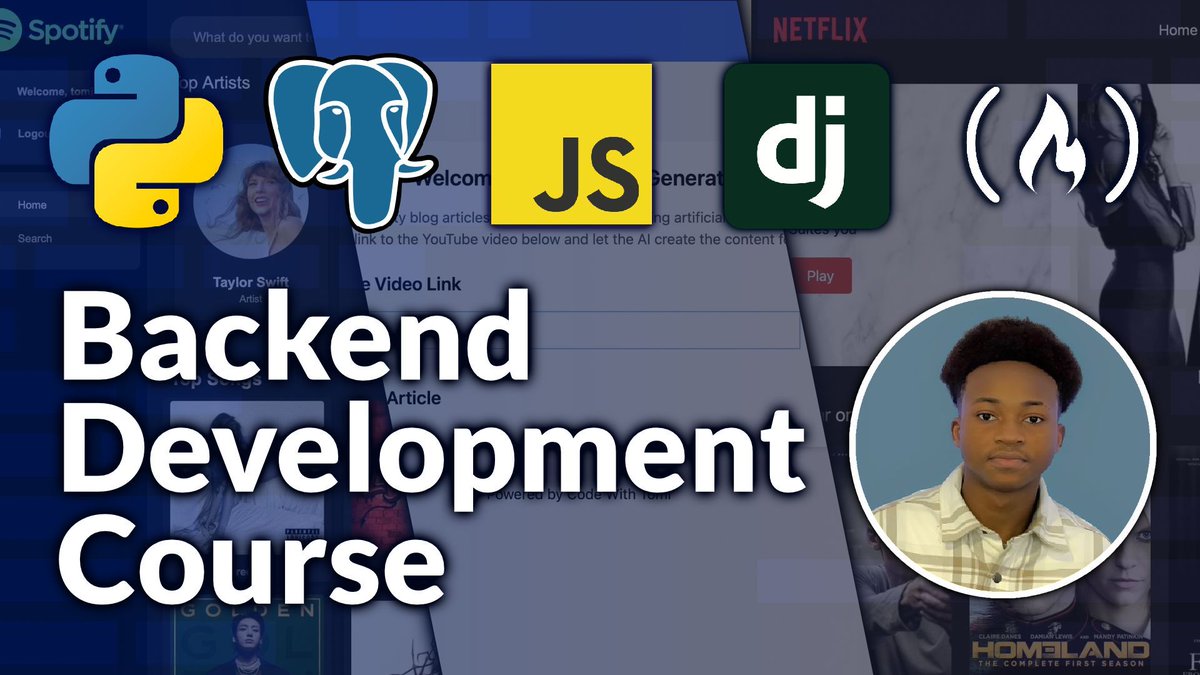
If you want to become a great backend dev, you should build lots of projects.
And there are 3 for you in this course: a blog generator, a Netflix clone, & a Spotify clone.
You'll sharpen your backend skills using tools like Python, Django, & PostgreSQL.
freecodecamp.org/news/backend-w…
If you want to become a great backend dev, you should build lots of projects.
And there are 3 for you in this course: a blog generator, a Netflix clone, & a Spotify clone.
You'll sharpen your backend skills using tools like Python, Django, & PostgreSQL.
freecodecamp.org/news/backend-w…
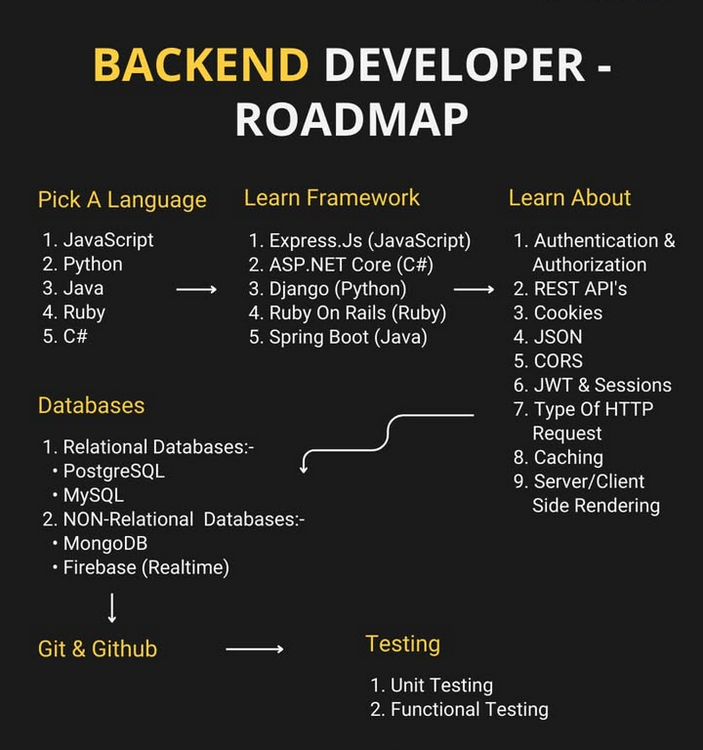
Finally, I'm done with the basics of backend engineering on the all-in-one resources to learn backend engineering I'm working on
This basic section includes
- Internet
- HTTP
- Servers
- Web Dev fundamentals
- Fundamentals of Operating Systems
- A server-side language -> JavaScript | Go | Rust | Node
- A framework -> Express | Nestjs | Django | Laravel | Spring Boot
This is the boring part. Don't worry. We are getting into the fun part soon.
Still working on it, updating it, Adding more, and making it better for you.
Follow me. Retweet. Comment "Backend." I will DM you the PDF version when it's out.
Enjoy the web version, and send in your feedback on how we can improve it for everyone.
masteringbackend.com/hubs/backend-e…
The uv build backend is now stable, and considered ready for production use.
An alternative to setuptools, hatchling, etc. for pure Python projects, with a focus on good defaults, user-friendly error messages, and performance.
When used with uv, it's 10-35x faster.
Finally, I'm done with the basics of backend engineering on the all-in-one resources to learn backend engineering I'm working on
This basic section includes
- Internet
- HTTP
- Servers
- Web Dev fundamentals
- Fundamentals of Operating Systems
- A server-side language (JavaScript)
- A framework (Express)
- Git and GitHub
This is the boring part, right? Don't worry. We are getting into the fun part soon.
I will give this some rounds of editing and upload it soon.
Follow me. Retweet. Comment "Backend". I will DM you.
Python Backend Development is One of the Highly In Demand and Top Paying Jobs in Tech.
Here's a complete roadmap to be a excellent Python Backend Developer (with youtube videos):
A Thread 🧵
Do you want to be a python backend web developer?
I just released a FULL 10+ HOURS COURSE on YouTube It teaches you everything you need to get started with web development with python
I hope you enjoy it.
I would appreciate it if you retweet. Thank you
youtu.be/S44qx6DoIv4