Bitcoin’s Calm Amid Middle East Tensions and Global Maneuvering
metanewshub.com/2026/03/19/bit…
#bitcoin #diplomacy #geopolitics
English
Kết quả tìm kiếm: "#Diplomacy"
20 kết quả
JUST IN: An Indian tanker just docked at Mundra port carrying 80,886 tonnes of crude oil. Indian media celebrated it as proof that energy keeps flowing. Look closer. The tanker never entered the Strait of Hormuz. The Jag Laadki is not a state vessel. It is privately owned by Great Eastern Shipping, a publicly listed Mumbai firm. It loaded Murban crude at Fujairah port, which sits east of the strait in the Gulf of Oman. It departed March 16, sailed south through the Arabian Sea under Indian Navy escort, and reached Gujarat on March 18. The entire voyage stayed outside the 21-mile chokepoint that has paralysed global shipping since February 28. No IRGC provincial command needed to grant clearance because the ship never entered their waters. No VHF radio hail. No AIS transponder permission protocol. No call from Jaishankar to Araghchi. Fujairah is on the safe side of the bottleneck. The Jag Laadki did not break the blockade. It drove around it. The Indian Navy provided the escort under Operation Sankalp, a standing maritime security deployment with destroyers positioned in the northern Gulf of Oman. Three warships are currently assigned to protect India-bound vessels in the corridor between Fujairah and the Indian coastline. The Navy is not charging a commercial fee. But the costs are real and they compound elsewhere. Maritime war risk insurance tells the financial story. When P&I clubs cancelled Gulf cover on March 5, commercial shipping lost its legal ability to transit. Single-voyage buy-back policies are available through Lloyd’s and specialty markets, but at Additional War Risk Premiums that have surged from roughly 0.25 percent of hull value pre-war to 0.5 to 5 percent or higher. For a Suezmax tanker valued at $70 to $90 million, that is a single-voyage insurance cost potentially running into the millions. That cost does not disappear when the crude reaches Mundra. It is baked into the delivered price. It flows through refinery margins. It arrives at the pump. Every Indian motorist paying elevated fuel prices is absorbing the war-risk premium of a strait their tanker did not even enter. The Jag Laadki loaded at Fujairah during an active drone attack on the terminal. It departed under naval escort through contested waters. It carried insurance bought at wartime rates from a market that has priced the entire Gulf as a combat zone. One tanker. One voyage. One cargo. The infrastructure required to move 80,886 tonnes of crude from a port 1,800 kilometres from India included three warships, a head-of-state diplomatic relationship, single-voyage specialty insurance, and a route that deliberately avoided the strait entirely. That infrastructure does not scale. It cannot move the 24 to 37 tankers per day that used to transit Hormuz. It cannot move a single urea vessel because urea loads at ports inside the Gulf, west of the strait, where the permissioned chokepoint applies. The Jag Laadki succeeded by avoiding the problem. The fertiliser cannot avoid it. The molecules load at Ruwais, at Ras Laffan, at ports that require passage through the 21 miles of mined, uninsured, permissioned water that the Jag Laadki was routed specifically to never touch. One tanker reached Mundra. The urea that 22 million Sri Lankans need for Yala did not. The crude that fuels Indian industry found a way around. The nitrogen that feeds Indian agriculture has no way around. The headline is the arrival. The story is what still cannot arrive. Full analysis: open.substack.com/pub/shanakaans…


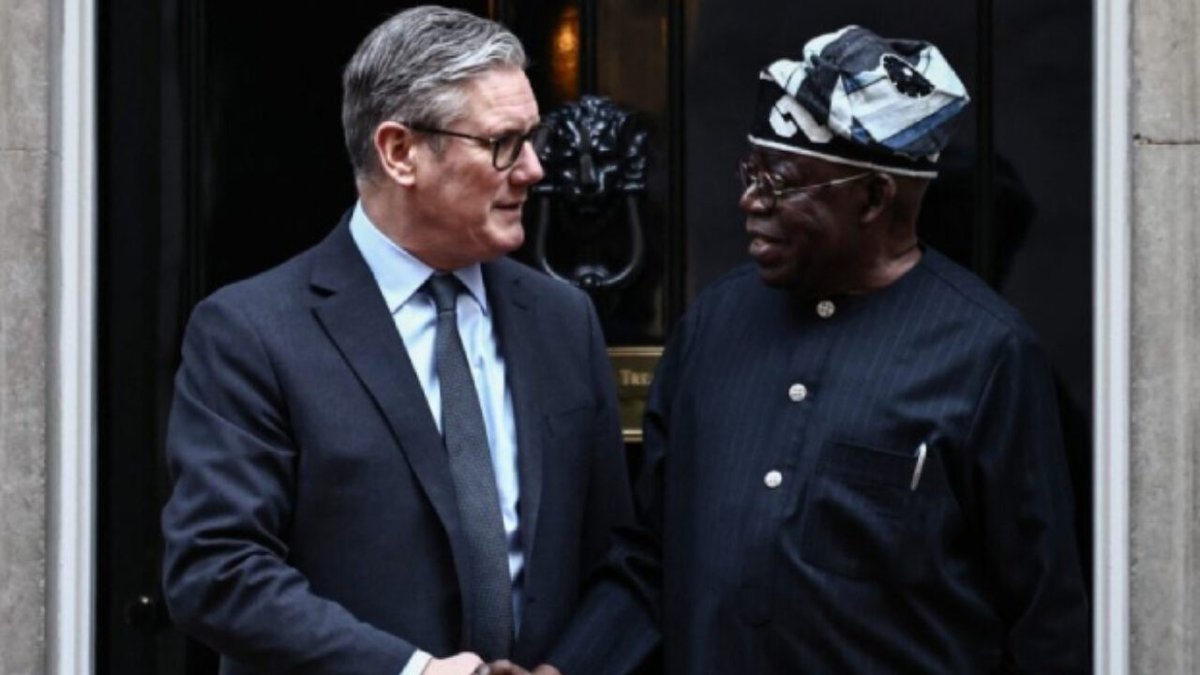








Asked why he didn't coordinate with allies before going to war with Iran, Trump says, "We didn't tell anyone about it. Who knows better about surprise than Japan? Why didn't you tell me about Pearl Harbor, OK?"