

Post

English




@Scivf4 Constantly repelling magnets causes them to slowly lose their magnetism, and this gear system will eventually fail. This will generate a lot of heat in the magnets too, which will also reduce their magnetic properties, and eventually cause it to fail.
English


@Scivf4 Problem with this is torque. If the load becomes too big then it will either slip or the gears will touch, making the idea pointless. So this is only usefull for low power, high accuracy applications.
Or am I missing something?
English

@Scivf4 Who tf decided that every tech/sci/history voiceover required an adult male negro voice, anyway? Did one invent this? I doubt it.
English

@Scivf4 Except for the pivoting axles they’re connected to.
English

@Scivf4 Wjat kind of torque does the outter wheel really have though, it's significantly less than a normal gear system. Slippage is the real enemy here.
English


@Scivf4 I’m guessing they would touch with even a small amount of torque behind it
English
@Scivf4 Interesting
But frictionless is being over simplified
May be low friction
English

Free Cone Day is here! Come celebrate with us at a DQ location on today by getting a FREE small vanilla cone 🍦
English

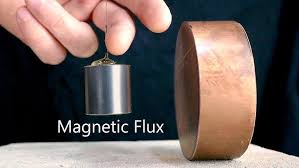


@Scivf4 Torque is reduced A LOT. Backlash is increased A LOT. might be some niche applications, but you CANNOT be precise if there is backlash.
English


These aren’t sci-fi — we’re at the prototype/testing stage (TRL 4–6 range), with hardware built, lab-validated, and now heading to actual space qualification (ISS tests + lunar analogs).
They’re not yet standard flight hardware on current missions, but the trajectory is clear: NASA, ESA, and companies see them as a key enabler for long-duration robotic exploration, in-space assembly, and deep-space probes where a gearbox failure would end the mission.
The basic parallel-wheel repulsion design in the original video is the simple “proof-of-concept” version. The ones being pushed for space are more advanced coaxial/field-modulated designs that pack far more torque into less mass/volume — but they work on the exact same contactless principle.
For a Mars rover that has to keep working for 10+ years, a satellite actuator that can’t ever be oiled, or a lunar robot operating in -170°C darkness, magnetic gears could be a game-changer. The agencies are betting on it.
English

@Scivf4 This statement is missleading - magnets do de-magnetize and therefore wear out.
English

@Scivf4 how this is different then just an electric motor?
English

@Scivf4 Cool idea. Cant really put a load or torque on em though I'd imagine
English

It’s time to dance! Get it on tournament action with Bonus Bets from FanDuel.
English

@Scivf4 Thought of this independently a long time ago, but it was not an original idea; had already been done. Apparently this is used in underwater ROVs and things where total sealing is required. If the rings were iron I think it would help to conserve the magnetism/heat sink.
English


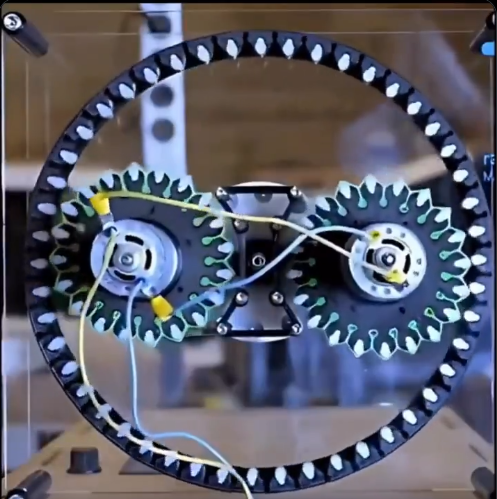
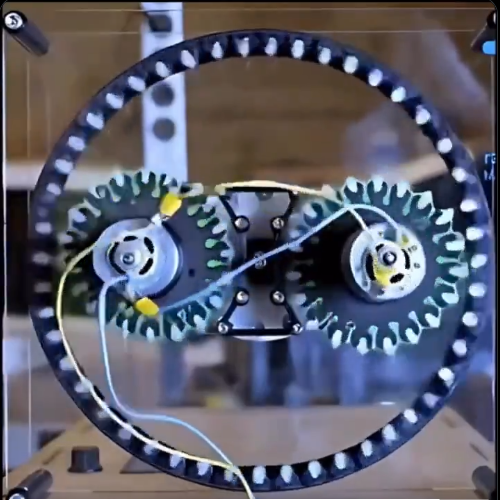

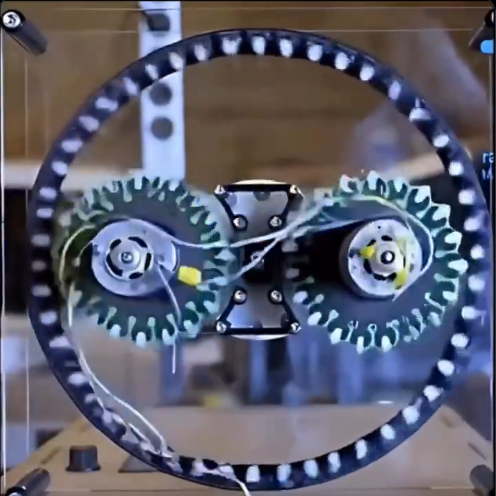

@Scivf4 The problem with such a device is heat and eddy currents. Eddy currents will degrade the magnets and cause heat which degrade the magnets quickly.
Its a good idea but over time, that device will degrade quickly and destroy itself.
English


@Scivf4 Technically according to electromagnetism at atomic scale nothing ever touches and with lubricant in traditional gears that’s also true
I don’t know if I would trust this, it has to have wear, just somewhere else, internal material stress, more stress on bearings
English

@Scivf4 No contact, no wear, no noise~!
I burst out laughing. Have you ever tried installing this thing on a car or other heavy-duty equipment to see what happens? 🤭
English



@Scivf4 enjoy that shit falling apart when it gets tough. cool little machine though.
English



@Scivf4 Now put some resistance on the outer wheel and see what happens. Cool show bro but produced 0 torque.
English

@Scivf4 Sure. But how do the two rotors spin? They need bearings, right? There's your weak link.
English


@Scivf4 That would be great for a one time use loitering submissible munition.
Low sound hard to detect.
English