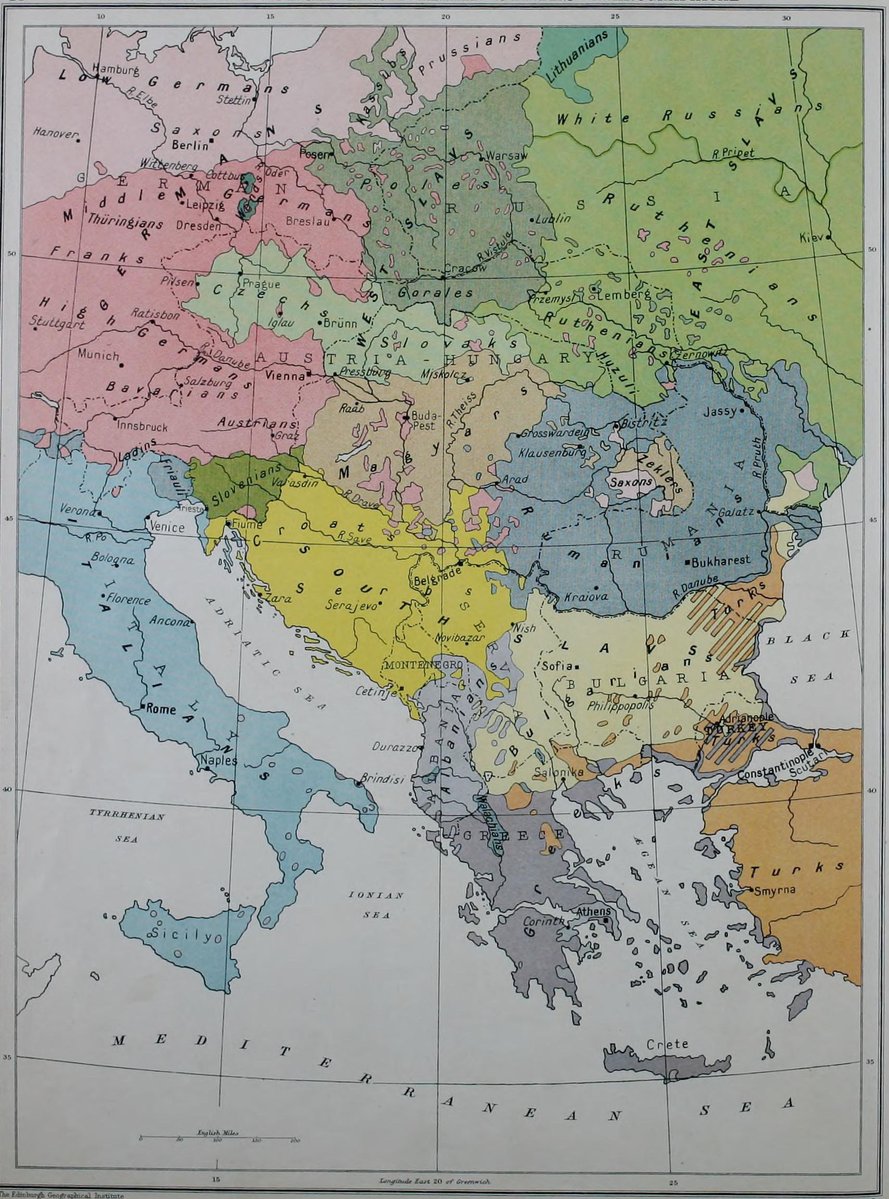
History, maps and ethnography: The Moldavian territory - Ethnographic map of the area between Carpathians and Inguletz River (G. Murgoci, Territoire moldave: Carte ethnographique du territoire entre les Carpathes et l'Inguletz, #Paris, 1920)
Union of Bessarabia with Romania (27 March 1918)
The union of Bessarabia with Romania, proclaimed on 27 March 1918, marked a decisive moment in the political reshaping of Eastern Europe at the end of the First World War. Bessarabia, a historical part of the medieval Principality of Moldavia, had been annexed by the Russian Empire in 1812. Despite a century of imperial administration and significant demographic pressures, the indigenous Moldavian/Romanian population preserved its ethnolinguistic majority, social structures, and cultural traditions.
The collapse of the Russian Empire in 1917 created a power vacuum that pushed local elites to establish the Sfatul Țării (National Council), a representative assembly in Chișinău. This body first proclaimed the autonomy, then the independence of the Moldavian Democratic Republic. Faced with growing instability, Bolshevik incursions, and the need for institutional continuity, the deputies voted for union with Romania as a framework capable of ensuring security, agrarian reform, and political representation.
The act of union included provisions for local autonomy and guaranteed rights, reflecting both the social diversity of the region and the desire to integrate Bessarabia into a functioning state. Although later contested by the Soviet Union, the decision of March 1918 remains a foundational moment, expressing the long-standing cultural and historical ties between Bessarabia and the Romanian state.
(More ethnographic maps of Bessarabia: historicalmaps.edmaps.com/romania/)
#ethnographic #map #carte #ethnographique #union #history #histoire #Moldavie #Moldavia #Bessarabia #Transnistria #Romania #France #Ukraine #Russia #Romanians #Hungarians #Germans #Bulgarians @sandumaiamd

Français