PSX Investor/Swing Trader

1.3K posts

PSX Investor/Swing Trader banner
PSX Investor/Swing Trader

PSX Investor/Swing Trader

@FVTechStallion

Passionate about blending Technical and Fundamental analysis in stock markets. Navigating through market chaos with my own charts.📈🔍Opinions are solely mine!

加入时间 Şubat 2013
319 关注2.7K 粉丝
PSX Investor/Swing Trader
PSX Investor/Swing Trader@FVTechStallion·
@asadnasir2000 But don't you think that debt comparisons across regimes need adjustment for FX depreciation, interest rates, and rollovers. A large part of recent increase reflects currency devaluation and domestic borrowing structure rather than purely new debt accumulation.
English
1
0
1
56
Asad Nasir
Asad Nasir@asadnasir2000·
In April 2022, 🇵🇰 Pakistan’s debt was Rs 44,000 billion. Today it is Rs 81,000 billion. Under PTI, it rose by Rs 19,000 billion in 4 years, while in the current Government it rosed Rs 37,000 billion in 4 years. — Muhammad Zubair
English
17
296
811
22.7K
PSX Investor/Swing Trader
PSX Investor/Swing Trader@FVTechStallion·
@elerianm Such intraday volatility reflects how sensitive oil is to marginal information flow in a tight market. Even small shifts in sentiment or supply assumptions get amplified, which is why macro forecasting becomes increasingly unreliable in the short term.
English
1
0
1
92
Mohamed A. El-Erian
Mohamed A. El-Erian@elerianm·
Crazy price volatility in the oil market: In less than 48 hours, Brent crude has swung from a local low of $111 to a high of $126 and is currently trading at around $116 (Bloomberg chart below). This level of instability is far from cost-free for the global economy. #economy #oil #markets #volatility
Mohamed A. El-Erian tweet media
English
75
185
815
101.6K
PSX Investor/Swing Trader
PSX Investor/Swing Trader@FVTechStallion·
This is less about daily payments and more about long term contractual design risk. If capacity commitments are misaligned with actual demand, the system naturally shifts into fixed cost burden regardless of usage, which becomes a fiscal drag over time.
farrukh saleem@SaleemFarrukh

$538,535 per day. Who will stop the meter? Pakistan’s LNG system carries a fixed cost that does not sleep. Every single day, $538,535 leaves the system -- whether gas flows or not. Over a decade, that has crossed $1.6 billion. The payments go to terminal operators at Port Qasim, Karachi, for floating regasification units that convert imported LNG into pipeline gas. Cold truth: This is not a fuel bill. This is a capacity bill. Colder truth: The ships can sit idle. The cheques do not. On March 4, Qatar invoked force majeure. LNG cargoes stopped -- Pakistan’s payments did not. At roughly $16 million a month, Pakistan continued to pay for terminals with nothing to regasify. Imagine: Pakistan cannot feed the 44.7 per cent of its population that survives below the poverty line. Imagine: Pakistan cannot fully fund the defence equipment its armed forces need to protect the country’s borders. Imagine: Pakistan goes to the IMF with a begging bowl every few years, negotiating humiliating conditions just to keep the lights on. Imagine: Every single day, without fail, Pakistan finds $538,535 to pay for ships that are not moving, vessels that are not working, and gas that is not flowing. So, who will stop the meter? The present government says the contracts, as signed, carry no force majeure protection for Pakistan. Fact: Tools exist. They are simply not being used. Ogra, the Oil and Gas Regulatory Authority, has the power to review and revise the tariff structure for both terminals. No gas flowing means no service rendered. A regulator worth its name would have opened that proceeding on March 5. Two operators. One port. Guaranteed dollar returns whether or not a single cubic foot of gas moves. Is that a market -- or a cartel dressed in contractual language? The Competition Commission of Pakistan (CCP) has the mandate to investigate exactly this kind of arrangement. The question is why it hasn’t. Why has parliament become a spectator in this? The Public Accounts Committee has the authority to call for a fresh forensic audit of the original contract awards -- how they were structured, why force majeure relief was explicitly excluded for Pakistan but not for the operators, and whether the contracts were designed, from the outset, to ensure that all risk flowed in one direction. Why has the Parliament become a spectator in this? Every day this question goes unanswered costs Pakistan $538,535. Someone decided to start this meter. Someone has the power to stop it. The people deserve to know who -- and why they haven’t.

English
0
0
0
222
PSX Investor/Swing Trader
PSX Investor/Swing Trader@FVTechStallion·
@iabdullah278 Margins and exports are improving, but valuation compression tells a different story, which is that market is not fully convinced about durability. AGP’s premium multiple looks more like expectation pricing than confirmed earnings strength.
English
0
0
0
140
Abdullah Manzoor
Abdullah Manzoor@iabdullah278·
Pakistan Pharma sector 3 years average PE was 20.9x now at 13.2x almost, 12% earning growth is forecasted, raw material API from China took margins to 44% from 25%, Exports increased by 34% specially to Middle East 💊 Among the sector AGP is looking pretty good as Alpha ahead currently at forward PE multiples of 22.5x which is kind of high valuation due to exports of generic medicines, new ventures & shares buy-back etc —-balance sheet under stress but optimistic for future projections either a higher short term multiple or EPS growth to be witnessed with longer stability 🎖️ Just a view, manage your risk profile ❗️ #KSE100 #Pharma
English
3
3
50
3.6K
PSX Investor/Swing Trader
PSX Investor/Swing Trader@FVTechStallion·
@AneelIqbal_ Commodities are only one part of the equation. PKR stability depends more on external account dynamics than policy rate moves. Without sustainable inflows, every tightening cycle becomes reactive rather than preventive.
English
0
0
0
57
Aneel Iqbal
Aneel Iqbal@AneelIqbal_·
The way commodities are trading, we might have to raise interest rates by another 1% by next MPC. Else PKR will slide. A weak PKR will increase prices of everything itself.
English
2
4
18
1.5K
PSX Investor/Swing Trader
PSX Investor/Swing Trader@FVTechStallion·
Japan’s 10 year yield hitting the highest level since 1997 is basically a sign that long term borrowing costs are rising after decades of ultra cheap money. It matters because Japan is one of the biggest global lenders, so when its yields rise, global markets quietly start adjusting expectations for interest rates, liquidity, and risk everywhere. In simple terms, money is getting more expensive again in a place that kept it extremely cheap for a very long time.
The Spectator Index@spectatorindex

BREAKING: 🇯🇵 Japan's 10-year government bond yield rises to 2.52%, the highest since 1997.

English
0
0
0
220
PSX Investor/Swing Trader
PSX Investor/Swing Trader@FVTechStallion·
@haider_mehtab Super Tax upheld as constitutional, confirming it as a valid tax on income under Section 4B and 4C. Key relief though, court clarified no super tax on exempt capital gains like certain property or securities. Policy stays intact but scope is now more defined.
English
0
0
0
44
Mehtab Haider
Mehtab Haider@haider_mehtab·
"The Federal Constitutional Court (FCC) of Pakistan has upheld the constitutionality of the Super Tax regime, imposed under Section 4B and 4C of the Income Tax Ordinance 2001, vindicating the stance of Federal Board of Revenue (FBR). However, the court exempted capital gains on disposal of immoveable property or securities either, for being held beyond a certain period. The Federal Constitutional Court of Pakistan, in a judgment in M/s DG Khan Cement Company Limited & Others v. Federation of Pakistan and connected appeals, upheld the constitutionality of the super tax regime. This judgment vindicates the position pursued by the Federation of Pakistan and the FBR. The FCC, in its judgment, stated that it is, however, clarified and held that super tax is an additional tax on income drawing its legislative sanction from entry 47 Part 1 of Federal Legislative List of Constitution. The necessary corollary to the above is that if a certain class of income is exempt from tax under the law regulating it i.e. the ordinance. For instance, where no tax is payable on capital gains arising on disposal of immoveable property or securities either for being held beyond a certain period or is inherited or is otherwise exempted from the ordinance, no super tax shall be payable on such capital gains on disposal of immoveable property or securities. Likewise, the same principle shall apply to any capital gains on disposal of agriculture property which even otherwise cannot be subjected on income arising therefrom either by usage or by disposal. Top official sources in the FBR said that the tax machinery so far collected Rs290 billion on account of Super Tax in the first nine months in the current fiscal year and it might go up to Rs315 billion till end of June 2026. In the extensive and detailed almost 300-page judgment, the court critically examined a number of complex taxation issues. The court held that the super tax levied under Section 4B (introduced by the Finance Act, 2015 for the rehabilitation of temporarily displaced persons from tax years 2015-2022)) and Section 4C (introduced by the Finance Act, 2022 imposed on ‘High Earning Persons’ from tax year 2022 and onwards) is a valid exercise of parliament’s taxing power under Entry 47 of the Federal Legislative List of the Constitution of Pakistan, being a tax on income. In the case of section 4B, the court rejected the argument that the levy was a fee and not a tax, holding that the mere mention of a purpose did not automatically render the tax a fee in the absence of any direct service linkage to any beneficiary. The court placed Section 4B squarely within the domain of taxation, validly passed through the Finance Act, thereby upholding all the high courts’ judgments to this effect." thenews.pk/print/1412946-…
English
1
6
16
1.6K
PSX Investor/Swing Trader
PSX Investor/Swing Trader@FVTechStallion·
@NKMalazai This is exactly the trust deficit problem. Families invest heavily in Cambridge expecting credibility, and incidents like this break confidence in the entire system. Accountability is not optional when students’ futures are involved.
English
0
0
0
50
Naimat Khan
Naimat Khan@NKMalazai·
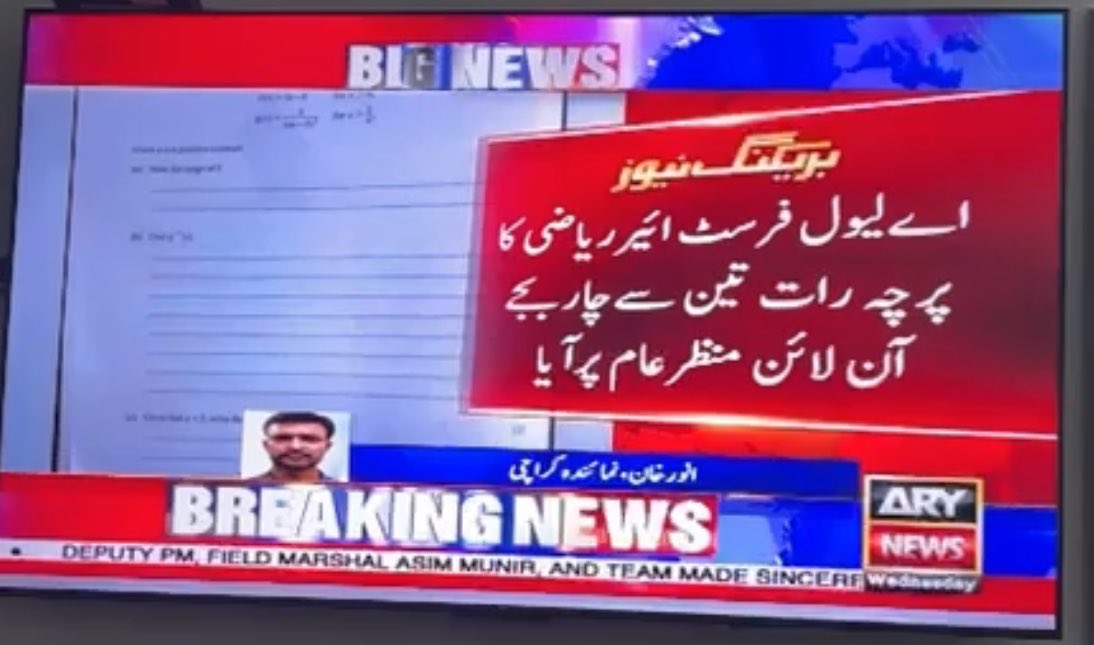
‼️ IMPORTANT ‼️ In the same school, the Cambridge system is far more expensive than the local Pakistani board. Parents often pay double or triple the fees, plus about Rs. 40,000 ($145) for every exam paper. Middle-class families struggle and save to afford this, while students work incredibly hard all year long. However, the news that an A-Level Mathematics paper leaked in #Karachi just hours before the exam is more than just a mistake it is a total betrayal of trust. This incident makes people feel that Cambridge standards are dropping and that the organization cares more about money than education. Who is responsible for the mental stress caused to students and parents? It is time to demand accountability. Should we the affected parents not take legal action and claim damages from @CambridgeInt to get justice? @pkBritish @EduMinistryPK @ShedSindh @BritishCouncil @MediaCell_SAPM @sardarshah1 #ALevels #Cambridge #PaperLeak #Karachi #EducationJustice #CIE #Accountability #MathsLeak
Naimat Khan tweet mediaNaimat Khan tweet mediaNaimat Khan tweet media
English
29
186
453
89.3K
PSX Investor/Swing Trader
PSX Investor/Swing Trader@FVTechStallion·
@umarsaif AI is less of an existential threat and more of a competitive filter. It is not killing digital businesses, it is redefining which ones stay efficient, fast, and scalable.
English
0
0
0
98
Umar Saif
Umar Saif@umarsaif·
If you are running a digital business and haven’t realized the existential threat by AI, you haven’t thought about it deeply enough.
English
7
10
55
4.6K
PSX Investor/Swing Trader
PSX Investor/Swing Trader@FVTechStallion·
UAE reported shift away from OPEC plus is less about breaking alliances and more about production freedom versus quota constraints. Tension with Saudi Arabia exists but it is not about monopoly, it is about output allocation and pricing strategy balance. Saudi Vision 2030 is not in danger, but weaker OPEC cohesion does reduce collective control over oil pricing psychology. Net result is more fragmented supply discipline and higher volatility rather than a structural collapse of the Saudi energy roadmap.
English
0
0
0
84
PSX Investor/Swing Trader
PSX Investor/Swing Trader@FVTechStallion·
UAE reportedly moving away from OPEC plus reflects a shift from collective supply discipline to production autonomy. Key driver is control over rising output capacity and pricing flexibility. For markets this signals less coordination in global oil supply and higher volatility ahead. For Pakistan it means a more unstable oil import outlook, where inflation and currency pressure could swing faster with crude cycles. Potential upside exists in short term price dips but long term predictability weakens significantly.
English
1
0
0
297
PSX Investor/Swing Trader
PSX Investor/Swing Trader@FVTechStallion·
25,000 students. Rs. 50,000 each. Years of preparation. And the system fails… again. At this point, the issue is no longer a “leak” it’s a structural failure of accountability. We often talk about capital flight in billions, but this is a quieter loss: trust, effort, and credibility. When institutions charge a premium but fail at the most basic responsibility, the real question isn’t compensation. It’s credibility.
M Ibrahim Jaffri@jaffri_ibrahim

In other news, an estimated 25000 students of Pakistan paid almost 50k to the British council to appear for A levels math exam and two hours prior to the exam the paper got leaked. Countless hours of prep, hundreds of thousands paid in tuition fees over the year, all gone to waste. Bear in mind this is the same educational board that funnels 50 billion out of Pakistan each year. Yet this is the third consecutive year they've failed to secure the paper. The students can't be compensated in any way.

English
0
0
3
198
PSX Investor/Swing Trader
PSX Investor/Swing Trader@FVTechStallion·
Pakistan wheat production has dropped from ~27–28 million tons to lower levels recently, while imports have increased significantly. This is not just weather impact it reflects policy inconsistency affecting farmer decisions.
English
0
0
0
69
PSX Investor/Swing Trader
PSX Investor/Swing Trader@FVTechStallion·
The problem isn’t just policy failure it’s a breakdown of incentives across the entire agricultural chain. Production alone doesn’t sustain a sector. Pricing, procurement, and policy consistency do. What we’re seeing now is not just decline, but the result of unpredictable decision-making that distorts farmer behavior and investment cycles. When policy volatility replaces predictability, even a strong sector can quietly collapse.
Usama Mela@UsamaMela

جیسے جیسے گندم کا ایک اور موسم اپنے اختتام کو پہنچ رہا ہے، ہم یہ دیکھنے پر مجبور ہیں کہ کس طرح ایک بھرپور زرعی شعبہ — جو چند سال پہلے تک ریکارڈ پیداوار دے رہا تھا — پی ایم ایل این کے چار سالہ دورِ حکومت میں پے در پے پالیسی ناکامیوں کی بھینٹ چڑھ کر تباہی کے دہانے پر آ کھڑا ہوا ہے۔ کسان کارڈ ہولڈرز سے تین ہزار پانچ سو روپے فی من کے حساب سے تیس لاکھ ٹن گندم “اسٹریٹجک ریزرو” کے طور پر خریدنے کا وعدہ کیا گیا — ایک ایسے نئے نظامِ خریداری کے تحت جو نہ مکمل طور پر مارکیٹ پر مبنی ہے اور نہ ہی خالص سرکاری۔ لیکن زمینی حقائق یہ ہیں: ابھی تک ایک من تو کیا، گندم کا ایک دانہ بھی نہیں خریدا گیا۔ یہ المناک صورتحال کچھ یوں سامنے آئی: 1۔ حکومت نے تیس لاکھ ٹن گندم کے لیے تین ہزار پانچ سو روپے فی من سپورٹ پرائس کا اعلان کیا۔ 2۔ ساتھ ہی یہ بھی کہا کہ خریداری خود کرنے کی بجائے گیارہ نجی کمپنیوں کو یہ ذمہ داری سونپی جائے گی۔ 3۔ نہ پی پی آر اے، نہ ٹینڈر، نہ کوئی شفافیت۔ آج تک کسی کو نہیں معلوم کہ یہ کمپنیاں کس بنیاد پر چنی گئیں اور انہیں درحقیقت کیا شرائط طے کر کے دی گئیں۔ 4۔ ان کمپنیوں سے وعدہ کیا گیا کہ انہیں بینکوں سے KIBOR minus 1% پر سرکاری ضمانت کے ساتھ قرضے ملیں گے، سرکاری گوداموں میں مفت ذخیرہ اندوزی کی سہولت دی جائے گی، اور ستمبر تا مارچ مناسب منافع بھی یقینی بنایا جائے گا۔ 5۔ جنوبی پنجاب میں گندم کی کٹائی مکمل ہوئی مگر خریداری کا کہیں نام و نشان نہ تھا۔ حکومت کی طرف سے مکمل خاموشی چھائی رہی۔ 6۔ پھر سنٹرل اور ناتھ پنجاب کے کسانوں نے بھی کٹائی شروع کر دی۔ کسان کارڈ ہولڈرز — جو سب سے چھوٹے اور کمزور زمیندار ہیں — مزید انتظار کی سکت نہ رکھتے ہوئے مجبوراً سپورٹ پرائس سے کم قیمت پر مڈل مین کے ہاتھ گندم بیچنے لگے۔ 7۔ اسی موقع پر اصل کہانی منظرِ عام پر آئی — ان گیارہ کمپنیوں کے لیے بینک قرضے منظور ہی نہیں ہوئے تھے۔ خریداری کے لیے آج بھی سرکاری خزانے میں ایک پیسہ موجود نہیں۔ 8۔ حکومت بدستور گہری خاموشی میں ڈوبی ہوئی ہے، جبکہ اندرونی ذرائع نے میڈیا کو بتایا کہ یہ پوری پالیسی “ادھوری سوچ اور مغرورانہ رویے کا شاخسانہ” تھی۔ 9۔ اب حکومت فنڈز کے لیے ہاتھ پاؤں مار رہی ہے، مگر اب یہ کوشش بے کار ہے کیونکہ زیادہ تر گندم پہلے ہی فروخت ہو چکی ہے۔ یہ بے حسی اور لاپروائی سراسر ناقابلِ معافی ہے۔ ایک مسلط کردہ وزیرِ اعلیٰ — جن کی دلچسپی کا محور ان کی اپنی ظاہری نمود اور ذاتی تصاویر ہیں — نے بار بار یہ ثابت کیا ہے کہ وہ کسی بھی سرکاری منصب کی اہل نہیں ہیں۔ یہ قرضوں کی اسکیم، جو بنیاد ہی سے کھوکھلی تھی، جنوری میں انہی کے ذہنِ رسا کی پیداوار تھی۔ زمینی حقائق سے مکمل طور پر بے خبر، انہوں نے ایک لمحے کے لیے بھی یہ نہ سوچا کہ بینک ان کی بے ڈھنگی پالیسی کو مسترد کر سکتے ہیں۔ وہ یہ بھول گئیں کہ یہ بینک ہیں، فارم سینتالیس کے ریٹرننگ افسر نہیں — جو آنکھیں بند کر کے ہر حکم بجا لائیں۔ لیکن انہیں کیا فکر؟ کیا انہیں کبھی عوام کی ذرہ بھر پروا رہی ہے؟ آخر انہیں عوام نے ووٹ دے کر بھیجا بھی تو نہیں۔

English
1
0
0
229
PSX Investor/Swing Trader
PSX Investor/Swing Trader@FVTechStallion·
Valid comparison on the surface, but today’s risk is less visible and more structural. In 1998 and 2008, crises were acute and forced immediate correction. Today’s stability is largely driven by demand compression, not productivity expansion. That distinction matters. The current account is contained, but at the cost of growth. The IMF framework brings discipline, but also signals policy dependency. And a liquid banking system remains heavily tied to sovereign risk. So yes, we are more stable. But this looks less like recovery and more like a low growth equilibrium. Pakistan is not in crisis mode anymore, it is in a stabilization trap. Pakistan is undoubtedly more stable than in past crisis points, but the real test is whether this stability can transition into self-sustaining growth, rather than remaining a cycle of periodic adjustment and external support.
Najam Ali@najam_ali

Let’s be very clear. Pakistan today is in a far stronger position than it was during the crises of 1998 or 2008. In 1998, sanctions hit overnight. Financing dried up. Reserves collapsed to survival levels. The system was effectively shut out. In 2008, it was chaos. A full-blown balance of payments crisis, runaway inflation, collapsing reserves, and an emergency IMF bailout just to stay afloat. Today is different. The current account is under control. The exchange rate, after a painful adjustment, has stabilised. The banking system is intact and liquid. And most importantly, there is an IMF-backed framework in place, a discipline that was missing when past crises spiralled out of control. Is everything perfect? Of course not. Growth is weak. Debt is high. Structural issues remain. But this is not a crisis driven by denial or mismanagement. This is a system that has already absorbed the shock and adjusted. Bottom line: Pakistan is not where it wants to be, but it is far better prepared, far more stable, and far less vulnerable than in the crises that once pushed it to the brink.

English
0
0
1
147
PSX Investor/Swing Trader
PSX Investor/Swing Trader@FVTechStallion·
HUBCO 9M FY26 Results Crisp Summary Strong Dividend Momentum Continues The Hub Power Company Limited (HUBCO) announced its un-audited results for the nine months ended March 31, 2026 on April 22, 2026. The Board approved an interim cash dividend of Rs. 5 per share (50%) for Q3. Total interim dividends declared for FY26: Rs. 15 per share (Rs. 10 already paid + Rs. 5 now). Standalone (Holding Company) – Dividend Powerhouse Profit after tax: Rs. 23.92 billion (+28.8% YoY) EPS: Rs. 18.44 (vs Rs. 14.31) Dividend income: Rs. 28.76 billion (more than doubled from Rs. 13.94 billion) Finance costs slashed to Rs. 431 million (from Rs. 3.06 billion) HUBCO’s holding-company model is working perfectly massive upstream dividends from subsidiaries and associates drove earnings growth despite zero revenue from own operations this period. Consolidated Performance – Resilient Despite Revenue PressureContinuing Operations (9M): Revenue: Rs. 50.57 billion (-21.7% YoY) Gross profit: Rs. 21.61 billion Profit from operations: Rs. 26.03 billion Share of profit from associates & JV: Rs. 32.31 billion (+6.4%) Finance costs: Rs. 6.86 billion (-45% YoY) — major deleveraging win Net profit attributable to owners: Rs. 33.06 billion EPS: Rs. 25.49 (vs Rs. 26.40) Revenue softness reflects typical power-sector dynamics (tariff, utilization, fuel costs), but lower interest expense and steady associate contributions kept bottom-line solid. Discontinued operations showed zero drag this year. Balance Sheet – Clean & LiquidStandalone Equity: Rs. 74.11 billion Cash & short-term investments: improved Short-term borrowings: almost eliminated (Rs. 21 mn vs Rs. 4.05 bn) Consolidated Total equity (owners): Rs. 226.30 billion Strong cash generation from dividend receipts (Rs. 28.76 bn) Leverage reduced meaningfully Cash-flow from investing activities hit Rs. 31.25 billion, funding aggressive payouts of Rs. 25.89 billion while maintaining healthy liquidity. Investment Takeaway HUBCO delivered exactly what income investors love: higher earnings at parent level, sharp debt reduction, and consistent high dividends. The Rs. 15 per share interim payout (plus prior final dividend) keeps the stock among the highest-yielding blue-chips on PSX. Despite sector headwinds, the group’s diversified IPP portfolio, long-term PPAs, and deleveraging story remain intact. Final quarter will be watched closely, but the Board’s confidence in declaring Rs. 5 dividend signals comfort with cash flows. For income investors: High single-digit to low double-digit yield remains attractive on dips. For swing traders: Watch ex-div movement around May 5–8. I remain long HUBCO in my core portfolio. This result reinforces conviction in the dividend-growth thesis. #hubco #psx #DividendStocks
PSX Investor/Swing Trader tweet media
English
0
0
4
560