Why trade with South Africa if it does not want African nationalities on its land. Therefore, African countries should BAN BUYING SOUTH AFRICAN MADE GOODS.
@HistoryFactou The moment SA government will realise that there is an invisible "Western enemy " hand in trying to Isolate SA through financing and indirectly supporting xenophobia, l hope it will not be too late to recover.
Reports about tensions around immigration in South Africa continue to spark reactions online, after comments linked to General Maphwanya and a controversial activist surfaced in a viral discussion. Many Africans are calling for unity, peace, and respect among all communities across the continent.
#SouthAfrica#Africa#ImmigrationDebate#AfricanUnity#TrendingNow#ViralPost#SAnews#AfricaNews
@HistoryFactou Idiot...
All first World countries pay their Citizen Grant, from unempleyment to old pension to child welfare in America...
You have your head up South African Ass that you cant do any research ...
All first world countries do it cause they are taking care of their citizen
@HistoryFactou Why do you want me to join you in hell? I'm not the one crying over a country I don't belong to. Go to your hell and leave us in peace...you're boring us. Futsek!!!
@HistoryFactou@ZMWZAR My friend my friend you are...you are Jealous very very Jealous and Envy SA...
We understand...
All best countries give their citizen Welfare checks...
Dont worry, fight the corruption in your country
@degogetteer South Africa with all the hate crime in it is not suitable for any visit by any black person. There are other countries to visit rather than South Africa.
This is sad.
"Hmmmmmmmm honeymoon celebration turned soar in South Africa
What was supposed to be a beautiful honeymoon trip turned into a heartbreaking tragedy. 💔😭
A Nigerian couple who reportedly traveled to Durban, South Africa, to celebrate their new marriage allegedly became victims of a shocking crime. Reports claim they were kidnapped by an Uber driver identified as Pondi Mshengu, who allegedly demanded ransom from their family.
Sadly, just two days later, the couple was reportedly killed despite the demands made.
According to reports, the suspect was later tracked down and arrested after mistakenly revealing his face in a video allegedly sent to the victims’ family. Authorities also reportedly discovered weapons during the arrest.
How can people leave home to celebrate love and never make it back alive?
What is this world turning into when even moments of happiness become dangerous? 😭
This painful story has left many people heartbroken and questioning the safety of travelers abroad. May the souls of the couple rest in peace. 🕊️"
@Vie_matongo@Vhikitaa So what is your argument sisi? History is clear on the lineages of those people and non argued about that. I only highlighted how Ndebele izibongo are also used by the Karanga.
@HistoryFactou@Vhikitaa Siziba, Ndlovu, Sibanda are original Nguni names probably from the men who fled from the Nguni region with Soshangane into the Karanga and Ndau region. We are not talking about how ladies are called in their clan names but the origin.
FASCINATING HISTORY
The Dziva clan also known as the Dziva or Save totem is one of the prominent and ancient totems (mitupo) among the Shona peoples of Zimbabwe. "Dziva" literally means "pool" or "large body of water" in Shona, and the totem symbolizes water, rainmaking, fertility, abundance, and spiritual guardianship of sacred water sources.
Ancient Origins and Settlement
Scholars and oral traditions describe the Dziva people as among the earliest Shona (or proto-Shona) settlers in the Zimbabwe plateau region. According to ethnographer C.J.K. Latham (1986), Dzivaguru serves as the founding ancestor (apical ancestor) of a pre-Mbire Shona group. These Dziva people are said to have settled in Zimbabwe in very ancient times—possibly as early as the 3rd century AD or earlier—long before the Mbire migrations and the rise of later Shona states like the Mutapa Empire (associated with the 11th–15th centuries).
Some oral histories frame the early Shona as having two foundational totem groups—Soko (monkey) and Dziva (water/pool)—from which many later totems (land animals, birds, body parts, etc.) branched off through migrations, leadership splits, and new lineages. The Dziva are sometimes linked to the "Hungwe" (early Shona occupants), who were later partially assimilated or displaced by incoming Mbire groups from the north.
Connection to Dzivaguru
The clan’s identity is inseparably tied to Dzivaguru (Great Pool), a powerful mhondoro (royal ancestral/lion spirit) and rainmaker in Shona cosmology. In oral traditions and ethnographic accounts:
Dzivaguru appears as a benevolent, almost divine figure—a simple man with long hair, wearing only a skin loincloth—who wandered the countryside performing kindnesses and magical acts. Wherever he went, rains followed, crops prospered, and he could control the seasons or walk through storms untouched.
He ultimately disappeared into a deep pool of water, after which his spirit (Mhondoro ye Dzivaguru) became a supreme ancestral force invoked for rain and fertility. In some traditions, Dzivaguru is treated as an apical ancestor or even equated with aspects of Mwari (the high god). His spirit is particularly revered among the Korekore Shona in northeastern Zimbabwe (Dande and Mutoko districts), where it coexists with other mhondoro like Nehoreka.
Alternative oral accounts place a historical Dzivaguru as a 16th-century figure from Choma (Mozambique) who arrived with powerful medicines (pfuta), knowledge of warfare, and the ability to create mhondoro spirits. He influenced local religious practices, and vaDziva (Dziva people) still assist in certain rituals for spirits like Nehoreka.
Geographical and Cultural Associations
Dziva/Save totem bearers are concentrated in eastern and northeastern Zimbabwe, especially along the Save River (a sacred waterway central to rain rituals). Key areas include:
Buhera and Hwedza (Mashonaland East)
Southern Manicaland
Eastern Masvingo
Parts of the northeast (Mutoko, Dande)
The clan (sometimes called Dziva-Hungwe or linked to vaNgowa) emphasizes herbal wisdom, rain rituals, and guardianship of sacred pools. Women of the clan are sometimes referred to as vanaMasiziba. Praise names (chidawo) include variants like Maita Save or Musaigwa.
Cultural Role Today
Like other Shona totems, Dziva functions as a kinship and identity marker. It enforces exogamy (no marriage within the same totem), promotes respect for water and nature, and ties into ancestral veneration through spirit mediums (masvikiro). The totem remains vibrant in rural communities, where Dziva people participate in rainmaking ceremonies and maintain spiritual links to Dzivaguru.
In summary, the Dziva clan represents one of Zimbabwe’s oldest Shona lineages, rooted in ancient migrations, water-centric spirituality, and the enduring legacy of the rainmaker-ancestor Dzivaguru. Their history blends archaeology, oral tradition, and mythology, reflecting the layered settlement of the Zimbabwean plateau.
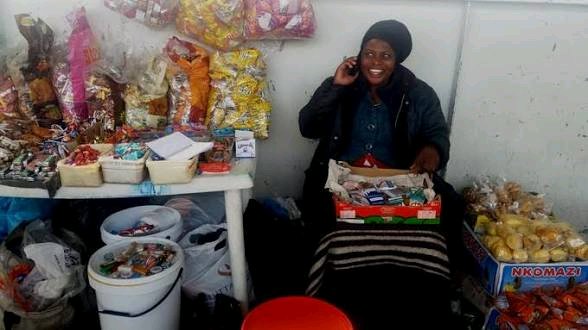
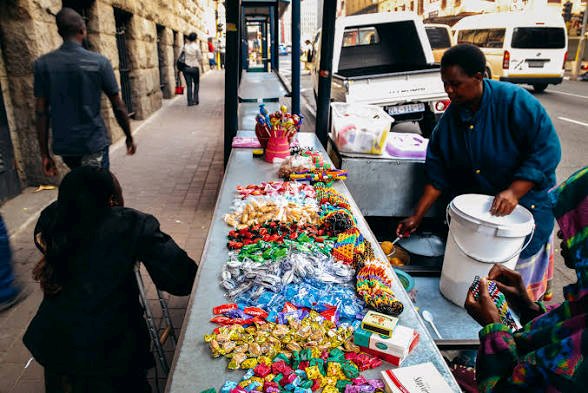
@les_lamitovic Freeking over nothing. I wonder if South Africans do not sell them either. No law disallows that. Do not lie. See evidence of South African street vendors selling sweets.
@RefilweSeboko Men have a period when the testosterone is very high and need sex a lot and when it falls and do not need it at all and the woman would be wanting it then she cheats. It is a vicious cycle.
Elders had no mercy back then,imagine sending a kid to the spaza shop to buy Coca Cola on credit😭only to tell the kid the coke is for elders?😂They would even send us to buy live chicken in a hot day and only dish up the chicken feet for us 😂😭
@itohan_olat@D_GreatSAMi True love knows no financial bankruptcy. The vows you made "in good or bad, in poverty or riches" should sustain a marriage. Anything besides that was not love but greed.
There is this couple in my former compound. Their PDA was very loud!
They called each other names like my oxygen, my lord, my life, my treasure.
Most times when they went on their evening walks together, if you were single, you would literally feel like throwing a stone at them.
Suddenly, the husband experienced financial bankruptcy, and that was when the real test of their marriage began.
The house that was once filled with peace, laughter, and affection became filled with arguments, resentment, blame, and endless complaints.
As a married couple, pray you never experience financial bankruptcy because it has a way of exposing the true strength of a relationship.
This lady named Zozibini Tunzi is a South African, she is supposed to host Miss Universe Zimbabwe on the 6th of this month and yet in South Africa they are chasing away legal immigrants from Zimbabwe. She must not host this event, she must host Miss Universe South Africa and leave Zimbabwean opportunities for Zimbabwean people.
We have so many talented hosts and yet a South African must host a whole Miss Universe Zimbabwe, South Africans are taking our jobs! She must go back and take up opportunities in her country.