置顶推文

Sulis
Goddess of the Hot Spring Celtic Briton, pre-Roman, Bath, England
c. 700 BCE active through the Roman period
Sulis was old before Rome had a name for her.
The thermal springs at Bath were in use for at least 10,000 years. (Goddessschool) It is likely that devotion to Sulis existed in Bath before Roman presence, by the local Celtic Dobunni tribe evidenced by eighteen Celtic Iron Age coins found at the lowest levels of the site. (Wikipedia) When the Romans arrived, they liked her so much they renamed the town after her: Aquae Sulis the Waters of Sulis.
Her name connects to the Old Irish súil "eye" or "sight" and possibly to the Proto-Celtic root for "sun." (Wikipedia) In Old Welsh, the word licat means both "eye" and "spring." (Earth and Starry Heaven) She was the eye of the earth. She was the sun that never went cold.
She was also a goddess of justice for people who had no courts.
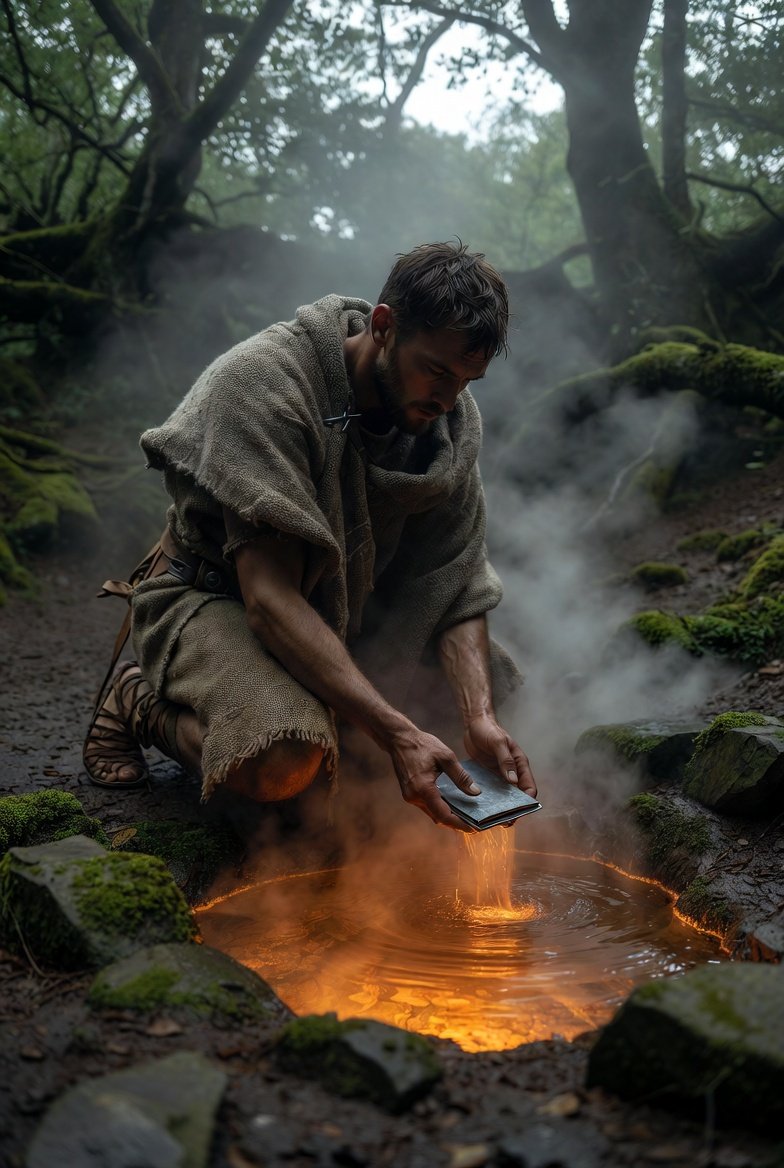
130 curse tablets were addressed to Sulis, found in her sacred spring mostly written by ordinary people whose belongings had been stolen at the baths. With no police, no legal recourse, they wrote their grievance on lead, folded it, and threw it into the water. It was a prayer for justice: the stolen item was declared a gift to Sulis herself, making the theft a crime against the goddess. One of those tablets, written by a man named Solinus, reads:
Latin (Tab.Sulis 32 original inscription, 2nd–4th century CE)
Roman Inscriptions of Britain: romaninscriptionsofbritain.org/inscriptions/T…
Solinus deae Suli Minervae. Do divinitati tuae [et] maiestati [balnea]ream paxsa[m et pall]eum. [Nec p]ermitta[s so]mnum nec san[ita]tem ei qui hoc fraudem commisit, sive mulier sive vir, sive servus sive liber, nisi se retexit et ea ad templum tuum detulerit.
Modern Welsh (translation)
Solinus i'r dduwies Sulis Minerva. Rhoddaf i'th ddwyfoldeb a'th fawrhydi fy nillad ymdrochi a'm clogyn. Na chaniatâ gwsg na iechyd iddo ef a wnaeth y twyll hwn arnaf, boed yn wraig neu'n ddyn, yn gaethwas neu'n rhydd, oni ddatgela ei hun a dwyn y pethau hynny i'th deml.
English
Solinus to the goddess Sulis Minerva. I give to your divinity and majesty my bathing tunic and cloak. Do not allow sleep or health to the one who has wronged me — whether woman or man, whether slave or free — unless they reveal themselves and bring those things to your temple.
Someone stole Solinus's clothes while he bathed. He had no recourse. So he went to the spring, carved his grief into lead, and trusted that something was watching.
That's not despair. That's radical faith that wrong things can be witnessed — even when no human institution will look. The spring was always hot. The eye never closed.
So I choose this one today because I honestly found it pretty amazing how little humans change. Even back in 2nd–4th century CE there was a man cursing a neighbor for stealing his clothes while bathing. Pretty much the guy went on his version of X to rant and we're seeing it now. Pretty awesome to me.
Sources & Further Reading:
Tab.Sulis 32 (Solinus tablet), Roman Inscriptions of Britain: romaninscriptionsofbritain.org/inscriptions/T…
Bath Curse Tablets, Wikipedia: en.wikipedia.org/wiki/Bath_curs…
Sulis, Wikipedia: en.wikipedia.org/wiki/Sulis
Aquae Sulis, Wikipedia: en.wikipedia.org/wiki/Aquae_Sul…
Barry Cunliffe (ed.), The Temple of Sulis Minerva at Bath, 1988 (the primary archaeological record)
R.S.O. Tomlin, Tabellae Sulis: Roman Inscribed Tablets of Tin and Lead from the Sacred Spring at Bath, 1988
Miranda Green (scholar cited throughout) — specialist in Celtic religion
Note on the Welsh: No Brythonic-language text about Sulis survives. The language her worshippers spoke was never written down. The Welsh above is a modern translation of the Latin original — Welsh being the closest living descendant of the language those Dobunni Celts would have spoken.
English