Andrea 已转推

Terwijl de corrupte duistere NL'se media de bevolking een rad voor de ogen draaien door bewust niets te berichten over het hoger beroep van 9 maart 2026 tegen Rutte, de Jonge, Kaag, Bill Gates en Albert Bourla
Nederlands
Andrea
6.5K posts




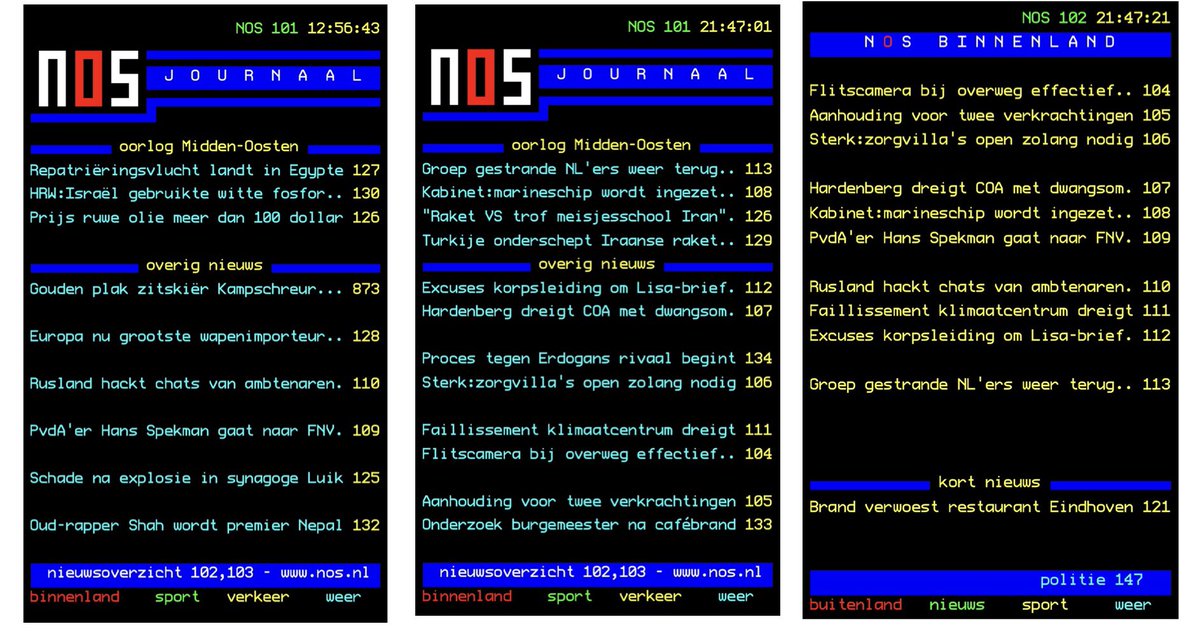



1996. FIOD-teamleider Gerard Bakker over formulier om containers ongezien te kunnen doorlaten… #Teevendeals #RCID #IRT #infiltrant #perceptie #Spookgetuige youtu.be/vgNOI4TWSSI?is…


I think this thread is posted in at least a simulacrum of good faith, so I'll give a substantive response. It is obviously true that in the moment of crisis, leaders face tremendous pressure to do something dramatic to address the crisis, and often those decisions turn out, in retrospect, to be wrong. In the case of the covid crisis, the problems were confounded by a determined unwillingness of scientific and public health leaders to respond to data -- in real time -- that showed that core assumptions underlying the lockdown strategy were wrong. Here is a short list of facts about covid that undermined these leaders' core assumptions: * covid is airborne, * covid spreads asymptomatically, * covid infection fatality rate << case fatality rate, * covid has a sharp age gradient in its infection mortality risk, * lockdowns cannot suppress covid spread or protect the vulnerable for long, * lockdowns crush the lives and well-being of children, the poor, and the working class, and almost everyone other than the laptop class * lockdowns cause a form of psychological terror that guarantee they could never last just two weeks The WHO and public health leaders got all of these facts wrong in 2020, which I suppose is understandable. What is not understandable is that these same leaders conducted "devastating takedowns" of even well-credentialed outside critics who pointed out that the WHO's core assumptions were incorrect, and accepted these assumptions as true even as overwhelming data to the contrary emerged in real time. What is not understandable is the utter confidence that the WHO and public health leaders expressed in these ideas and lockdown policies to the public as the only way to protect the population, going so far as to call for censorship of contrary voices on social media and elsewhere. The closest analogue I can think of is the set of "best and brightest" advisors who told Pres. LBJ that victory in the Vietnam War was just around the corner, based on a whole host of faulty information. Leaders who come out of such situations having embraced such a litany of catastrophically failed ideas and policies have a few choices on how to handle the post-crisis era. 1) They can, in good faith, admit their failures and work to reform systems so the disaster never happens again. This would be best, though I would understand why the public would want a new set of leaders to design and implement the reforms. I personally am very happy to work with and learn from public health leaders who choose this option. 2) They can pretend to have done nothing wrong, clinging to power for as long as they can, hoping against hope that history will vindicate them, crushing public trust in the institutions they lead. 3) They can try to pretend they never recommended or adopted the catastrophically failed policies, hoping that the public has a short memory. This is the current strategy that the @WHO is taking. 4) They can appeal to the difficulty of the job of handling a crisis under considerable uncertainty, not in a spirit of reform, but rather as an excuse to avoid responsibility for their failed crisis management. This is the approach that Koopmans is taking in her thread. I have very little sympathy for the covid crisis leaders who choose options 2, 3, or 4. Their job was to manage the uncertainty with wisdom and humanity, which they failed to do. They cannot, at this juncture, turn around and expect public sympathy because their job was hard, or expect the public to forget their failure. These leaders have destroyed public trust in public health, and should step aside as a new set of public health leaders works to fix the damage they caused.





During the worst of the days of the hunger crisis in Gaza in the past six months, Hamas deliberately hid literal tons of infant formula and nutritional shakes for children by storing them in clandestine warehouses belonging to the Gaza Ministry of Health. The goal, as I said then, was to worsen the hunger crisis and initiate a disaster as part of the terror group’s famine narrative in a desperate effort to stop Israel’s onslaught against Gaza and force the return of the UN’s aid distribution mechanism, and away from the controversial Gaza Humanitarian Foundation (GHF). Now, activists in the Strip are documenting the waste and deliberate disposal of tons of infant formula, nutritional children’s shake, and children’s powdered milk, which Hamas had hoarded away, given the saturation of the coastal enclave with humanitarian aid after the ceasefire two months ago. When countless other Palestinian activists and I from Gaza said this back in July, August, and September, we were villainized, attacked, threatened, and made into pariahs by the “pro-Palestine” industrial complex and activist mafias, even though for Gazans, the evidence was so clearly apparent before our eyes. What those in the West continue to fail to understand is that there is no being pro-Palestine without also having a serious vigilance against Hamas’s continued manipulation of international public opinion to hide behind the Strip's civilian population's suffering, something that the terrorist organization’s own actions have led to and created. Never allow yourself to be a useful idiot in Hamas’s propaganda. You can have compassion for the real suffering of the Palestinian civilians of Gaza, and demand Israeli action to facilitate aid entry into the coastal enclave, while still holding Hamas accountable for its part in causing a hunger and starvation crisis in the first place.