Rahul Arora

1.4K posts

Rahul Arora banner
Rahul Arora

Rahul Arora

@codename_Rahul

Polymath | Programming | Data Science | Tech | History | Spirituality . . Everything!!!!

加入时间 Kasım 2021
285 关注246 粉丝
置顶推文
Rahul Arora
Rahul Arora@codename_Rahul·
🚀 Just launched a new Twitter Community for Data Science enthusiasts! If you’re into: 📊 Data Analysis 🤖 Machine Learning 👩‍💻 AI 🐍 Python 📈 Real-world projects & career growth This community is for learning, sharing, and growing together - no spam, just value. Join here: x.com/i/communities/…
English
0
0
1
109
Rahul Arora 已转推
Python Coding
Python Coding@clcoding·
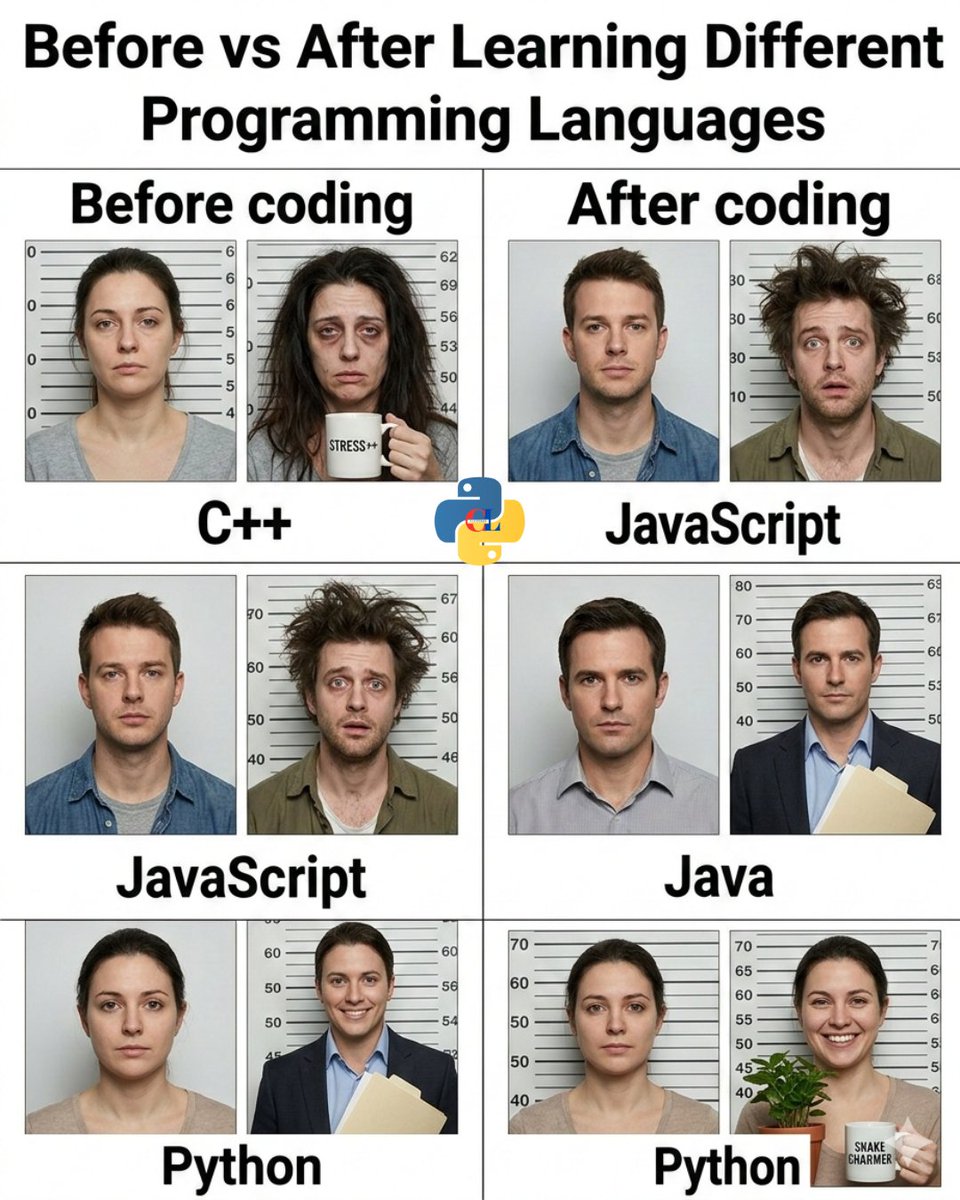
Programmer Evolution by Language
Python Coding tweet media
English
7
22
275
21.7K
Rahul Arora 已转推
userhonest_
userhonest_@honest1user·
ZXX
82
3.8K
29.4K
1.6M
Rahul Arora
Rahul Arora@codename_Rahul·
I'm Not Hiring!!!! Not Looking for Web3 Enthusiasts to join my team on a new project Salary: $0.00 - $0.00 Weekly Not Interested? leave a comment below on which aspect you're good at I won't dm you personally No experience required Remote 4- 12 hours daily not required Dont Like, rt & turn on
Rahul Arora tweet media
English
2
1
2
74
Karthik
Karthik@karthikponna19·
gun to your head name a programming language without using the letter 'a', 'c' or 'p'
Karthik tweet media
English
104
1
46
7.4K
Rahul Arora
Rahul Arora@codename_Rahul·
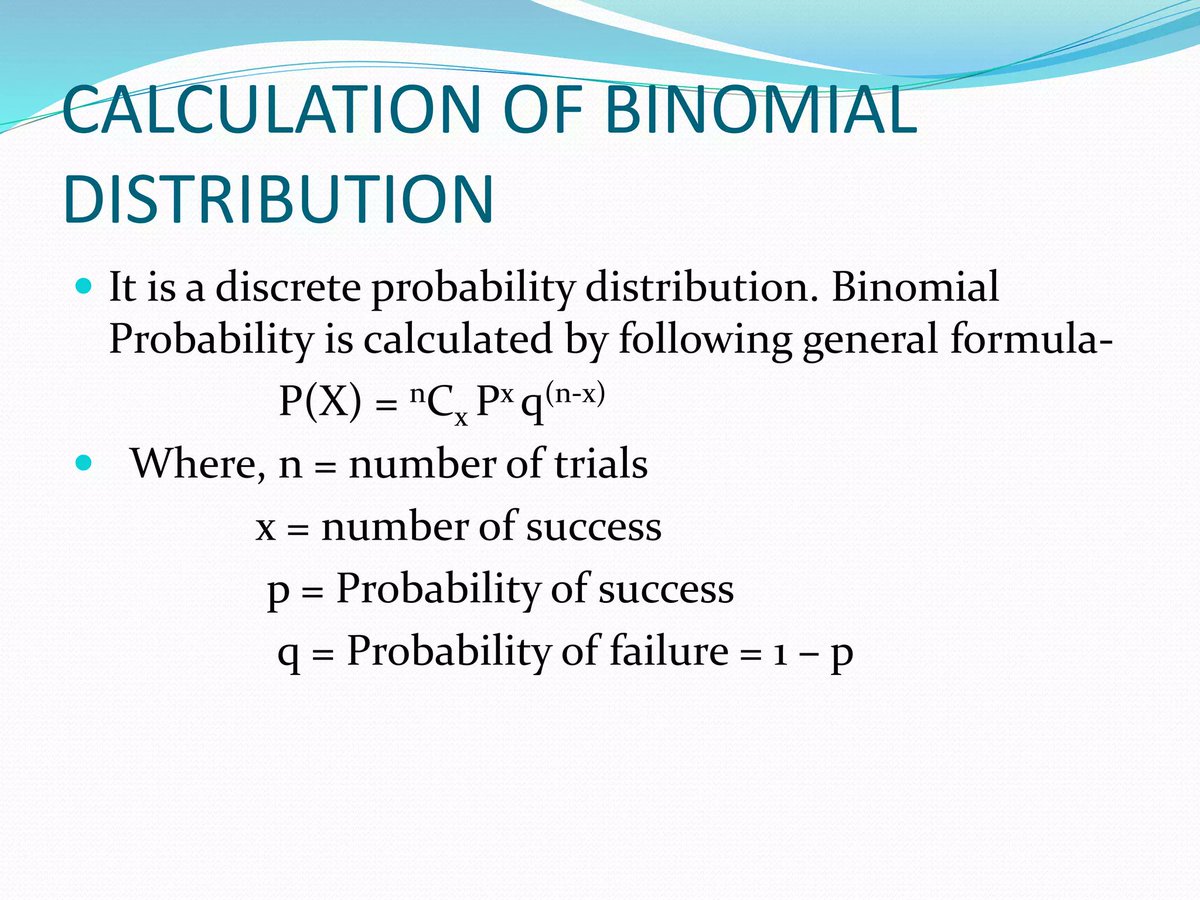
Statistics For Data Science (Episode 5) - Probability Distributions (Part 2) The captain of the Indian cricket team had an unusual problem. He had developed a reputation for losing tosses. Fans joked about it, commentators mentioned it every match, and memes flooded the internet.🤡 With the World Cup approaching, he looked at the schedule. -> 10 matches. -> 10 tosses. He decided something simple: “I’ll call Heads every single time.”🗿 Not because it changes the outcome - a coin toss is fair, but at least his strategy would be consistent. Still, he had a personal goal. If he could win at least 6 tosses out of 10, he could finally silence the jokes. So he wondered: “What are the chances of that happening?” Each toss has only two outcomes: Heads → Success Tails → Failure Probability of success: p=0.5p = 0.5p=0.5 Number of tosses: n=10 Let the random variable: X=number of heads in 10 tosses. This situation follows a 'Binomial Distribution': X~Binomial(10,0.5) He wants probability of getting at least 6 heads. Meaning that 7, 8, 9 or 10 heads would also be counted as success. For exactly k heads, the probability is calculated by: P(Y) = nC^x * p^x * (1-p)^n-x. where x is number of successful outcomes, i.e, 6 (if k =6). n is the total number of trials = 10. p is the probability of success in a given trial, 1/2 = 0.5 (since only 2 outcomes head or tail). nC^x is the 'combination' of all possible successful outcomes. Hence, the probability of getting: 6 heads = 210 / 1024 7 heads = 120 / 1024 8 heads = 45 / 1024 9 heads = 10 / 1024 10 heads = 1 / 1024 He added them together to calculate probability of getting at least 6 heads - P(x>=6) => 386/1024 or ~0.377 or a 37.7% chance of getting at least 6 heads in 10 coin tosses. Looks like our captain has to change his strategy of relying on 'heads' and also to pray for improving his luck🙏.
Rahul Arora tweet media
English
0
0
0
21
Rahul Arora
Rahul Arora@codename_Rahul·
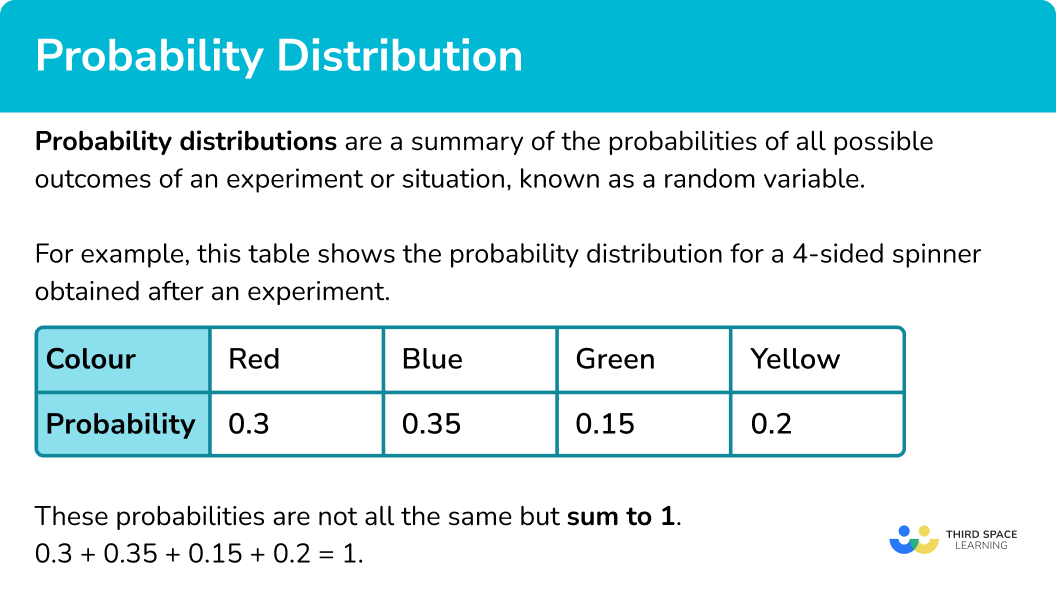
Statistics For Data Science (Episode 4) - Probability Distribution(Part 1) Vijay Kalya was still struggling with debt. After learning the brutal probability of winning a lottery, he started wondering about something else: "If thousands of people buy lottery tickets every week, how many actually win something?" The lottery payout structure was as follows: 1 jackpot winner → ₹10,00,000 9 small prize winners → ₹10,000 990 people → ₹0 So, probability of winning 10,00,000 is 1/1000= 0.001 Probability of winning small prize is 9/1000 = 0.009 Probability of winning nothing is 990/1000 = 99%. This calculation of all the possible outcomes and their probabilities is called Probability Distribution. Now Vijay asks himself "The total amount given away in lottery is 10,90,000. If we divide it among 1000 people, each would get 1090. This would make sense if the lottery's agenda was charity. But its not the case. There is something fishy going on." Then he calculated the total cost of 1000 tickets - 1000 x 2000 = 20,00,000. The money given away is only 10,90,000. This means 9,10,000 profit for the lottery sponsor. Vijay lost his hope on winning the lottery but gained the idea of starting his own lottery and paying off his debts. Image source : thirdspacelearning.com
Rahul Arora tweet media
English
0
0
0
26
Rahul Arora
Rahul Arora@codename_Rahul·
Statistics for Data Science (Episode 3) - Probability Basics There was a man named Vijay Kalya. He had a lot of debt, being nearly bankrupt. One evening, he bought a lottery ticket for a weekly draw. The rules of the lottery were simple: - Numbers range from 1 to 1000 - Each ticket has one number - Only one number wins His lottery number was 502. He was worried about his chances of winning and decided to use 'Probability' to calculate his luck. 'Probability' would tell him the chance of an event happening (his win). Probability(winning) = Favourable outcome/ Total possible outcomes Vijay has only 1 outcome in his favor and there are 1000 possible numbers which could be drawn. Hence, Probability of Vijay winning is 1/1000 = 0.001 or 0.1% chance of winning. He is sad. Him being a pessimist, calculated the probability of not winning the lottery. It is 1 - Probability of winning = 1 - 1/1000 => 999/1000 or 99.9% chance. Now, he's disheartened and convinced of losing. But an idea struck his mind, "what if I buy lottery every week? Would that increase my chances?" Since the probability of not winning in 1 week is (999/1000), then probability of not winning for 4 weeks would be: (999/1000)⁴ = ~0.996 or 99.6% chance of losing.🥲 To reach <1 % chance of losing, (999/1000)^5000 = 0.67% he has to buy lottery ticket for 5000 weeks straight or nearly 100 years🤡. Vijay now understood the bitter truth and decided to stop his reliance on luck. He will work hard and pay his debts.
English
0
0
0
37
Rahul Arora
Rahul Arora@codename_Rahul·
@rohanpaul_ai Higher screen-time and short form content disrupts our mind's focusing capabilities, hence making it difficult to retain or learn new information.
English
0
0
0
4
Rohan Paul
Rohan Paul@rohanpaul_ai·
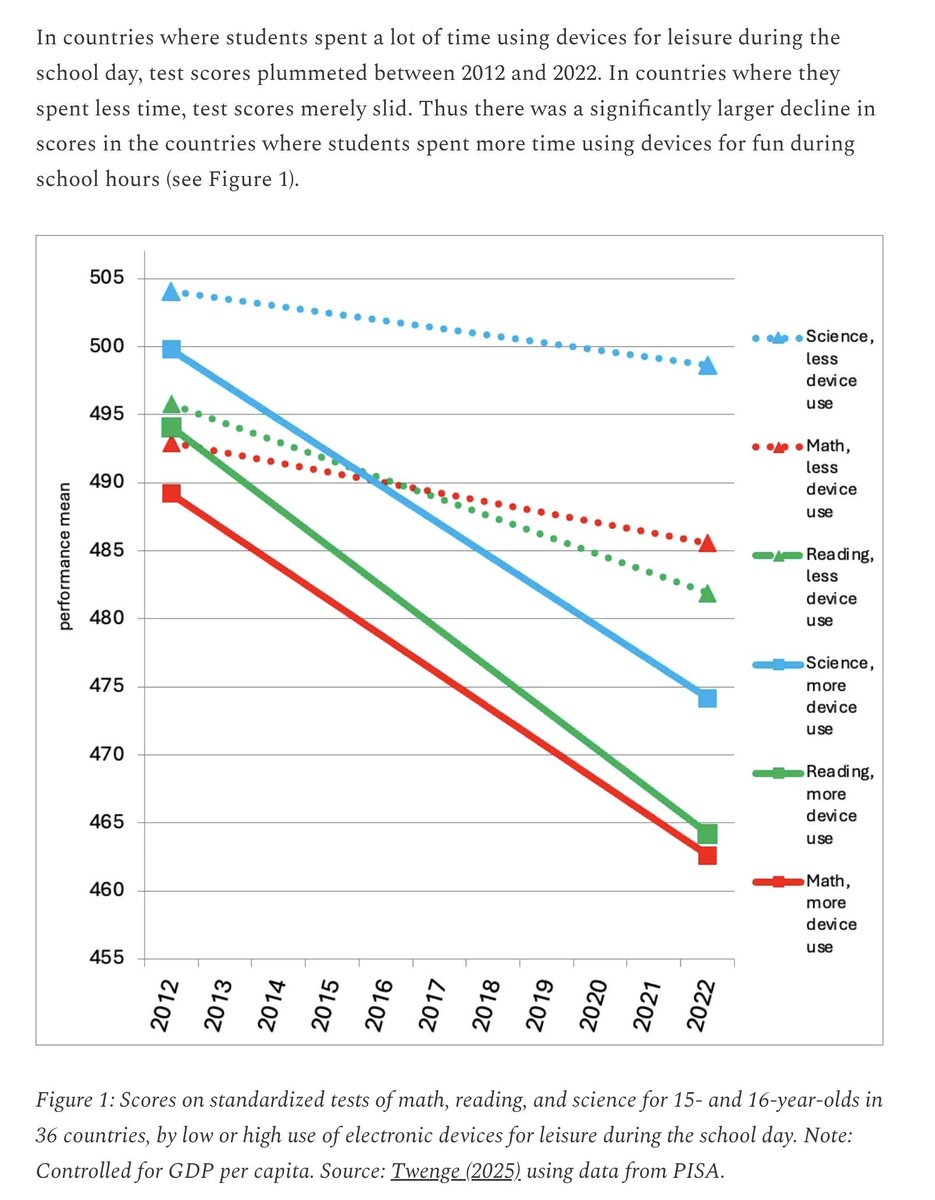
The global drop in student test scores since 2012 is directly tied to smartphones and computers in schools. Countries where students spend a lot of free time on these gadgets see a faster drop in performance. Early studies already proved social media caused teen depression rates to double after 2012. Now researchers are analyzing the 30 hours a week teenagers spend inside the classroom. Even school-issued laptops are frequently used by students to watch streaming platforms or play games. American teenagers spend more than 1 hour during the school day just looking at their personal smartphones. Almost none of this daily screen time involves actual educational activities. This means students waste about 20% of their school day ignoring classwork and peers. This massive loss of focus explains why standardized test scores in math and reading and science dropped steadily.
Rohan Paul tweet media
Jonathan Haidt@JonHaidt

More evidence that the global decline in test scores that began after 2012 is linked to the proliferation of smartphones and computers in class: The slide was bigger in countries where students began spending more time on devices (for leisure) generationtechblog.com/p/phones-at-sc…

English
10
15
59
9.1K
Matt Dancho (Business Science)
Understanding P-Values is essential for improving regression models. In 2 minutes, I'll crush your confusion. Let's go:
Matt Dancho (Business Science) tweet media
English
9
230
1.4K
58.5K
Rahul Arora
Rahul Arora@codename_Rahul·
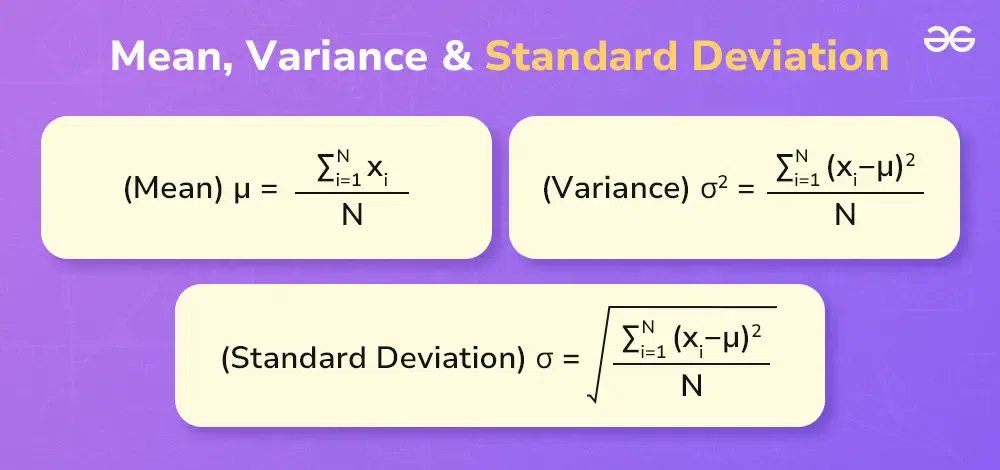
Statistics for Data Science (Episode 2) - Measures of Dispersion - Range, Variance and Standard Deviation Meet Rohan again. A few months after the class leader election, his school announced the Annual Sports Day. Rohan participated in 100-meter sprint trials, but he felt unsure about his performance. He asked his coach for help. The sports coach recorded the sprint times (in seconds) of Rohan across 5 practice runs: [16.2, 15.1, 14.8, 15.6, 16.0, 15.2] Rohan asked "Are my timings consistent or they fluctuate too much?" To answer this, coach used the concept of 'Range'. The difference between minimum and maximum values. 16.2 - 14.8 = 1.4 s This means Rohan's time was not consistent and 1.4 sec could make a big difference in results. Coach also found that his mean time was 15.48 sec. Now, Rohan is motivated to improve his 100m sprint. Taking the mean 15.48 sec as the center, he was eager to find out how much he was deviating from the mean. For this he had to calculate standard deviation (how far do the data points lie from the mean) But first, he has to calculate 'Variance'. Its formula is - (Sum of (x - mean)^2)/n x are the values and n is no. of values. (16.2 - 15.48)^2 = 0.518 (15.1 - 15.48)^2 = 0.144 (14.8 - 15.48)^2 = 0.462 (15.6 - 15.48)^2 = 0.014 (16.0 - 15.48)^2 = 0.270 (15.2 - 15.48)^2 = 0.078 Var = (0.518+0.144+0.462+0.014+0.270+0.078)/6 = 0.247 sec Now, standard deviation = √variance => √0.247 = 0.496. This means Rohan is, on average, deviating ~0.5 sec from his mean time to complete the sprint. For a 100m race, this value is quite high. Rohan now understands his performance and works even harder to lower his mean time and standard deviation. He thanks his coach for helping him. Image source - Geeks for Geeks
Rahul Arora tweet media
English
0
0
0
32
Rahul Arora
Rahul Arora@codename_Rahul·
Statistics For Data Science (Episode 1) - Mean, Median and Mode aka Measures of Central Tendency This is Rohan, a student studying in 8th standard. He was feeling insecure about his height and decided to compare it with his classmates. To make a genuine comparison, he recorded the height of all classmates - [1.56, 1.71, 1.68, 1.45, 1.52, 1.60, 1.65] m. Now using the formula of mean - (Sum of values / No. of values) , the mean or average height came to be ~1.6 m. Rohan's height was 1.64m hence 'above average'. Now he isn't insecure about his growth😎 A few days later, the Math exam results came. The marks of section A (rohan's class) were - [40, 44, 62, 46, 50, 48, 54, 50] The marks of Section B were - [38, 27, 36, 40, 39, 95, 96, 35] The average of Section B(50.75) was more than Section A(49.25) and they were mocked. Rohan decided to get back at them by using a better statistical method known as Median (the middle value). Its formula is (n+1}/2th term when n is odd and average of (n/2)th term + (n/2) + 1 th term when n is even. Here, n is number of values and the data should be sorted in ascending order. Since, there are even number of values, median of section A is (48 + 50) / 2 = 49. Median of section B is (38+39)/2 = 38.5 This revealed the true performance of each section and Rohan is rejoiced. Now, Rohan is tasked with electing the class leader for an event. There were 3 candidates and the results are based on majority votes. After everyone had voted, the results were - [A, B, A, C, C, B, C, C]. Here, C is the most frequently occurring value in the list , aka Mode. The majority of votes were given to C and he was elected as the leader. Rohan was able to get rid of his insecurities, uphold his class' reputation and elect a leader using statistical Measures of Central Tendency. Image courtesy - The internet
Rahul Arora tweet media
English
0
0
1
42
Rahul Arora 已转推
Nicholas Fabiano, MD
Nicholas Fabiano, MD@NTFabiano·
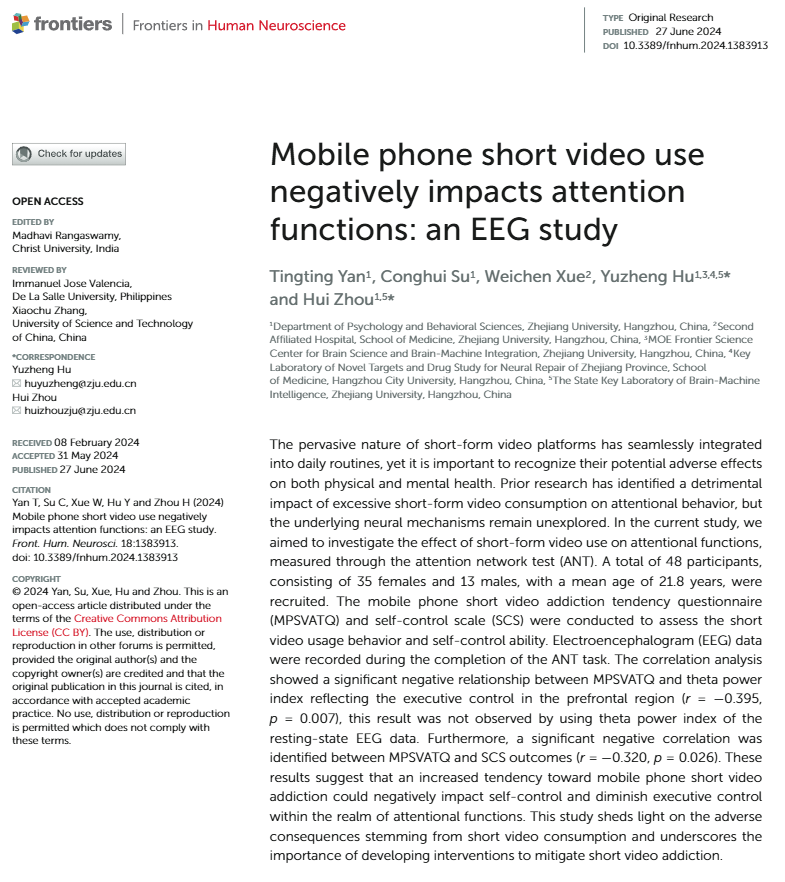
Addiction to short-form videos reduces brain activity in the frontal lobe weakening the ability to focus.
Nicholas Fabiano, MD tweet media
English
758
10.4K
44.1K
10M
Rahul Arora
Rahul Arora@codename_Rahul·
Banning social media for children/teens is the right thing to do. The internet is the best source of knowledge but social media sites are designed to retain user attention for extended periods of time. This attention is gained at the cost of user's attention-span, memory and ability to learn new things. Furthermore, social media induces the feeling of jealousy and FOMO in teens as they compare themselves with peers, friends and trends. There are tons of other cons of social media and very little pros. Hence, banning it for the young is a great decision.
Rothmus 🏴@Rothmus

Nobody believes they’re doing it to protect minors.

English
0
0
0
29
• nanou •
• nanou •@NanouuSymeon·
What’s the hardest part of being a developer that nobody talks about?
English
94
2
83
6.7K
Rahul Arora
Rahul Arora@codename_Rahul·
@rohanpaul_ai AI was meant for the routine-boring tasks while humans focus on creativity and innovation. But the tables have turned, all the creative fields - Art, Music, Creative Writing, Filmmaking,etc are being taken over by AI while we humans are stuck to the routine tasks.
English
0
0
0
36
Rohan Paul
Rohan Paul@rohanpaul_ai·
Ben Affleck doesn’t quite like the progress of AI. Says AI "is not progressing in exactly the same way they sort of presented... this is going to be just a tool, just like VFX or visual effects.... it is not gonna be able to write anything meaningful.."
Rohan Paul@rohanpaul_ai

Matthew McConaughey is readying for the AI wave in Hollywood. "Damn sure AI gonna infiltrate our categories. In 5 years we may have the best AI film, the best AI actor. There's too much money to be made, and it's too productive."

English
35
5
56
23.7K
Lingo.dev
Lingo.dev@lingodotdev·
What do you think of the program I wrote? 🤔
Lingo.dev tweet media
English
15
4
63
1.7K
Rahul Arora
Rahul Arora@codename_Rahul·
What's better for Data Science tasks - Python or R?
English
2
0
2
75