The Cloaked Gaze 👀

20.2K posts

The Cloaked Gaze 👀 banner
The Cloaked Gaze 👀

The Cloaked Gaze 👀

@gaze_observer

Investor Learner Observer

加入时间 Eylül 2023
98 关注16.6K 粉丝
The Cloaked Gaze 👀
The Cloaked Gaze 👀@gaze_observer·
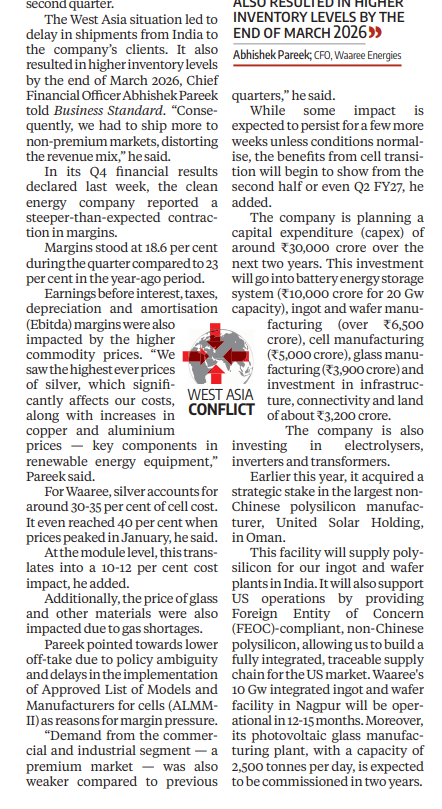
Waaree Energies Q4 FY26 Overseas Revenue Down 20% on West Asia Disruptions; Margins Contract to 18.6% from 23%; ₹30,000 Cr Capex Plan Intact The Revenue Hit Overseas revenue (exports + US local manufacturing): shrank ~20% in Q4 FY26 CFO Abhishek Pareek: "The West Asia situation led to delay in shipments… it also resulted in higher inventory levels by end of March 2026" Overseas segment typically a premium revenue contributor — share fell sharply in Q4 Overseas revenue share trajectory: 45%+ in Q2 → 32.6% in Q3 → ~20% in Q4 — steep sequential decline Consequence: had to ship more to non-premium markets, distorting revenue mix Margin Contraction EBITDA margins: 18.6% in Q4 vs 23% in the year-ago period — steeper-than-expected contraction Key input cost pressures: - Silver: highest-ever prices — accounts for 30–35% of cell cost, peaked at 40% in January - Copper and aluminium: prices rose — key components in renewable energy equipment - Glass and other materials: impacted by gas shortages - Silver price surge translates to 10–12% cost impact at module level Additional margin drag: lower off-take due to policy ambiguity and delays in ALMM-II implementation Demand Weakness Commercial and industrial segment (premium market) was weaker compared to previous quarters ALMM-II delays creating policy uncertainty affecting order flow Recovery Timeline Some West Asia impact expected to persist for a few more weeks Benefits from cell transition (in-house cell manufacturing) expected from H2 or Q2 FY27 Strategic Moves — Building for the Future ₹30,000 crore capex over next two years — plan unchanged despite near-term headwinds: - BESS: ₹10,000 crore for 20 GW capacity - Ingot & wafer manufacturing: ₹6,500 crore+ - Cell manufacturing: ₹5,000 crore - Glass manufacturing: ₹3,900 crore - Infrastructure, connectivity, land: ₹3,200 crore Also investing in electrolysers, inverters, and transformers Acquired strategic stake in United Solar Holding (Oman) — largest non-Chinese polysilicon manufacturer - Will supply polysilicon for ingot and wafer plants in India - Enables FEOC-compliant, non-Chinese polysilicon for US market — fully integrated, traceable supply chain 10 GW integrated ingot and wafer facility in Nagpur: operational in 12–15 months Photovoltaic glass manufacturing plant (2,500 tonnes/day capacity): commissioned in two years Core Theme Waaree's Q4 FY26 tells a tale of two timelines — near-term pain from West Asia logistics disruptions, silver price spikes, and ALMM policy delays compressing margins and overseas revenues, while the company simultaneously executes one of India's most ambitious solar manufacturing buildouts, positioning itself for a structurally superior, vertically integrated, and FEOC-compliant business by FY27-28.
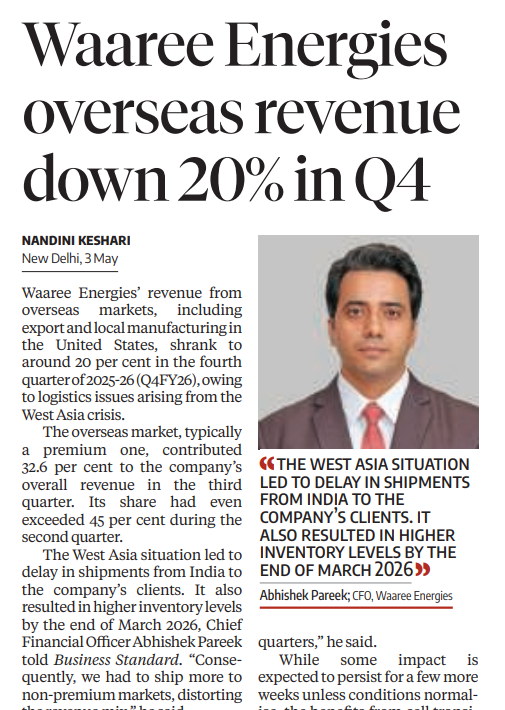
The Cloaked Gaze 👀 tweet mediaThe Cloaked Gaze 👀 tweet media
English
0
0
0
47
The Cloaked Gaze 👀
The Cloaked Gaze 👀@gaze_observer·
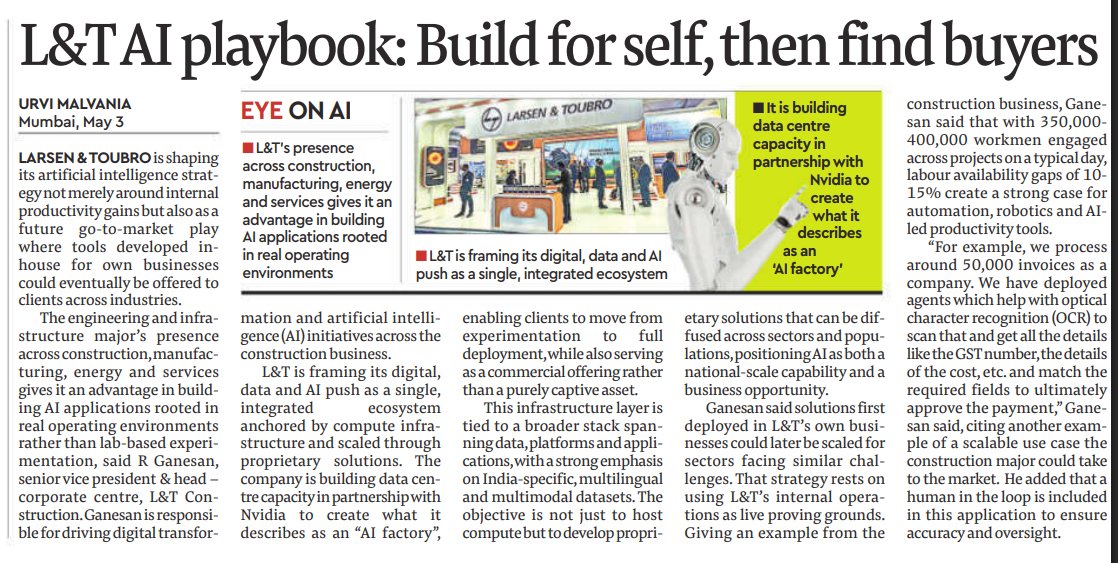
L&T's AI Playbook: Deploy Internally First, Then Commercialise Externally; Building 'AI Factory' with Nvidia for Data Centre Capacity The Strategy L&T shaping AI strategy as both an internal productivity play and a future go-to-market business Tools developed in-house for own businesses to be eventually offered to clients across industries Key advantage: L&T's presence across construction, manufacturing, energy, and services allows AI applications to be built and tested in real operating environments — not lab-based experimentation SVP & Head Corporate Centre R Ganesan: "Solutions first deployed in L&T's own businesses could later be scaled for sectors facing similar challenges" Infrastructure Build L&T framing its digital, data, and AI push as a single integrated ecosystem Anchored by compute infrastructure scaled through proprietary solutions Building data centre capacity in partnership with Nvidia — creating what it describes as an "AI factory" Objective: not just to host compute but to develop proprietary solutions diffusable across sectors and populations Broader stack: India-specific, multilingual, and multimodal datasets — platforms and applications layer on top Commercial Positioning Infrastructure layer positioned as a commercial offering, not a purely captive asset Enables clients to move from experimentation to full deployment AI positioned as both a national-scale capability and a business opportunity Real Use Cases at L&T Processes ~50,000 invoices using AI agents with OCR capability — extracting GST numbers, cost details, matching fields, and approving payments 3,50,000–4,00,000 workmen engaged across projects on a typical day — labour availability gaps of 10–15% create a strong case for automation, robotics, and AI-led productivity tools Human in the loop retained for accuracy and oversight in critical applications Core Theme L&T is executing a disciplined "build for self, then find buyers" AI playbook — using its massive, multi-sector operational footprint as a live proving ground to develop, validate, and refine AI tools before packaging them as scalable commercial offerings, with an Nvidia-backed AI factory providing the compute backbone for what could become one of India's most consequential enterprise AI businesses.
The Cloaked Gaze 👀 tweet media
English
0
0
1
187
The Cloaked Gaze 👀
The Cloaked Gaze 👀@gaze_observer·
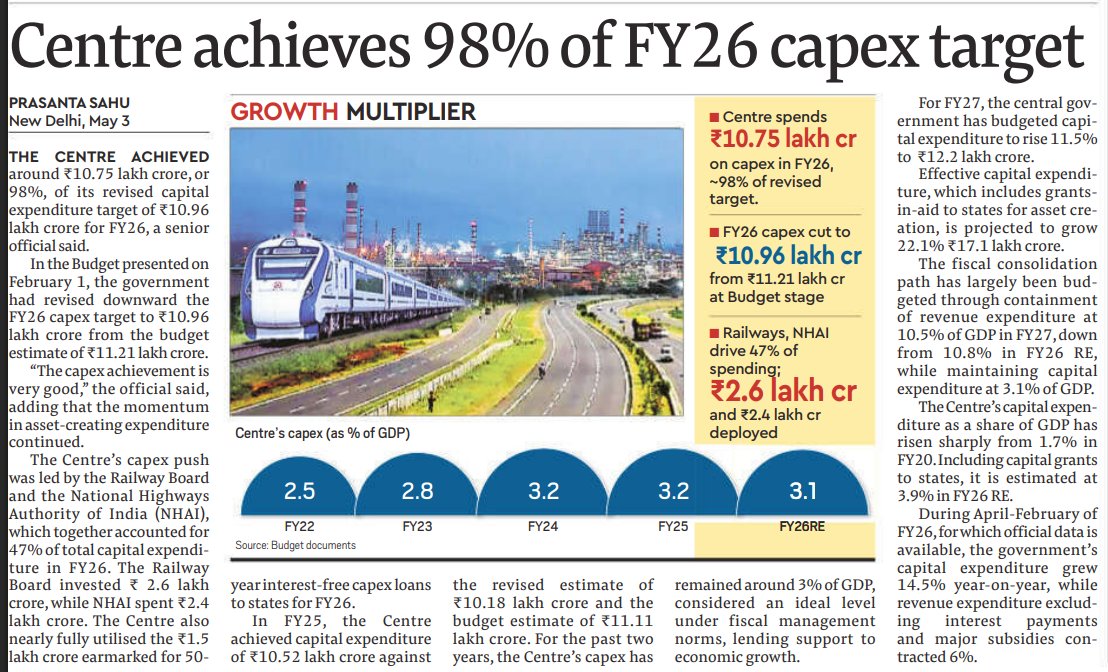
Centre Achieves 98% of FY26 Revised Capex Target at ₹10.75 Lakh Crore; Railways and NHAI Drive 47% of Spending FY26 Capex Execution Actual capex spent: ₹10.75 lakh crore — ~98% of revised estimate of ₹10.96 lakh crore Original budget estimate for FY26: ₹11.21 lakh crore — revised downward to ₹10.96 lakh crore at Budget stage Government official: "The capex achievement is very good… momentum in asset-creating expenditure continued" April–February FY26 capex growth: 14.5% YoY (latest official data available) Who Led the Spending Railways: deployed ₹2.6 lakh crore NHAI: deployed ₹2.4 lakh crore Together: accounted for 47% of total capital expenditure in FY26 Centre also nearly fully utilised ₹1.5 lakh crore earmarked for 50-year interest-free capex loans to states Capex as % of GDP — Trend FY22: 2.5% | FY23: 2.8% | FY24: 3.2% | FY25: 3.2% | FY26 RE: 3.1% Capex has risen sharply from 1.7% of GDP in FY20 — structural step-up sustained Including capital grants to states: estimated at 3.9% of GDP in FY26 RE FY25 Context FY25 actual capex: ₹10.52 lakh crore against revised estimate of ₹10.18 lakh crore and budget estimate of ₹11.11 lakh crore FY27 Outlook Budgeted capex: ₹12.2 lakh crore, up 11.5% YoY Effective capital expenditure (including grants-in-aid to states for asset creation): projected to grow 22.1% to ₹17.1 lakh crore Revenue expenditure (ex-interest and major subsidies): contracted 6% in FY26 — fiscal consolidation via revenue containment, not capex compression Fiscal Consolidation Path Revenue expenditure contained at 10.5% of GDP in FY27, down from 10.8% in FY26 RE Capital expenditure maintained at 3.1% of GDP — government choosing to protect investment spending Strategy: compress revenue spend, sustain capex — textbook counter-cyclical fiscal management Core Theme The Centre's near-complete execution of its FY26 capex target — with Railways and NHAI alone deploying ₹5 lakh crore — confirms that India's public investment engine remains the primary growth multiplier, even as the government simultaneously consolidates its fiscal position by compressing revenue expenditure rather than cutting capital spending.
The Cloaked Gaze 👀 tweet media
English
0
0
1
209
The Cloaked Gaze 👀
The Cloaked Gaze 👀@gaze_observer·
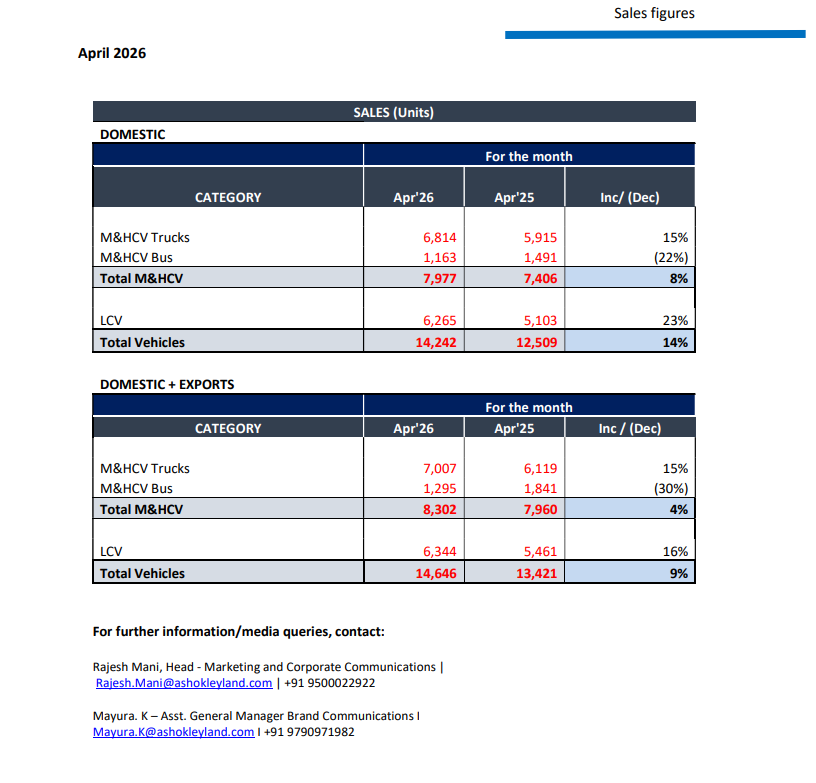
Ashok Leyland Ltd Monthly Sales Data #Ashokleyland ➤ Total Sales Volume ✓ Domestic + Exports 14,646 Units (+9% YoY) ✓ Domestic 14,242 Units (+14% YoY)
The Cloaked Gaze 👀 tweet media
English
0
0
3
236
The Cloaked Gaze 👀
The Cloaked Gaze 👀@gaze_observer·
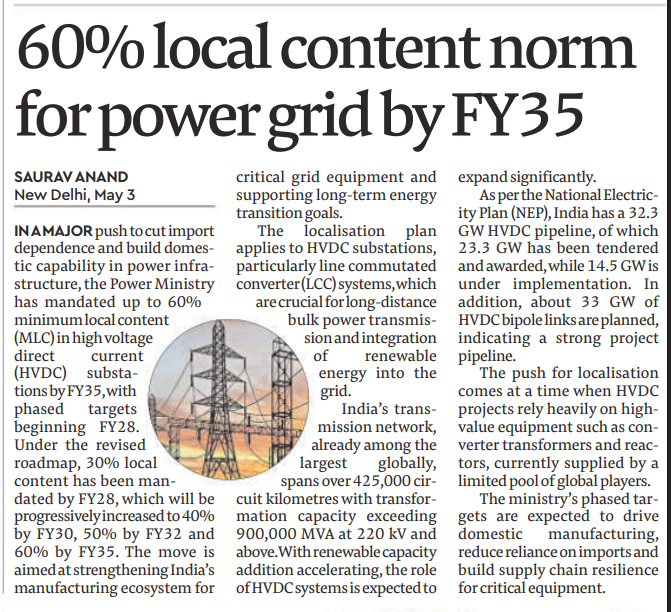
Power Ministry Mandates 60% Local Content in HVDC Substations by FY35; Phased Targets Starting FY28 to Build Domestic Manufacturing Ecosystem The Policy Power Ministry mandated minimum 60% local content (MLC) in High Voltage Direct Current (HVDC) substations by FY35 Specifically applies to Line Commutated Converter (LCC) systems — critical for long-distance bulk power transmission and renewable energy grid integration Aimed at reducing import dependence and building domestic capability in critical grid equipment Phased Localisation Roadmap FY28: 30% minimum local content FY30: 40% FY32: 50% FY35: 60% Progressive step-up gives manufacturers a clear runway to build capacity and supply chains India's HVDC Pipeline — Scale of Opportunity National Electricity Plan (NEP): India has a 32.3 GW HVDC pipeline 23.3 GW already tendered and awarded 14.5 GW currently under implementation Additional ~33 GW of HVDC bipole links planned — strong project pipeline ahead India's transmission network: spans 4,25,000+ circuit kilometres with transformation capacity exceeding 9,00,000 MVA at 220 kV and above Why This Matters HVDC projects currently rely heavily on converter transformers and reactors — supplied by a limited pool of global players Localisation push will drive domestic manufacturing, reduce import reliance, and build supply chain resilience Renewable capacity addition accelerating — role of HVDC systems expected to expand significantly as grid integration demands grow Core Theme India's 60% HVDC localisation mandate is a calculated industrial policy move — using a 32.3 GW project pipeline as demand anchor to bootstrap a domestic manufacturing ecosystem for critical grid equipment, reducing dependence on a handful of global suppliers while future-proofing the grid for accelerating renewable energy integration.
The Cloaked Gaze 👀 tweet media
English
0
0
7
306
The Cloaked Gaze 👀
The Cloaked Gaze 👀@gaze_observer·
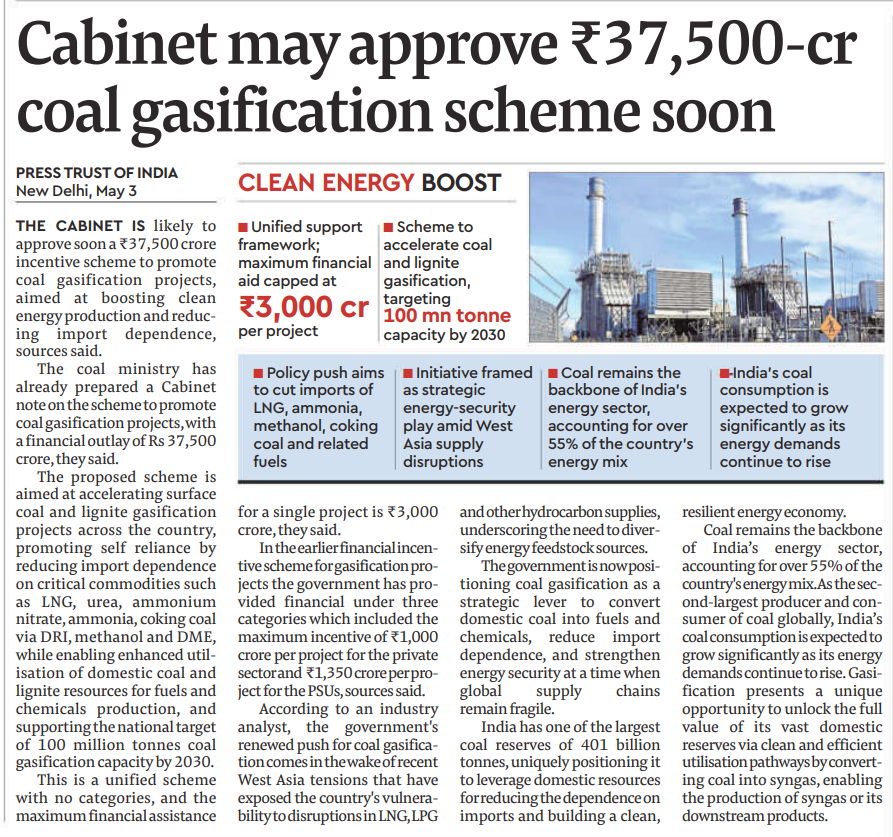
Cabinet Set to Approve ₹37,500 Cr Coal Gasification Scheme; Targets 100 Million Tonne Capacity by 2030 Amid West Asia Supply Disruptions The Scheme Cabinet likely to approve ₹37,500 crore incentive scheme to promote coal and lignite gasification projects Coal Ministry has already prepared the Cabinet note Unified support framework — no categories; maximum financial assistance capped at ₹3,000 crore per project Earlier scheme had separate incentives: ₹1,000 crore per project for private sector and ₹1,350 crore for PSUs — new scheme simplifies and scales up significantly Target National target: 100 million tonne coal gasification capacity by 2030 Accelerate surface coal and lignite gasification projects across the country Strategic Intent — Import Substitution Reduce import dependence on LNG, urea, ammonium nitrate, ammonia, coking coal (via DRI), methanol, and DME Convert domestic coal into fuels and chemicals — syngas and downstream products Framed as a strategic energy security play amid West Asia supply disruptions exposing India's vulnerability to LNG, LPG, and hydrocarbon supply shocks India has 401 billion tonnes of coal reserves — second-largest producer and consumer of coal globally Why Coal Gasification Now Coal accounts for over 55% of India's energy mix — and consumption expected to grow significantly West Asia tensions have exposed fragility of global LNG and hydrocarbon supply chains Gasification converts coal into syngas — unlocking domestic reserves via clean and efficient utilisation pathways Unique opportunity to leverage vast domestic coal reserves to reduce import bill and strengthen energy resilience Core Theme India is repositioning coal gasification as a strategic energy security lever — using its 401 billion tonne coal reserve base to substitute expensive and geopolitically vulnerable LNG, ammonia, and chemical imports, with a ₹37,500 crore scheme designed to rapidly scale domestic gasification capacity to 100 million tonnes by 2030 amid a fragile global supply chain environment.
The Cloaked Gaze 👀 tweet media
English
0
0
4
320
The Cloaked Gaze 👀
The Cloaked Gaze 👀@gaze_observer·
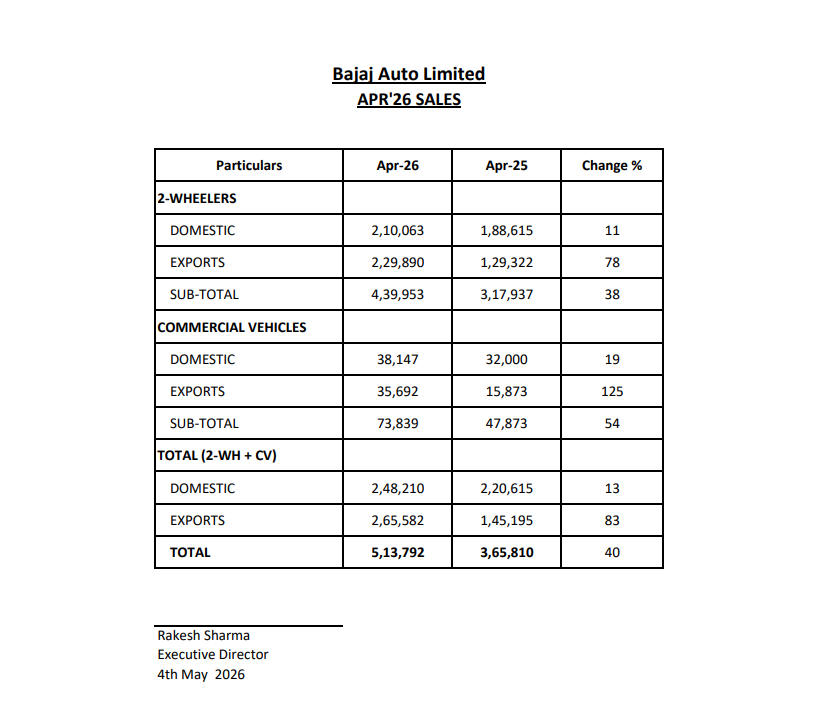
Bajaj Auto Ltd Monthly Sales Data #BajajAuto ➤ Total Sales Volume 5,13,792 Units (+40% YoY) ✓ Domestic 2,48,210 Units (+13% YoY) ✓ Exports 2,65,582 Units (+83% YoY)
The Cloaked Gaze 👀 tweet media
English
0
0
5
308
The Cloaked Gaze 👀
The Cloaked Gaze 👀@gaze_observer·
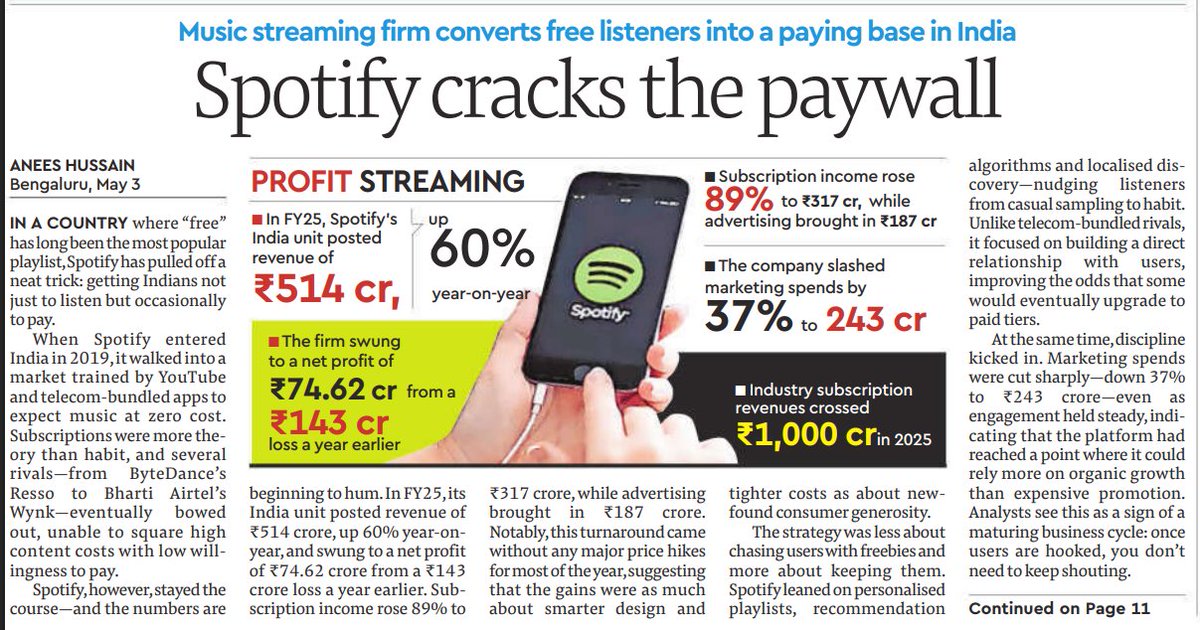
Spotify India Swings to ₹74.62 Cr Net Profit in FY25; Revenue Up 60% YoY to ₹514 Cr as Subscription Income Surges 89% The Turnaround Spotify India revenue: ₹514 crore in FY25, up 60% YoY Net profit: ₹74.62 crore — swung from a ₹143 crore loss a year earlier Turnaround achieved without any major price hikes for most of the year — gains driven by design, algorithms, and cost discipline Revenue Mix Subscription income: ₹317 crore, up 89% YoY — primary growth engine Advertising revenue: ₹187 crore — meaningful but secondary Industry context: music streaming subscription revenues in India crossed ₹1,000 crore in 2025 Cost Discipline — The Key Lever Marketing spends slashed 37% to ₹243 crore — even as engagement held steady Signal: platform reached a point where organic growth replaced expensive promotion Analysts view this as a sign of a maturing business cycle — once users are hooked, less shouting needed How Spotify Cracked India's "Free Music" Culture Entered India in 2019 into a market trained by YouTube and telecom-bundled apps to expect zero-cost music Rivals (ByteDance's Resso, Bharti Airtel's Wynk) eventually bowed out — unable to square high content costs with low willingness to pay Spotify's strategy: build direct user relationships via personalised playlists, recommendation algorithms, and localised discovery — nudging casual listeners toward habit and eventual paid conversion Focus was on keeping users, not chasing them with freebies Core Theme Spotify India's flip from ₹143 crore loss to ₹75 crore profit — on the back of 89% subscription growth and 37% marketing cuts — is the clearest proof yet that India's "free music" culture is cracking, and that patience, personalisation, and product discipline can convert a habitually non-paying audience into a sustainable subscription base.
The Cloaked Gaze 👀 tweet media
English
0
0
1
316
The Cloaked Gaze 👀
The Cloaked Gaze 👀@gaze_observer·
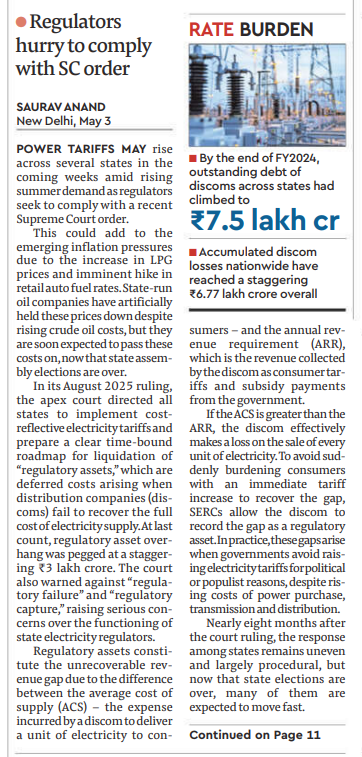
Power Tariffs Set to Rise Across Several States; ₹3 Lakh Crore Regulatory Asset Burden Forces Discoms to Comply with SC Order The Trigger Power tariffs likely to rise across several states in coming weeks as state electricity regulators hurry to comply with a Supreme Court order SC's August 2025 ruling directed all states to implement cost-reflective electricity tariffs and prepare a clear time-bound roadmap for liquidation of "regulatory assets" Court warned against "regulatory failure" and "regulatory capture" — raising serious concerns over functioning of state electricity regulators Nearly eight months post ruling, response remains uneven and largely procedural — but with state elections now over, states expected to move fast The Scale of the Problem Regulatory asset overhang: ~₹3 lakh crore nationwide Outstanding discom debt across states (end of FY2024): ₹7.5 lakh crore Accumulated discom losses nationwide: ₹6.77 lakh crore These are deferred costs arising when discoms fail to recover the full cost of electricity supply from consumers How Regulatory Assets Are Created Regulatory assets = unrecoverable revenue gap = Average Cost of Supply (ACS) minus Annual Revenue Requirement (ARR) ACS: expense incurred by discom to deliver a unit of electricity to consumers ARR: revenue collected via consumer tariffs and government subsidies When ACS > ARR, discom makes a loss on every unit of electricity sold To avoid sudden consumer burden, SERCs allow discoms to record the gap as a regulatory asset — essentially a deferred liability In practice: these gaps arise when governments avoid raising tariffs for political or populist reasons despite rising costs of power purchase, transmission, and distribution Broader Inflation Context Tariff hikes coming at an uncomfortable time — adding to inflation pressures from rising LPG prices and imminent retail auto fuel price hikes State-run oil companies have artificially held fuel prices down despite rising crude costs — but are now expected to pass through costs now that state assembly elections are over Core Theme India's power sector is heading for a multi-state tariff shock — years of politically-motivated suppression of electricity prices have created a ₹3 lakh crore regulatory asset overhang and ₹7.5 lakh crore of discom debt, and the Supreme Court's cost-reflectivity mandate is now forcing states to confront the bill, with consumers likely bearing the brunt just as summer demand peaks and broader inflation pressures mount.
The Cloaked Gaze 👀 tweet mediaThe Cloaked Gaze 👀 tweet media
English
0
0
2
346
The Cloaked Gaze 👀
The Cloaked Gaze 👀@gaze_observer·
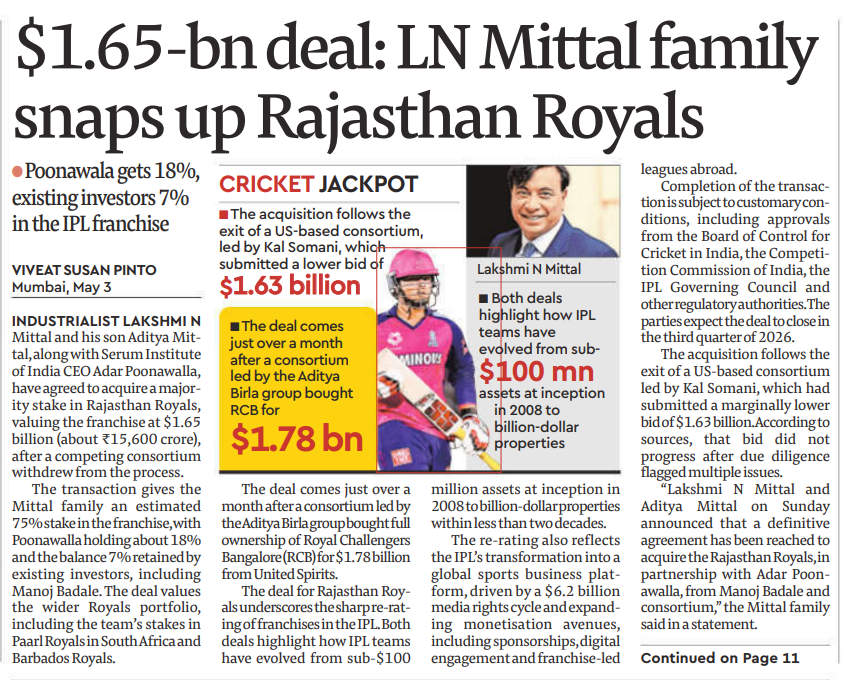
LN Mittal Family Acquires Majority Stake in Rajasthan Royals for $1.65 Billion; Franchise Valued at ~₹15,600 Crore The Deal Lakshmi N Mittal and son Aditya Mittal, along with Serum Institute of India CEO Adar Poonawalla, agreed to acquire a majority stake in Rajasthan Royals Franchise valuation: $1.65 billion (~₹15,600 crore) Deal includes the wider Royals portfolio — team's stakes in Paarl Royals (South Africa) and Barbados Royals Ownership Structure Post-Deal Mittal family ~75% stake Adar Poonawalla ~18% Existing investors (including Manoj Badale) 7% retained Why the Deal Happened A competing US-based consortium led by Kal Somani submitted a marginally lower bid of $1.63 billion That bid did not progress after due diligence flagged multiple issues Mittal-Poonawalla consortium stepped in as the winning party Deal Context — IPL Valuation Surge Deal comes just over a month after Aditya Birla group acquired Royal Challengers Bangalore (RCB) for $1.78 billion from United Spirits Both deals highlight how IPL franchises have evolved from sub-$100 million assets at inception in 2008 to billion-dollar properties in under two decades IPL's $6.2 billion media rights cycle, expanding sponsorships, digital engagement, and franchise-led leagues globally driving re-rating Completion Timeline Subject to approvals from BCCI, Competition Commission of India, IPL Governing Council, and other regulatory authorities Expected to close in Q3 2026 Core Theme The $1.65 billion Rajasthan Royals deal — coming weeks after RCB's $1.78 billion transaction — confirms that IPL franchises have completed a generational value migration from sub-$100 million sporting assets to globally competitive sports business platforms, attracting India's most prominent industrial families as the next generation of franchise owners.
The Cloaked Gaze 👀 tweet media
English
0
0
2
413
The Cloaked Gaze 👀
The Cloaked Gaze 👀@gaze_observer·
Adani Ports and Special Economic Zone Ltd Business Update ➤ Cargo volume 43.1 MMT (+15% YoY) Growth led by: ✓ Containers (+17% YoY) ✓ Dry cargo (+17% YoY) ➤ Logistics Rail volume 48,490 TEUs (-16% YoY)
The Cloaked Gaze 👀 tweet media
English
0
0
4
476
The Cloaked Gaze 👀
The Cloaked Gaze 👀@gaze_observer·
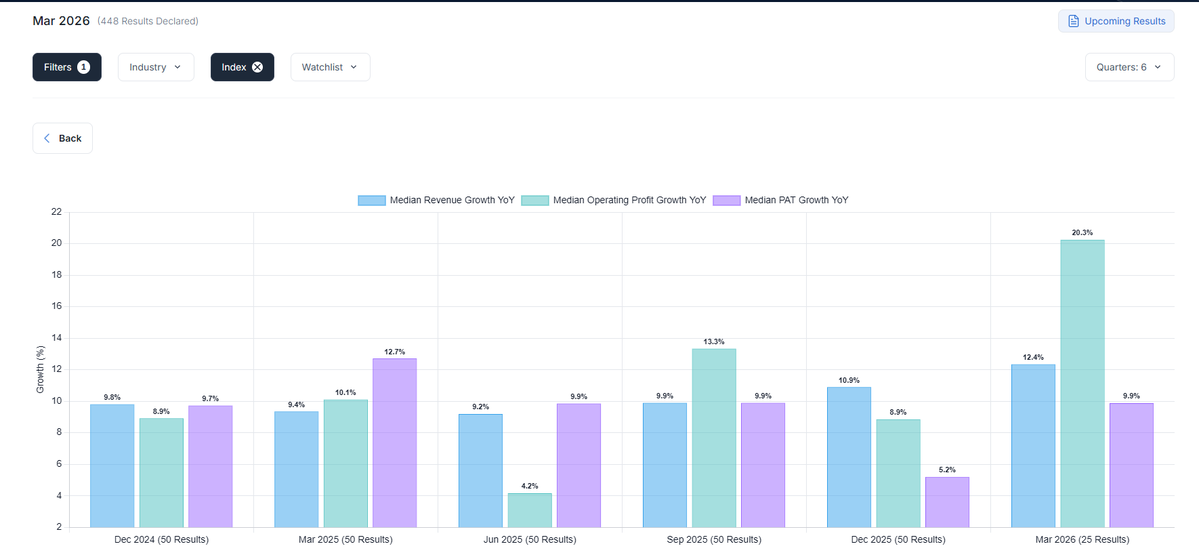
Decent results reported this week with a positive outlook going forward: HFCL Acutaas Chemicals Monolithisch India (SME) Nippon Life AMC Tamilnad Mercantile Bank City Union Bank Sterlite Technologies Piramal Finance Aye Finance Aimtron Electronics (SME) Emmvee Photovoltaic Power Smartworks Coworking Spaces Capri Global Capital Equitas Small Finance Bank Navin Fluorine International Sona BLW Precision Forgings AU Small Finance Bank Etc..........
English
2
7
81
6K
The Cloaked Gaze 👀
The Cloaked Gaze 👀@gaze_observer·
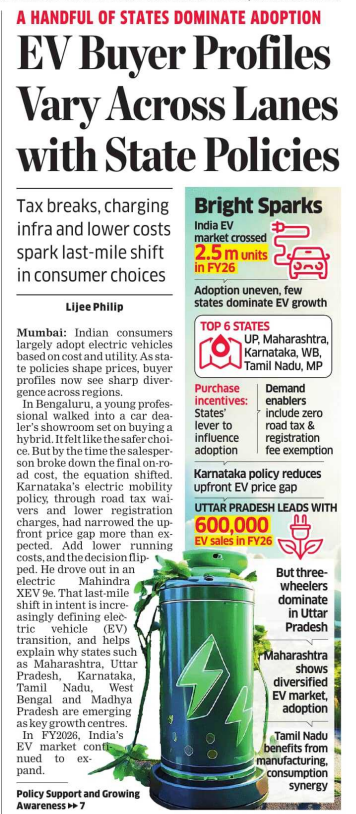
India EV Market Crosses 2.5 Million Units in FY26; Buyer Profiles Diverge Sharply Across States as Policy Shapes Adoption Industry Headline India EV market: crossed 2.5 million units in FY26 — continued expansion Adoption remains uneven — a handful of states dominate EV growth Top 6 states driving volume: UP, Maharashtra, Karnataka, West Bengal, Tamil Nadu, and Madhya Pradesh What's Driving State-Level Divergence Tax breaks: road tax waivers and registration fee exemptions are states' primary lever to influence adoption Charging infrastructure availability shaping consumer confidence Lower on-road costs vs ICE vehicles becoming the tipping point for last-mile shift Karnataka's electric mobility policy — road tax waivers + lower registration charges — narrowed upfront EV price gap significantly State-wise Profiles Uttar Pradesh: leads with 6,00,000 EV sales in FY26 — but three-wheelers dominate Maharashtra: shows diversified EV market adoption across segments Tamil Nadu: benefits from manufacturing and consumption synergy — EV production base driving local adoption Karnataka: policy-driven adoption; road tax and registration incentives making EVs cost-competitive at point of purchase Consumer Behaviour Shift Last-mile shift increasingly defined by cost and utility, not aspiration Karnataka example: young professional walked in to buy a hybrid — Karnataka's policy made electric the financially rational choice Lower running costs + policy incentives = tipping point in purchase decision Demand Enablers Cited Zero road tax Registration fee exemption Lower total cost of ownership vs ICE Expanding charging infrastructure Core Theme India's EV market is no longer a monolith — state policy architecture is creating sharply differentiated buyer profiles and adoption curves, with UP's three-wheeler utility dominance, Maharashtra's diversified mix, and Tamil Nadu's manufacturing-consumption flywheel all telling different stories within the same 2.5 million unit national market.
The Cloaked Gaze 👀 tweet media
English
0
0
13
1.5K
The Cloaked Gaze 👀
The Cloaked Gaze 👀@gaze_observer·
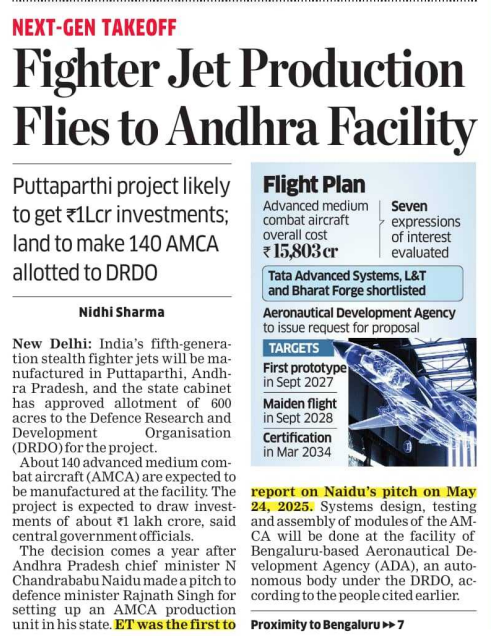
India's AMCA Fighter Jet Production to Be Based in Puttaparthi, Andhra Pradesh; ₹1 Lakh Crore Investment Expected The Decision India's fifth-generation stealth fighter jets (AMCA — Advanced Medium Combat Aircraft) to be manufactured at Puttaparthi, Andhra Pradesh AP state cabinet approved allotment of 600 acres to DRDO for the project ~140 AMCA aircraft expected to be manufactured at the facility Project expected to draw investments of ~₹1 lakh crore Programme Financials & Structure AMCA overall programme cost: ₹15,803 crore Seven expressions of interest evaluated Tata Advanced Systems, L&T, and Bharat Forge shortlisted as potential production partners Aeronautical Development Agency (ADA) to issue Request for Proposal (RFP) Systems design, testing, and assembly of modules to be done at ADA's Bengaluru facility — an autonomous body under DRDO Key Milestones & Timeline First prototype September 2027 Maiden flight September 2028 Certification March 2034 Strategic Context Decision comes a year after AP CM N Chandrababu Naidu pitched to Defence Minister Rajnath Singh for setting up an AMCA production unit in the state Proximity to Bengaluru (ADA facility) cited as a key locational advantage for Puttaparthi Part of India's broader push for defence indigenisation and self-reliance in advanced aerospace manufacturing Core Theme The AMCA production facility in Puttaparthi marks a landmark moment in India's defence manufacturing ambitions — placing fifth-generation stealth fighter jet production in a state-backed greenfield facility, with Tata, L&T, and Bharat Forge competing for the production mandate, and a clear timeline targeting maiden flight by 2028 and certification by 2034.
The Cloaked Gaze 👀 tweet media
English
0
0
21
1.6K
The Cloaked Gaze 👀
The Cloaked Gaze 👀@gaze_observer·
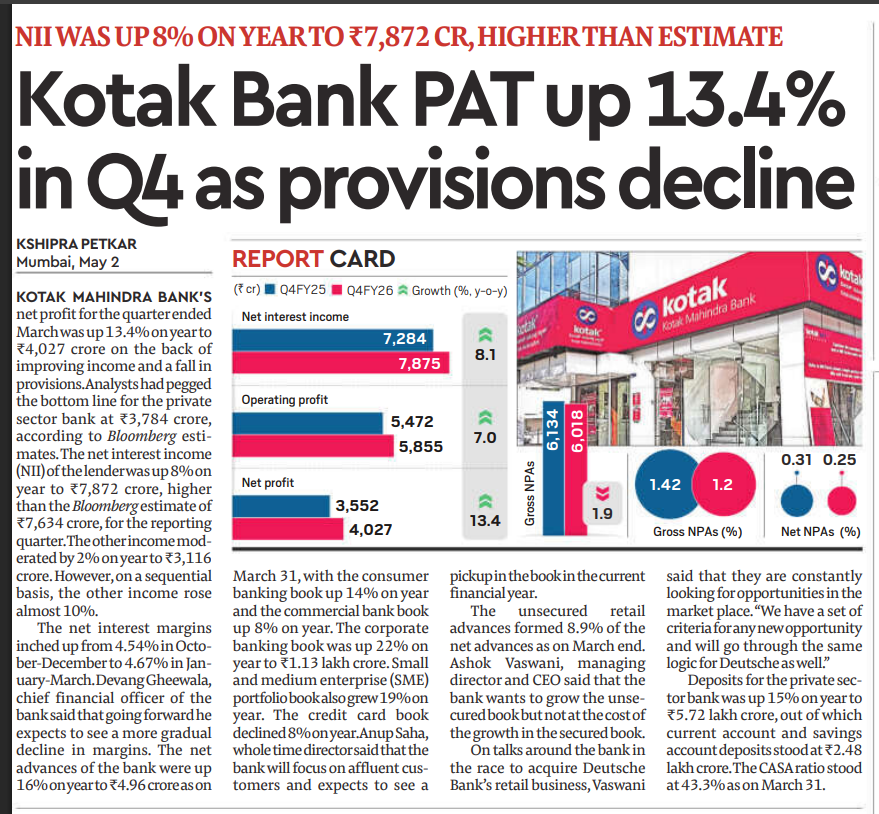
Kotak Mahindra Bank Q4 FY26 PAT Up 13.4% YoY to ₹4,027 Cr; NII Beats Estimates at ₹7,875 Cr; Asset Quality Improves Q4 FY26 Financials Net Profit ₹4,027 crore, up 13.4% YoY (vs ₹3,552 crore) — beat Bloomberg estimate of ₹3,784 crore NII ₹7,875 crore, up 8.1% YoY (vs ₹7,284 crore) — beat estimate of ₹7,634 crore Operating Profit ₹5,855 crore, up 7.0% YoY (vs ₹5,472 crore) Other income moderated 2% YoY to ₹3,116 crore; up ~10% QoQ sequentially Asset Quality — Meaningful Improvement Gross NPA declined by 1.9% YoY from 6,134 crore to 6,018 crore — Gross NPA ratio at 1.2% (vs 1.42% in Q4 FY25) Net NPA improved to 0.25% from 0.31% Provisions declined — key PAT driver alongside NII beat Margins NIM inched up from 4.54% (Oct–Dec) to 4.67% (Jan–Mar) CFO Devang Gheewala: expects "more gradual decline in margins" going forward — rate cut cycle will exert pressure but pace manageable Loan Book Growth Total advances ₹4.96 lakh crore, up 16% YoY Consumer banking book up 14% YoY Commercial banking book up 8% YoY Corporate banking book up 22% YoY to ₹1.13 lakh crore SME portfolio up 19% YoY Credit card book down 8% YoY — deliberate pullback in unsecured stress segment Liability Franchise Deposits ₹5.72 lakh crore, up 15% YoY CASA deposits ₹2.48 lakh crore CASA ratio 43.3% as on March 31 Strategy — Affluent Focus & Unsecured Growth Whole-time director Anup Saha: bank will focus on affluent customers and expects pickup in the book this fiscal MD & CEO Ashok Vaswani: wants to grow unsecured book but not at the cost of secured book growth Unsecured retail advances: 8.9% of net advances as on March end Deutsche Bank Acquisition Talk Vaswani confirmed bank is constantly looking for opportunities in the market "We have a set of criteria for any new opportunity and will go through the same logic for Deutsche as well" — neither confirmed nor denied active pursuit Core Theme Kotak Bank delivered a clean beat on PAT and NII in Q4 FY26, driven by improving asset quality, declining provisions, and NIM resilience despite rate cuts — while strategically pivoting toward affluent customers, corporate lending, and measured unsecured growth as the next phase of its franchise deepening.
The Cloaked Gaze 👀 tweet media
English
0
0
12
1.6K