
置顶推文
n0nano
6K posts


n0nano
@n0coder
🚀i am atomic🚀 no abstractions, no blackboxes, anything can happen, the specifics don't matter. objects describe themselves. infinite ℵ and no ∅ possibilities
the cosmos 加入时间 Eylül 2014
812 关注118 粉丝
n0nano 已转推

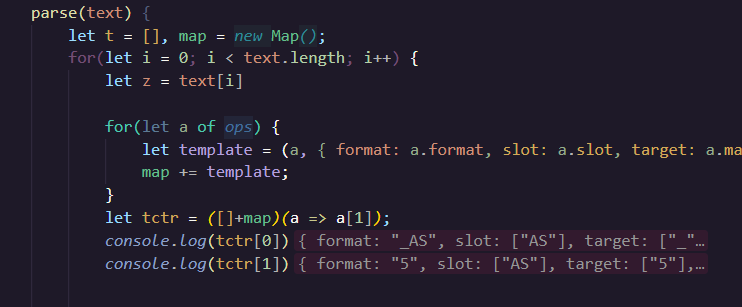
@joseph_h_garvin no my brain is fried i just got done with a 150kb commit where i did a total rewrite of functions, iterators, generators and added a new keyword and async in my programming language in a single day
XD my appologies
English

@n0coder Oh you said don't "have" spaces, I thought you meant a spaceless language.
AFAIK idiomatic code in all of those languages usually uses spaces around infix, even though it's not required
English
you got it but you know what that means
(foo)-(bar) becomes required to subtract those
Joseph Garvin@joseph_h_garvin
More languages should allow you to use dashes in identifiers, using whitespace to distinguish from subtraction, so `foo-bar` is an identifier but `foo - bar` is subtraction.
English
@joseph_h_garvin javascript, c, c++, c#, lua, rust
don't require spaces
would suck to require spaces because the language decided to remove support for tight packing on operators
English
@joseph_h_garvin true, but also, not really a good option
some languages don't have spaces at all
English
essentially stating that when you remove the limiters on low dimensional work, you also reduce the chances of running into a limit
idk what's so hard to understand about manifolds lol
Grant Stenger (hiring)@GrantStenger
Local minima are rare in high dimensions because a strict local minimum has to curve upward in every direction, so all Hessian eigenvalues must be positive. In a D-dimensional toy model where eigenvalue signs are independent, that’s a 2^(-D) event. In GOE-like random matrix models, positive definiteness is even rarer, roughly exp(-cD^2). So as dimension grows, random critical points are much more likely to be saddles than minima. This is one reason high-dimensional optimization is often a saddle-escape problem, not a bad-local-minimum problem. Wrote up some of the math here: grantstenger.com/local-minima
English
why specifically do people
be intentionally vague
point at concrete known things
make a statement that we can't know it
because it threatens their jobs to have people start to actually know what theyre doing
are they gatekeeping
because why claim turing problem on modern computer
English
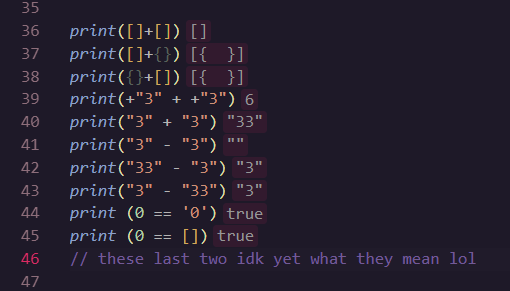
atomscript decided on somewhat more useful interpretations
SudoX7@sudox7
JavaScript decided [] + [] equals "". C decided + adds numbers. one of these is a programming language. JavaScript's type coercion isn't a bug. it's a documented feature with 47 special cases that no human can hold in their head simultaneously. 0 == "0" is true. 0 == [] is true. "0" == [] is false. by the transitive property that makes no sense. by JavaScript's rules it makes perfect sense. C has 6 numeric types and one rule: promotion. that's it. the language has opinions. JavaScript has vibes.
English
n0nano 已转推

一緒にいるときは喧嘩もするし、離れているときは寂しくなる――これこそが真の友情だ。
#WutheringWaves #phoebe #WuWaCollection #AIイラスト
#ArknightsEndfield
日本語
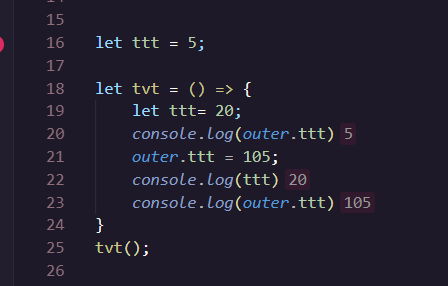
@pikuma in AS: o(-infinity)
if op is not runtime
the entire range of systems you just used vanish entirely
including the variable, control flow, and output
every piece known is inlined
you write 6 and if it touches io you get 'six' in the io path
otherwise the code never existed
English

if (op == 1) {
return "one";
} else if (op == 2) {
return "two!";
} else if (op == 3) {
return "three";
} else if (op == 4) {
return "four";
} else if (op == 5) {
return "five";
} else if (op == 6) {
return "six";
}
English
