
Vee Nee See Us 已转推
Vee Nee See Us
441 posts

Vee Nee See Us
@omicHandle
Senior Tech Art at Epic Games by day. Indie Game Dev by night.
London, England 加入时间 Ağustos 2011
514 关注47 粉丝

Vee Nee See Us 已转推

@RohanCreates None. They will either adapt or be replaced.
You see, AI lacks intention. The successful softwares will thrive by making it super easy to drive AI results with intention.
That’s all UX is about.
English

Question : How many of you think that most 3d sofwares or even graphic design softwares will become redundant within the next 5-6 years because of generative AI?
English
Imagine if companies were to rent compute or energy from citizens around the world!
What an absurd idea you see…
What a crazy thing to think that people would want to contribute with right incentives..
We have all we need apart from the willingness to REALLY FUCKING DO IT…
English
Vee Nee See Us 已转推

this is actually insane
> be tech guy in australia
> adopt cancer riddled rescue dog, months to live
> not_going_to_give_you_up.mp4
> pay $3,000 to sequence her tumor DNA
> feed it to ChatGPT and AlphaFold
> zero background in biology
> identify mutated proteins, match them to drug targets
> design a custom mRNA cancer vaccine from scratch
> genomics professor is “gobsmacked” that some puppy lover did this on his own
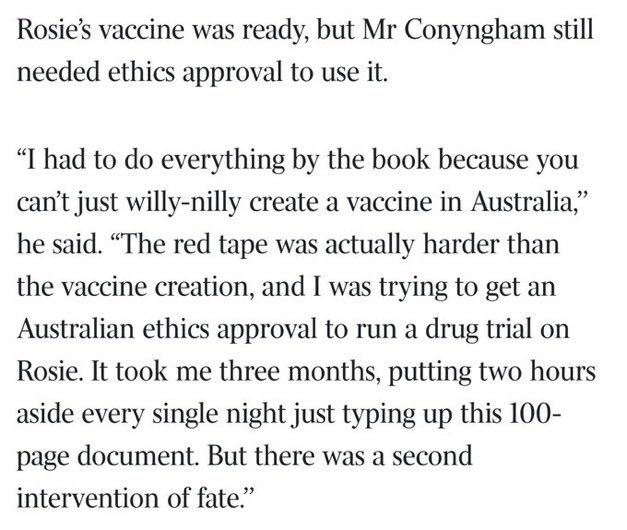
> need ethics approval to administer it
> red tape takes longer than designing the vaccine
> 3 months, finally approved
> drive 10 hours to get rosie her first injection
> tumor halves
> coat gets glossy again
> dog is alive and happy
> professor: “if we can do this for a dog, why aren’t we rolling this out to humans?”
one man with a chatbot, and $3,000 just outperformed the entire pharmaceutical discovery pipeline.
we are going to cure so many diseases.
I dont think people realize how good things are going to get



Séb Krier@sebkrier
This is wild. theaustralian.com.au/business/techn…
English

Would you like us to write about this shader? If so, Godot or Unity? 👀
Crisppyboat@CrisppyBoat
Wind Waker 🌊✨
English
Vee Nee See Us 已转推

Hey everyone! We have just announced our new game: Stackmon, a mix of Pokémon with Stacklands!
Take a look!
Stackmon@Stackmon_
Stack, build, catch and explore in our brand new card stacking creature collector, Stackmon! 🥳 With 100+ Stackmon to find and catch, several unique biomes to explore and much much more, what are you waiting for? Sign up to the playtest now! 👇️ #indiegame #playtest
English
@CameronWills Honestly, the only issue the game industry has been having is a weak and greedy leadership. The way ppl look has nothing to do with it.
English

@RealLifeFakeWiz Small emotional narrative game, see if touches you!
store.steampowered.com/app/3158630/A_…
English

I have generated 1,000,000+ views for Indie Games in the last 30 days.
For Free.
If you are an Indie Dev, I want to promote your game. Comment them below.
If you know some Indie Games that need some love, share them below.

English
For now it does not do so because it is trained on data that humans created and it does not show any signs of data extrapolation precise enough to justify that.
It lacks projection.
Reasoning is an after the fact analysis.
Projection happens BEFORE reasoning.
English
Thing is, for AI to truly be conscious it need to be able to show the complete understanding of something we humans never understood and explain it to us in a way that we understand and agree.
The goal of consciousness is to gather novel information about the universe after all.
English
After 13 years of adamant Unity Engine devotion and love.
I am in love with a new game engine.
For some reason Unreal has everything I want out of the box...
I am becoming a bi-engine game dev :O
English

Thanks for this big update ! Bubbles under the ocean... It seems obvious now ! SUNKEN BUBBLES / 3477-8670-2913
English
Unless you fail very hard you are the only one that knows you failed.
No social harm done.
English
Shobletay.
It needs a better name, but sounds good for a game dev philosophy don't you think?
English
For humans to create AGI we need to understand how intention and self projection work in ourselves.
Only then we can try mimic it.
My 2 cents.
English
Yep, we did it! It's just the star, enjoy!
Fall Guys@FallGuysGame
Run, jump, grab and dive… on the go 🌍 FALL GUYS ON MOBILE IS HERE! Available through the Epic Games Store on Android worldwide and iOS in the European Union 📱
English