@G7 @EmmanuelMacron Gap show beside P.M. modi respect for a lady nd care to those who r behind u.
I already consider Mr. Macron a hero by action.
English
Ravi Sharma
2.4K posts
@ravisrm511
Global Pulse Decoder | International Relations & Geopolitics Analyst | Unpacking Power, Policy & Propaganda | Real-time Global Narratives | #GeoPolitics #IR #Gl
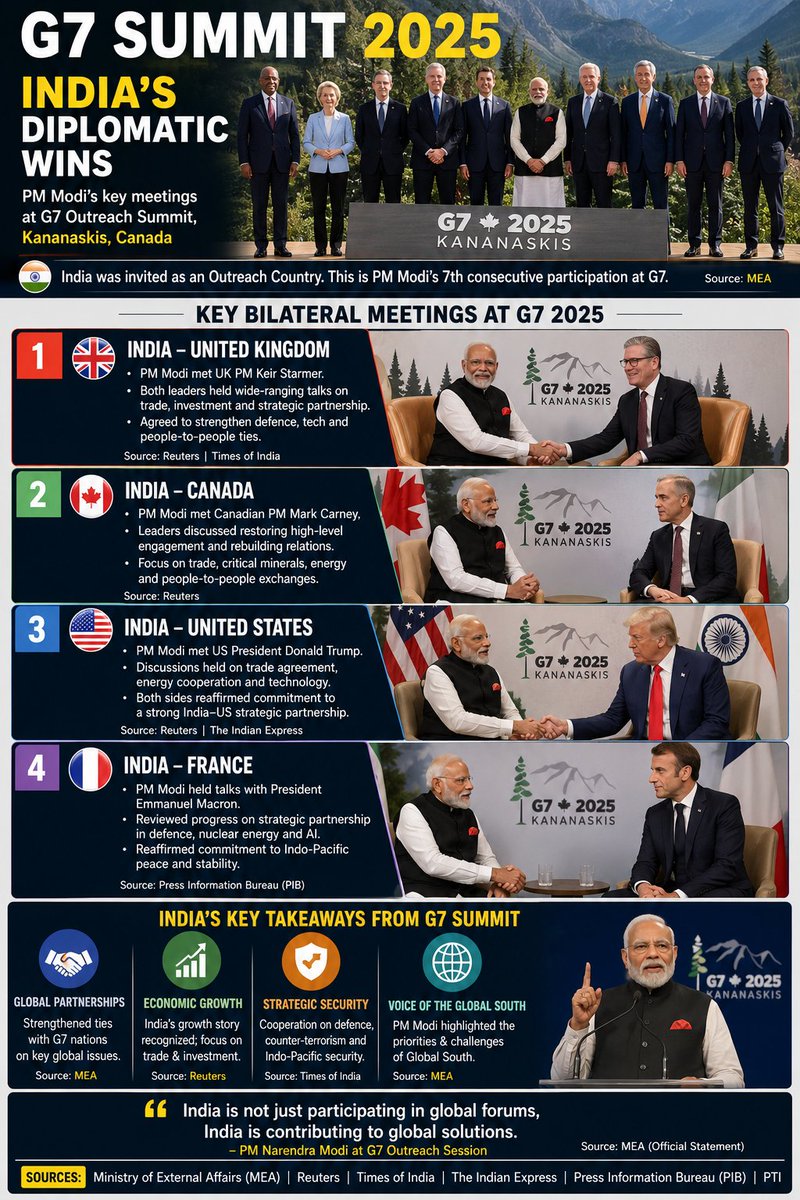

🌎12+1 June 2026 🛟⛽🧭🛢️🚨🚧⚓🚤🚢🛫🚀✈️ 🇮🇳🇺🇸🇨🇳🇷🇺🇺🇦🇮🇷🇮🇱🇨🇦🇹🇼🇰🇵🇪🇺🇺🇸🇮🇷 🇵🇭🇯🇵 🇨🇳🇵🇭🇯🇵⚓🌊⚠️ South China Sea confrontations continue to intensify. Chinese maritime deployments near disputed areas are increasing regional security concerns. 🕵️ Analysis: Nearly one-third of global maritime trade passes through Indo-Pacific sea lanes; instability impacts everyone. ⚠️ Middle East remains the biggest geopolitical risk zone. Military pressure, sanctions and negotiations are unfolding simultaneously across the region. 🕵️ Analysis: India's energy security is now increasingly linked to developments in West Asia. 🇷🇺🇺🇦⚔️ Russia Rejects Direct Talks with Ukraine Russian president Vladimir Putin has again indicated there is little point in direct talks with Ukrainian President Volodymyr Zelensky and insists Russia will achieve its war objectives. 🇨🇳🇰🇵🤝 Xi Jinping Makes Rare Visit to North Korea Chinese President Xi Jinping travelled to Pyongyang and met North Korean leader Kim Jong Un with both sides describing their relationship as "unbreakable". � 👨🏫 Analysis: The visit signals tighter China-North Korea coordination amid growing rivalry with the US and its allies in the Indo-Pacific. 🇫🇷🇺🇸🇪🇺🌍 Iran and Ukraine to Dominate G7 Summit in France The G7 Summit in France will focus heavily on the Middle East crisis, Ukraine, critical minerals and global economic imbalances linked to China. � 🇮🇱🇮🇷🚀 Israel-Iran Ceasefire Remains Fragile Despite diplomatic efforts, missile exchanges and military operations linked to Lebanon continue to threaten the ceasefire between Israel and Iran. � 👨🏫 Analysis: The Middle East remains the world's biggest geopolitical flashpoint and the primary risk to global energy🛢️⛽ markets.🚨 🇵🇰🌍🤝🇨🇳 ⚠️ Pakistan continues balancing relations between China, the Gulf and Western partners. Islamabad remains strategically relevant due to geography and connectivity corridors. 🕵️ Analysis: India's western strategic environment remains closely tied to Pakistan's external partnerships. 🇮🇳🌏📈⚡ 📈 India benefits from global supply-chain diversification. As geopolitical blocs harden, India continues attracting investment in semiconductors, defence manufacturing and digital infrastructure. 🇨🇳🤖💻🇺🇸 ⚠️ Technology rivalry remains at the heart of US–China competition. Advanced chips, AI infrastructure and strategic technologies continue to shape policy decisions. 🎯 Bottom Line • Middle East tensions remain the biggest threat to global energy security. • Russia-Ukraine war shows no sign of ending soon. • China is consolidating its regional bloc with North Korea. • The G7 is shifting from economic coordination to crisis management and geopolitical competition. #Geopolitics #World_Affairs #IranWar #Israel #Russia #Ukraine #China #NorthKorea #G7 #GlobalSecurity #InternationalRelations
🌎12+1 June 2026 🛟⛽🧭🛢️🚨🚧⚓🚤🚢🛫🚀✈️ 🇮🇳🇺🇸🇨🇳🇷🇺🇺🇦🇮🇷🇮🇱🇨🇦🇹🇼🇰🇵🇪🇺🇺🇸🇮🇷 🇵🇭🇯🇵 🇨🇳🇵🇭🇯🇵⚓🌊⚠️ South China Sea confrontations continue to intensify. Chinese maritime deployments near disputed areas are increasing regional security concerns. 🕵️ Analysis: Nearly one-third of global maritime trade passes through Indo-Pacific sea lanes; instability impacts everyone. ⚠️ Middle East remains the biggest geopolitical risk zone. Military pressure, sanctions and negotiations are unfolding simultaneously across the region. 🕵️ Analysis: India's energy security is now increasingly linked to developments in West Asia. 🇷🇺🇺🇦⚔️ Russia Rejects Direct Talks with Ukraine Russian president Vladimir Putin has again indicated there is little point in direct talks with Ukrainian President Volodymyr Zelensky and insists Russia will achieve its war objectives. 🇨🇳🇰🇵🤝 Xi Jinping Makes Rare Visit to North Korea Chinese President Xi Jinping travelled to Pyongyang and met North Korean leader Kim Jong Un with both sides describing their relationship as "unbreakable". � 👨🏫 Analysis: The visit signals tighter China-North Korea coordination amid growing rivalry with the US and its allies in the Indo-Pacific. 🇫🇷🇺🇸🇪🇺🌍 Iran and Ukraine to Dominate G7 Summit in France The G7 Summit in France will focus heavily on the Middle East crisis, Ukraine, critical minerals and global economic imbalances linked to China. � 🇮🇱🇮🇷🚀 Israel-Iran Ceasefire Remains Fragile Despite diplomatic efforts, missile exchanges and military operations linked to Lebanon continue to threaten the ceasefire between Israel and Iran. � 👨🏫 Analysis: The Middle East remains the world's biggest geopolitical flashpoint and the primary risk to global energy🛢️⛽ markets.🚨 🇵🇰🌍🤝🇨🇳 ⚠️ Pakistan continues balancing relations between China, the Gulf and Western partners. Islamabad remains strategically relevant due to geography and connectivity corridors. 🕵️ Analysis: India's western strategic environment remains closely tied to Pakistan's external partnerships. 🇮🇳🌏📈⚡ 📈 India benefits from global supply-chain diversification. As geopolitical blocs harden, India continues attracting investment in semiconductors, defence manufacturing and digital infrastructure. 🇨🇳🤖💻🇺🇸 ⚠️ Technology rivalry remains at the heart of US–China competition. Advanced chips, AI infrastructure and strategic technologies continue to shape policy decisions. 🎯 Bottom Line • Middle East tensions remain the biggest threat to global energy security. • Russia-Ukraine war shows no sign of ending soon. • China is consolidating its regional bloc with North Korea. • The G7 is shifting from economic coordination to crisis management and geopolitical competition. #Geopolitics #World_Affairs #IranWar #Israel #Russia #Ukraine #China #NorthKorea #G7 #GlobalSecurity #InternationalRelations