
置顶推文

realitybasedguy
122.3K posts
Aurin Makepeace has been convicted of killing Steven Rothwell. We recognise the significant concern our coverage of this case has caused. Our post reflected the terminology used in the court proceedings. Read more: orlo.uk/Tl2T8

Aurin Makepeace has been convicted of killing Steven Rothwell. We recognise the significant concern our coverage of this case has caused. Our post reflected the terminology used in the court proceedings. Read more: orlo.uk/Tl2T8

Easy to forget the opposition to this preventative measure. Fears of public backlash, implementation issues, how would it be policed etc - took leadership to do the right thing. Smoking ban showed Scotland is capable of introducing bold laws app.scotsman.com/story/6280829/…

“Doctor Who” boss Russell T Davies warns audiences that X is a "hate site" for fandoms. "That online voice, which is hostile, exists on X, which is a hate site. We shouldn’t be surprised to find hatred on it, because it’s a hate site … It’s very dangerously assumed that that is the fan voice... Fandom is creative and brilliant and fun, but it’s all getting soured,” he said, adding: “Turn those phones off for anyone under 16, chuck them in the bin. I literally am evangelical about it.” variety.com/2026/tv/global…

Something new and uncomfortable is happening on parts of the British right. Religion is being rediscovered. Not as faith. As a political weapon. 1. Figures like Nigel Farage, Robert Jenrick and Tommy Robinson are increasingly framing politics in civilisational terms. Christianity vs. something else, Britain as a religious identity under threat. 2. But this isn’t a revival of faith. It’s a repurposing of it. Christianity is being used less as a belief system and more as a cultural marker. A way of drawing lines around identity. 3. That matters because it is, at its core, selective. The language of “Christian values” appears most often in opposition to immigration, to Islam, to social change. It is rarely accompanied by any serious engagement with the actual religion itself. 4. Genuine faith is inconvenient. It asks for consistency, humility, moral discipline. Political rhetoric is not. It is flexible, opportunistic and used when useful. 5. Which is why the current trend feels less like Reform have found God and more like hypocrisy. Religion is being used as shorthand for belonging, not as a guide to conduct. 6. There is also a clear political incentive. Framing issues in civilisational or religious terms raises the stakes instantly. It turns policy debates into existential struggles, where compromise looks like surrender. The irony is obvious. Many of the loudest voices invoking Christianity are not known for deep religious observance. The appeal isn’t theological. It’s tribal. 7. And that has consequences. Once politics is framed in these terms, it becomes harder to have serious discussions about policy such as migration, integration and housing because everything is recast as identity conflict. It also risks degrading religion itself. When faith becomes a political prop, it loses credibility as a moral force. Religion has always had a place in British public life. But there is a difference between faith shaping politics and politics exploiting faith. What we are seeing now looks much more like the latter.

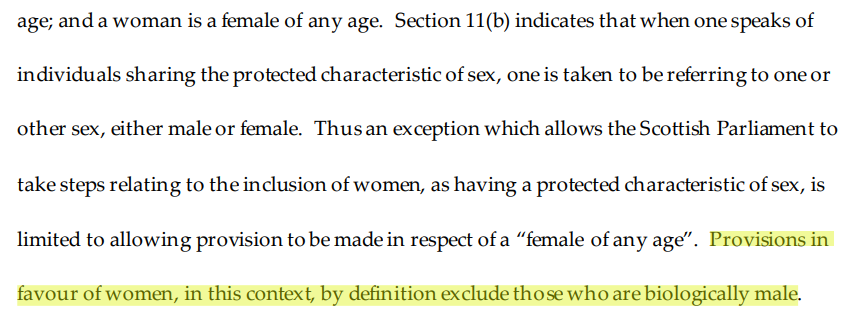
SNP minister @kaukabstewart says that we shouldn’t ‘blanket ban’ men from women’s spaces. I thought @scotgov supported the decision of the Supreme Court? Perhaps I’ve been in a fever dream for the past year.


@ScotGovFairer @scotgov It appears to be a £200k contact, at a time when frontline VAWG services are in financial crisis. Who is the audience? The Scottish Government. This looks like a project that could be delivered in-house. inspiringscotland.org.uk/wp-content/upl…







"Figure 03" AI-powered robot accompanies first lady Melania Trump to a White House summit on empowering children with educational technology.
