The Red Sea Monitor

455 posts

The Red Sea Monitor banner
The Red Sea Monitor

The Red Sea Monitor

@redseamonitor

Tracking maritime security, naval movements, and chokepoint geopolitics in the Red Sea

加入时间 Haziran 2024
561 关注802 粉丝
置顶推文
The Red Sea Monitor
The Red Sea Monitor@redseamonitor·
Yesterday it was Egypt and Eritrea. Here is the bigger picture. Saudi Arabia, Turkey and Egypt have formed a de facto Red Sea axis, crystallized through a series of maritime pacts and military synchronizations across the Horn of Africa. By early 2026 this framework shifted from rhetoric to action. Port Sudan has a Turkish military base. Laasqooray port in Somalia is activated. The SAF in Sudan receives financial backing from Riyadh estimated in the hundreds of millions. This is not a collection of separate bilateral relationships. It is a coordinated architecture for controlling who has access to the African shore of the Red Sea and who does not. The rules-based order governing this waterway is not under pressure. It has already been replaced. hornreview.org/2026/01/09/the…
English
5
18
74
13.2K
The Red Sea Monitor
The Red Sea Monitor@redseamonitor·
TURKEY secured a 99-year lease on Suakin Island on Sudan's Red Sea coast in 2017. Its drones are now striking RSF targets from a covert Egyptian base in the Sahara. This is not drone diplomacy. It is infrastructure acquisition dressed as military support. Ankara secured the Suakin lease officially to restore its Ottoman-era port. Egypt and Saudi Arabia were sufficiently alarmed by the naval dock provisions to suspect Turkey had a military base in mind all along. Nobody believes the official explanation now. By late 2025 Turkey had shifted from declared neutrality to overt SAF alignment Bayraktar drones, military cargo deliveries to Port Sudan, technical support for the SAF's war effort. Ankara came to view the RSF's decentralized model as a direct threat to its Red Sea interests, where a unified state is crucial for securing trade routes and port concessions. Turkey is not backing the SAF not just because it believes in the SAF. It is backing the SAF because the SAF controls Port Sudan and Port Sudan is on the Red Sea. The humanitarian corridor and the military acquisition target are the same piece of infrastructure. fairobserver.com/region/africa/…
English
2
10
24
2.2K
The Red Sea Monitor 已转推
Esfandyar Batmanghelidj
“The financial boost from a modest fee could revitalize this body, allow it to expand its remit to providing a wider range of environmental and safety-related services in the Persian Gulf and Gulf of Oman.” A couple months ago, I wrote about why a fee to support environmental remediation in the Strait of Hormuz might be the best way to make the idea of a “toll” in the Strait of Hormuz palatable for regional countries. Iran and Oman can utilize an existing multilateral body called ROPME. bourseandbazaar-substack.org/p/how-a-hormuz…
English
4
27
96
9.3K
The Red Sea Monitor 已转推
Windward
Windward@WindwardAI·
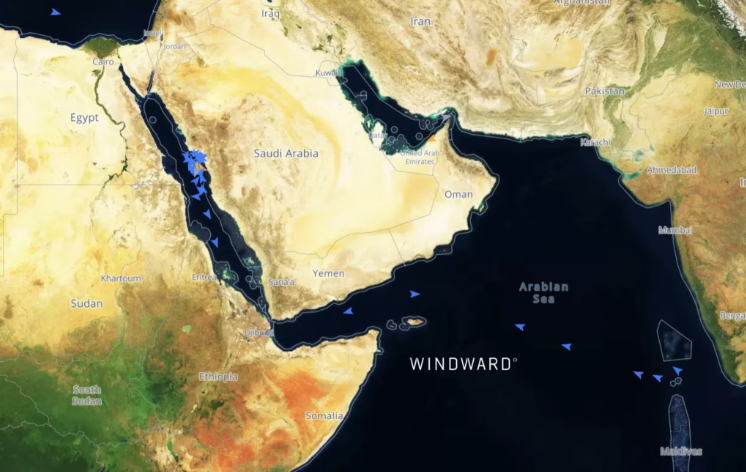
The Saudi maritime pivot is visible in vessel behavior. Windward tracked weekly tanker calls at Saudi Red Sea ports rising from 58 in late December to more than 90 by early March. The image below shows 52 VLCCs simultaneously underway to Yanbu, with the East-West Pipeline operating at full capacity (March 30). The Red Sea has become a primary corridor, not just an alternative one.
Windward tweet media
English
0
4
6
926
The Red Sea Monitor
The Red Sea Monitor@redseamonitor·
A deal is not a reopening. A reopening is not a recovery. Even in the most optimistic scenario with a deal signed this week, no complications, markets behaving rationally the Hormuz supply crisis doesn't bottom until November. Mine clearance alone takes 6-8 weeks and cannot begin until the war formally ends. Insurers won't move until clearance is complete. Production restart takes months. Refinery reconfiguration adds weeks on top. Global inventories are down 500 million barrels and LNG facilities will be tight for 2-3 years. Every ceasefire announcement moves oil prices. None of them move this timeline. November is the floor. Not the forecast.
The Red Sea Monitor tweet media
English
1
0
3
184
The Red Sea Monitor
The Red Sea Monitor@redseamonitor·
Ethiopia is being squeezed from both directions simultaneously. Egypt locking in Eritrea closes the northern access route. The SAF-Egypt relationship closes the southern one Port Sudan, the one Red Sea entry point Ethiopia might otherwise have leveraged as a transit corridor, is controlled by a government Cairo actively backs.
English
1
0
6
351
The Red Sea Monitor
The Red Sea Monitor@redseamonitor·
ETHIOPIA just accused Egypt of blocking its Red Sea access bid. Days after Cairo signed a maritime cooperation deal with Eritrea Ethiopia's historic adversary. This is not a bilateral dispute. It is the Horn of Africa's land and sea rivalries being fought through port agreements. Egypt's foreign minister travelled to Asmara personally and stated that Red Sea governance must remain the "exclusive responsibility" of littoral states. "Non-littoral parties have no right to engage in arrangements related to the Red Sea." That statement is not about Ethiopia. It is Egypt staking a claim to regional maritime governance at the exact moment the corridor is most contested and locking in Eritrea's 1,200 kilometers of coastline while doing it. Ethiopia is being squeezed out of the Red Sea by the very states it needs to work with. That has consequences for every trade corridor feeding into the Horn. al-monitor.com/originals/2026…
English
6
10
27
4.7K
The Red Sea Monitor
The Red Sea Monitor@redseamonitor·
THE RED SEA is no longer a trade corridor. It is a power vacuum with too many actors and no dominant one. This is not a shipping disruption story. It is a governance collapse story. The US and China have military bases in Djibouti 10 kilometers apart. Russia and Egypt are deepening their Sudan presence. Turkey is running drone diplomacy across the Horn. The Houthis have closed the corridor without controlling a single port. The GIS analysis makes one conclusion that cuts through everything else: no single power dominates. But here is what that framing misses. The absence of a dominant power is not a temporary condition waiting to be resolved by diplomacy. It is the permanent new architecture because every actor has calculated that the rules-based order governing this corridor no longer applies and has stopped behaving as if it does. The corridor is not being contested. It is being partitioned informally, incrementally, one base and one proxy at a time. gisreportsonline.com/r/red-sea-geop…
English
0
3
10
456
The Red Sea Monitor 已转推
Bloomberg
Bloomberg@business·
If the Strait of Hormuz doesn’t open by August, there may be a risk of a recession rivaling the great financial crisis. bloomberg.com/news/newslette…
English
150
594
1.5K
299.9K
The Red Sea Monitor
The Red Sea Monitor@redseamonitor·
The Iran blockade is working on a longer timeline than markets assume. China built a 1.24 billion barrel inventory buffer. Switched to Russian crude. Banked 65 days of Iranian supply before the pressure hit. That preparation is now running out. The cargo-to-payment cycle from Kharg Island runs four months. The clock started in March. By July the buffer is gone and the blockade bites. Every alternative crude corridor just became the most valuable real estate on earth. Berbera noticed.
The Red Sea Monitor tweet media
English
1
2
5
244
The Red Sea Monitor
The Red Sea Monitor@redseamonitor·
CHINA JUST LOST ACCESS TO IRANIAN CRUDE. It is not panicking. That is the most analytically interesting thing happening in oil markets right now. China's crude imports fell to their lowest since September 2022 in April. But instead of drawing down stocks, Beijing kept building them extending inventories to a record 1.24 billion barrels. Iran still has 105 million barrels already positioned outside the blockade roughly 65 days of Chinese demand at April rates. Chinese and Indian refiners have ramped up Russian crude purchases to fill the medium-sour barrel shortage, drawing down Russian crude on water by around 60 million barrels since March. The blockade won't hit Iran's revenues for another two to three months the typical cargo-to-payment cycle from Kharg Island to northeastern China runs close to four months total. China is not scrambling. It is waiting. With 65 days of Iranian supply already banked and Russian crude filling the gap, Beijing has more runway than Washington's blockade timeline assumes. That clock is running in both directions simultaneously. vortexa.com/insights/impor…
The Red Sea Monitor@redseamonitor

THE US BLOCKADE has effectively cut off Iranian oil exports to Asia. Four weeks. No VLCCs. No suezmaxes. The data is unambiguous. The yardstick is simple. Iranian tankers sail dark from the Gulf of Oman, switch AIS back on when they hit the Malacca Strait. That pattern has run for years. It has now stopped. The last two tracked shipments — sanctioned tankers Huge and Derya — loaded before the blockade began and avoided Malacca entirely, taking the unusual Lombok Strait route between Bali and Lombok instead. The last vessel through Malacca from Iran was April 24. That cargo also loaded pre-embargo. 84 commercial vessels redirected. Four disabled. 39 Iranian tankers now sitting as floating storage in the Gulf. Around 11 more anchored off Chinese teapot refinery ports — waiting, not delivering. China bought 90% of Iran's crude. That flow has stopped. The shadow fleet survived every previous pressure campaign. It has not survived this one.

English
0
3
7
704
The Red Sea Monitor
The Red Sea Monitor@redseamonitor·
THE US BLOCKADE has effectively cut off Iranian oil exports to Asia. Four weeks. No VLCCs. No suezmaxes. The data is unambiguous. The yardstick is simple. Iranian tankers sail dark from the Gulf of Oman, switch AIS back on when they hit the Malacca Strait. That pattern has run for years. It has now stopped. The last two tracked shipments — sanctioned tankers Huge and Derya — loaded before the blockade began and avoided Malacca entirely, taking the unusual Lombok Strait route between Bali and Lombok instead. The last vessel through Malacca from Iran was April 24. That cargo also loaded pre-embargo. 84 commercial vessels redirected. Four disabled. 39 Iranian tankers now sitting as floating storage in the Gulf. Around 11 more anchored off Chinese teapot refinery ports — waiting, not delivering. China bought 90% of Iran's crude. That flow has stopped. The shadow fleet survived every previous pressure campaign. It has not survived this one.
The Red Sea Monitor tweet media
English
6
39
96
10.3K
The Red Sea Monitor
The Red Sea Monitor@redseamonitor·
The documentation is unambiguous and comes from the highest possible sources. The UN's Independent International Fact-Finding Mission concluded that the SAF's starvation tactics included the use of bureaucratic and administrative impediments to obstruct the delivery of aid. The Danish Refugee Council, Norwegian Refugee Council and Mercy Corps stated in a joint report that the hunger crisis was human-made with the parties deliberately hindering humanitarian assistance and turning hunger into a weapon of war. UN News
English
0
0
0
68
The Red Sea Monitor
The Red Sea Monitor@redseamonitor·
Aid organisations that tried to scale up operations in Sudan were retaliated against — through delayed visas for staff travelling to Port Sudan and by issuing fewer travel permits in SAF-controlled areas. Visa applications for aid workers take up to three months to approve. Only UN organisations receive multiple-entry visas. In May 2024 alone, only 110 visas were approved out of 355 pending requests and the backlog was growing. This is not a capacity problem. It is a permission system with a queue.
English
1
0
0
82
The Red Sea Monitor
The Red Sea Monitor@redseamonitor·
THE PORT SUDAN FILES — Part 4 of 5 FILTER THREE. PORT SUDAN ITSELF. Shipments have survived Hormuz. They have passed Bab al-Mandeb. They have arrived at Port Sudan. This is where the third filter begins. And this one has been running for three years. 🧵
English
1
0
0
111
The Red Sea Monitor
The Red Sea Monitor@redseamonitor·
THE UAE just made a $1 billion bet that Hormuz never fully reopens. This is not crisis infrastructure. It is permanent infrastructure and the difference matters enormously. The Abu Dhabi crude pipeline already moves 1.8 million barrels a day to Fujairah bypassing Hormuz entirely. The new expansion doubles that. UAE Crown Prince Sheikh Khaled didn't say "until the crisis resolves." He said ADNOC is entering "a new phase of world-scale project execution." Last week the UAE left OPEC. This week it fast-tracked permanent Hormuz bypass capacity. Both decisions point in the same direction. Abu Dhabi is not negotiating over the current corridor. It is planning for an entirely different looking future for shipping mg.co.za/world/2026-05-…
English
0
2
5
456