置顶推文
Thrive Script
700 posts

Thrive Script
@thrivescript
Writing your thriving story, one day at a time | Mindset shifts • Better habits • Self-mastery | Daily wisdom for the person you’re becoming.

United States 加入时间 Haziran 2020
1.9K 关注570 粉丝

Most people wait for life to get easier before they start feeling better. Monks do the opposite. They build habits that create resilience before difficulty even arrives. And the interesting thing is that none of these habits are complicated. They are simple, daily practices that anyone can adapt, regardless of whether you live in a monastery or a studio apartment.
Here are five of them.
The first is starting the day with formal gratitude. Not gratitude as a vague feeling, but as a structured morning ritual. Before anything else, consciously acknowledge what you are thankful for. Your teachers. Your family. The people who support you in small, daily ways. One element of this practice that tends to surprise people is being grateful for difficult individuals too. The colleague who frustrates you. The person who is consistently rude. In monastic thinking, these people are essential. They are the ones who give you the opportunity to practice patience and build mental strength. Without them, those qualities stay untested and theoretical. The goal is to begin each day with a genuine sense of value in your life and in the people around you.
The second is meditating before the world gets loud. Morning is the one window in the day when both the external environment and the internal mind are at their most peaceful. Monks treat this time as sacred, and for good reason. A short practice before the day's demands begin, whether that is a breathing exercise or a loving-kindness meditation, creates a buffer. It centers you before the noise starts. And that centered state makes you significantly less reactive to whatever challenges arrive later. You do not need a long session. Even ten to fifteen minutes of intentional stillness is enough to change the tone of an entire day.
The third is journaling as a structured evening review rather than a diary. Write down the good things you did during the day. Compare what you intended to do with what you actually did. Look for the gap between your values and your behavior, not to judge yourself, but to close that gap over time. The consistent act of writing down what went well trains your brain to search for the good throughout the day automatically. Over time, this quietly rewires the default lens through which you see your life.
The fourth is turning one meal into a meditation. In many monasteries, the dining hall is completely silent. Eating is treated as a mindfulness practice, not a break from one. Before your first bite, take a moment to reflect on why you are eating. Then pay attention to the actual experience of the meal. The texture. The taste. Nothing else. This is particularly useful for people who feel they have no time to meditate. You are already eating every day. That time exists. It is simply a matter of how you use it. One mindful meal a day is a genuine practice built into something you were going to do anyway.
The fifth is planning tomorrow before today ends. Most people wake up and react to the day. The night before approach is simple: before you sleep, decide what the next day looks like. This removes the "what should I do next?" confusion that quietly drains energy and leads to wasted hours. One addition that makes this significantly more effective is deciding to do the hardest task first. Not the easiest. Not the most comfortable. The one you have been avoiding. Completing that early creates a sense of mental freedom that carries through the rest of the day. Everything after it feels lighter.
I find it worth noting that the argument of not having time for any of this does not hold up. Every person has the same 24 hours. The difference in how people feel at the end of the day comes down almost entirely to how those hours are structured.
Character is not something you are born with in a fixed form. It is the accumulation of your repeated thoughts and daily actions. These five habits are not dramatic. None of them require a retreat or a lifestyle overhaul. But practiced consistently, they quietly shape how you think, how you respond, and ultimately who you become.
Start with one. Build from there.
#MindsetMatters #MonkHabits #MorningRoutine #Mindfulness #PersonalDevelopment #SelfImprovement #GrowthMindset #Productivity #DailyHabits #MentalPerformance

English

Most sleep advice assumes your biology works the same as everyone else's. Wake up early. Get morning sunlight. Be in bed by ten. That advice is not wrong. It is just wrong for a lot of people, and nobody tells them that.
Your chronotype is your genetically predetermined sleep and hormone schedule. It is not a preference or a personality trait. It is a biological blueprint that controls when your cortisol peaks, when your body temperature rises, when your focus is sharpest, and when your system starts winding down. Fighting it does not make you more productive. It just makes you tired in a way that never quite goes away.
There are four chronotypes. Most people have never heard of three of them.
The Lion
Lions wake naturally around 5:30 AM with high energy and a clear head. They are organized, driven, and genuinely at their best in the early hours. The limitation shows up socially. By evening, their energy is largely spent. Late dinners, evening events, and social plans often feel like obligations rather than enjoyment. If you are a Lion who forces yourself to stay out late and sleep in on weekends, you are working against yourself.
The Bear
Bears follow the natural arc of the sun. Alert through the morning and mid-afternoon, ready for rest at a reasonable hour in the evening. About 55 percent of the population falls into this category, which is precisely why the standard 9-to-5 work structure was built the way it was. It was designed for Bears. If the traditional schedule has always felt manageable for you, this is probably why.
The Wolf
Wolves rarely fall asleep before midnight. Their creativity and focus peak late in the evening, which is why this group is disproportionately represented among artists, writers, musicians, and performers. If you are a Wolf who has spent years trying to become a morning person, I want you to hear this clearly: forcing an early schedule does not convert you into a Lion. It just produces a chronically under-slept Wolf with worse output.
The Dolphin
Dolphins have irregular, light, and often unrefreshing sleep regardless of how many hours they get. They wake during the night, struggle to feel rested, and frequently try to solve the problem by adopting an earlier schedule. Without addressing the underlying irregularity, that effort rarely lands the way they hope.
Your Chronotype Changes as You Age
This part surprised me. Your chronotype is not fixed for life. Children and infants lean toward Lion patterns. As kids move into their school years, they gradually shift toward Bear. Adolescents undergo a genuine biological shift toward Wolf behavior, which means the teenager who cannot fall asleep before midnight and cannot wake up before nine is not being lazy. That is actual physiology. As people move into their senior years, many shift back toward earlier sleep and wake times naturally.
Three Rules That Apply to Every Chronotype
Regardless of your type, these three habits make a real difference.
Stop eating at least two hours before bed. Active digestion keeps your body in an alert metabolic state and works directly against the transition into sleep.
Cut all caffeine after 2 PM. Caffeine has a half-life of roughly five to six hours in most adults. That afternoon coffee is still active in your system well into the evening, even if you do not feel it.
Keep a consistent wake-up time every single day, including weekends. This is the single most important factor for anchoring your circadian rhythm. Everything else in your biology begins to organize around it.
The goal is not to become an early riser. The goal is to stop fighting your own biology and start working with it. When your schedule aligns with your chronotype, your energy, focus, and recovery all move in the same direction instead of pulling against each other.
Find your type. Build around it. That is where better sleep actually starts.
#Chronotype #SleepScience #BetterSleep #NeuroscienceOfSleep #ProductivityTips #MindsetMatters #PersonalDevelopment #SelfImprovement #CircadianRhythm #SleepTips

English

Most people assume their sleep problems are random. They are not. Your sleep is failing for specific biological reasons, and once you understand what those reasons are, you can actually fix them.
There are two forces controlling your sleep and wakefulness every single day. Most people ignore both of them entirely. Here is what they are and what to do about it.
Force One: Adenosine
From the moment you wake up, a chemical called adenosine starts building in your brain. Think of it as a pressure gauge. The longer you are awake, the more it accumulates, and the stronger your urge to sleep becomes.
Here is the part most people get wrong about caffeine: it does not remove adenosine. It just blocks the receptors that adenosine would normally attach to. When the caffeine wears off, all of that built-up adenosine floods in at once with even more intensity. That is not a coincidence. That is the biology behind your afternoon crash, and adding another coffee just delays the same problem by a few hours.
Force Two: Your Circadian Rhythm
Your body runs on a 24-hour internal clock managed by a cluster of neurons in the brain. Every morning when you wake up, your body releases a pulse of cortisol. That pulse starts a biological timer. Roughly 12 to 14 hours later, your brain begins releasing melatonin and preparing you for sleep.
Your sleep timing is not random. It is a clockwork sequence that begins the moment you open your eyes. Most sleep problems are a disruption somewhere in that sequence.
Morning Sunlight Is the Most Powerful Tool You Are Not Using
The neurons that manage your internal clock are calibrated through light. Specifically, they respond best to sunlight when the sun is near the horizon, the kind you see at sunrise. This exposure anchors your clock, sharpens the cortisol-to-melatonin sequence, and sets the tone for how alert you feel throughout the day.
One detail that surprised me: viewing sunlight through a window is about 50 times less effective than being outside. Glass filters out the specific light qualities your brain needs. On a clear day, two to five minutes outdoors is enough. On a cloudy day, aim for ten to twenty minutes. This one habit alone can shift how you feel within a week.
Evening Light Is Quietly Destroying Your Sleep
The same system that benefits from morning light is severely disrupted by light at night. After about 10 to 14 hours of being awake, your eyes become much more sensitive. A small amount of overhead light or screen time in the evening is enough to shift your internal clock later and delay your ability to fall asleep.
Light exposure between 11 PM and 4 AM has an additional consequence: it activates a brain region that suppresses dopamine. That means lower mood, more anxiety, and reduced focus the next day. Not from poor sleep alone, but from the light itself.
A simple fix most people overlook: switch to floor lamps or desk lamps in the evening. The retinal cells that signal your internal clock are in the lower half of your eye and scan upward. Overhead lighting activates them far more than low lighting does. Repositioning your light sources is a small change with a meaningful effect.
When You Need More Support
If behavioral changes are not enough, three supplements have solid research behind them. Magnesium Threonate crosses into the brain and increases GABA activity, which calms the nervous system. L-Theanine quiets the kind of racing thoughts that keep you lying awake. Apigenin, a chamomile-derived compound, acts as a mild sedative to ease you into deeper sleep.
Worth noting: most commercial melatonin supplements are dosed 10 to 100 times higher than what your body naturally produces. That can interfere with other hormonal systems over time. Use it with caution if at all.
One more tool worth adding to your routine is Non-Sleep Deep Rest, sometimes called NSDR. A 20-minute Yoga Nidra session has been shown in research to restore dopamine levels in the brain and produce recovery comparable to a full nap, without the grogginess.
You do not need a dramatic lifestyle change to sleep better. You need to understand what your biology is already trying to do and stop getting in the way.
Start with morning light. Protect your evenings. Let the rest follow.
#SleepScience #CircadianRhythm #NeuroscienceOfSleep #BetterSleep #MorningRoutine #ProductivityHacks #MindsetMatters #SelfImprovement #PersonalDevelopment #BrainHealth

English

Most people treat sleep like a passive event. You lie down, close your eyes, and hope your body figures it out. I used to think the same way. But sleep is not passive. It is a biological process, and like any process, it responds directly to what you do in the hours before it.
Here is what changed my perspective: most sleep problems are not medical. They are behavioral. They are habits disguised as disorders. And that is actually good news, because habits can be fixed.
These six adjustments are backed by neuroscience, and you can start applying them tonight.
Regularity is everything
This one is the foundation. Going to bed and waking up at the same time every single day, including weekends, anchors your brain's internal 24-hour clock. When that clock gets consistent signals, your entire sleep system runs more efficiently. When it does not, the system starts to break down. One irregular weekend can quietly undo progress you built all week.
Your bedroom needs to be cooler than you think
Your core body temperature needs to drop by about 1 degree Celsius to initiate sleep. That is not a preference. That is biology. A room temperature around 65 degrees Fahrenheit (roughly 18 degrees Celsius) creates the right conditions. A room that is too warm delays sleep onset significantly. A room that feels slightly too cool almost always works in your favor.
Darkness is a biological trigger, not just a preference
Melatonin is the hormone that regulates your sleep timing, and it is released in response to darkness. The problem is that modern life keeps us chronically exposed to bright light well into the night. In the hour before bed, dim your lights by half and step away from screens. Blackout curtains or an eye mask help too. These small changes send a clear signal to your brain that sleep is approaching.
The 25-minute rule
Your brain is an associative device. If you lie in bed unable to sleep, your brain starts linking the bed with wakefulness. Over time, that association deepens and makes the problem worse. The fix is simple: if you have been awake for around 25 minutes, get up. Go to another room, do something calm, and return only when you genuinely feel sleepy. This interrupts the cycle and helps your brain relearn what the bed is actually for.
Caffeine and alcohol are quiet disruptors
Caffeine blocks the receptors in your brain that build sleep pressure throughout the day. Even if you fall asleep fine after an afternoon coffee, the architecture of your sleep is affected in ways you do not feel but your body absolutely registers. The cutoff matters more than most people realize.
Alcohol is the other one. A lot of people use it to wind down, assuming it supports sleep. It does not. Alcohol fragments your sleep cycles and reduces the quality of deep, restorative rest. You might fall asleep faster, but you wake up less recovered than you would have otherwise.
Build a proper wind-down routine
Sleep is not a light switch. Think of it like landing a plane: the descent has to be gradual, and the runway has to be long enough. In the last 20 to 30 minutes before bed, step back from the demands of the day intentionally. The specific activity matters less than the consistency. A repeated routine signals to your brain that sleep is close, and that transition gets noticeably smoother over time.
One thing worth saying clearly: if you suspect something medical is affecting your sleep, behavioral changes alone may not be enough. Fix the habits first. If problems persist, see a doctor.
Sleep is not a luxury you fit in when everything else is done. It is the foundation every other health habit rests on. Start with regularity. Keep your room cool and dark. Be intentional about the hour before bed.
These are not complicated changes. Applied consistently, they can genuinely transform your nights and everything that follows.
#SleepScience #BetterSleep #MindsetMatters #NeuroscienceOfSleep #ProductivityTips #SelfImprovement #PersonalDevelopment #SleepTips #HealthyHabits #MentalPerformance

English

Your frustration is completely valid, and you are right to separate two things here. The imaging research is real and replicable, but it works at a group level, not yet at the individual level. A scan cannot confirm or rule out ADHD for a single person the way it can for other conditions. The science is genuinely ahead of the clinical tools available right now.
What you went through in Australia is a system design failure, not a failure of the science itself. The cost barrier and the lack of diagnostic confidence you experienced are real problems worth calling out. But they exist alongside legitimate biology, not instead of it.
English

This is interesting.. surely this type of imaging should be part of a ADHD diagnosis?
My experience is that it was very difficult and expensive (in Australia) to get diagnosed. It took a psychologist and then 2 x $900 appointments with a psychiatrist to get close. At the end of the day, I pulled out because I had very little faith that they actually had any real clue if I really had ADHD... Basically, If I paid enough money, they would give me drugs.
To this day I don't actually know if I have ADHD... I certainly have many of the symptoms and pass the "tests" with flying colors😅
This type of physical evidence would put these charlatans out of business
English

I spent years thinking ADHD was just a label people used to explain away bad behavior or laziness in kids who could not sit still.
Then I actually looked at the science. And I have not been able to think about it the same way since.
Here is what the research actually shows, because I think most people, including many who have ADHD, do not fully understand what is happening inside the brain.
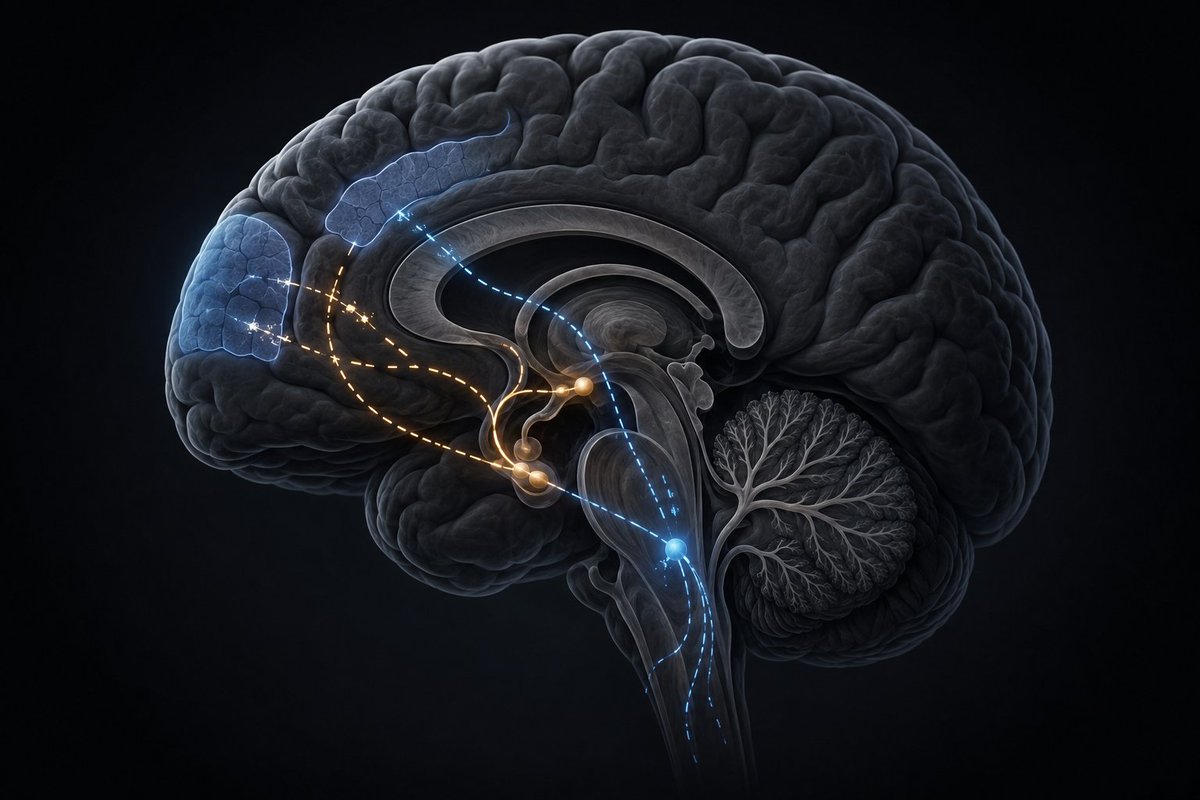
At the structural level, two specific regions are consistently found to be measurably smaller in people with ADHD. The anterior cingulate gyrus and the dorsolateral prefrontal cortex, both responsible for goal-directed behavior and executive control, show physical differences in imaging research. I want you to sit with that for a second. This is not a gap in discipline. It is a gap in anatomy. You cannot willpower your way out of a structural difference in your brain.
Two neurochemical systems drive most of the dysfunction. The mesolimbic dopamine pathway governs motivation and reward. When it is disrupted, the brain simply cannot generate enough drive for tasks that are not immediately stimulating. The locus coeruleus noradrenergic system governs alertness and stress response. When that one is disrupted, regulating attention and responding proportionally to situations becomes neurologically difficult. Both systems need to function together for executive control to work. In ADHD, neither does so reliably.
And if you think ADHD is always obvious, it is not. The combined type, involving both inattention and hyperactivity, makes up around 62% of cases. But the inattentive type, which is far more common in women and girls, produces no visible restlessness at all. It looks like careless errors, internal drift, and quiet disengagement. No disruption. No hyperactivity. Just a brain struggling silently, which is exactly why so many people go undiagnosed for decades.
I also want to address something I see misunderstood constantly. Emotional dysregulation in ADHD is not a personality flaw or oversensitivity. It is a core feature of the same prefrontal and dopaminergic disruption that drives every other symptom. When someone with ADHD has an intense reaction to a small obstacle, their regulatory system is not being dramatic. It is running without sufficient neurochemical support. That is a very different thing.
The heritability rate for ADHD is 74%. If you have it, siblings are three to four times more likely to have it too. Prenatal exposure to alcohol, nicotine, or insecticides, along with low birth weight and premature delivery, are also documented risk factors. ADHD is not caused by parenting style. It is not caused by too much screen time. It is a neurodevelopmental condition with clear, measurable biological origins.
Diagnosis is clinical because no lab test or brain scan currently exists for it. Children need six of nine DSM-5 criteria present across more than one environment. Adults need five. The multi-environment requirement matters because a brain condition is pervasive. A difficult classroom or a hard year at work is situational. ADHD is not.
And when it comes to treatment, no single approach does everything. Behavioral therapy and CBT build the practical skills the ADHD brain was not wired to develop automatically. Stimulant medications block the reuptake of dopamine and noradrenaline, increasing their availability where it is needed most. Non-stimulant options exist for those who do not respond well to stimulants. Exercise supports the same brain systems involved in ADHD and is consistently documented as a meaningful add-on.
The combination is the strategy. Not one thing. All of it working together.
I think the most important shift I made was understanding that the biology is where the self-blame ends. If you have spent years wondering why you cannot just focus, just start, just remember, just regulate, the answer was never a character flaw. It was a system running without what it needed.
That is not a reason to give up. It is a reason to finally get the right support.
#ADHD #ADHDAwareness #Neuroscience #MentalHealth #ADHDBrain #ExecutiveFunction #Dopamine #Neurodiversity #ADHDAdults #BrainScience

English

I used to think I had a bad memory.
I would finish a book, watch an educational video, take pages of notes, and feel genuinely good about what I had just learned. Then three days later, someone would ask me about it and I would draw a complete blank. Not a fuzzy recollection. Nothing.
For a long time, I blamed my brain. Now I understand it was never my brain. It was my method.
There is a phenomenon called the fluency illusion. It is the feeling of clarity you get when information is presented well. The explanation makes sense. The concept clicks. You feel like you have learned something. But that feeling is a trap, because recognition and actual remembering are two completely different things. Research by Hermann Ebbinghaus showed that we lose roughly 70% of what we learn within 24 hours if we do not actively reinforce it. Seventy percent. Gone. Not because you are forgetful. Because passive consumption was never designed to build lasting memory.
The moment I understood this, everything I thought I knew about studying and learning fell apart. And I had to rebuild it from scratch.
The framework I now use is called T.R.A.P. Four steps. Each one grounded in how memory actually works.
**T is for Test.** After you finish reading or watching something, close it. Look at a wall. Now explain what you just learned out loud, from memory, with nothing in front of you. I know how uncomfortable that feels the first time. That discomfort is the point. The harder your brain has to work to pull something out, the more durable that memory becomes. If you cannot explain it cold, you do not own it yet. Simple as that.
**R is for Retain.** I used to review my notes either immediately after learning something or weeks later when an exam was approaching. Both are wrong. Reviewing too soon does not challenge the brain enough. Reviewing too late means you are rebuilding from near zero. The optimal moment to review is just before the memory would otherwise be lost. Spaced repetition tools like RemNote automate this entirely. They track each concept and surface it for review at exactly the right window. You do the recalling. The system handles the scheduling.
**A is for Associate.** Memory is not a filing cabinet. It is a web. Every new piece of information needs a road back to it, and that road is built by connecting the new concept to something you already know. I learned the economic concept of opportunity cost by thinking about a restaurant menu. Choosing one dish means giving up every other dish on that menu. That is opportunity cost. I have never forgotten it since. When you encounter something new, ask yourself: what does this remind me of? That single question is how durable memory gets built.
**P is for Perform.** This is the one most people skip, and it is the one that matters most. Notes are not knowledge. I can fill a notebook with ideas I will never actually use. True mastery only shows up when you build something real with what you have learned. A project. A piece of writing. A conversation where you teach the concept to someone else. Performing the information forces it out of passive storage and into active, functional use. That is when it becomes a skill rather than a fact.
In an era where AI can generate a fluent explanation of anything within seconds, the ability to recognize information has almost no value on its own. What remains genuinely valuable is the ability to connect ideas, apply them, and produce something that did not exist before you engaged with them.
A page full of notes is not music. Notes are what you recognize. Music is what you play on your own.
Start with the test. Right now, close this article and tell me what you remember.
#Learning #Memory #ProductivityTips #NeuroscienceOfLearning #StudySmart #BrainTraining #PersonalDevelopment #GrowthMindset #SpacedRepetition #ActiveRecall

English

I used to picture ADHD as a hyperactive eight-year-old who could not sit still in class.
That image is not wrong. It is just wildly incomplete. And because of how incomplete it is, millions of people are walking around completely unaware that what they are experiencing has a name.
Let me share what I have learned, because this reframed a lot of things for me.
There are three distinct presentations of ADHD, and only one of them looks like the stereotype. The hyperactive-impulsive type is what most people picture: restlessness, excessive talking, interrupting, difficulty waiting. That one tends to get caught early, especially in boys, because it is visible and disruptive in a classroom.
But the inattentive type? That one is quiet. It looks like losing things constantly, drifting out of conversations mid-sentence, and leaving tasks half-finished with no explanation for why. No restlessness. No outburst. Just a brain that cannot hold its own attention in place. This type, which is far more common in women and girls, gets missed all the time because it never makes noise.
Then there is the combined type, which involves six or more symptoms from both categories simultaneously. That is the most common presentation. And all three share the same underlying neurology. The expression just differs.
What I find particularly important to understand is that symptoms do not appear out of nowhere. They become visible when the demands of life increase. Early childhood is often manageable. Then school starts. Suddenly, sustained attention, multi-step planning, organization, and following layered instructions become daily requirements. That is when the gap between an ADHD brain and the structure surrounding it becomes impossible to ignore.
And it does not resolve in adolescence. Or adulthood. The majority of people with ADHD continue experiencing symptoms throughout their entire lives. They get better at masking and compensating, but the underlying neurology does not change on its own. I think this is one of the most important things to understand, because "I had it as a kid" does not mean it went away. It often means you got better at hiding it.
Diagnosis requires symptoms to be consistent across more than one environment. Not just at home. Not just at school. Multiple settings, multiple observers, and at least six DSM-5 criteria that meaningfully interfere with daily functioning. That threshold exists for good reason. Everyone gets distracted. What makes ADHD a diagnosis is the severity, the persistence, and the real-world cost of it.
Treatment works best as a combination. Behavioral therapy builds the practical skills the ADHD brain was not wired to develop automatically, things like time management, organization, and emotional regulation. For younger children, parent training is just as critical, because the home environment either supports or further dysregulates a developing ADHD brain. Medication, both stimulant and non-stimulant options, addresses the chemistry by helping the brain filter distractions and direct attention more effectively. But medication alone does not do everything. The behavioral work fills in what chemistry cannot.
Here is what I want you to take away from all of this.
ADHD makes life harder. It does not make success impossible. The same brain that struggles with routine and low-stimulation tasks is often the one generating unexpected creative solutions, bringing unusual energy to meaningful work, and approaching problems from angles nobody else thought to try. The right support does not just reduce the difficulties. It gives those strengths room to finally show up consistently.
If you have been wondering whether what you experience might be ADHD, I would genuinely encourage you to pursue a professional assessment. Not to add a label. To finally understand the operating system you have been running without a manual this whole time.
That knowledge changes everything.
#ADHD #ADHDAwareness #Neurodiversity #MentalHealth #ADHDAdults #ADHDWomen #BrainScience #ExecutiveFunction #ADHDDiagnosis #PersonalDevelopment

English

Only 1 in 5 adults with ADHD knows they have it.
I want you to think about that for a moment. The other four are out there right now being told they are anxious, lazy, too sensitive, or simply not trying hard enough. They are in therapy for depression that is not fully lifting. They are exhausted from burnout nobody can explain. They are managing symptoms that have a name nobody has given them yet.
I find this one of the most important conversations we are not having loudly enough.
The diagnostic gap is not evenly distributed. In girls and women, ADHD tends to present as internal clustering rather than visible disruption. OCD patterns, chronic anxiety, depression, and self-harm are often what gets treated, while the underlying condition driving all of it goes completely unaddressed. In BIPOC and genderqueer communities, diagnostic bias and culturally different presentations mean traditional criteria miss what is right in front of them.
The "ADHD is overdiagnosed" narrative is doing real damage. Because while some populations are being over-identified, the wrong populations are being missed entirely.
What makes it even harder is that ADHD rarely shows up alone. Unaddressed ADHD generates anxiety and depression over time. So people seek help for the burnout without anyone tracing it back to the engine producing it. Sleep deprivation mimics ADHD symptoms so closely that the two regularly get confused, and ADHD brains are also biologically predisposed to insomnia, so the cycle feeds itself. Thyroid dysfunction can produce restlessness that looks like hyperactive ADHD. The overlap between ADHD and autism is significant enough that what presents as an ADHD response might actually be an autistic meltdown.
Treating the surface without identifying the source is one of the main reasons so many adults spend years in treatment that partially works but never quite resolves.
And here is what I think gets missed most: the DSM checklist does not capture what ADHD actually feels like from the inside.
It does not capture hyperfocus so consuming that an entire day passes without eating or noticing the time. It does not capture thoughts arriving so fast they disappear before you can hold them. It does not capture genuinely believing you have time for a shower five minutes before a meeting, not because you are careless but because the gap between now and soon does not register as meaningful. It does not capture emotional responses that arrive with an intensity that feels completely disproportionate and is nearly impossible to regulate in real time.
None of that is on the checklist. All of it defines the daily experience.
I also want to say something about what a late diagnosis actually feels like, because I think it gets glossed over. For most people, it is not just relief. It is grief. You look back at the failed semester, the job you lost, the relationship that collapsed, the decade of wondering what was fundamentally wrong with you, and you realize there was a biological explanation the entire time. That mourning process is real. It is valid. And it is frequently underacknowledged by the medical community.
The good news is that 4 in 5 people with ADHD see meaningful improvement with treatment. For many, medication provides a sense of mental quiet they have genuinely never experienced before. That is not a small thing. But releasing the years of self-blame that came before the diagnosis is its own work, and it deserves as much attention as the treatment itself.
The goal is not to fix your brain into meeting a neurotypical standard.
It is to stop building your life around a brain you were never properly introduced to.
Adapt your life to your brain. Not the other way around.
If any of this sounds like your life, please pursue a professional assessment. Not to collect a label. To finally have a map.
#ADHD #ADHDAwareness #Neurodiversity #MentalHealth #ADHDWomen #ADHDAdults #LateADHDDiagnosis #BrainScience #ADHDAndAnxiety #YouAreNotLazy

English

75% of adults diagnosed with anxiety may actually have ADHD as the underlying cause.
Not anxiety that happens to exist alongside ADHD. Anxiety that is caused by it.
I think about that statistic a lot. Because when you spend years performing competence while quietly waiting for everyone around you to realize you are not as capable as you appear, anxiety is not a disorder. It is a logical response to living that way.
ADHD in adults rarely looks like a hyperactive child in a classroom. Let me show you what it actually looks like.
It looks like a highly creative, genuinely talented professional who cannot understand why a two-minute email takes her twenty minutes. Who forgets requests that matter to the people around her. Who carries a quiet internal voice telling her she is a failure, even when her external results say otherwise. She does not look like she has ADHD. She looks like she has anxiety. Because she does. But the anxiety is not the root. It is the symptom of a brain that has been working twice as hard as everyone else's for years just to keep up.
It also looks like a socially skilled, well-liked person who ignores his mail until the water gets shut off. Who lives in a constant state of crisis management because his brain genuinely requires the urgency of an emergency to generate enough neurological activation to begin. He is not irresponsible. He is running a brain that only turns on under pressure.
Neither of them fits the stereotype. Both of them are exhausted.
Here is something I find particularly important to understand. The perfectionism you often see in high-functioning adults with ADHD is not a personality trait. It is a defense mechanism. If the label you have carried internally since childhood is "lazy," then being flawless becomes your only available rebuttal. Perfectionism is not meticulous by nature in these cases. It is protective by necessity. A way to preemptively counter a narrative that has been running for decades.
At the chemical level, here is what is actually happening. Dopamine is what the brain uses to determine whether something is worth engaging with. Without sufficient dopamine, the brain cannot generate genuine interest in mundane but necessary tasks. Paying a bill. Responding to a routine message. Buying groceries. These are not choices being avoided out of laziness. They are tasks the brain has no chemical foundation for approaching.
Norepinephrine governs executive function and the perception of time. It is what tells the brain that getting to an appointment matters more than finishing one more thing. Without it, everything exists on the same flat plane of urgency. Which means nothing is truly prioritized, and everything eventually becomes a crisis.
Research suggests that 2 to 3 out of every 10 people may be living with untreated ADHD. For most of them, it has never been called ADHD. It has been called stress, anxiety, inconsistency, underachievement, or a personal history of never quite living up to potential.
That gap between how capable a person genuinely is and how much of that capability actually shows up in daily life is one of the most painful features of untreated ADHD. It is not created by lack of effort. It is created by a chemical system that does not match the demands being placed on it.
When the chemistry is addressed, the change is not about becoming someone different. It is about finally being able to access the person who was always there. The creative ideas do not disappear. The swirl becomes navigable. Tasks that once required a crisis to initiate become approachable before they escalate. Presence, with family, with work, with your own life, becomes possible in a way it genuinely was not before.
For someone who has spent decades wondering what is wrong with them, that is not a small thing. That is everything.
If this sounds like your life, please consider a professional assessment. Not because something is broken. Because something has simply gone unidentified for far too long.
#ADHD #ADHDAndAnxiety #Neurodiversity #MentalHealth #ADHDAdults #HighFunctioningADHD #Dopamine #YouAreNotLazy #ADHDAwareness #BrainScience

English

After a stroke, the brain does something that still stops me when I think about it.
Functional MRI research shows it actively prioritizes relearning activity on the affected side. Without being told. Without medication prompting it. The brain, on its own, begins organizing itself around recovery.
That tells you something important about what the brain is capable of when you give it the right conditions. But capability alone is not enough. Recovery follows rules. And those rules apply to every brain, not just ones recovering from injury.
Here are the ten principles that determine how well neuroplasticity actually works.
Use it or lose it.
Neural pathways that go unused weaken and eventually die off through a process called synaptic pruning. This is not a motivational phrase. It is a biological reality. Consistent daily engagement is not optional. It is the minimum requirement for the brain to hold what it has built.
Use it and improve it.
The direct counterpart. Active engagement in physical, cognitive, or language-based tasks regenerates synaptic connections and steadily rebuilds functional ability. The brain responds to demand. Give it a reason to build and it will.
Specificity matters more than general effort.
To rebuild a specific neural pathway, the training has to replicate the exact task being relearned. A stroke patient wanting to regain the ability to write needs to practice writing, not just picking up objects. The brain builds what it is asked to perform, not what is adjacent to it. I find this principle applies just as powerfully to skill-building outside of rehabilitation. If I want to get better at something specific, doing something vaguely related does not move the needle the same way.
Repetition and intensity produce measurably different outcomes.
Research shows that patients who engaged in three hours of therapy per day scored 11.5 points higher on the Fugl-Meyer assessment scale compared to those doing one hour. More is genuinely better. If you are working toward any meaningful cognitive or physical goal, volume of practice is not something you can shortcut your way around.
Time matters, and earlier is better.
The brain is most neurologically primed for change in the acute period immediately following an injury. That window matters enormously. But here is what I also want you to hear: patients in chronic stages can still make real progress. It just requires more sustained effort. Earlier is better. Later is still possible.
Salience accelerates everything.
Salience means personal meaning. When an exercise is tied to something a person genuinely cares about, engagement increases and neurological response deepens. This is why goal-setting is not just motivational. It is neurological. What you care about shapes how effectively your brain reorganizes itself around it.
Neuroplasticity can work against you.
This one I think about a lot. When the brain compensates for a weakness by developing a workaround, it can entrench a harmful pattern before the underlying issue is addressed. A patient with foot weakness who starts hiking their hip to walk is building a new neural pathway for a bad habit. Left unchecked, it becomes permanent. The same principle applies outside rehabilitation. Bad habits are not just behavioral. They are structural. Catching and correcting them early is not a minor detail. It is essential.
Here is what I want you to take from all of this.
These principles were developed in the context of stroke recovery, but they describe how every brain builds and maintains its capabilities. Use it or lose it. Specificity. Repetition. Meaningful goals. Early action. The brain does not distinguish between a patient relearning to walk and you building a new skill or breaking an old pattern.
The rules are the same. And they are on your side if you work with them deliberately.
Train with intention. Repeat with purpose. Stay consistent long enough for the structure to change.
#Neuroplasticity #BrainScience #StrokeRecovery #NeuroscienceOfLearning #BrainTraining #PersonalDevelopment #GrowthMindset #HabitFormation #Neuroscience #MindsetShift

English

I used to think the answer to procrastination was more discipline.
Set the alarm earlier. Remove the distractions. Just start. Push through.
I tried that for years. It did not work. And when I finally understood why, the whole thing clicked in a way that actually changed how I operate day to day.
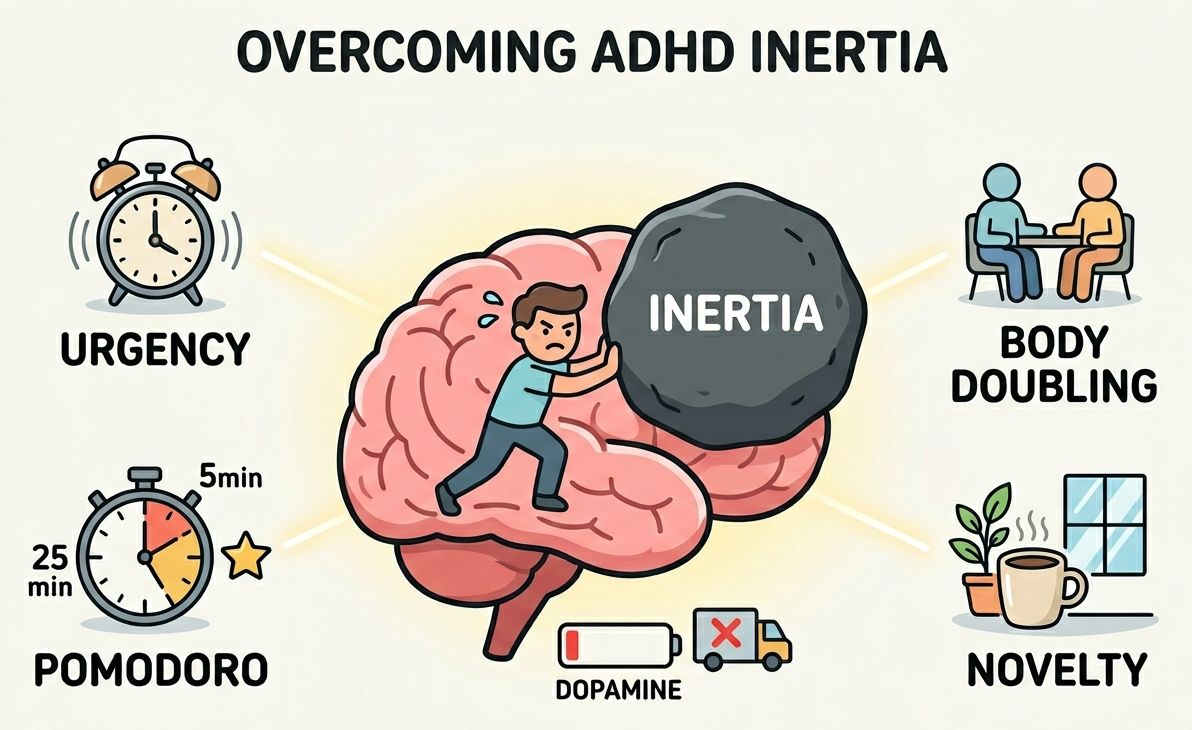
For an ADHD brain, difficult tasks are not just boring. They can feel physically painful to start. Not metaphorically. There is a genuine neurological resistance that kicks in before certain categories of work, and pushing harder into that resistance does not dissolve it. It just adds shame to the pile.
A task becomes aversive for predictable reasons. It is too large in scope. It has too many steps. It is routine with no novelty. Or it feels like it will consume an unreasonable amount of time with no visible finish line. Any one of those is enough to trigger real inertia. The goal is not to force yourself through the wall. It is to stop building the wall in the first place.
Here is what actually works for me.
The first strategy is pairing. The ADHD brain resists unpleasant tasks because it anticipates an unpleasant experience. So you change the experience. Fold laundry while watching something you enjoy. File documents while listening to a podcast you actually look forward to. Exercise with music that moves you. You are not tricking yourself. You are changing what the brain learns to associate with that category of work.
If the task requires too much focus for media, change your physical environment instead. I genuinely do certain types of work differently depending on where I am sitting. The same task that feels impossible at a desk can feel manageable on a porch or in a coffee shop. The brain responds to novelty, and a change of environment is often enough to lower the activation threshold.
Post-task rewards work too, but timing matters. Immediately after finishing something aversive, do something you genuinely enjoy. Not later. Immediately. The brain begins rewriting what it associates with that type of work. One thing I would flag: avoid using food as the reward. It is easy to reach for and easy to overuse. Keep a written list of enjoyable activities with rough time durations ready in advance so you are not making a decision in the moment when your cognitive resources are already depleted.
The natural break pivot is another one I use constantly. I schedule my most dreaded work in the hour immediately before something I already look forward to, a walk, a show, a call with someone I enjoy. That upcoming event becomes both motivation and a hard deadline. Finite work with a known endpoint is neurologically easier to start than open-ended work that stretches into the indefinite future.
Now here is the structural issue underneath all of this. When an ADHD brain defers everything until it becomes urgent, every single day turns into a fire drill. And fire drills generate more fire drills. You end up spending all your energy on what is screaming the loudest while the things that actually matter most, your health, your relationships, your long-term plans, get silently neglected because they never reach crisis level.
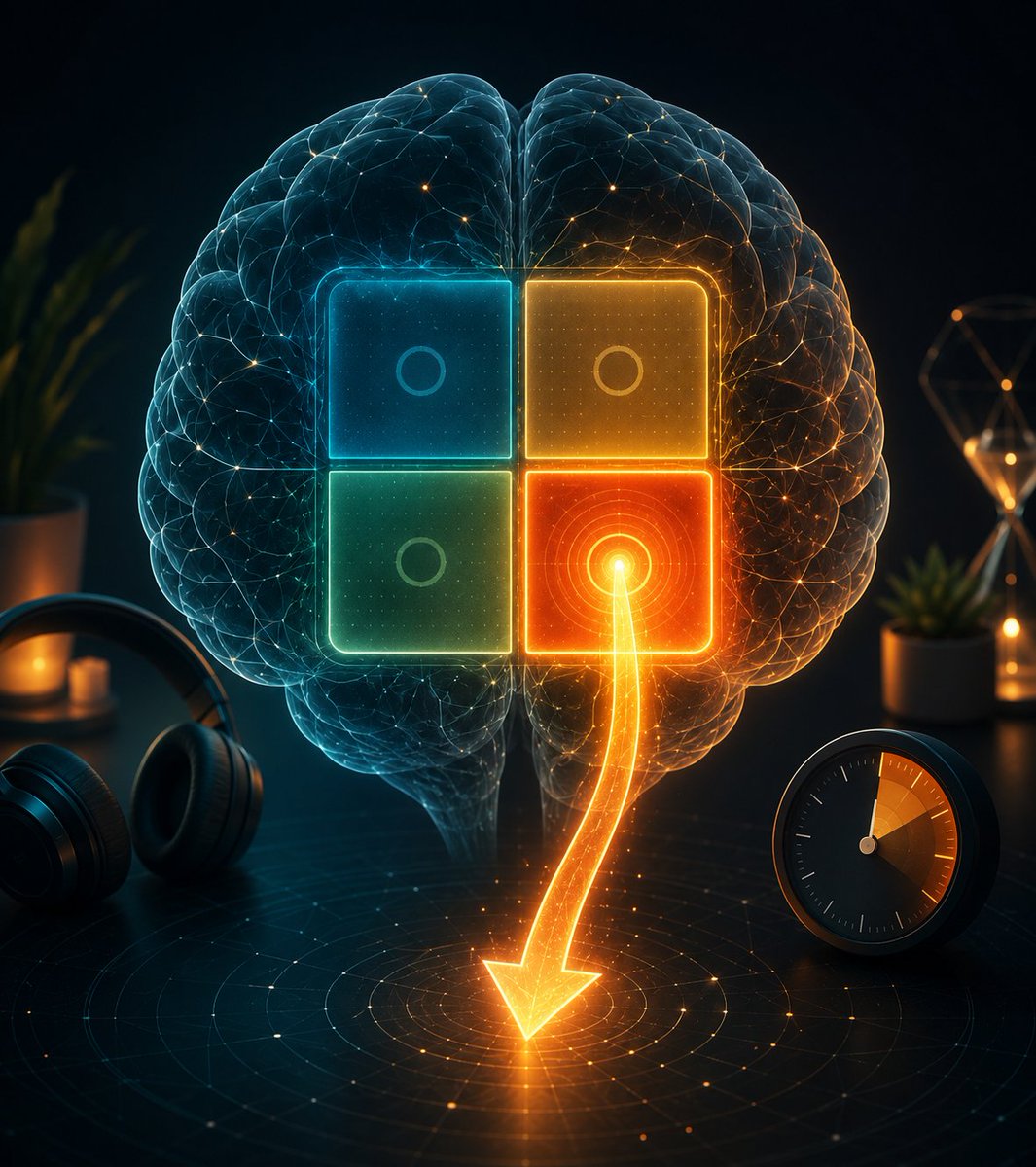
The Eisenhower Matrix is the clearest framework I have found for breaking that cycle. Important and urgent tasks go first. Important but not urgent tasks get deliberately scheduled because they will never demand your attention on their own. Urgent but not important tasks get delegated or cut. And not urgent, not important tasks get saved for genuine downtime, because reorganizing a drawer while avoiding your taxes is not productivity. It is procrastination wearing a costume.
The goal of all of this is not simply to get things done. It is to reduce the negative reinforcement your brain has built around certain types of work over years of struggle. Every time you make a hard task slightly more tolerable, you lower the activation energy required to start it next time.
That compound effect is what eventually makes the hard things feel manageable. Redesign the experience. The behavior follows.
#ADHD #ADHDProductivity #ExecutiveFunction #Procrastination #BrainScience #ADHDStrategies #Neurodiversity #MentalHealth #FocusTips #ADHDAdults

English

Your brain is not broken for thinking negatively.
It was literally built to do exactly that.
I used to feel a deep sense of shame about how quickly my mind could spiral into worst-case scenarios. I thought it meant something was fundamentally wrong with me. Then I learned the neuroscience behind it, and the shame quietly dissolved. What replaced it was something far more useful: a strategy.
Here is the truth. For millions of years, the human brain survived by expecting the worst. A mind that stayed alert to danger, that assumed the lion was in the bushes even when it was not, kept our ancestors alive long enough to pass on their genes. That same protective software is still running in you and me today. It has no lion to find anymore, so it finds the unanswered email, the awkward conversation, the unpaid bill, the uncertain future.
The brain defaults to negative not because something is wrong with you. But because something went very right for your ancestors.
The result is a mind that acts like Velcro for negativity and Teflon for positivity. Negative experiences stick immediately and replay on demand. Positive ones require deliberate effort to absorb and hold. This is not a character flaw. It is evolutionary architecture. And architecture can be renovated.
The first place I would tell you to look is your environment, before you try to work on your mind directly. Your brain contains mirror neurons that subconsciously absorb the energy, behavioral patterns, and emotional states of the people around you. Chronic exposure to highly negative people and environments is not just emotionally draining. It is neurologically instructive. The brain mirrors what it is surrounded by. Cleaning up your external inputs is not a luxury or a soft suggestion. It is foundational groundwork.
When you cannot change the environment, you change what you do with the thought. I use a sequence that has made a real difference for me. The moment a negative thought arrives, I pause rather than engage with it automatically. I observe it from a distance rather than becoming it. I shift my focus away from the trigger deliberately. I introduce an intentional replacement thought. I identify something specific, however small, that I can genuinely appreciate. And I stay with that long enough for the brain to actually process it.
This is not toxic positivity. It is deliberate neural redirection. Practiced consistently, it builds a new pathway that gradually becomes faster than the old one.
One thing I want to be honest about: affirmations and mental techniques often fail when the body is still locked in a stress state. You cannot think your way out of a physiological response. The most direct way to physically interrupt a loop of fear or negativity is through breath. Specific breathwork practices like Ujjayi Pranayama work by balancing alpha brain wave activity across both hemispheres. Too much alpha on the left side is linked to low mood and lack of motivation. Too much on the right is linked to overthinking and racing thoughts. Balancing both shifts your brain's baseline chemistry before any mindset work begins. The body has to come down before the mind can change direction.
And I want to close with something I think gets dismissed too easily.
If you apply these practices consistently and the negativity still feels paralyzing and beyond your control, that is not a willpower problem. It is a medical one. A brain producing the wrong chemical balance or running misfiring circuits needs support the same way a broken bone does. Seeking psychiatric or neurological guidance is not weakness. It is the same logic as seeing a cardiologist for your heart or an orthopedist for your knee.
You would not walk on a broken leg and call it discipline.
Do not dismiss what your brain may genuinely need.
Start with your environment. Apply the sequence every time a negative thought arrives. Protect your breath. And if the weight is too heavy to lift alone, ask for help.
#Neuroplasticity #NegativeThinking #MindsetShift #BrainScience #MentalHealth #Mindfulness #Breathwork #PersonalDevelopment #GrowthMindset #Neuroscience

English

"Everyone gets distracted sometimes. Everyone has a little ADHD."
I hear this constantly. And I understand why people say it. Distraction is universal. Forgetting things is human. Feeling overwhelmed is something we all experience.
But saying everyone has a little ADHD because everyone gets distracted is like saying everyone is tall because everyone is taller than the ground. The difference is not the experience. It is the height. And how hard it makes it to find pants.
Let me explain what I mean.
The name itself is misleading, and I think it creates most of the confusion. ADHD is not a deficit of attention. It is a difficulty regulating where attention goes. That is a fundamentally different thing. People with ADHD are not paying less attention than everyone else. Their attention is firing in all directions, landing where it wants rather than where it is needed, and resisting redirection in ways that have real consequences in daily life.
And hyperactivity is not required. A significant portion of people with ADHD, particularly women and girls, struggle entirely internally with no visible restlessness at all. They look calm. They look fine. They are quietly drowning. This is precisely why so many go undiagnosed for years, sometimes decades. They learned to mask early, and the world around them never looked hard enough beneath the surface.
Here is what it actually looks like in daily life, and I want you to read this carefully.
"I'll do it later" does not mean procrastination. It frequently means the task has already ceased to exist in working memory. It is not being avoided. It has genuinely disappeared.
Time exists as either Now or Not Now, with almost no reliable sense of how far away Not Now actually is. This is why someone with ADHD can genuinely believe they have time for a full shower five minutes before an important meeting. It is not carelessness. The gap between now and soon does not register the way it does in other brains.
A chaotic inbox, a disorganized car, a room that looks like a disaster area, these are not signs of laziness. They are signs of a brain that cannot maintain organizational architecture without significant external support.
And then there is the all-or-nothing pattern, which I think is one of the most exhausting features of ADHD and one of the least talked about. Some days the motivation to do everything arrives simultaneously and collides with itself into paralysis. Other days, starting a single task feels like lifting concrete. Neither extreme reflects capability or character. Both reflect a dopamine regulation system that does not produce consistent motivational fuel the way other brains do.
Five things I think everyone should understand clearly.
ADHD is a measurable difference in brain structure and dopamine chemistry. It is not a character flaw. It is not all liability either. Creativity, empathy, and hyperfocus, when directed with the right support, are genuine and significant strengths. Medication is not the only path. Behavioral strategies and environmental design are essential tools regardless of whether medication is part of the picture. Early diagnosis matters not because the condition worsens, but because the consequences on credit, relationships, self-esteem, and academic history accumulate steadily without intervention. And a professional assessment is the only valid diagnostic path. Recognizing yourself in a description is a starting point, not a conclusion.
If any of this has been describing your experience since before age 12, and it is interfering with how you function, that is worth bringing to a doctor.
Not because something is broken. Because understanding the operating system you are actually running makes it possible to stop blaming yourself for not running a different one.
You are not failing at life. You may simply be navigating it without a map that was drawn for your brain.
#ADHD #ADHDAwareness #Neurodiversity #MentalHealth #ADHDAdults #ADHDWomen #YouAreNotLazy #BrainScience #ADHDDiagnosis #KnowYourBrain

English

I used to believe that the way I thought was just the way I was wired.
Fixed. Inherited. Not really up for negotiation.
Then I started learning how the brain actually changes, and I realized I had been leaving one of the most powerful tools I own completely untrained.
Your brain is not fixed. But without intentional input, it defaults to whatever patterns have been reinforced the longest. Which means if you are not actively shaping it, your past is doing that job for you.
Here are six practices I have come to rely on, each grounded in neuroscience, none requiring a dramatic life overhaul.
Start by identifying your limiting beliefs.
A limiting belief is a negative, self-imposed boundary that operates as fact inside your mind even when it has no factual basis. The most effective way to expose one is to write it down and then ask why you believe it. I have found that most limiting beliefs cannot survive honest scrutiny on paper. They exist in the vague, unchallenged space of your inner monologue, and the moment you force them into a sentence and question them, they start to fall apart. A thought journal or a simple notes app used consistently is one of the highest-leverage tools available for this.
Dopamine detox is not about suffering. It is about recalibrating.
The brain naturally chases high-stimulation, short-term rewards: scrolling, binge-watching, passive consumption. These activities do not just waste time. They crowd out the mental bandwidth you need for low-stimulation but high-impact work. When I deliberately reduce high-dopamine inputs for a period, I notice within days that my ability to focus on things that actually matter improves significantly. You are not punishing yourself. You are clearing the channel.
Mindfulness trains the gap between stimulus and response.
Sudden anger, automatic stress reactions, impulsive decisions: they all share one thing in common. They happen before conscious thought arrives. Even a few minutes of focused breathing daily begins to rewire the neural pathways responsible for emotional regulation. Over time, the gap between trigger and reaction widens. That gap is where your best choices live. I started with five minutes a morning and the shift was noticeable within two weeks.
Gratitude is not a soft practice. It is a neurological one.
A mind fixed on what is lacking will find evidence of scarcity everywhere. I have experienced this firsthand. When I started deliberately noting specific things I appreciated each day, not vague generalities but specific details, the texture of my thinking began to shift. The brain trained toward appreciation becomes more receptive to opportunity, creativity, and forward momentum. It changes the filter, not just the mood.
Visualization works because the brain does not clearly distinguish between a vividly imagined experience and a real one.
When you regularly picture your goals in specific sensory detail, you register them into the subconscious and activate the brain's pattern-recognition systems to identify aligned opportunities in daily life. I practice this directly after meditation when the mind is already calm and receptive. The combination is noticeably more effective than visualization alone.
What you say to yourself in private becomes the operating system you live from.
Affirmations spoken aloud, especially during mirror work where you look directly at your own reflection and speak, carry a measurably deeper impact than silent thought. Hearing your own voice declare something engages an additional sensory channel and accelerates the rewiring of negative self-talk. The words you repeat most become the beliefs your brain treats as fact. That works in both directions. Choose deliberately.
None of these require a dramatic overhaul of your life. Pick one. Apply it consistently for two weeks before adding another.
The brain changes through repetition. And repetition starts with a single decision to begin.
What are you going to start with?
#Neuroplasticity #BrainTraining #MindsetShift #PersonalDevelopment #SelfImprovement #GrowthMindset #Dopamine #Mindfulness #Affirmations #Neuroscience

English

7/ Focus is trainable. That is the central point.
By managing dopamine through behavior and nutrition, practicing visual fixation daily, protecting attentional capacity from chronic context-switching, and understanding which networks need to be kept in balance, the brain's ability to sustain focus can be meaningfully strengthened over time.
The conductor is not fixed. It responds to what you consistently give it.
Start with one practice. The fixation exercise costs 60 seconds. Do it today.
#ADHD #ADHDLife #Neurodivergent #Dopamine #ADHDawareness #ADHDProcrastination #ProductivityHacks
English

6/ Nutrition has a measurable and specific effect on attention.
Getting above 300mg of DHA from omega-3 fatty acids daily appears to be the threshold where attentional benefits become significant. Phosphatidylserine at 200mg per day, often taken alongside omega-3s, has shown reductions in ADHD symptoms in peer-reviewed studies. Alpha-GPC supports acetylcholine, the neurotransmitter responsible for highlighting specific synaptic circuits during focused work.
These are not wellness supplements. They are compounds with documented mechanisms of action on the neurobiology of attention.
English